


Understanding Dublin’s Layout: Northside vs. Southside
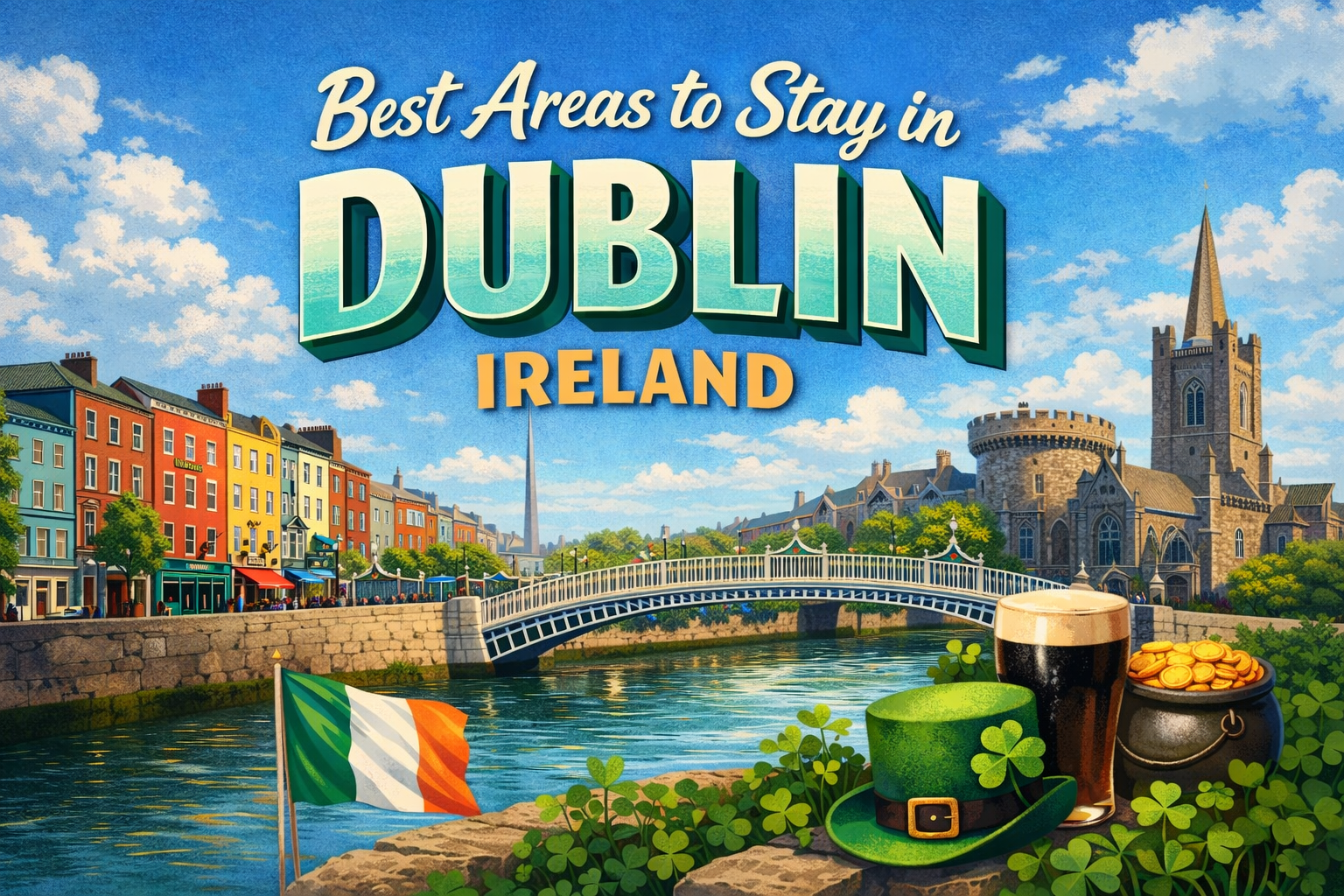
To find the best places to stay in Dublin, it helps to start with a quick sense of the city’s layout. Dublin is essentially split into two by the River Liffey. You have the Northside (with odd-numbered postcodes like D1, D7, and D9) and the Southside (even numbers like D2, D4, and D6).
For a long time, the Southside was considered the “posher” side of town, while the Northside was well-known for its grit and history. While these days, those lines are much more blurred. Northside spots like Smithfield and Phibsborough have transformed into some of the trendiest neighbourhoods in Europe, filled with indie cinemas and great coffee. When you’re picking a base, it usually comes down to two things: how close you are to your university and how near you are to a Luas (tram) or DART (train) stop. In a city where traffic can be tricky, being on the rail line is a total game-changer.
Best Area to Stay in Dublin Ireland
Trinity College Area
Temple Bar
Portobello
Phibsborough
Best For: TU Dublin Students and Urban Explorers
Vibe: Unpretentious, Creative, and Properly Local.
Pros: Local feel, budget-friendly, student hub.
Cons: A bit gritty, far from Southside.
Phibsborough has a bit of an edge to it that you won’t find in the more manicured parts of the Southside. It’s a D7 staple that perfectly balances old-school charm with a new-wave ‘hipster’ energy. What makes it a top-tier choice for where to stay in Dublin, Ireland, isn’t just the trendy coffee shops—though there are plenty—but its sheer practicality. Being the main gateway to TU Dublin Grangegorman campus, it saves you a fortune in commute time and stress. When you do need to head into town for a lecture at Trinity or a shopping trip on Grafton Street, the Luas Green Line is your lifeline, whisking you there in minutes. Between the quiet walks along the Royal Canal and the convenience of having big-name supermarkets just around the corner, Phibsborough offers a more authentic, liveable version of Dublin life that’s hard to beat.
Docklands
Best For: Tech Fans and Lovers of Luxury
Vibe: Sleek, High-Tech, and Cosmopolitan
Pros: Modern flats, ultra-safe, tech-central.
Cons: Corporate feel, lacks “old Dublin” charm.
For those who prefer the best neighborhoods to stay in Dublin, the Docklands—affectionately dubbed ‘Silicon Docks’—is in a league of its own. It’s Dublin’s most cosmopolitan corner, where the HQs of Google, Meta, and LinkedIn create a vibe that’s more San Francisco than traditional Ireland. For a student, the real draw isn’t just the proximity to tech giants; it’s the chance to bypass the ‘characterful’ older houses for ultra-modern complexes. Our student accommodation in Dublin has 24/7 security, rooftop terraces, and study pods that actually make you want to work. It’s arguably the safest, slickest part of the city to call home, where your morning coffee run involves the architecturally stunning Grand Canal Square. Even though it feels like a world of its own, it’s incredibly handy for getting around—the Luas and DART are right there, and a scenic 15-minute walk along the Liffey lands you right at Trinity College.
Smithfields
Stephen's Green
Best For: Culture Seekers and Urban Sophisticates
Vibe: Polished, Prestigious, and Undeniably Classic
Pros: Prestigious, park access, prime location.
Cons: Premium price tag, strictly urban.
If you have the budget to match your ambitions, finding the best area to live in Dublin near St. Stephen’s Green is a bit of a dream scenario. It’s the ultimate Dublin 2 postcode—a massive place that feels surprisingly peaceful despite being exactly where everything happens. For anyone studying at RCSI or Trinity, it’s a perfect option; you’re trading a messy commute for a short walk past duck ponds and manicured flowerbeds every morning. There’s a great flow to the area, too—one minute you’re tucked away in a quiet corner of the Iveagh Gardens with a book, and the next you’re right in the thick of the Grafton Street buzz or grabbing a flat white on Dawson Street.
Merrion Square
Best For: Academics, art lovers, and serenity-seekers.
Vibe: Stately, serene, Georgian elegance.
Pros: Quiet, academic, beautiful architecture.
Cons: Ghost town at night, expensive.
Want to live somewhere that feels like a scene straight out of a period drama? Merrion Square is the answer for the best place to stay in Dublin that suits your needs. It is the ultimate showcase of Dublin’s Georgian heritage, where those iconic, brightly painted doors and grand red-brick terraces wrap around a park that feels much more like a private sanctuary than a busy public hub. Staying here puts you right in the middle of the city’s “Cultural Quarter”—you’ve got the National Gallery and the Natural History Museum practically as your next-door neighbors. Because it’s tucked away behind major government buildings like Leinster House, the area has an incredibly safe, dignified air that is a lot more “chilled” and refined than the constant energy of nearby St. Stephen’s Green. It’s the perfect choice if you want a sophisticated, academic vibe where the only real weekend “commotion” is the local artists lining their work along the park railings on a Sunday morning. For anyone at Trinity College who wants to be close to the library but needs a quiet, high-status place to actually get some sleep, Merrion Square is truly in a league of its own.
Ballsbridge
Best For: UCD students, safety-seekers, and park-lovers.
Vibe: Leafy, prestigious, quiet luxury
Pros: Upscale, safe, leafy avenues.
Cons: High-end costs, fairly quiet
Ballsbridge is one of the best area to stay in Dublin Ireland for the absolute gold standard of Dublin life, making it a top option. Often called the “Embassy District,” Ballsbridge as one of the lush slices of Dublin 4 is where the city’s old-school charm meets a very modern kind of prestige. People have easy access to the tree-lined avenues and visit the Herbert Park or browse the Sunday food markets. A refined pace of life in this beat neighbourhood that feels worlds away from the city centre chaos, even though you’re actually just a short hop away. For University College Dublin students or professionals, it strikes that rare balance between being handy for campus and providing a peaceful, upscale retreat at the end of the day. Between the high-end gastropubs and the roar of the crowd on match days at the Aviva Stadium, Ballsbridge gives you a sophisticated “home away from home” that’s perfect if you value safety, greenery, and a bit of D4 luxury.
Ranelagh
Best For: Foodies, Luas commuters, nightlife
Vibe: High-end “village” life with the best food scene in the city
Pros: Foodie heaven, Luas access, village vibe.
Cons: Ultra-competitive, pricey
Most people in Dublin will tell you that Ranelagh is the ultimate spot when you’re wondering where to stay in Dublin, Ireland, with that perfect ‘urban village’ feel. It’s got this ‘posh village’ energy that’s impossible to ignore, but it doesn’t feel stuffy or out of reach. The main street is just one long stretch of brilliant brunch spots and late-night wine bars such as Smyth’s, The Tap House, and Humphreys, so you never really have to leave the neighbouhood for a good night out. It’s famous for those beautiful red-brick terraces, but the real win is the Luas Green Line—you can be in the city centre in ten minutes flat, though you’ll probably find yourself staying local more often than not. It tends to draw a younger crowd and students who want a bit of a scene without the headache of the touristy city centre.
How can uhomes.com help you?
Conclusion
Finding where to stay in Dublin Ireland really comes down to where you see yourself on a Saturday morning—grabbing a flat white in Ranelagh or jogging through the Green. There isn’t a single best area to stay in Dublin, just the one that fits your budget and your lifestyle. Whether you go for the polished streets of D4 area or the artsy grit of the Northside, just make sure you lock it in early. Once you’ve got the keys of these best places, the rest of the city is yours.
FAQ
If you’re trying to figure out where to stay in Dublin Ireland for the first time, you really can’t go wrong with Ranelagh or Rathmines. Both spots are local favorites for a reason—they’re just a quick 15-20 minute hop into the city center, but they feel like destinations in their own right. They’ve got a fantastic energy, packed with a mix of proper old-school pubs, great coffee shops, and some of the best food in the city.
If you’re chasing a vibe that’s more “local cool” than “tourist brochure,” look toward Stoneybatter or Smithfield. But for the real deal, you have to check out The Liberties. It’s one of Dublin’s oldest neighborhoods and has this amazing, gritty energy where traditional street markets live alongside sleek new distilleries and indie cafes. It’s authentic, slightly rough around the edges in the best way, and feels like the real heartbeat of the city.
If you’ve only got twenty-four hours to play with, staying central is a no-brainer. Sticking close to Trinity College or St. Stephen’s Green means you’re within walking distance of everything—you won’t spend half your night stuck in a taxi. While airport hotels are the “safe” move for an early flight, they can be a bit soulless. If you’d prefer somewhere with more of a local pulse that isn’t quite as chaotic as Temple Bar, Smithfield is a solid shout for a shorter stay.
As the main spine of the city, O’Connell Street is the one place every visitor eventually finds themselves. It stretches from the bridge right up to Parnell Street and is famous for its grand, wide pavements that give you a bit more breathing room than the narrow lanes of Temple Bar.