



The average rent in Boston in 2026 ranges from about $3,400 to over $3,800 per month, depending on the neighborhood and unit size. This average is more than 100% higher than the national average. Boston consistently ranks among the top 3–4 most expensive rental markets in the US, with a typical studio apartment averaging $2,200-$2,800 per month. One-bedroom apartment prices often fall between $2,600 and $3,400, while a two-bedroom apartment in Boston usually rents for $3,300 to $4,300+ per month. The average rent in Boston can vary based on apartment size and location, offering a range of options to fit different budgets, often influenced by nearby universities. Let’s break it down.
What is Average Rent in Boston?
| Apartment Type | Average Monthly Rent | Average Apartment Size |
|---|---|---|
| All Rentals | $3,400 – $3,800 | 800 sq. ft. |
| Studio | $2,200 – $2,900 | 480 sq. ft. |
| 1 Bedroom | $2,600 – $3,400 | 700 sq. ft. |
| 2 Bedroom | $3,400 – $4,300 | 1,000 sq. ft. |
| 3 Bedroom | $3,900 – $5,700 | 1,230 sq. ft. |
Average Rent in Boston by Neighborhood
Most affordable neighborhoods in Boston
Mattapan – $2,200 per month
Roxbury – $2,500 per month
Roslindale – $2,800 per month
Most expensive neighborhoods in Boston
Back Bay – $4,800 per month
Downtown – Financial District – $4,300 per month
West End Boston – $4,000 per month
Most Popular Neighborhoods in Boston for Renters
- Fenway – Kenmore is one of the most student-dense areas in Boston due to its proximity to Boston University, Northeastern University, and Berklee College of Music.
Allston – Brighton remains one of the most affordable large-scale rental markets near major universities like Boston University and Harvard University.
South Boston attracts young professionals working in Downtown and the Seaport District.
| Neighborhood | Studio | 1 Bedroom | 2 Bedroom | Nearby Universities |
|---|---|---|---|---|
| Back Bay | $2,800–$3,400 | $3,500–$4,500+ | $4,200–$5,200+ | BU, Northeastern, Berklee (near Kenmore) |
| Downtown – Financial District | $3,400 | $4,500 | $4,200–$5,200+ | Suffolk, Emerson |
| South Boston | $2,500 | $3,800 | $4,900 | UMass Boston (via Red Line), Suffolk, Tufts (Downtown) |
| West End Boston | $2,300 | $3,400 | $5,300 | MGH IHP (nearby) |
| Chinatown – Leather District | $2,700 | $3,200 | $4,000 | Tufts (DT), Emerson |
| Fenway – Kenmore | $2,800 | $3,400 | $4,500 | BU, Northeastern, Berklee |
| South End Boston | $2,300 | $3,500 | $4,700 | Northeastern, BU (nearby) |
| Charlestown | $2,300 | $3,400 | $3,600–$4,000 | Bunker Hill CC, Suffolk (Downtown commute) |
| Allston – Brighton | $2,900 | $3,400 | $4,300 | BU, Harvard (nearby) |
| Jamaica Plain | $2,900 | $3,400 | $3,900 | Northeastern (Green/Orange line), MCPHS, Wentworth |
| East Boston | $2,500 | $3,200 | $3,500 | Suffolk, Emerson, Tufts (Downtown via Blue Line), Northeastern (commute) |
| Dorchester | $1,900 | $2,600 | $2,900–$3,500 | UMass Boston |
| Mission Hill | $2,200 | $2,600 | $3,300 | Northeastern, MCPHS, Wentworth |
| Roslindale | $1,800 | $2,600 | $2,700–$3,000 | Northeastern (commute), UMass Boston |
| West Roxbury | $1,800 | $2,100 | $2,700–$3,000 | Boston College, Northeastern (commute) |
| Beacon Hill | $3,000 | $3,200 | $4,200–$4,500 | Suffolk, Emerson, Tufts (Downtown) |
| Roxbury | $1,800–$2,100 | $2,100–$2,700 | $2,700+ | Northeastern (nearby) |
| Mattapan | $1,600 | $2,200 | $3,300 | UMass Boston (commute), Northeastern (commute) |
| Cambridge | $2,100–$2,400 | $2,600–$3,400 | $3,600–$4,800 | Harvard, MIT |
| Somerville | $2,300 | $3,000 | $3,700–$4,800 | Tufts (nearby) |
| Brookline | $2,400–$2,900 | $3,100–$3,500 | $3,800–$4,400 | BU, BC (nearby) |
This table lists some of the best neighbourhoods in Boston within commuting distance of prestigious universities, including Northeastern University, BU, Harvard, and UMass Boston. The rental prices for apartments near universities in Boston vary by neighborhood. Areas like Back Bay and South Boston are on the higher end, with prices ranging from $2,800 to $5,200 depending on the apartment size. Neighborhoods such as Dorchester and Roxbury are more affordable, with prices ranging from $1,800 to $3,500.
Median Rent in Boston
As of February 2026, the median rent in Boston is approximately $3,500 per month. For international students, median rent is the more reliable number when budgeting for Boston. Boston has many high-end apartments that raise the average, but most students rent in Allston, Mission Hill, Fenway, or Somerville — where median rent is a more realistic benchmark. The median rent in Boston often differs from the average rent because luxury listings can raise the average.
| Metric | Why It Matters for Students |
|---|---|
| Average Rent | Can look higher because of luxury apartments in Seaport & Back Bay |
| Median Rent | Better reflects what most students actually pay |
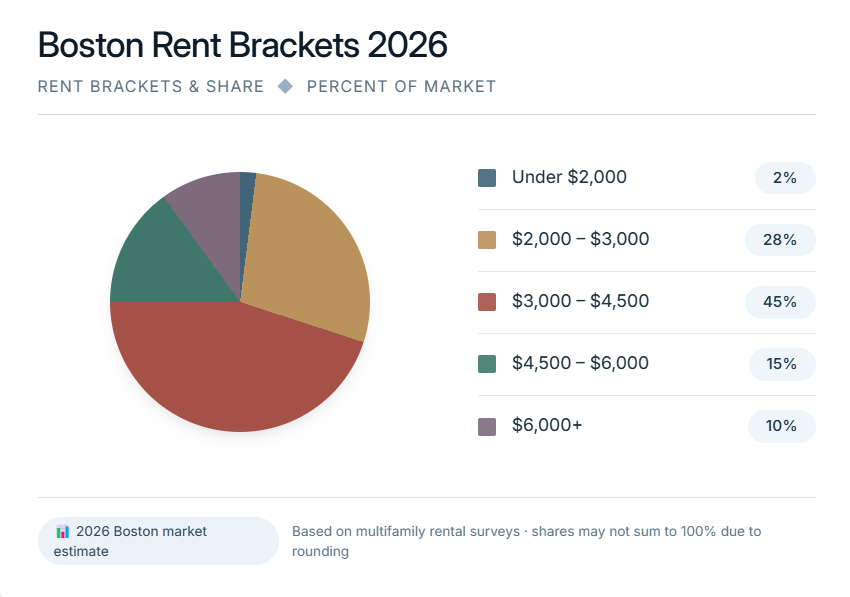
What's the Typical Cost of Rent in Boston?
How the Average Rent in Boston Has Changed Over Time
When Is the Best Time to Rent in Boston?
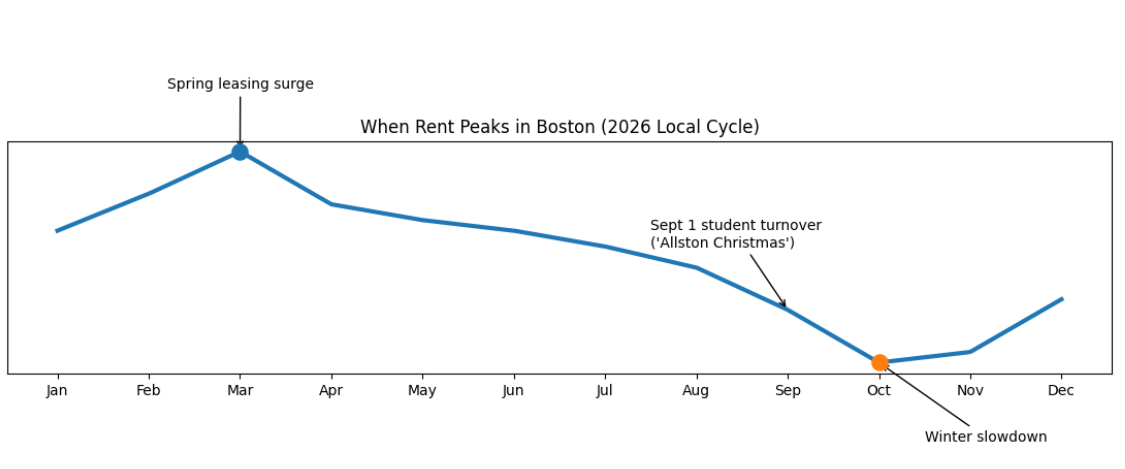
Boston has a typical “semester-driven” rental market, so the peak rental season is highly synchronised with the start of the university semester, especially around September 1st. Since many universities use the fall semester, most students move in between August and September. Therefore, properties available for September 1st typically begin listing and being signed as early as April to June, with popular areas even seeing listings as early as March. In contrast, January 1st is a secondary peak, with most properties becoming available in October and November. Winter is generally the off-season, with fewer properties available, but usually more room for negotiation.
Do Most People Rent or Own in Boston, MA?
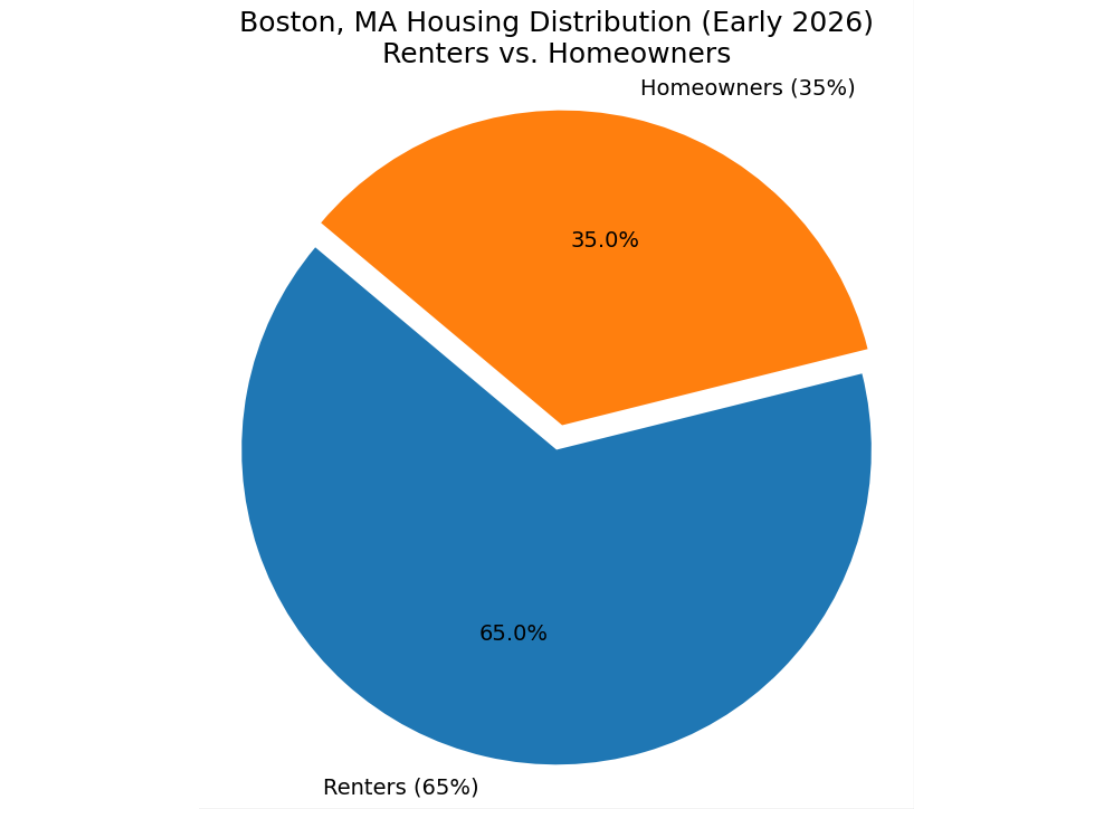
Why is renting more typical in Boston?
High home prices: Boston home prices are significantly above national averages, requiring large down payments and higher monthly costs.
Limited housing supply for buyers: There are relatively few homes on the market, and listings often move quickly, which keeps ownership rates lower.
Strong rental demand: Many residents, especially students and early-career professionals, rent because of job mobility, study timelines, and the difficulty of affording a home in the city.
Factors Influence the Average Rent in Boston
Transit proximity, the rigid September 1st lease cycle, unit layout, building history, and premium amenities are the true underlying factors that influence the average apartment rent in Boston, MA.
1. Neighbourhood Density and Transit Access (MBTA Effect)
Boston has four main subway lines (red, green, orange, and blue). Why are the costs of rent in Boston consistently high along the Green, Orange, and Blue lines (especially near downtown)? The Green Line is a true “college line.” It runs through Boston University, Boston College, and NEU, as well as the Longwood Medical District. Strong demand from students and healthcare professionals ensures landlords along the Green Line never lack tenants. The Orange Line connects the bustling business district of Back Bay; while the Blue Line connects directly to the airport and the waterfront of the financial district. These two lines are vital commuting routes for young professionals and finance professionals.
The average price of apartments in Boston is exceptionally high in several neighborhoods, including Back Bay, Seaport, and Cambridge. Back Bay is Boston’s long-established financial and business center, home to top investment banks and established wealthy families. Seaport is Boston’s newly built “Silicon Valley,” home to the headquarters of tech and pharmaceutical giants like Amazon and Vertex. Cambridge (especially around Kendall Square) is a world-leading biotechnology hub, backed by Harvard University and Massachusetts Institute of Technology. Living here means paying not only rent, but also access to a top-tier research and business environment.
The Cost of Walking: Choosing accommodation within a 15-minute walk of a university or financial district typically costs $300 to $500 more per month. This premium essentially buys you a buffer against Boston’s harsh winter and unreliable MBTA service. Many experienced residents believe that, within budget, paying for proximity is effectively paying for a more comfortable and predictable daily life.
2. The September 1st Rental Frenzy (The Allston Effect)
The September 1 lease cycle plays a major role in determining both the average rent in Boston and the median rent in Boston each year. Boston has one of the highest concentrations of student renters in the United States, and this demographic reality shapes the city’s rental calendar. A large share of annual leases begin on September 1, which concentrates demand into a narrow late-summer window. Between August and early September, rental activity accelerates, and vacancy rates tighten, especially in student-heavy neighbourhoods such as Allston, Brighton, Fenway, and Mission Hill. This surge in demand allows landlords to raise asking prices and limit concessions, which pushes both average and median rent levels higher during peak leasing season.
3. The Game Between Unit Size and Per-Square-Foot Cost
In Boston, “the smaller the apartment, the lower the value” is an ironclad rule, renters often pay more per square foot for studios and one-bedroom apartments, even though larger units offer better value relative to their size.
The “One Door Separation” Premium for 1-Bedroom vs. Studio: a 1-bedroom apartment in Boston is typically $400 to $600 more expensive than a studio in the same area. Why is a wall and a door so valuable? In today’s world where work-from-home (WFH) is the norm, physically separating the “sleeping area” from the “living/working area” is an important safeguard for mental health. This door represents the market-recognized “quality of life premium.”
4. Building Age: Historic Brownstones vs Luxury Towers
Building age directly affects the average apartment rent in Boston, MA, maintenance stability, and daily comfort. Historic brownstones in Beacon Hill, South End, and Back Bay often offer architectural character and larger layouts, but they usually lack elevators and may have older heating or insulation systems. Rent is often lower than in nearby luxury buildings, yet tenants assume more variability in noise control and infrastructure reliability.
Luxury towers in Seaport, West End, and Fenway provide elevators, central air, secured package rooms, and on-site management. These buildings reduce maintenance uncertainty and improve convenience, but they command significantly higher base rents. In most cases, renters pay for predictability and service quality rather than additional square footage.
5. Amenities Premium in Boston’s Luxury Market
In Boston, bundled amenities can increase monthly rent by approximately 15% to 20% compared to similar-sized units in older buildings. Features such as central air conditioning, 24-hour doorman service, secured package rooms, gyms, and rooftop terraces directly contribute to this premium. Many renters value these amenities because they reduce delivery issues, eliminate separate gym memberships, and improve climate control year-round.
How the Average Rent in Boston Affects Students and Renters
The Boston apartment rent does more than just dictate monthly budgets; it fundamentally shapes housing choices, living arrangements, and the financial trajectory of both students and working professionals. Beyond the surface-level numbers, the reality on the ground is far more intense.
Impact on Students
High average apartment rent in Boston, MA, pushes most students toward shared housing. In neighborhoods near major universities, studio and one-bedroom units drastically exceed typical student budgets. This forces a massive migration into multi-bedroom units in areas like Allston, Brighton, and Mission Hill. As the average rent in Boston rises, some students are forced into a corner, prioritizing basic proximity to campus and split utilities over privacy, quiet study environments, and living quality.
Impact on Young Professionals
For early-career professionals in Boston, rent isn’t just an expense; it is often a severe financial burden. In many cases, securing a basic one-bedroom apartment in central neighborhoods consumes 40% to 50% of a renter’s post-tax income.
This staggering cost of living in Boston has birthed an “extended roommate culture” unique to Boston. While peers in the Midwest might be putting down payments on starter homes at 28, young professionals in Boston frequently continue to share triple-decker apartments well into their late twenties and early thirties. The reality of the median rent in Boston pushes renters toward smaller units, longer MBTA commutes, or extended shared housing long after graduation just to maintain financial stability.
Income Pressure and the “3x Income” Gatekeeper
The financial barrier in Boston isn’t just about being able to make the monthly payment; it’s about getting approved in the first place. Using the strictly enforced “3x gross income rule” standard across Boston’s management companies, a renter needs an annual income of roughly $140,000 just to qualify for a standard $3,500 monthly apartment. For international students, recent graduates, and young H1B workers, this creates an immense, sometimes insurmountable, affordability gap. Even with sufficient savings, many face instant rejection or the grueling hurdle of securing local guarantors.
How to Lower Your Cost of Rent in Boston
Lowering your cost of rent in Boston does not always mean negotiating a lower monthly price. In many cases, especially during peak seasons, prices are fixed by market demand. However, students may still be able to reduce overall costs and risks by choosing the right platform.
For international students, one major challenge is uncertainty—unverified listings, misleading photos, hidden fees, or unexpected broker charges. Clear fee structures can also minimize unexpected broker charges or hidden transaction costs—especially for students renting remotely. Some student-focused platforms, such as uhomes.com, provide additional transparency. For example:
Listings may include on-site BD-taken photos, videos, or recorded live tours, helping students verify the property before signing.
- Certain partnered properties in Boston are official collaborations that do not require service fees.
Many Boston student housing on the platform already include built-in commission structures, meaning no additional service fee is required. For a smaller portion of listings without commission, a service fee may apply, but the fee is generally lower than traditional market broker standards.
- In addition, uhomes.com also features price transparency, student discounts, and occasional cashback offers, which may help reduce overall rental expenses.
Ready to navigate the Boston rental maze like a true insider? Skip the bidding wars and avoid the “Allston Christmas” chaos. Explore our curated list of verified, student-friendly apartments for rent in Boston—from charming Back Bay brownstones to amenity-rich Seaport towers.
Final Thoughts of Average Rent in Boston MA
While average rent in Boston is expected to remain painfully high in 2026—around $3,400 a month—the good news is that the days of landlords holding all the leverage are beginning to fade. The market now feels less frantic and more balanced. With new developments coming online and rent increases slowing, renters have more room to compare options and even negotiate perks such as a free month’s rent or waived pet fees.
If you’d rather not devote half your paycheck to the high-end buildings of Back Bay or the South End, where monthly rents can easily exceed $3,500, neighborhoods like Allston or Dorchester—further out along the Green Line—offer more practical alternatives. Saving a few hundred dollars each month can make a meaningful difference in overall quality of life.
For students and young professionals, instead of competing with the entire city during the September 1 leasing rush, it makes sense to plan ahead, lock in a lease early, or share an apartment to reduce costs. Boston’s world-class hospitals, universities, and biotech sector do help explain its high price tag. But in 2026, renters won’t have to accept every asking price without question. Understanding the city’s price tiers and approaching the search strategically will be key to striking the right balance between commute, neighborhood feel, and budget.
FAQ
Boston rents have stabilized compared to the sharp increases of 2022–2023. As of 2026, the average monthly rent is around $3,200–$3,400, with year-over-year growth slowing to low single digits (roughly 1–3%), and some neighborhoods seeing slight declines due to new supply.
Yes. Apartments in central areas like Back Bay and South End often exceed $3,500–$4,000 per month for a one-bedroom, while neighborhoods such as Allston, Dorchester, or parts of Brighton typically range from $2,400–$3,000, offering noticeable savings.
For most students, renting a one-bedroom alone is financially challenging. With one-bedroom rents averaging $2,800–$3,300, many students opt for shared apartments, where individual costs can drop to $1,200–$1,800 per month depending on location.
Utilities are not always included. Water is commonly covered, but tenants usually pay for electricity, internet, and sometimes gas heat. In winter, heating costs can add $150–$300 per month, depending on unit size and insulation.
Yes. Reported average rents typically combine both standard and luxury units. High-end buildings charging $4,000+ per month can push overall averages higher, especially in prime neighborhoods.
No. Boston is expensive, but still generally cheaper than New York City. As of 2025, average NYC rent exceeds $4,000 per month, compared to Boston’s $3,200–$3,400 average.