



Not sure which universities in Japan you can actually get into, or whether you need Japanese to apply? You’re not alone. Many international students struggle to find schools that are both affordable and offer English-taught programs. This guide covers the top universities in Japan for international students and what you really need to know—English-taught programs, scholarships, admissions, cost of living, and which cities make student life easier. And yes, we’re starting with Tokyo, because that’s where most international students realistically begin.
List of Universities in Japan for International Students
| University | City | Best For | Eng | Tuition / Year | Living / Month |
|---|---|---|---|---|---|
| University of Tokyo | Tokyo | Research, STEM, Prestige | ✔ Grad | ¥535k (~$3.7k) | ¥120k–180k |
| Waseda University | Tokyo | International programs, Business | ✔ Full | ¥900k–1.5M | ¥120k–180k |
| Keio University | Tokyo | Business, Alumni network | ✔ Some | ¥900k–1.4M | ¥120k–180k |
| Tokyo Institute of Technology | Tokyo | Engineering, Computer science | ✔ Grad | ¥535k (~$3.7k) | ¥120k–180k |
| Sophia University | Tokyo | Humanities, Global studies | ✔ Full | ¥1.2M–1.6M | ¥120k–180k |
| Hitotsubashi University | Tokyo | Economics, Business, Policy | ✔ Grad | ¥535k (~$3.7k) | ¥120k–180k |
| Kyoto University | Kyoto | Research, Medicine, Science | ✔ Grad | ¥535k (~$3.7k) | ¥95k–140k |
| Osaka University | Osaka | Engineering, Life sciences | ✔ Some | ¥535k (~$3.7k) | ¥90k–135k |
| Tohoku University | Sendai | Research, Engineering | ✔ Grad | ¥535k (~$3.7k) | ¥80k–120k |
| Nagoya University | Nagoya | Science, Engineering | ✔ Grad | ¥535k (~$3.7k) | ¥85k–125k |
| Hokkaido University | Sapporo | Campus life, Environment | ✔ Some | ¥535k (~$3.7k) | ¥75k–115k |
| University of Tsukuba | Tsukuba | Value, Research, Support | ✔ Some | ¥535k (~$3.7k) | ¥75k–110k |
Why Start with Tokyo?
Tokyo is often the most practical starting point for international students. The city offers a concentration of highly ranked universities, a larger selection of English-taught programs, and more established international student support systems.
Beyond academics, Tokyo is Japan’s economic and financial hub. As one of Asia’s most developed financial centers, it hosts global banks, technology firms, consulting companies, and multinational headquarters. For students, this translates into broader internship opportunities, stronger alumni networks, part-time job availability, and more diverse career pathways after graduation.
Combined with its extensive public transportation network and international community, Tokyo provides both academic strength and professional exposure that can be difficult to replicate elsewhere in Japan.
Top Universities in Tokyo (Best for Internationals)
International colleges in Japan are expanding English-taught degree options, particularly in Tokyo. As Japan’s economic and financial center, Tokyo offers stronger internship access, deeper alumni networks, and broader career pathways alongside academic reputation and campus life. As one of Asia’s most established financial centers, Tokyo hosts global banks, tech giants, consulting firms, and multinational headquarters. For international students, this means better internship access, stronger alumni networks, and broader career pathways after graduation.
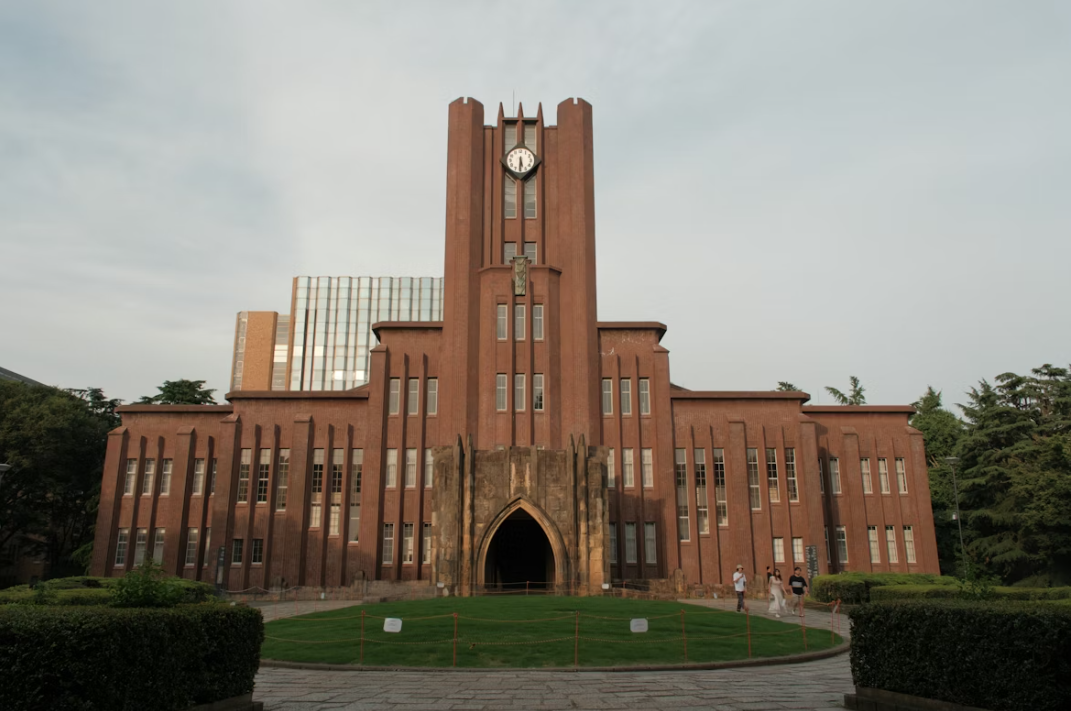
1. University of Tokyo (Todai)
Best for: research, STEM, economics, law, academic prestige
The University of Tokyo is Japan’s flagship university and one of the top universities in Japan for international students. It is a public university that holds a pivotal historical position, having produced a large number of academic luminaries, business tycoons, and political and economic elites, including one Fields Medalist, six Wolf Prize laureates, eight Nobel laureates, 16 Japanese prime ministers, and 21 (Imperial) Diet Speakers. It is an important political, business, and cultural stronghold in Japan, the highest academic institution in Japan, and one of the top scientific research and educational institutions in Asia and even the world. If you want the highest academic reputation and you’re aiming for global graduate school or research careers, UTokyo is the gold standard.
English-taught options: Strongest at graduate level; some English undergraduate tracks exist.
Scholarships: Competitive, but UTokyo has strong scholarship pathways and MEXT applicants often target it.
Tuition: ¥535,800/year
Entrance fee: ¥282,000 (one-time)
Law school: ¥804,000/year
2. Waseda University
Best for: international community, social sciences, business, global careers
Waseda is one of the most international-friendly universities in Japan. It’s private, well-connected, and has a strong reputation both inside Japan and abroad. It’s also one of the easiest top schools to “feel at home” in as a non-Japanese student.
Waseda University, founded in 1882, is one of Japan’s most international universities and, along with Keio University, is considered one of the “two giants” of private universities. Its main campus is located in Shinjuku-Nishi-Waseda, Tokyo, boasting an open and diverse atmosphere and consistently ranking among the top universities in Japan in terms of international student ratio. For many international students seeking an international environment and a central location in Tokyo, Waseda is the top choice.
The university also offers robust resources. Its library system, centered around the Central Library, comprises 30 libraries with approximately 4,270,000 volumes and about 1.8 million visits annually. It supports global search systems, providing a wide range of academic resources. For accommodation, students can choose from various options such as apartments, shared rooms, homestays, or boarding dormitories. While rent in central Tokyo is relatively high, typically requiring 1-2 months’ rent as a deposit and key money, the surrounding area offers convenient living and excellent transportation, making the adjustment period relatively manageable for newly arrived international students.
English-taught options: One of the best in Japan for undergrad English programs.
Scholarships: Plenty of internal scholarships; not always cheap, but more manageable than people expect.
Waseda University Tuition:
Undergraduate: ¥391,000–¥586,000 per year (first academic year)
Graduate School: ¥549,000–¥2,784,000 per year (first academic year)
Student life: Big city energy. Tons of clubs. Very global vibe.

3. Keio University
Best for: business, media, entrepreneurship, strong alumni network
Keio University is often compared to an Ivy-style private university in Japan. Founded in 1858, it is one of the oldest and most prestigious universities in Japan, often considered one of the “two giants” of private universities alongside Waseda University. Its greatest characteristic is its blend of historical depth and pragmatism—Keio boasts a very strong alumni network in the Japanese business, finance, consulting, and technology industries. The main campus is located in Mita, Minato-ku, Tokyo, and while the overall atmosphere is elite, it’s not rigid.
For international students, Keio offers excellent resources. The university has four libraries located on the Mita, Hiyoshi, Yagami, and Shinanomachi campuses, with a total collection of 4,275,823 volumes as of October 2007, providing ample academic resources. In terms of accommodation, Keio provides single rooms in dormitories for some students, with a monthly rent of approximately 44,000–65,200 yen. An additional 20,000 yen maintenance fee is required for the first month, and usually no deposit or key money is required, which is really convenient for international students who have just arrived in Japan.
English-taught options: Available, but not as broad as Waseda in some fields.
Scholarships: Strong internal scholarships; also a popular MEXT target.
Reality check: If you’re career-focused, Keio is a serious advantage.
Keio University Tuition:
- Undergraduate: ¥800,000-1,500,000/year
- The first year’s entrance fee: ¥200,000-1,500,000/year
- Graduate: ¥600,000-1,800,000/year (depending on the graduate school)
- Entrance Fee: From 200,000 yen
4. Sophia University
Best for: humanities, international studies, English-friendly campus life
Sophia University is sometimes overlooked in ranking-based comparisons, yet it is widely regarded as one of the top universities in Tokyo for international students. Sophia University, founded in 1913, has its main campus in Yotsuya, Tokyo, a prime location in Tokyo—close to Shinjuku, Shibuya, and Tokyo Station, making life and commuting extremely convenient. The name “Sophia” itself comes from “divine wisdom,” reflecting the university’s international character and strong language proficiency, making it one of Tokyo’s most popular private universities for international students. Crucially, Sophia’s internationalization isn’t just for show: upon entering the campus, you’ll immediately feel the mingling of Western and Asian students, with English conversations flowing naturally.
If you’re interested in English-taught programs, Sophia has a solid foundation: it established one of the earliest degree-granting English-taught programs in Japan in 1949 and was selected for the Japanese government’s “Global 30” internationalization project in 2009 (one of only 13 universities nationwide). The university is particularly strong in foreign languages, international education, and humanities and social sciences, and also offers graduate programs in theology, human sciences, global studies, science and engineering, and earth and environmental sciences. Sophia doesn’t have on-campus dorms due to its central Tokyo location. The university operates a dedicated men’s dorm in Tokyo and also partners with private student residences, which many female students choose for safety and convenience.
English-taught options: Strong in liberal arts and global studies.
Scholarships: Good support, especially for international programs.
Student vibe: Smaller, more community-based, less intimidating than UTokyo.
5. Hitotsubashi University
Best for: economics, business, policy, high-level academics
In the field of economics, Hitotsubashi University is considered a top university in Japan. and it’s highly respected by employers. It’s smaller and more specialized than UTokyo, which many students prefer. Its main campus is located in Kunitachi City, Tokyo, offering a quiet and comfortable environment with convenient commuting to the city center. Originating from the “Commercial Law Training Institute” founded in 1875, it was known before the war as “Tokyo University of Commerce,” and is one of Japan’s oldest national universities specializing in social sciences. Its character is clear: it doesn’t pursue flashy overall rankings, but rather strives to achieve top-tier status in economics, business, and law—especially in finance, consulting, trading companies, and government agencies, where Hitotsubashi’s alumni network is truly formidable.
Regarding accommodation, Hitotsubashi offers two types of dormitories for international students: the International Exchange Center on campus and the International Student Dormitory. There are approximately 190 single rooms in the International Student Dormitory, with monthly rent ranging from 10,000 to 20,000 yen, but places are allocated by lottery and are extremely limited. If you rent a private apartment off-campus, a room of about 20 square meters usually costs around 40,000 to 50,000 yen per month. However, for the first move-in, you often need to prepare the equivalent of 4 to 6 months’ rent (agency fee, deposit, key money, etc.), so it is recommended to plan your budget in advance.
English-taught options: More limited at undergrad level; stronger for graduate programs.
Scholarships: Competitive but strong for high-achieving applicants.
Reality check: Great for serious business/econ students, less ideal if you want a broad campus experience.
Tuition:
Undergraduate & Graduate Schools: ¥535,800 per year
Research Student (Non-degree): ¥356,400 per year
- Entrance fee: ¥282,200, paid only in the first year
6. Tokyo Institute of Technology
Best for: engineering, computer science, physics, research careers
If you’re STEM-focused, Tokyo Institute of Technology is one of the smartest choices you can make in Japan. It’s research-heavy and globally respected. Tokyo Institute of Technology is one of Japan’s top national universities specializing in science and technology. Its origins can be traced back to 1881, established to train engineers and catch up with Western technology. The university is renowned for its research strength and engineering technology, having produced top scholars such as Hideki Shirakawa, the 2000 Nobel Laureate in Chemistry. Tokyo Tech currently has three campuses (Ookayama, Suzukawadai, and Tamachi), with approximately 10,000 students, including 5,041 master’s and doctoral students, 4,761 undergraduate students, and about 1,053 international students. For international students interested in engineering, computer science, materials science, and information technology, it is one of the most worthwhile options to consider in Tokyo.
English-taught options: Better at graduate level, but improving quickly.
Scholarships: Solid support for strong STEM applicants.
Reality check: Not the most “campus life” school, but academically elite.
Tuition:
- Entrance fee: ¥282,000 (one-time, first year only)
- Annual tuition: ¥535,800
- Paid in two installments: ¥267,900 per semester
- Application fee: ¥17,000 (undergraduate) / ¥30,000 (graduate)
7. Hosei University
Best for: sustainability (GIS), law, social sciences, urban career development, diversity
Hosei University is one of Japan’s oldest and most respected private universities, famously known as the first private law school in the country (founded in 1880). Today, it is a key member of the prestigious “MARCH” group. Unlike the elite-focused atmosphere of Keio, Hosei is celebrated for its “Freedom and Reason” philosophy, offering a more down-to-earth, progressive, and inclusive environment. The main Ichigaya Campus is a stunning high-rise “Boissonade Tower” located in the heart of Tokyo (Chiyoda-ku), offering students unparalleled access to the city’s business and political districts.
For international students, Hosei is a pioneer in global education. It was one of the first Japanese universities to establish a fully English-taught liberal arts faculty (GIS). The university offers extensive support for job hunting in Japan, making it a top choice for students who want to bridge the gap between academics and a professional career in Tokyo. In terms of accommodation, Hosei provides several dedicated international dormitories (like Hosei University International House). Monthly rents typically range from ¥50,000 to ¥85,000, depending on the location and room type. Most university-arranged housing simplifies the process by waiving traditional Japanese “Key Money” (Reikin), which is a huge relief for newcomers.
English-taught options: GIS (Global Interdisciplinary Studies) and GBP (Global Business Program) are highly competitive and well-regarded.
Scholarships: Very generous; international students often receive a 30% tuition reduction automatically upon admission if they meet certain criteria, plus various internal HUDSA scholarships.
Hosei University Tuition:
Undergraduate: ¥1,100,000 – ¥1,500,000/year
First-year Entrance Fee: ¥200,000 – ¥240,000 (One-time)
Graduate: ¥700,000 – ¥1,200,000/year (depending on the program)
Entrance Fee: Approx. ¥200,000
Top Universities in Japan for International Students Outside Tokyo
Tokyo is the easiest entry point, but Japan’s top universities are spread across the country. If you want lower costs, a calmer lifestyle, or a specific academic field, these are excellent options.
Kyoto University
Best for: science, medicine, research, academic prestige
Kyoto University is Japan’s second most prestigious research university after UTokyo. It’s intense, respected, and has a strong global reputation. The university is renowned for its tradition of prioritizing science over humanities, focusing on theoretical research and fostering the Kyoto School of thought, characterized by its “seeking knowledge regardless of practical application,” earning it the reputation as a cradle of scientists. The university boasts numerous research institutes and advanced facilities unique to Kyoto, offering an excellent research environment and producing outstanding results, has 55 branch libraries with a collection of nearly 5 million volumes.
Regarding accommodation, the International Exchange Hall offers short-term dormitories starting at 11,700 yen per month; private apartments cost approximately 25,000–45,000 yen per month, usually requiring key money and a guarantor.
English-taught options: Strong for graduate programs.
Scholarships: Good research funding, especially for STEM.
Annual tuition (undergraduate & most graduate programs): ¥535,800/year
Entrance fee (one-time): ¥282,000
Application/exam fee: varies by program (often around ¥17,000–¥30,000)
Lifestyle: Kyoto is beautiful, historic, and calmer than Tokyo.
Osaka University
Best for: engineering, life sciences, strong campus + city balance
Osaka University is a powerhouse with a slightly more relaxed vibe than UTokyo or Kyoto University. Osaka city is also more affordable than Tokyo and very international-student-friendly. Osaka University is renowned for its strengths in science, engineering, and medicine. The university’s overall atmosphere mirrors the city of Osaka: unpretentious and focused on practical skills and problem-solving, making it particularly popular for students in engineering, life sciences, information technology, and materials science.
For international students, Osaka University offers two practical advantages: its large size and comprehensive range of disciplines, and a significantly lower cost of living compared to Tokyo. Following its merger with Osaka University of Foreign Studies in 2007, the university expanded further while retaining 25 foreign language programs, offering a wide selection of less commonly taught languages. Its library resources are also impressive, with a total collection of approximately 3 million volumes. The main library, covering 18,920 square meters, can accommodate 1.37 million books and has 1,287 seats, making it one of the largest libraries among Japanese national universities. Regarding accommodation, Osaka University has multiple student dormitories, with some costing as little as 4,300 yen per month and others around 5,900 yen per month (an incredibly good deal). However, places are limited, so you usually need to apply as early as possible.
English-taught options: Growing steadily.
Scholarships: Solid options; Osaka is also a cheaper city.
Student life: Great food, friendly locals, strong city energy.
Tohoku University (Sendai)
Best for: research, engineering, supportive campus culture
Tohoku University is consistently ranked among Japan’s best universities. Tohoku University, located in Sendai, is one of Japan’s former Imperial Universities. Founded in 1907, it was the first national university in Japan to officially admit female and international students, a tradition of openness that continues to this day. Many Chinese students are familiar with it—Lu Xun and the mathematician Su Buqing both studied here. The university celebrated its 100th anniversary in 2007.
If you’re considering STEM fields or materials science, Tohoku University is truly exceptional. Known as the “Science Capital of Tohoku,” its Faculty of Science boasts 11 departments and 63 lectureships, making it one of the largest science faculties among Japanese national universities. The Faculty of Engineering also has a very large graduate student body, with over 6,700 master’s and doctoral students, consistently ranking among the top in Japan in fields such as materials science, earthquake-resistant engineering, and new energy. The university library holds approximately 2.75 million volumes, with about 90,000 new volumes added annually. Compared to Tokyo, the cost of living is generally more affordable, making it a popular choice for many international students in STEM fields seeking a combination of high research potential and relatively low living costs.
English-taught options: Good for graduate students.
Scholarships: Strong for research applicants.
Lifestyle: Sendai is safe, affordable, and easier to navigate than mega-cities.
Tuition: ¥535,800/year
Entrance fee: ¥282,000 (one-time)
Law school: ¥804,000/year
Nagoya University
Best for: engineering, science, research, central Japan access
Nagoya University is a strong national university with serious research output. It’s also in a city that’s often overlooked—but very practical. It is one of Japan’s former Imperial Universities, and known for its exceptional research rather than marketing.
If you prioritize research prestige, Nagoya University excels: Professor Ryoji Noyori won the Nobel Prize in Chemistry in 2001; in 2008, its doctoral alumni Toshihide Masukawa and Makoto Kobayashi won the Nobel Prize in Physics for the Kobayashi-Masukawa theory, and Osamu Shimomura won the Nobel Prize in Chemistry for his research on green fluorescent protein. In other words, it’s the kind of school where “Nobel laureates truly emerge from the lab.” The university’s academic atmosphere is also well-defined, often summarized as “freedom, open-mindedness, and ambition.”
For international students, Nagoya University offers another practical advantage: the cost of living is generally more affordable than in Tokyo, while the city itself is large enough to offer ample job opportunities. The university library holds approximately 2.82 million volumes, and its affiliated hospital is large, with 1,035 beds and 29 departments. Regarding accommodation, newly enrolled international students can apply for the International Exchange Hall (furnished). The university offers three dormitory options, with only two move-in opportunities per year: April and October. For example, the international accommodation on campus has a single room of approximately 16 square meters and a monthly rent of approximately 5,900 yen; the international student hall has a single room of approximately 12.5 square meters and a monthly rent of approximately 5,900 yen; and the International Yingming Hall is about a 10-minute walk away, with a monthly rent of approximately 4,700 yen (plus public welfare fees and utilities). Places are limited and require advance application, but if you are selected, the value for money is exceptionally high.
English-taught options: Mostly graduate-focused.
Scholarships: Good for research-based applicants.
Lifestyle: Lower cost than Tokyo, good transport.
Tuition:
Entrance fee (first year only): ¥282,000
Annual tuition: ¥535,800
Hokkaido University (Sapporo)
Best for: STEM, research, and students who want a top university outside Tokyo.
Hokkaido University, one of Japan’s former Imperial Universities, originated as Sapporo Agricultural School founded in 1876 and is one of the earliest universities in Japan to grant bachelor’s degrees. The main campus is located in the heart of Sapporo, and its most distinctive feature is its sheer size and beauty. Spanning approximately 1.77 million square meters, the Sapporo campus boasts over 10 student cafeterias, making it feel like a small university town. Classic photo spots include the poplar-lined avenue and the Hokkaido University Museum.
From the perspective of international students, Hokkaido University’s advantages are very practical: it possesses top-tier research capabilities in science, engineering, agriculture, medicine, and social sciences, consistently ranking among the top 6 in Japan for overall research strength, and ranking approximately 100-150 globally (according to ARWU and THE rankings). In 2010, Professor Akira Suzuki of the Faculty of Engineering at Hokkaido University won the Nobel Prize in Chemistry. The university currently comprises 12 faculties, 13 graduate schools, and 5 major research institutes. In addition to the main campus in Sapporo, Hokusai University also has a College of Fisheries and a Graduate Institute in Hakodate, which is suitable for students interested in marine and fisheries science.
English-taught: Some programs (mostly graduate).
Scholarships: Strong for research-track students.
Lifestyle: Lower cost than Tokyo; Sapporo is clean, safe, and easy to get around.
Tuition: ¥535,800/year + ¥282,000 entrance fee.
Why Choose Japan as an International Student
Academic Reputation (A Degree That Actually Carries Weight)
Japan has produced around 30 Nobel Prize winners across fields such as physics, chemistry, medicine, literature, and peace — one of the highest totals in Asia and a sign of its deep research strengths. While major Western countries like the United States and the United Kingdom have larger totals overall, Japan’s contribution to scientific discovery and academic achievement is internationally recognized.
In global university rankings, Japan consistently performs at a high level. According to QS — one of the most widely cited international ranking systems — more than ten Japanese universities are ranked within the world’s top 200. This places Japan among the countries with the highest concentration of top-tier universities in Asia.
For international students, this means access to institutions with established global credibility, strong research infrastructure, and internationally connected faculty networks. A degree from a leading Japanese university is not only regionally respected, but also globally recognized in academic and professional circles.
Japan Is a High-Value Choice—You Can Save Real Money
If you’re trying to get a globally respected degree without paying US/UK-level tuition, Japan is honestly one of the best countries to study abroad. Tuition is genuinely affordable — especially at national universities — and your total cost for a full degree can be far more manageable than many other popular destinations.
Typical annual tuition in Japan:
National universities: about ¥535,800/year (≈ US$3,700)
a one-time entrance fee of around ¥282,000
Private universities: usually ¥800,000–¥1,500,000/year, depending on the program
Living costs also depend heavily on location:
Tokyo: roughly ¥100,000–¥150,000/month
Regional cities: often ¥75,000–¥110,000/month (sometimes even lower)
International students can typically work up to 28 hours per week with the proper visa permission, which helps cover daily expenses like rent, food, and transport. When you combine tuition, living costs, part-time work, and scholarships, Japan becomes a study destination where saving money is actually realistic — not just a marketing line.
Quality of Life (Safety and Comfort—A Better Student Experience)
Japan is widely seen as one of the safest countries in the world, and Tokyo and Osaka are among the safest cities in the world for international students. That’s not just a “nice bonus” — it changes your day-to-day life. It means you can take late trains home after class, walk around at night without constantly checking your surroundings, and generally feel less stressed while living abroad alone. That sense of everyday safety is a big reason many students say Japan feels easier to settle into compared with other major study destinations.
On top of safety, Japan’s infrastructure makes student life smoother. Public transport is punctual and efficient, cities are clean, and basic services simply work — which matters more than people expect when you’re juggling classes, part-time work, and paperwork in a new country. Tokyo and Osaka offer modern, international city life with strong career networks, while places like Kyoto, Sendai, Sapporo, and Tsukuba tend to be quieter and more affordable without sacrificing comfort.
And honestly, the lifestyle perks are real too. Japan’s food culture is a huge part of the experience — from affordable student meals to world-class ramen, sushi, and convenience store options that actually taste good. When you combine safety, efficiency, cultural depth, and everyday livability, Japan becomes not just a place to study, but a place where many international students genuinely enjoy living.
How to Choose the Right University in Japan
Location (Tokyo vs regional cities)
English-taught availability
Budget
Career goals
Research vs coursework
Application Tips (Practical)
Applying in Japan usually involves:
Choosing the right degree and language track (English/Japanese).
Meeting academic and language requirements (e.g., TOEFL/IELTS).
Submitting a statement of purpose, transcripts, and test scores.
Visa application after acceptance.
👉 Many guides note that the process looks daunting at first, but becomes manageable once you break it into steps and start early.
Scholarships
Japan has both governmental and university-level funding options. For example:
MEXT Scholarships: Highly competitive but cover tuition, living costs, and airfares. Reddit threads show students favor programs that are MEXT-endorsed.
University scholarships: Many top schools from Tokyo to Kyoto offer merit and need-based aid.
How uhomes.com Helps Students Settle in Japan
The hardest part of renting student housing in Japan isn’t finding a place, it’s dealing with hidden costs, confusing procedures, and outdated listings. uhomes.com solves all of this for international students and working professionals.
The platform emphasises real properties and the latest updates, so you don’t have to worry about encountering a bunch of outdated or fake listings. You can directly view student accommodations in Tokyo and other cities online using VR, filter by distance to your university, choose furnished units with amenities you want; quickly finding your ideal apartment within a 30-minute commute is simple.
Renting apartments near University of Tokyo or Waseda University can be competitive and expensive, but uhomes.com makes it easier with no agency fees, no key money, and low security deposits, cutting your upfront costs significantly.
Once you receive your school offer, you can browse, choose, and sign your apartment contract online, avoiding the stressful housing rush. uhomes.com helps you secure your place early and move in smoothly, whether you’re a student or a working professional.
Final Thoughts
Choosing where to study is a personal journey — but if you’re focused on global opportunity, strong academic reputation, and vibrant student life, Tokyo’s universities like the University of Tokyo, Waseda, and Keio should be at the top of your list. And beyond Tokyo, schools like Kyoto University, Osaka University, and Hokkaido University offer excellent alternatives. Start early, research programs carefully, and use resources like scholarships and English-taught degrees to make your study abroad dream a reality in Japan.
FAQs about Universites in Japan for International Students
Which universities in Japan are best for international students?
The top 10 best universities in Tokyo and Japan for international students include the University of Tokyo, Waseda University, Keio University, Tokyo Institute of Technology, Kyoto University, Osaka University, Tohoku University, Nagoya University, Hokkaido University, and the University of Tsukuba. This list covers the strongest universities overall, combining global reputation, research strength, and international student support.
What are the best universities in Tokyo for international students?
The best universities in Tokyo for international students include the University of Tokyo, Waseda University, Keio University, Tokyo Institute of Technology, and Sophia University. Tokyo schools are popular because they offer stronger global networks, more internship opportunities, and a wider range of English-friendly services.
Is it hard to get into a top university in Japan as an international student?
Yes, top universities in Japan can be competitive, but the process is often more structured and predictable than many students expect. For graduate programs, research fit and proposal quality matter a lot; for undergraduate programs, language track and entrance requirements matter most.
Can I study in Japan in English?
Yes — you can study in Japan in English, especially at the graduate level. Many top universities offer full English-taught degrees or English-track programs, and Japan’s Global 30 initiative helped accelerate this shift.
Is studying in Japan affordable compared with the US or UK?
Yes, Japan is often much more affordable than the US or UK, especially at national universities. Most national universities charge a standardized tuition of ¥535,800 per year, plus a one-time entrance fee of ¥282,000.
Which Japanese universities have the strongest job outcomes?
Schools like the University of Tokyo, Kyoto University, Osaka University, Waseda, Keio, and Hitotsubashi are known for strong employer recognition. In Tokyo especially, students benefit from access to major companies, alumni networks, and internship pipelines.
Do I need a Japanese EJU score to apply universities in Japan?
Most Japanese-taught programs require the EJU (Examination for Japanese University Admission). However, if you apply for English-taught programs—such as Hosei’s GIS or Keio’s GIGA—universities typically prioritize SAT/ACT and TOEFL/IELTS scores instead. We recommend confirming “Pre-arrival Admission” options one year in advance to secure your spot without traveling to Japan for testing.
How much is the average monthly rent for students in Japan, and can part-time jobs cover it?
Monthly rent in Tokyo generally ranges from ¥55,000 to ¥85,000. Under Japanese law, students can legally work 28 hours per week on a student visa. With Tokyo’s average hourly wage (approx. ¥1,100–¥1,300), you can earn about ¥120,000 per month. This typically covers rent and groceries, though you should save separately for your first-year tuition and entrance fees.