


There are 10 main types of houses in the UK: detached houses, semi-detached houses, mid-terraced houses, end-terraced houses, back-to-back houses, bungalows, cottages, townhouses, flats, and maisonettes. They differ mainly in price, structure, living space, privacy and overall layout.
This guide explains the key features of each housing type, who they are best suited for, and what you should consider before choosing a home in the UK. Below, we take a closer look at the main types of British houses and what makes each one different.
What are the main types of houses in the UK?
1. Detached house
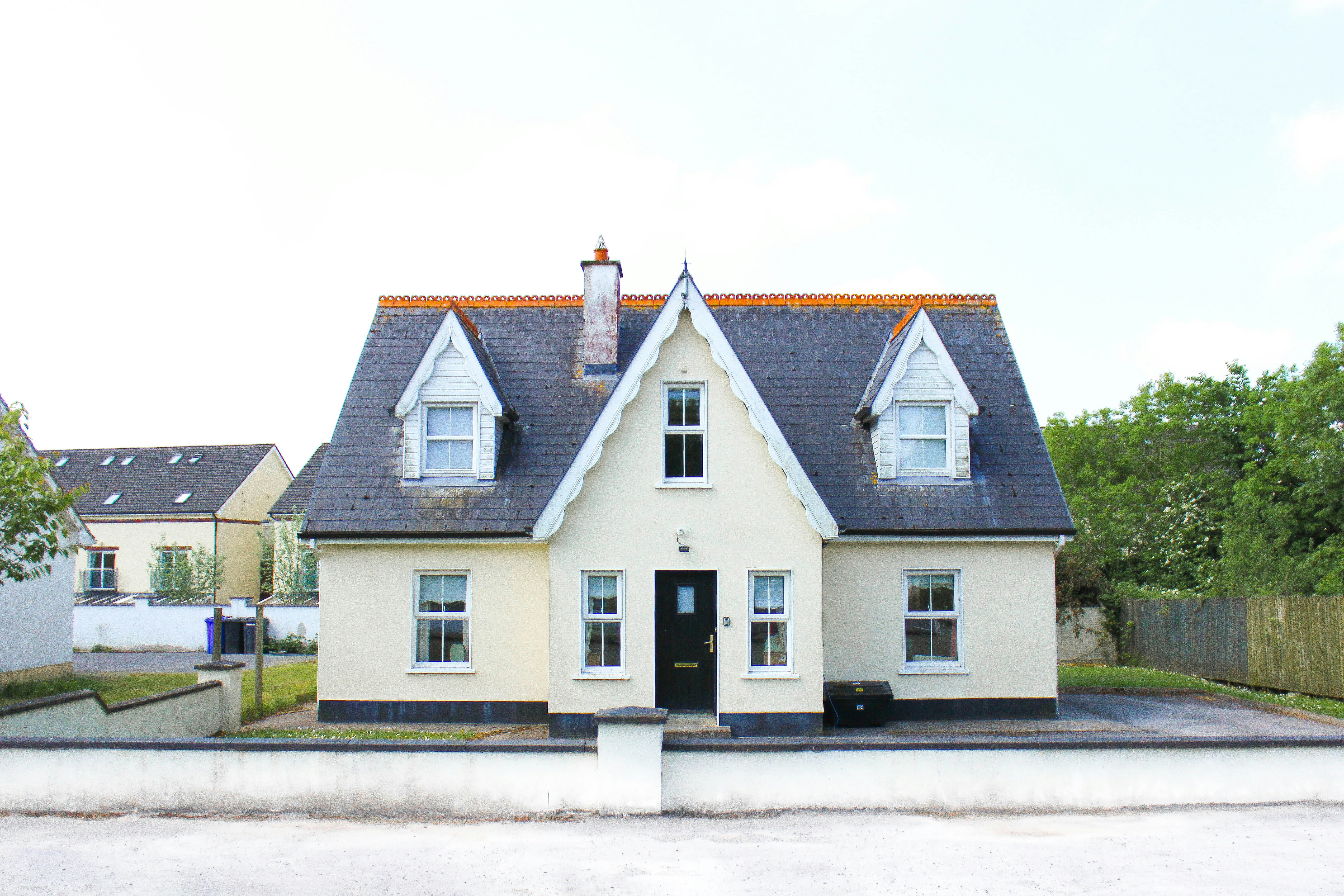
A detached house stands on its own and does not share walls with other homes. It usually gives you more space and privacy, but it may cost more and need more upkeep.
Pros and cons of detached houses in the UK
Pros:
- More privacy: With no shared walls, there is usually less noise from neighbouring homes.
- More space: Detached houses often have larger indoor and outdoor areas, such as a private garden and garage.
Cons:
- Higher price: Detached houses are generally the most expensive property type in the UK. According to the UK House Price Index, the average detached house cost around £440,564 in December 2025.
- Less availability in city centres: Detached houses can be harder to find in densely populated urban areas.
Detached houses are best suited to families or individuals who want more privacy and space and are comfortable with higher housing and maintenance costs.
2. Semi-detached house
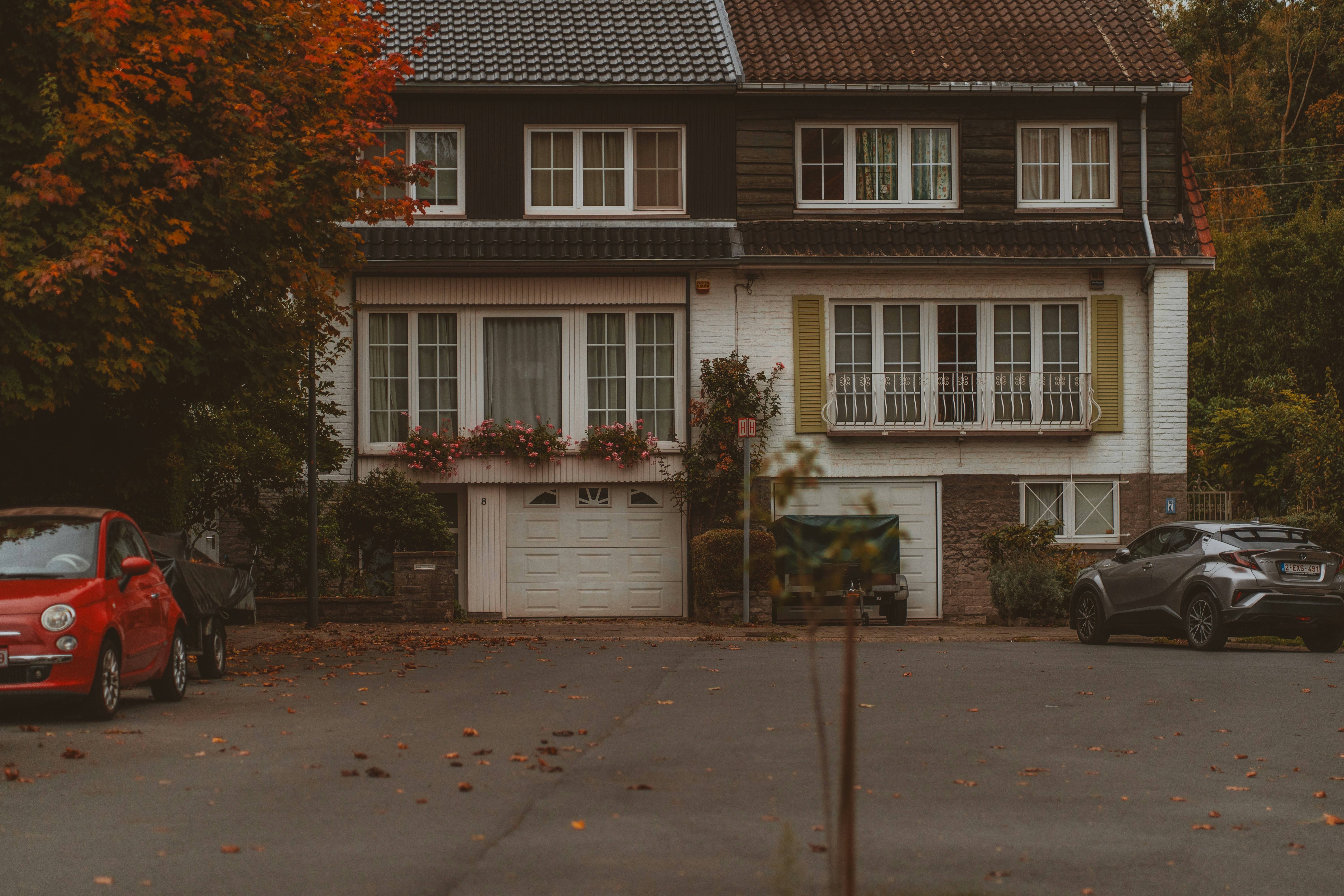
A semi-detached house is one of a pair of homes joined together by a single shared wall, while the other three sides remain separate. As one of the most common types of housing in England, it offers a middle ground between a detached house and a terraced home, providing more privacy than a terraced house but usually at a lower price than a detached property.
Pros and cons of semi-detached houses in the UK
Pros:
- More affordable than a detached house: Semi-detached homes generally cost less than detached properties. According to the UK House Price Index, the average semi-detached property cost £277,332 in June 2026.
- More privacy than a terraced house: With only one shared wall, there are fewer immediately adjoining neighbours.
- Often comes with outdoor space: Many semi-detached homes have a private front or back garden.
Cons:
- Shared-wall noise: Noise can travel through the party wall, depending on the property’s construction and soundproofing.
- Party wall considerations: Some renovation work, such as loft conversions, extensions or removing a chimney breast, may affect the shared wall and require the homeowner to notify their neighbour under the Party Wall etc. Act 1996.
Semi-detached houses are best suited to families, couples or buyers who want more space and privacy than a terraced house, but at a lower cost than a detached home.
3. Terraced house
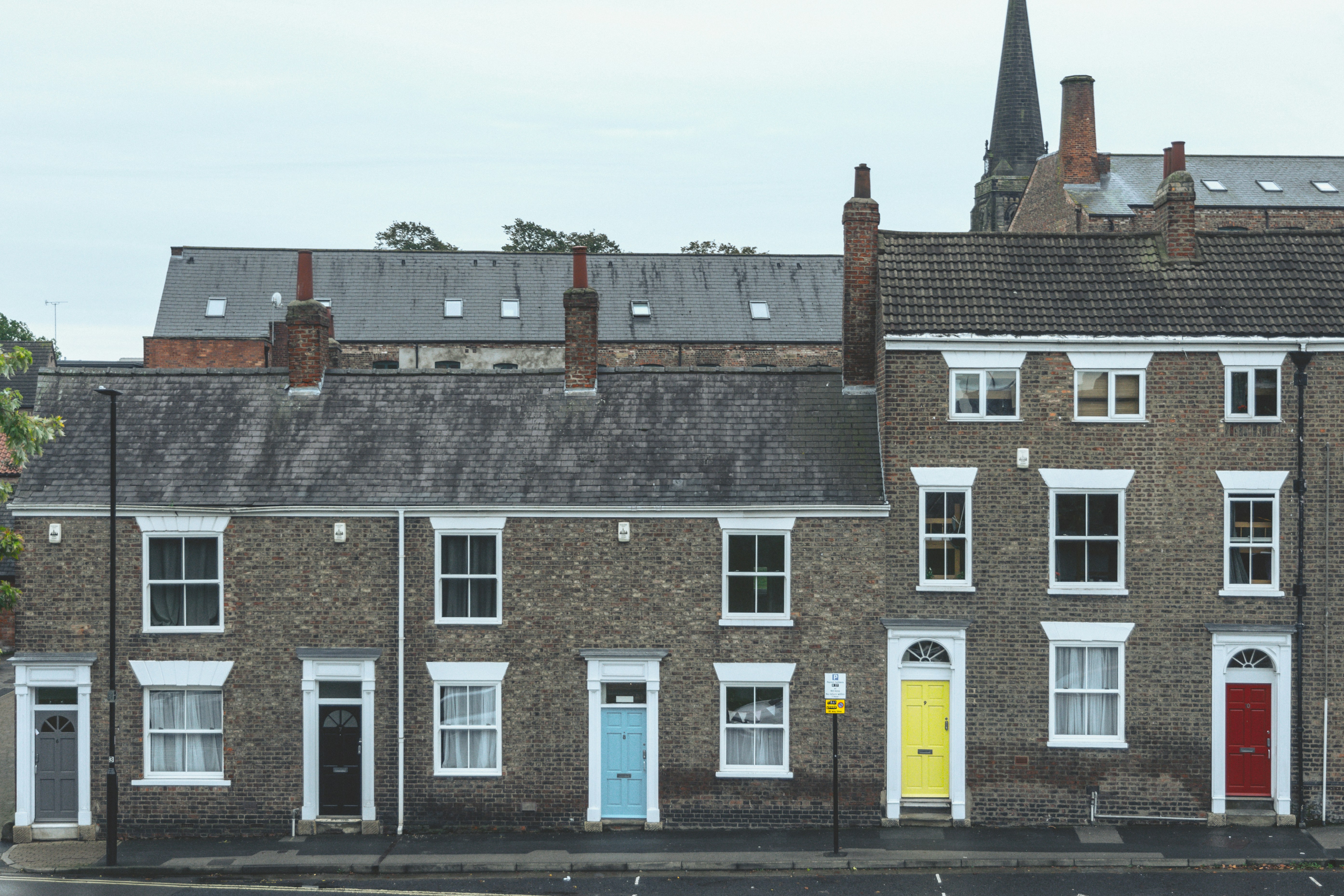
A terraced house is one of a row of homes built side by side, with each property sharing one or two walls with its neighbours.
Pros and cons of terraced houses in the UK
Pros:
- More affordable than detached and semi-detached houses: Terraced houses are generally cheaper than larger house types. According to the UK House Price Index, the average terraced house cost £230,994 in June 2026.
- Good urban locations: Many terraced houses are found in established residential areas close to shops, schools and public transport.
Cons:
- Less privacy: Mid-terrace homes usually share walls with neighbours on both sides, so there may be more noise from adjoining properties.
- Limited outdoor space: Some terraced houses have smaller gardens or less private outdoor space than detached or semi-detached homes.
4. End-of-terrace house
An end-of-terrace house is the property at either end of a row of terraced houses and is one of the common types of housing in England. Unlike a mid-terraced house, which usually shares walls on both sides, an end-of-terrace house shares only one wall with a neighbouring property. This often gives it more privacy, additional natural light and, in some cases, extra side space or access.
Pros and cons of end-of-terrace houses in the UK
Pros:
- More privacy: An end-of-terrace house shares only one wall with a neighbouring property, so it generally offers more privacy and less potential noise than a mid-terraced house.
- Potential for extra outdoor space: Some end-of-terrace houses have side access, a wider garden or additional space around the property, although this varies from home to home.
Cons:
- Usually more expensive: End-of-terrace houses often cost more than comparable mid-terraced properties because they offer greater privacy and only one shared wall.
- Still has a shared wall: Although it offers more privacy than a mid-terraced house, you still share one wall with a neighbour, so some noise may still be noticeable.
Mid-Terraced vs End-Terraced Houses in the UK
| Feature | Mid-Terraced | End-Terraced |
|---|---|---|
| Shared walls | Two | One |
| Privacy | Less | More |
| Natural light | Usually front and rear | May also have side windows |
| Heat loss | Usually lower | May be slightly higher due to an exposed side wall |
| Price | Often cheaper | Often slightly more expensive |
So if you want to keep costs down, a terraced house can be worth considering. Mid-terraced homes are often cheaper and may retain heat better, while an end-terraced home can give you a little more privacy and natural light.
5. Back-to-back house
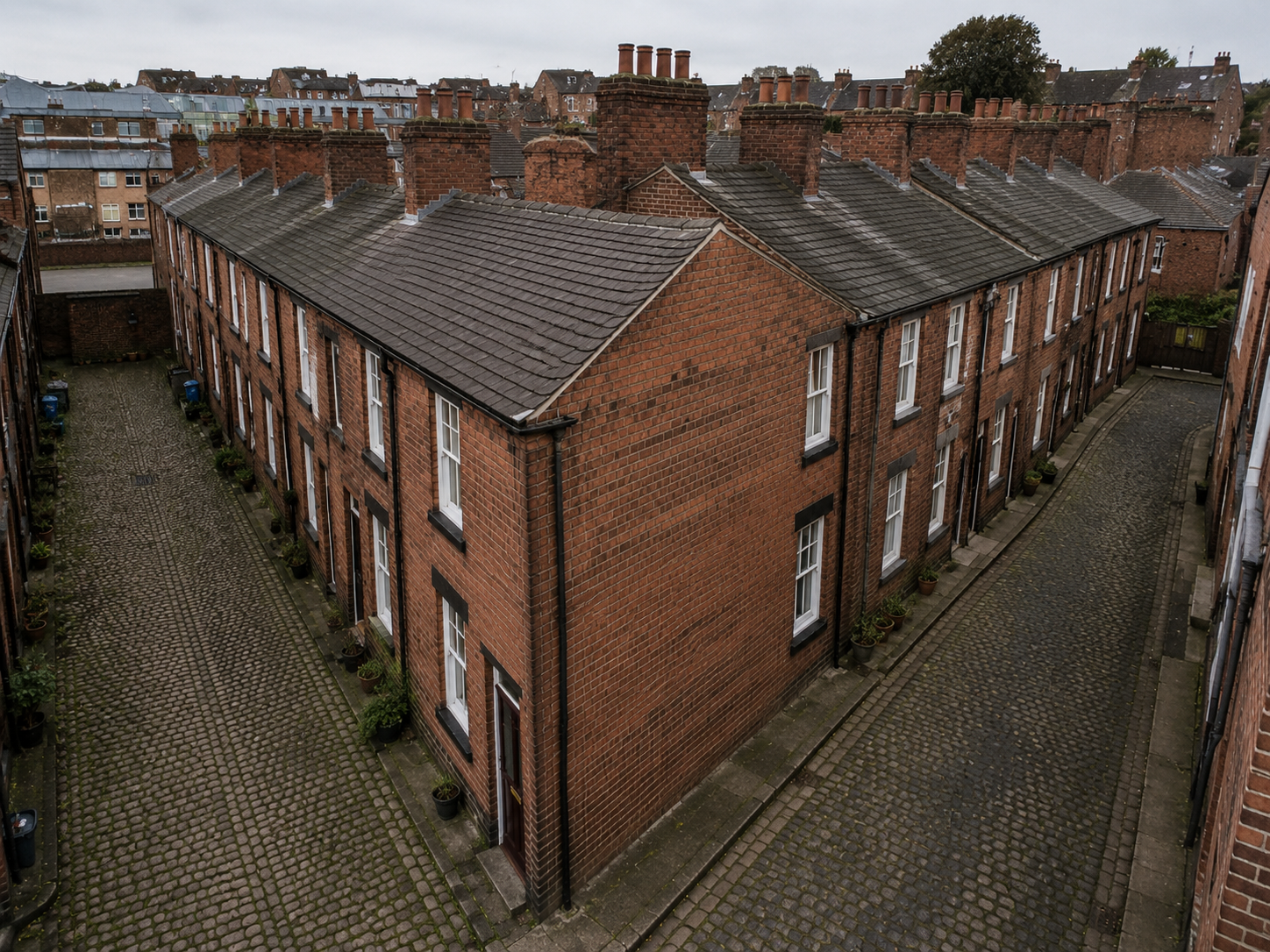
Among the less common types of houses in England, a back-to-back house is built directly against another home at the rear, with the two properties sharing a back wall. Many traditional back-to-back houses also share side walls with neighbouring homes, leaving most windows and access at the front.
Back-to-back houses became common in industrial towns during the 19th century, particularly in cities such as Leeds and Birmingham. While many were later demolished, a number still survive today, especially in Leeds.
Pros and cons of back-to-back houses in the UK
Pros:
- Often more affordable: Their compact size can make them a more affordable option than larger house types in the same area.
- Convenient urban locations: Many surviving back-to-back homes are found in established inner-city neighbourhoods, particularly in Leeds.
- Distinctive character: Older back-to-back homes can retain features associated with Britain’s industrial housing history.
Cons:
- Limited natural light: With the rear and often both side walls shared, there are fewer places for windows.
- Limited ventilation: Fewer external walls and windows can reduce natural airflow.
- Fire-safety considerations: Some traditional layouts have only one main escape route from the property.
- Older housing stock: Many surviving examples are older properties and may require improvements to insulation, heating or general maintenance.
Back-to-back houses are best suited to budget-conscious buyers or renters who prioritise affordability and a convenient inner-city location over space, natural light and modern facilities.
6. Bungalow
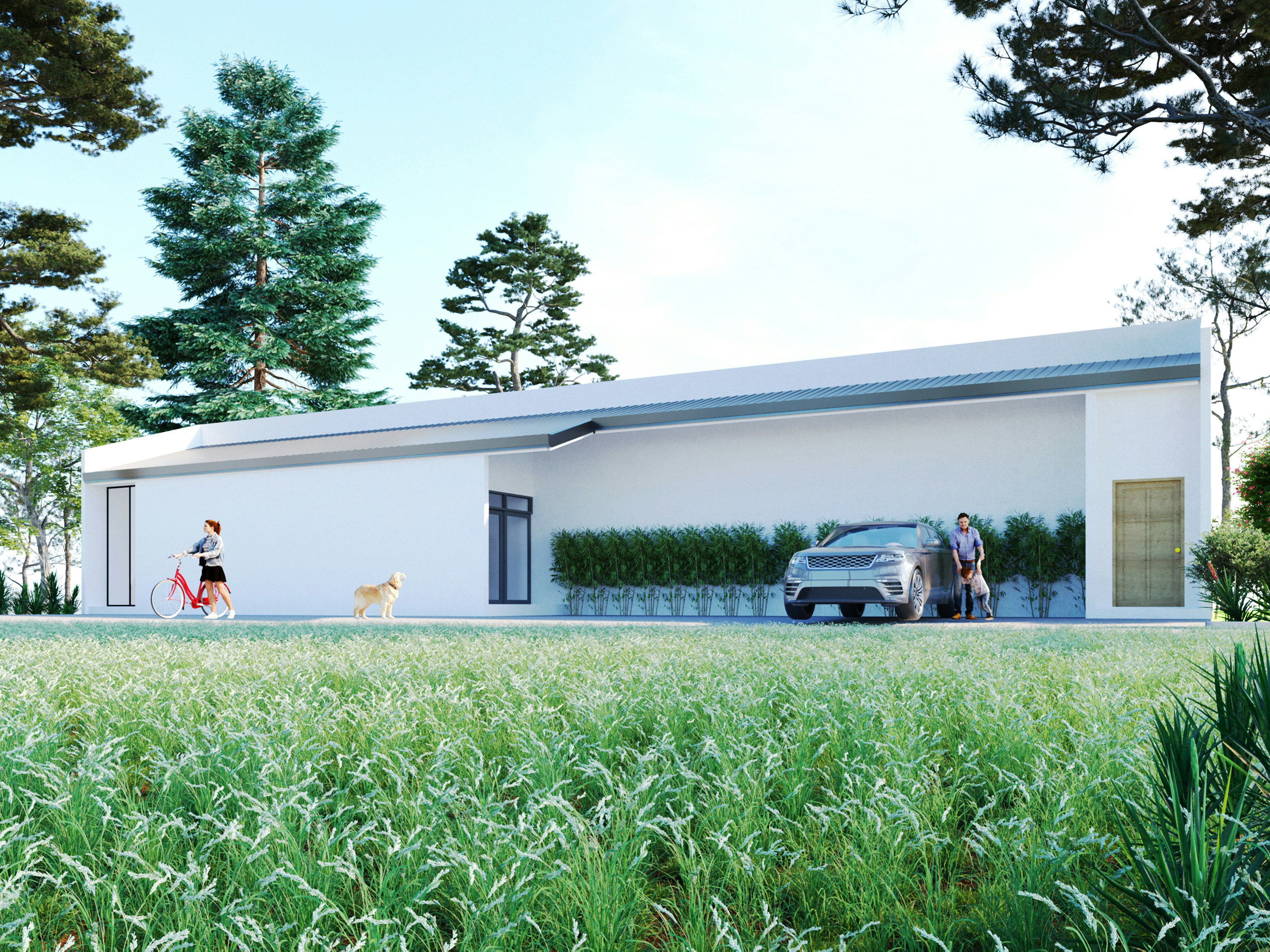
A bungalow is a house where most or all of the living space is on one floor. Some bungalows also have an extra room or half-storey built into the roof. Unlike many other types of homes in England, there is usually no need to move between different floors for everyday living, which makes bungalows particularly convenient for older people or anyone with limited mobility.
Pros and cons of bungalows in the UK
Pros:
- Easy to move around: With everything on one floor, there are no stairs to deal with, making bungalows particularly suitable for older people and those with limited mobility.
- Potential to extend: Some bungalows offer scope for rear extensions or loft conversions, subject to planning permission and building regulations.
Cons:
- Less living space: A single-storey layout can mean fewer rooms than a two-storey house occupying a similar amount of land.
- Energy efficiency can vary: Bungalows are not necessarily cheaper to heat. In the English Housing Survey, 54% of bungalows were rated EER D in 2022, showing that energy performance can vary considerably depending on the age and condition of the property.
Bungalows are best suited to older people, people with limited mobility, or anyone who prefers the convenience of having most living spaces on one floor.
7. Cottage
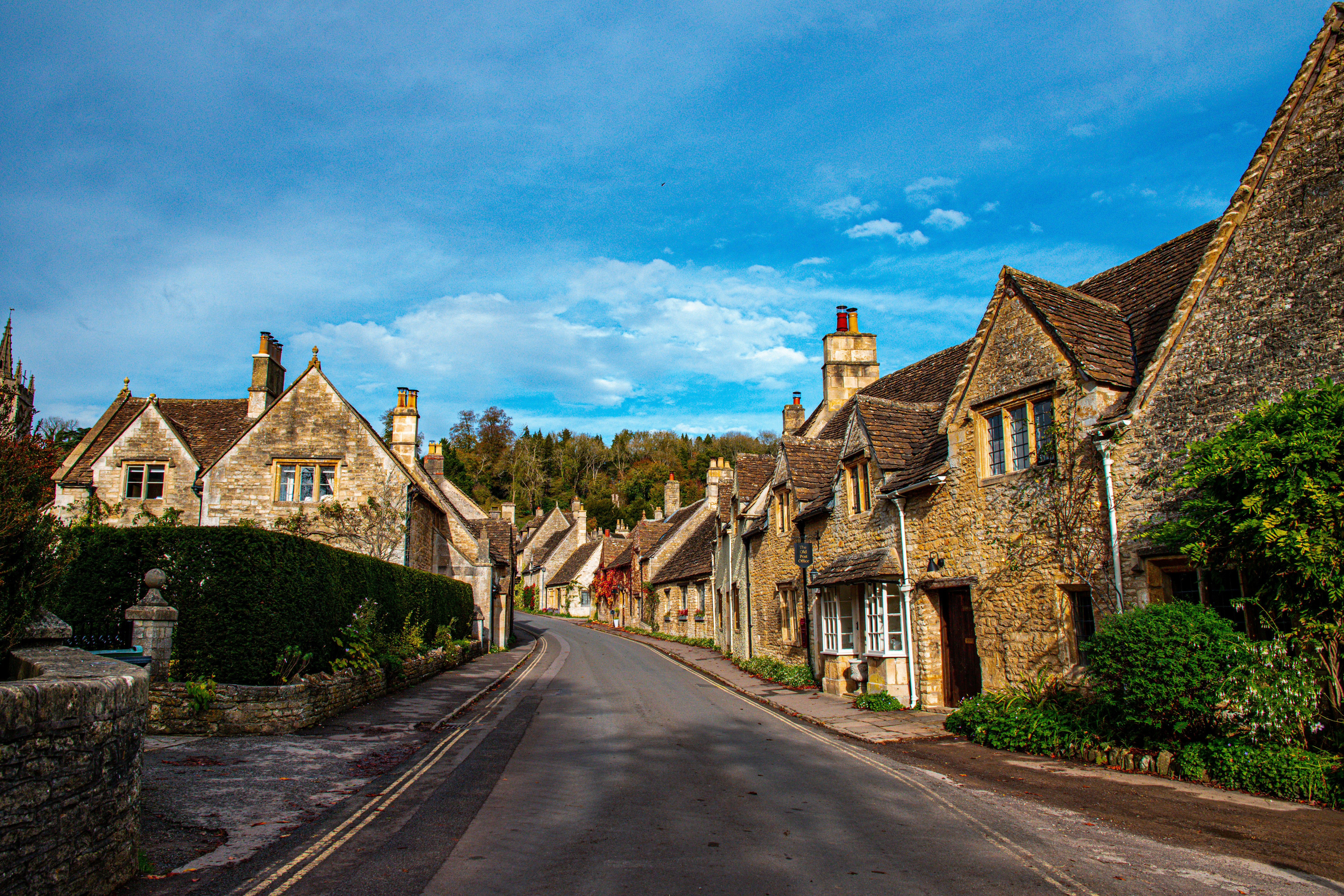
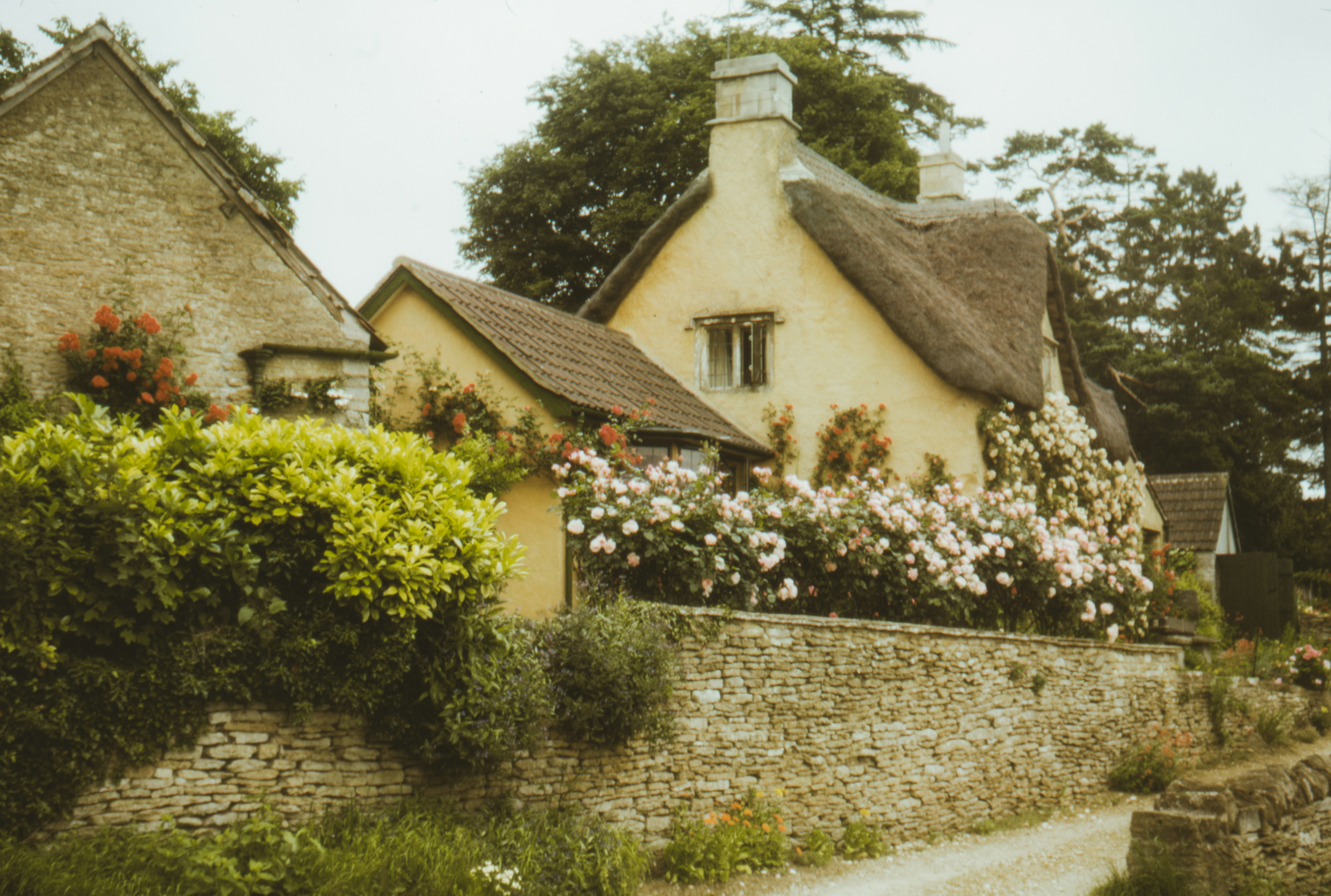
A cottage is typically a small house, often found in the countryside or in a village. Among the more traditional types of homes in England, cottages are often associated with older buildings, compact layouts and distinctive architectural features such as stone or brick walls, exposed beams and thatched or tiled roofs.
Not every cottage looks the same, though. Some are centuries old, while others are newer homes built in a traditional cottage style.
Pros and cons of cottages in the UK
Pros:
- Peaceful surroundings: Many cottages are located in villages or rural areas, away from busy city centres.
- Outdoor space: Some cottages come with private gardens or larger plots of land.
- Privacy: Rural cottages may have fewer immediate neighbours than homes in densely built-up areas.
Cons:
- Limited transport links: Rural locations can mean greater reliance on a car and fewer nearby public transport options.
- Restrictions on renovations: If a cottage is listed or located in a conservation area, certain alterations may require additional consent.
Cottages are best suited to people who prefer a quieter lifestyle, value privacy and outdoor space, and do not mind living farther from city centres or relying more on a car.
8. Townhouse
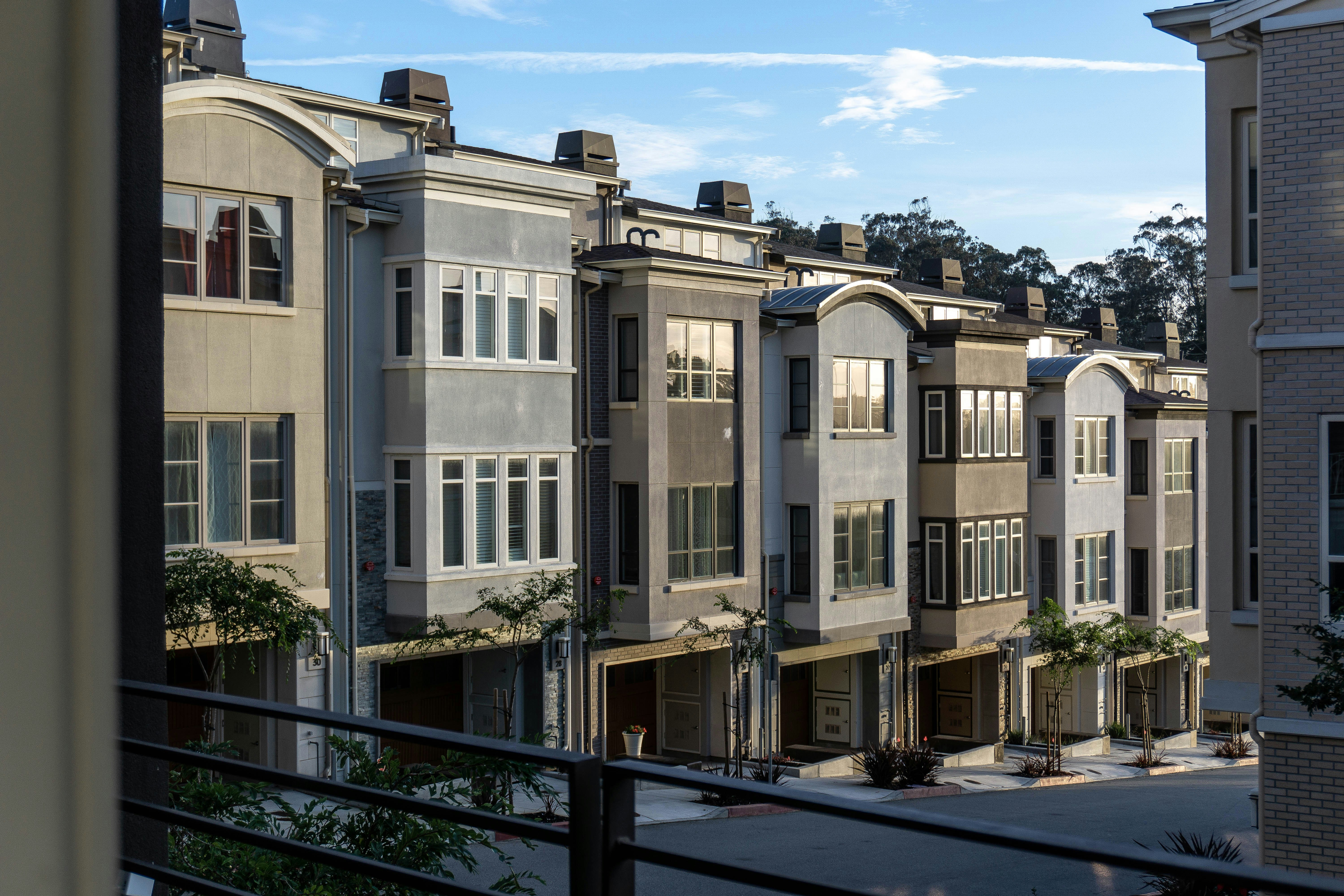
A townhouse is one of the common types of homes in England, typically designed as a tall, narrow home arranged over three floors. Many townhouses are built in a row and share walls with neighbouring properties, although semi-detached and detached townhouses can also be found. Their vertical layout allows more living space to fit onto a relatively small plot of land.
Pros and cons of townhouses
Pros:
- More living space: Three-storey layouts can provide several bedrooms and separate living areas without requiring a large footprint.
- Suitable for larger households: The additional floor can provide useful extra bedrooms or flexible living space.
Cons:
- More stairs: Moving between several floors every day may be inconvenient for young children, older people or anyone with limited mobility.
- Shared-wall noise: Terraced townhouses may share one or two walls with neighbouring properties.
Townhouses are best suited to larger households, families with older children, or people who want several bedrooms and flexible living space without needing a large plot of land.
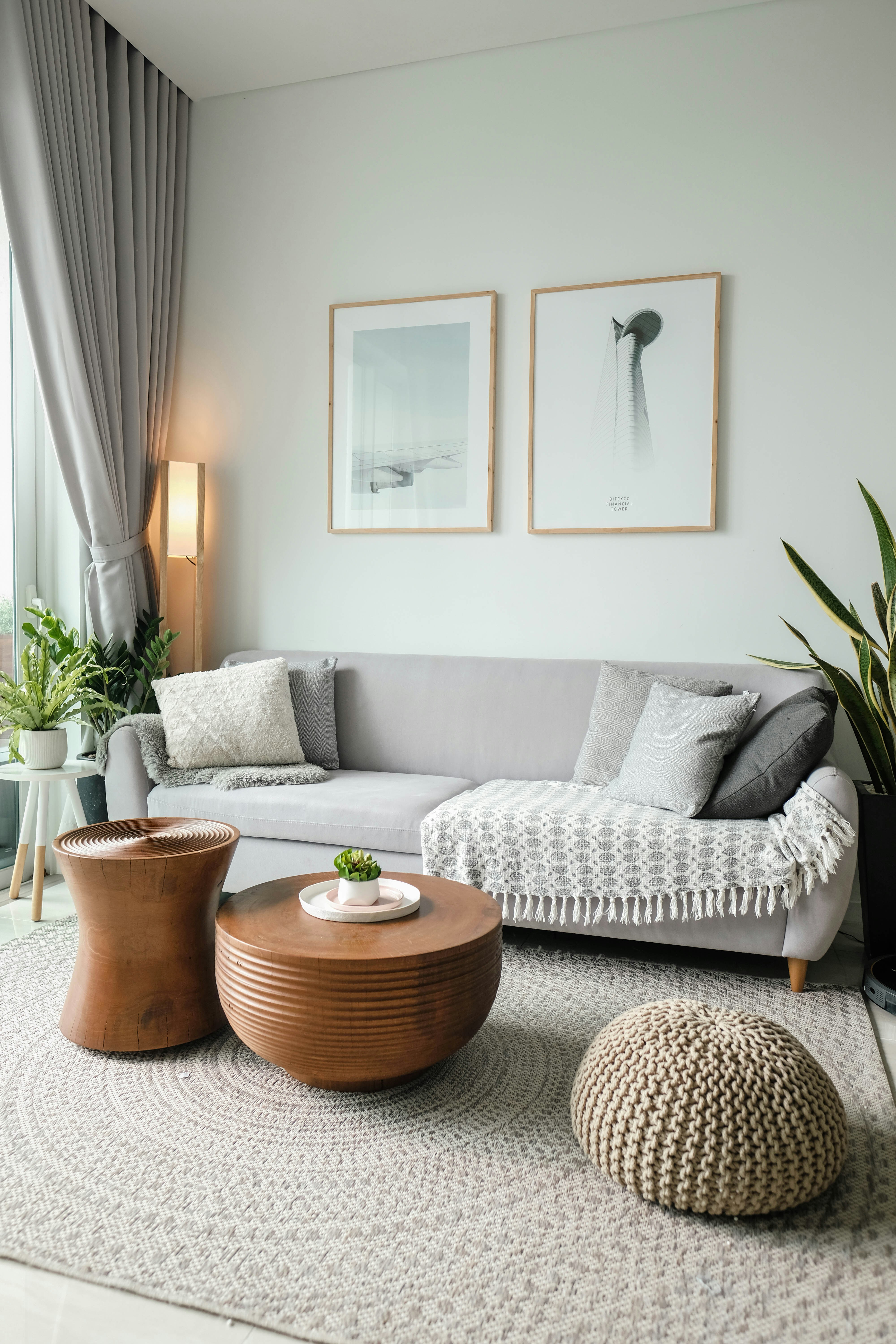
9. Flat
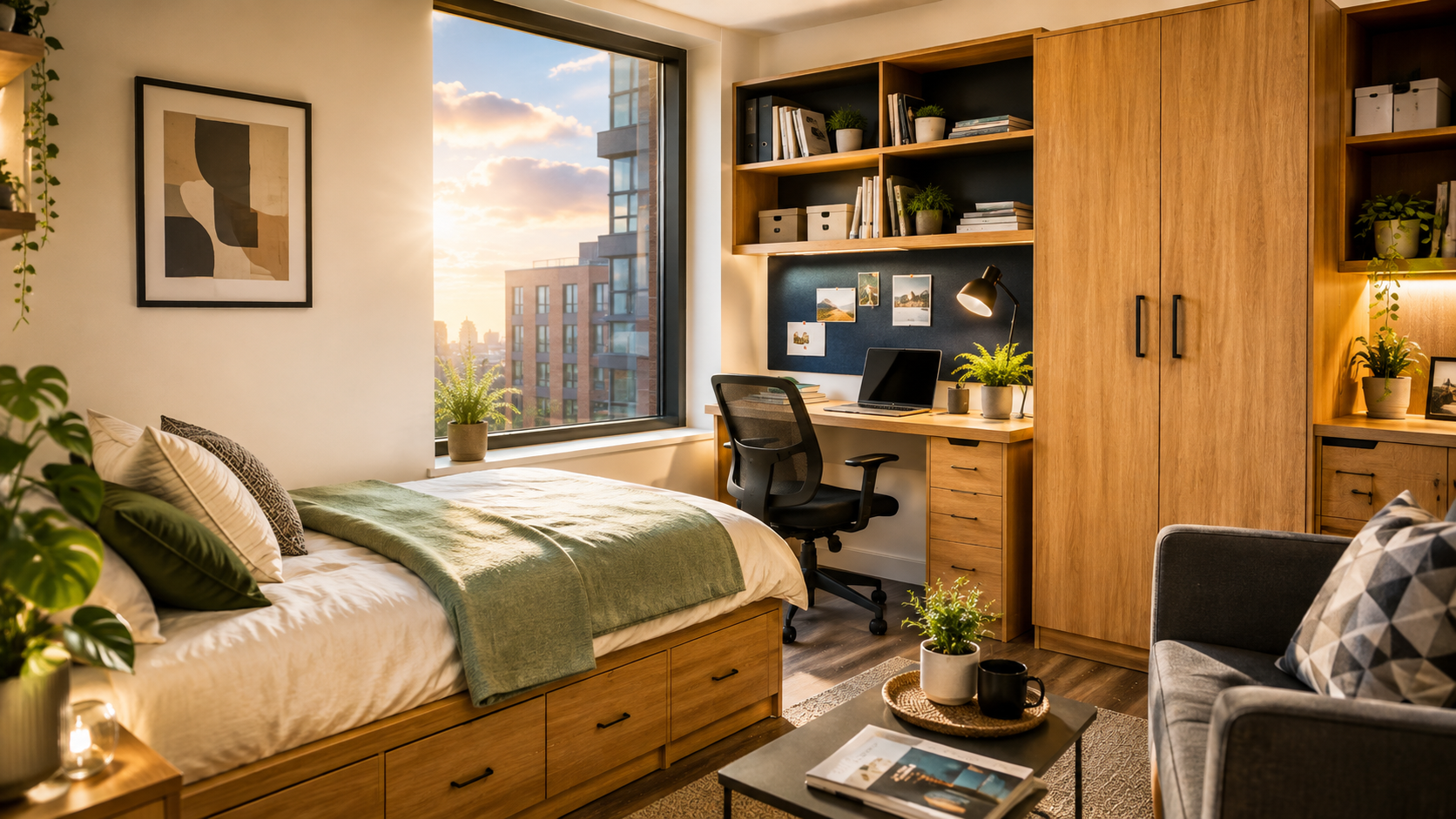
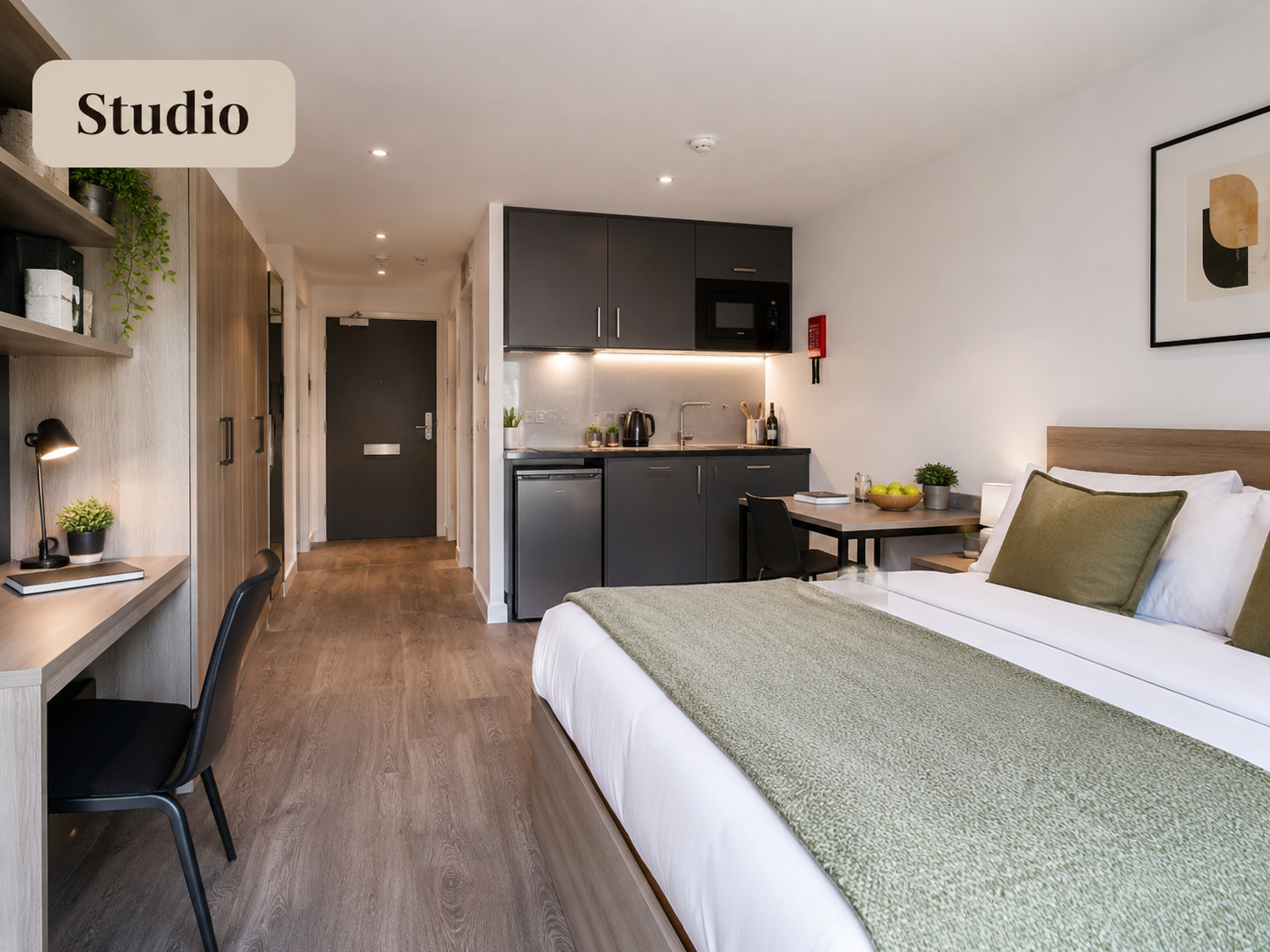
A flat in the UK is a self-contained home within a larger residential building. Flats dominate city-centre housing stock and are the most common accommodation type in London, where purpose-built and converted flats make up more than half of all dwellings. For students moving to university cities, purpose-built student accommodation, typically studios or shared flats close to campus, is usually the most practical option, since it combines lower upfront costs, bills-inclusive contracts and shorter tenancy lengths than a standard house share. Platforms such as uhomes.com list studio, en-suite and shared flat options across cities including Edinburgh, Manchester, Southampton and Newcastle, which makes comparing student-specific flats considerably faster than searching the general rental market.
For students, you will also need to consider how much space and privacy you want, how close the property is to your university and public transport, whether you are happy to share facilities, and what fits your budget.
Common Types of Flats and Student Rooms in the UK
| Type | Bathroom | Kitchen | Good Choice If You… |
|---|---|---|---|
| Studio | Private | Private | Want to live independently. |
| One-bed apartment | Private | Private | Want more space and separate rooms. |
| Two-bed apartment | Usually shared | Shared | Want to live with a friend. |
| En-suite room | Private | Shared | Want privacy but still enjoy shared living. |
If privacy is your priority, a studio or one-bedroom apartment may suit you better. If you want to keep costs down or prefer living with other students, an en-suite room or a shared two-bedroom apartment can be a more practical option.
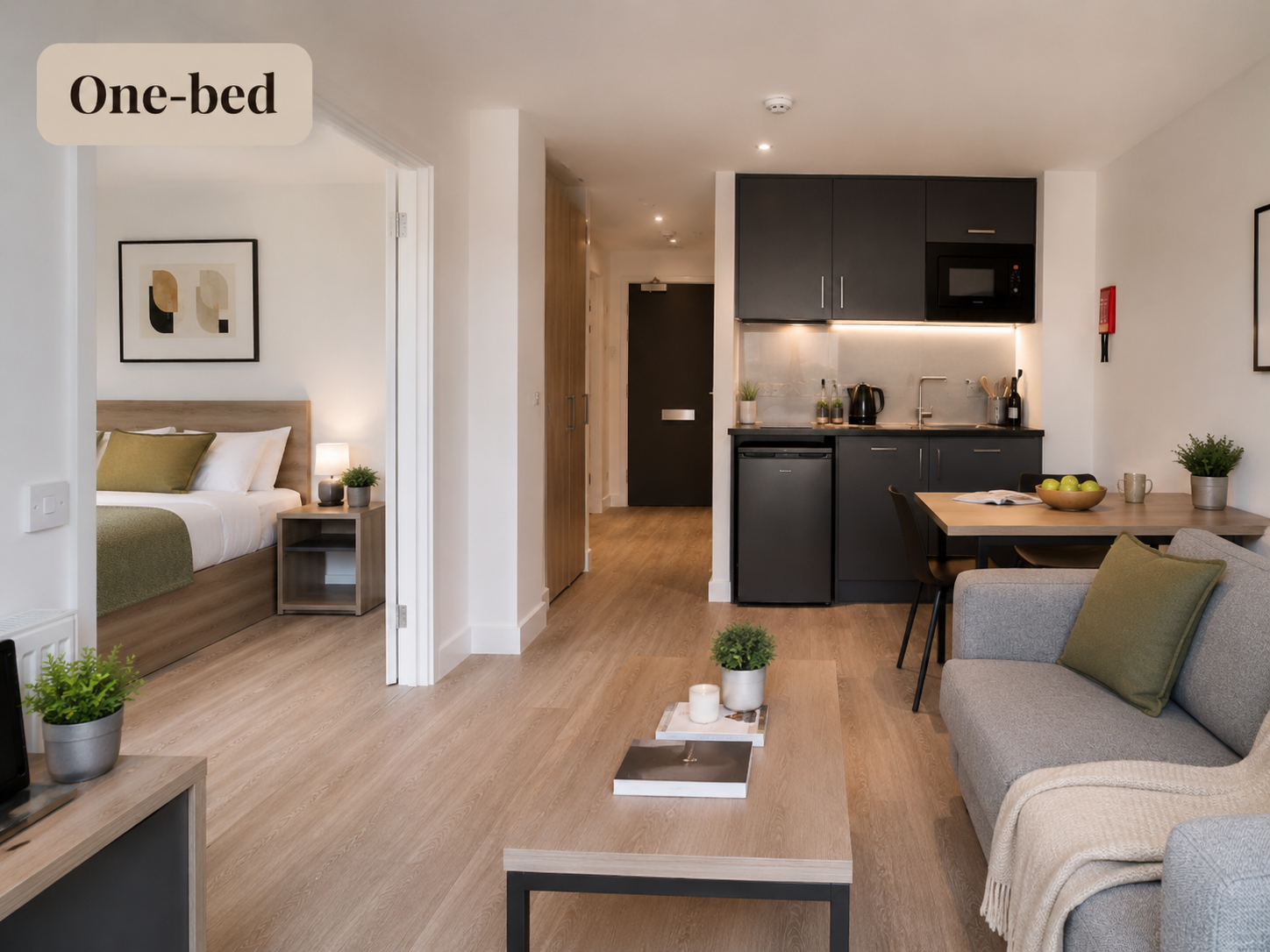
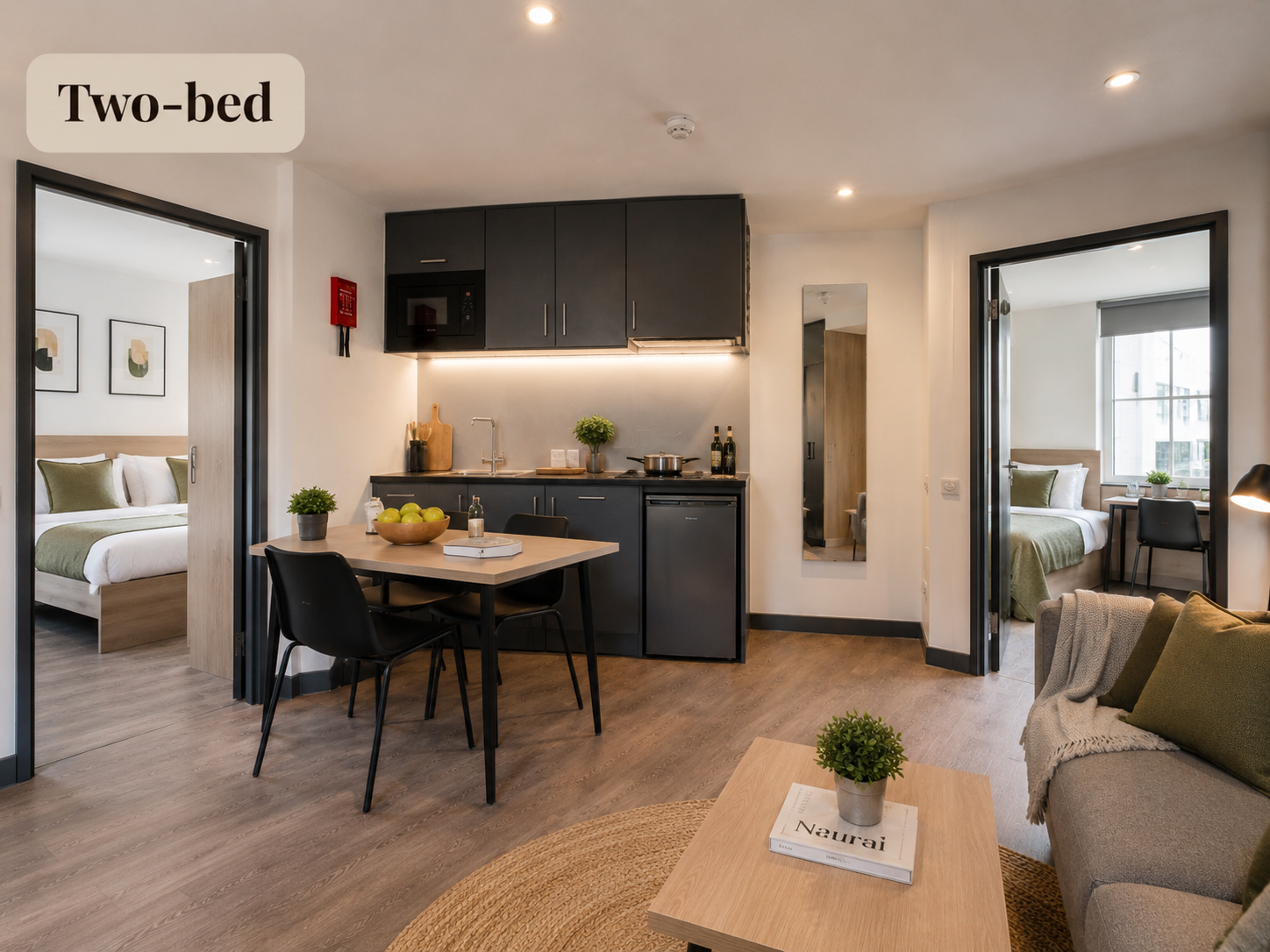
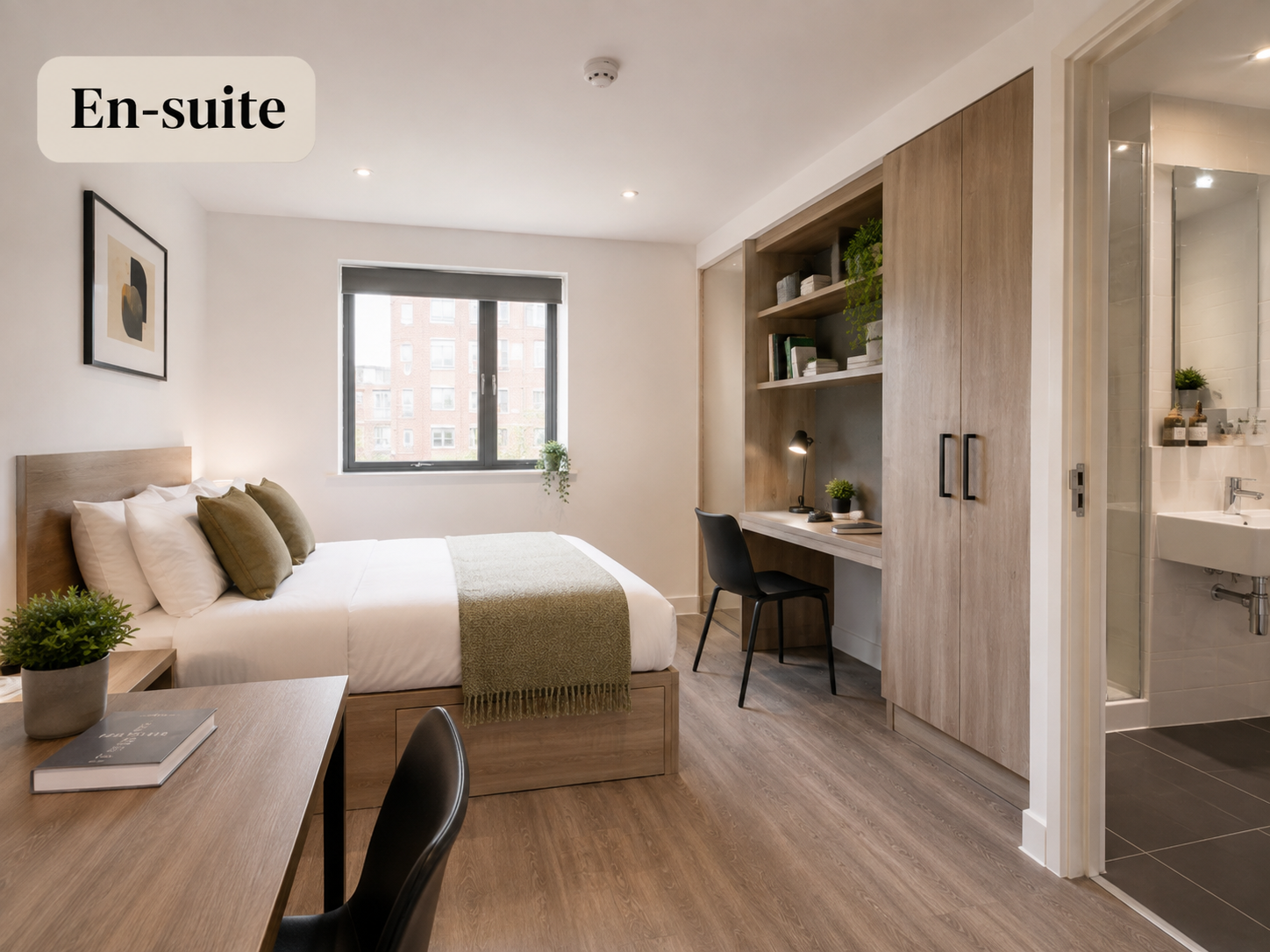
10. Maisonette
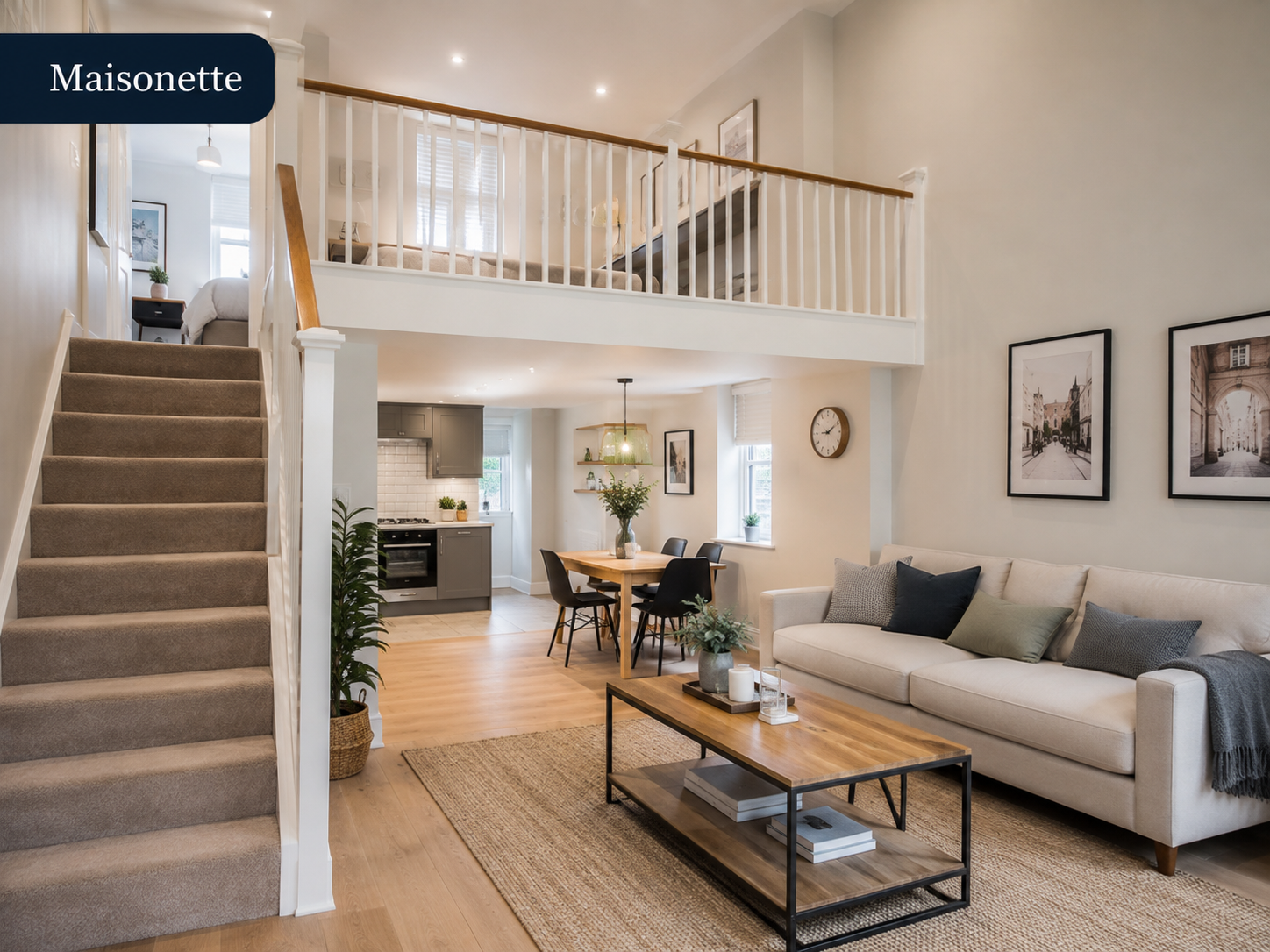
A maisonette is a self-contained flat that is typically arranged over two floors, often with its own entrance. With living and sleeping areas spread across different levels, it can feel more like a small house than a traditional single-storey flat.
Pros and cons of maisonettes in the UK
Pros:
- Better separation of space: Living areas and bedrooms can be kept on different floors.
- More privacy: Some maisonettes have their own private entrance rather than a shared communal hallway.
Cons:
- Can cost more to rent: Maisonettes often offer more space, so the total monthly rent may be higher than for a smaller flat or studio.
- Fewer choices: Maisonettes are less common than standard flats, so students may have fewer options when comparing location and price.
Maisonettes are best suited to couples, small families or students who want more privacy and clearly separated living and sleeping areas, and who are comfortable paying more than for a standard flat or studio.
How many houses are there in the UK?
According to the latest UK-wide official housing data, released by the Office for National Statistics in June 2026, there were around 30.7 million dwellings in the UK in 2024. In official housing statistics, the term dwelling is used rather than simply house, because the total includes houses, flats, apartments and other self-contained residential properties.
In the latest UK-wide dataset, England accounted for by far the largest share, with around 25.62 million dwellings, followed by Scotland with approximately 2.73 million, Wales with 1.48 million, and Northern Ireland with around 836,000.
More recent national data also shows that the housing stock is continuing to grow. England alone increased from around 25.40 million dwellings in 2023 to 25.83 million in 2025. Wales also reached its latest estimate in March 2025.
How to choose the right types of houses in UK?
Choosing between different types of houses in England depends on more than just how a property looks. Your budget, location, space requirements and lifestyle can all affect which type of home works best for you.
1. What is your budget?
If keeping costs down is your priority, terraced houses and flats may be more practical options. According to the latest UK House Price Index, average prices vary considerably between different property types across the UK. Detached houses are the most expensive, while flats and maisonettes are the cheapest, with semi-detached and terraced houses sitting in between.
Average House Prices by Housing Type in the UK
| Property Type | Average Price, June 2026 | Annual Change |
|---|---|---|
| Detached | £444,652 | +2.3% |
| Semi-detached | £277,332 | +3.4% |
| Terraced | £230,994 | +3.0% |
| Flat / maisonette | £193,711 | −1.6% |
| All properties | £272,188 | +2.0% |
Source: HM Land Registry, UK House Price Index summary: June 2026 . Published 19 August 2026. Latest figures are provisional and may be revised.
2. Where do you want to live?
Think about how close you need to be to work, shops, public transport and other everyday amenities.
If you want to live in a city centre, flats and apartments are often the most practical choice. They usually put you closer to workplaces, shops, restaurants and public transport, although you may have to compromise on space, privacy or outdoor areas.
If you want a quieter rural lifestyle, cottages, bungalows and detached houses may appeal more. However, check local transport links and how far you will need to travel for work, shopping and other everyday services.
3. What lifestyle suits you best?
If you are only staying for a short period, a flat or smaller property may offer more flexibility and require less upkeep.
If you are choosing a home for the longer term, think about whether you may need more bedrooms, outdoor space or easier access in the future.
A semi-detached or detached house may give a growing household more room, while a bungalow can be a practical long-term option if avoiding stairs becomes important later on.
Which house types are best for students renting in the UK?
For students renting in England, the best accommodation depends on more than the traditional house type. Location, rent, privacy, room layout and access to university are often more important. In major university cities, students commonly choose from studios, shared flats, apartments and purpose-built student accommodation (PBSA).
Flats and apartments are particularly popular because they offer different layouts to suit different budgets and lifestyles. Studios provide more privacy, while shared flats and apartments allow students to share living costs without giving up a private bedroom. PBSA is another popular option, with many properties offering furnished rooms and student-focused facilities.
If you are looking for student accommodation in England, uhomes.com offers a range of studios, en-suite rooms, shared accommodation and apartments across major UK university cities. You can compare properties by location, price, room type and facilities to find an option that suits your needs.
Conclusion
There is no single “best” type of house in the UK — the right choice depends on your budget, lifestyle and priorities. Detached houses are best for those who value privacy and space, while semi-detached houses offer a balance between space and price. Terraced houses are a practical option for buyers looking to keep costs down, while bungalows suit those who prefer stair-free living. Cottages appeal to people looking for character and a quieter lifestyle, townhouses work well for those who need more living space in urban areas, and maisonettes offer a more house-like layout within a flat-style property. Less common back-to-back houses may also appeal to buyers looking for more affordable homes in certain established urban areas.
Ultimately, the right choice depends on your budget, lifestyle and priorities. Whether you value more space and privacy, a lower price, easier maintenance or a convenient location, understanding the differences between these house types can help you find the option that best suits your needs.
FAQ
The main types of houses in the UK include detached houses, semi-detached houses, terraced houses, bungalows, cottages and townhouses. Other less common types include back-to-back houses and maisonettes, while flats and apartments are especially common in cities.
Semi-detached houses are among the most common types of homes in the UK. They are especially popular in suburban areas and consist of two homes sharing one wall. Terraced houses are also widely found across UK cities.
A terraced house is defined by how it connects to neighbouring homes, usually sharing one or two side walls. A townhouse is defined more by its tall, multi-storey layout, often spread over three floors. In the UK, many townhouses are also terraced, so the two terms can overlap.
A flat is usually a self-contained home within a larger building and is often arranged on one level. A maisonette is typically spread over two floors and may also have its own private entrance, giving it a more house-like feel.
In simple terms, choose a detached house for more privacy and space, a semi-detached house for a balance of comfort and cost, and a terraced house if affordability is your main priority.
Flats and maisonettes are generally the cheapest major property type in the UK, while detached houses are the most expensive. In June 2026, their average prices were about £193,711 and £444,652 respectively.
Semi-detached and detached houses are often good choices for families because they usually offer more bedrooms, living space and access to a private garden. A semi-detached house may suit families looking for a balance between space and price, while a detached house is better suited to those who prioritise privacy and have a larger budget.
A newer flat or apartment will generally require less day-to-day maintenance than a large detached house or an older cottage. There is usually less private exterior space to look after, although residents may still need to pay service charges for the maintenance of shared areas and the building itself.