




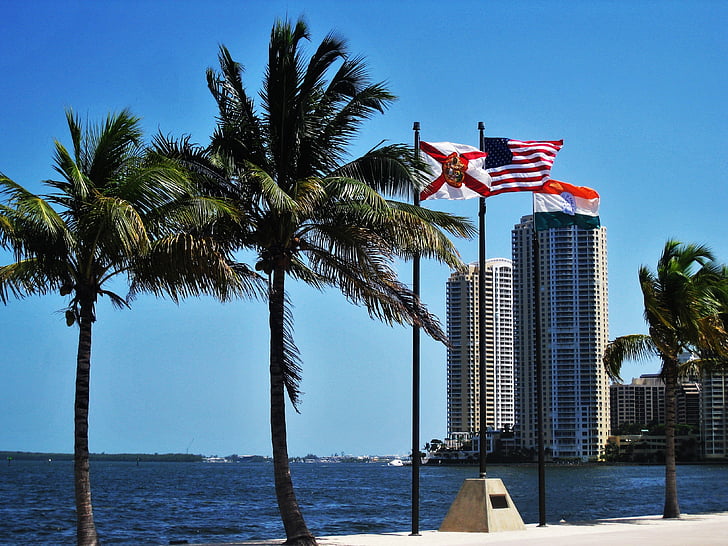
Planning a move to the Sunshine State? Understanding the cost of living in Florida is one of the most important steps before you relocate. Located in the southeastern United States, Florida is the third most populous state in the country. It is known as the Sunshine State because of its year-round sunshine and excellent beaches. Tourism, aerospace, financial services, and other industries are fully developed in Florida. Thus, many job opportunities are available. As a result, Tallahassee, Miami, Orlando, and other Florida cities have become desirable destinations. In this guide, we break down the latest costs for rent, utilities, groceries, transportation, and everyday essentials, so you can quickly see what fits your budget and choose the right place to live in Florida with confidence.
What's the average cost of living in Florida, USA?
According to the most recent MERIC data (2025 Q3), Florida’s cost-of-living index stands at 99.5, just 0.5% below the U.S. average. And it’s about $60,204 per person per year based on the latest data from Bureau of Economic Analysis. However, the cost of living in Florida also varies depending on economic development and population distribution. For example, in large cities like Miami, living expenses are relatively high due to the city’s cosmopolitan status and advanced tourism industry. At the same time, towns like Tallahassee are more affordable.
Overall, while Florida’s cost of living is slightly higher than the national average, its warm climate, abundant natural resources, and rich cultures provide residents with a high quality of life. For those seeking a comfortable life with plenty of sunshine near beaches, Florida is undoubtedly an attractive choice.
| Categories | Average Annual Costs in Florida (per person) |
|---|---|
| Housing and Utilities | $12,191 |
| Healthcare | $8,996 |
| Food and Beverages (non-restaurant) | $4,736 |
| Gas and Energy Goods | $1,168 |
| All Other Personal Expenditures | $33,112 |
Compare Living Cost in Florida by Cities
Life in Florida is colorful. Known as the Sunshine State, it is blessed with abundant sunshine and a warm climate. Residents enjoy a carefree life, and the happiness index here is relatively high. Florida’s beach culture is an integral part of the state’s way of life. With coconut trees, a vast sea, and sufficient sunshine, Clearwater Beach is a good place to relax. In addition, Florida has a wealth of tourism resources, such as Orlando’s theme parks, Miami’s South Beach, and Everglades National Park, offering residents and visitors a variety of entertainment options.
The pace of life in Florida is relatively slow, and many people want to move here. But before you move, you need to know the cost of living in Florida. Life expectancy varies from city to city. To make it easier for you to choose, below is a list of the average cost of living in some Florida cities.
| Cities in Florida | Population | Costs of Living |
|---|---|---|
| Homestead | 1024k | $3,991 |
| Miami | 498k | $3,103 |
| Jupiter | 61k | $3,034 |
| Fort Myers | 86.4k | $2,942 |
| Pembroke Pines | 181k | $2,898 |
| Boca Raton | 97.4k | $2,860 |
| Boynton Beach | 80.4k | $2,816 |
| West Palm Beach | 130k | $2,789 |
| Hollywood | 160k | $2,724 |
| Fort Lauderdale | 192k | $2,727 |
| Tempa | 421k | $2,658 |
| St. Petersburg | 269k | $2,642 |
| Orlando | 341k | $2,594 |
| Jacksonville | 1024k | $2,386 |
| Tallahassee | 206k | $2,019 |
Cost of Living in Florida: Housing

Renting apartments
Housing is a significant factor affecting your living expenses in Florida. According to the latest data, housing costs in Florida are about 7.2% higher than the national average. The median rent here is 22% higher than the national median, which is $2,495. And rents vary by property type. Below is a list of the average rents for different property types in Florida.
| Room Types | Median Rents (monthly) |
|---|---|
| Studio | $1,481 |
| One-bedroom Apartment | $1,715 |
| Two-bedroom Apartment | $2,045 |
| Three-bedroom Apartment | $2,423 |
| Four-bedroom Apartment | $3,500 |
In addition, rents fluctuate significantly from city to city. For example, Orlando has seen rents decline due to an increase in new rental listings. In areas such as Miami, rents are still rising due to high demand but limited supply. Below is a list of average rent prices in some Florida cities.
| Cities in Florida | Average Apartment Monthly Rents |
|---|---|
| Miami | $2,768 |
| Orlando | $1,822 |
| Jacksonville | $1,592 |
| Tampa | $1,543 |
| Pensacola | $1,480 |
Buying properties
According to the latest data, the average home price in Florida is $418,097, which is 15% higher than the US average house price. This price reflects the state’s overall real estate market, but the specific price will vary by region and property type. For example, the median sale price of apartments is $4,242 per square meter, while the median sale price of houses is $2,620 per square meter.
Housing prices are also different in different cities. In cities such as Tampa and Orlando, prices of detached villas can range from a few hundred thousand dollars to several million dollars, showing the coexistence of the high-end and ordinary market. Below is a list of average home prices in some Florida cities.
| Cities in Florida | Average Home Prices |
|---|---|
| Miami | $441,390 |
| Tampa | $361,065 |
| Orlando | $373,914 |
| Jacksonville | $349,781 |
| North Port | $453,085 |
| Cape Coral | $375,812 |
| Lakeland | $303,766 |
| Deltona | $334,978 |
| Palm Bay | $345,520 |
| Pensacola | $287,113 |
| Port St. Lucie | $377,334 |
| Naples | $588,278 |
| Tallahassee | $252,737 |
| Ocala | $273,074 |
| Gainesville | $277,965 |
Utilities
Utility costs are a significant part of the cost of living in Florida. According to the latest data, the average utility bill in Florida is about $422 per month for a typical household. However, many factors can affect the bill’s cost, such as season, home size, usage, and the specific area you live in. It is important to note that Florida’s tropical climate significantly impacts utility costs. Due to the hot summer, air conditioning is used more frequently, and electricity bills are often higher. And gas bills can increase in winter due to people’s heating needs. Therefore, residents need to take these seasonal changes into account when planning their budgets.
| Utilities | Average Florida Bills |
|---|---|
| Electricity | $150-300 |
| Gas | $15-100+ |
| Cable & Internet | $60-120 |
| Water | $40-80 |
| Overall | $220-400 |
Cost of Living in Florida: Transportation

Spending on public transportation in Florida is relatively low, with a one-way ticket costing about $2. For residents who regularly use public transportation, a monthly pass costs between $50 and $ 120, depending on the city you live in, e.g., $ 49 in Orlando and $ 112.50 in Miami. This is an affordable option for residents who travel frequently by public transportation.
When it comes to private transportation, car rental prices in Florida are volatile. Regular cars generally start at around $200 a week. But during holidays like Christmas, the same car’s rent can go up to nearly $900 a week. In addition, the price of gasoline in Florida is also an important influencing factor. This directly affects the cost of driving a private car or renting a car. The cost of various modes of transportation in Florida is listed below. Residents can choose the most appropriate mode of transportation based on their travel needs and budget.
| Modes of Transport | Costs |
|---|---|
| Bus | $1.76 (one-way ticket) |
| Trolley | $2 (one-way ticket) |
| Taxi | $2.7 per mile (one-way ticket) |
| Monthly Transit Pass | $50-$120 |
| Monthly (Car + Transit) | $100-$250 |
| Gas Prices | $3.5 per gallon |
| Car Insurance | $1,500-$2,500 annually |
Cost of Living in Florida: Education

Florida has a comprehensive education system, ranging from public and private secondary schools to higher education institutions, demonstrating a strong focus on and significant investment in education. When it comes to higher education, Florida is ranked 2nd in the US News 2025 Best States. In particular, it performed well in “the proportion of people aged 25 and older with at least an associate’s degree”, reflecting Florida’s strength in further study.
Florida has outstanding educational institutions and rich scientific research resources, and the state’s universities include the University of Florida, the University of Miami, Florida State University, the University of South Florida, and the University of Central Florida. These universities performed well in US News’ 2026 ranking of America’s Best Colleges, with the University of Florida ranked 30th. However, the rankings don’t guarantee a low overall cost of living. Below is a list of the cost of living at the University of Florida, according to LivingCost.org.
| In State | Out of State | |
|---|---|---|
| Total Costs | $22,601 (on-campus) $23,141 (off-campus) |
$44,879 (on-campus) $45,419 (off-campus) |
| Tuition & Fees | $6,381 | $28,659 |
| Books & Supplies | $1,050 | |
| Room & Board | $11,500 (on-campus) $11,500 (off-campus) |
|
| Other Expenses | $3,670 (on-campus) $4,210 (off-campus) |
|
Cost of Living in Florida: Food & Groceries

Strongly affected by Latin American and Caribbean cultures, Florida’s food is distinctive. And food and grocery prices in Florida aren’t that low compared to other US states. Florida residents spend an average of $287.27 per week on groceries, the fifth most expensive state in the country. People in Florida now spend 14.5% of their monthly income on groceries, compared to the national average of just 12.6%.
There are several possible reasons why food and grocery prices are so high in Florida. The first is that Florida is often affected by natural disasters such as hurricanes, and the production and transportation of crops may be affected. The decrease in production will lead to an increase in food prices. The second reason is taxes. Although Florida does not have a personal income tax, the sales tax could affect final food prices. Florida’s base sales tax rate is 6%. And plus local sales taxes, the total sales tax rate can be even higher. The high sales tax rate could increase the cost of groceries. Here are some prices of food and groceries in Florida.
| Grocery Items in Florida | Costs |
|---|---|
| Milk (1L) | $1.08 |
| Bread (500g) | $3.63 |
| Rice (1 kg) | $4.12 |
| Eggs (12) | $4.46 |
| Cheese (1 kg) | $13.8 |
| Chicken Filets (1 kg) | $11.9 |
| Beef Steak (1 kg) | $17.2 |
| Apples (1 kg) | $5.20 |
| Banana (1 kg) | $1.69 |
| Oranges (1 kg) | $4.33 |
| Tomato (1 kg) | $4.56 |
| Potato (1 kg) | $2.92 |
| Onion (1 kg) | $3.12 |
| Water (1 L) | $1.42 |
| Bottle of Wine (Mid-Range) | $13.5 |
| Beer (0.5 liter bottle) | $2.20 |
| Toilet Paper (4 rolls) | $4.51 |
Cost of Living in Florida: Healthcare

Healthcare costs in Florida are relatively affordable, ranking as the third lowest in the USA. This may be mainly because of Florida’s climate and people’s lifestyle. Due to the warm climate that facilitates outdoor activities, it is easier for residents to stay healthy, which reduces healthcare costs.
However, Florida also faces some challenges. Especially during the COVID-19, the state has experienced one of the worst outbreaks in the country, driving up healthcare costs. Many insurers have announced that they will no longer cover COVID-19 care for patients. That could mean patients have to bear more of their medical costs, and increase the total cost of living in Florida.
| Types of Healthcare | Costs |
|---|---|
| Employer-sponsored Health Insurance | $140.33 |
| Non-employer-sponsored Health Insurance (Average Cheapest) | $196.66 |
Cost of Living in Florida: Entertainment

Florida is blessed with sunshine and various entertainment activities. In addition to the usual recreational activities, such as watching movies and doing exercises in gyms, Florida also offers many free or low-cost outdoor activities, such as beach walks, park adventures and nature trail hikes. Not only are these activities good for your health, but they’re also a great way for family and friends to spend sweet time together. Overall, Florida offers a variety of entertainment options to suit the needs of different budgets and interests.
| Items of Entertainment | Costs |
|---|---|
| Movie Tikets (1 seat) | $14.8 |
| Gym (1 adult) | $41.2/month |
| Tennis Court Rent (weekends) | $12/hour |
Cost of Living in Florida: Taxes
Taxes have always been an essential part of the cost of living for US residents. When we talk about the cost of living in Florida, we have to mention the taxes here. Here is the situation of Florida residents’ taxes.
- Personal income tax: Florida doesn’t have a state-level personal income tax in 2024; instead, it uses federal tax brackets and rates. This means that personal income tax expenses will be determined according to the federal tax bracket, as shown in the federal tax table.
- Sales tax: Florida’s sales tax rate is 6%, but cities and counties can add local sales taxes on top of the state sales tax. For example, Jacksonville, Tampa, and Tallahassee have sales tax rates of 7.5%, compared with 7% in Miami and Fort Lauderdale and 6.5% in Orlando.
- Property taxes: The median property tax in Florida is $1,773.00, with specific tax rates varying by region and county.
- Excise taxes: Florida imposes excise taxes on certain luxury items, such as gasoline, cigarettes, cell phones and alcohol. The average resident will spend about $615 on these items in 2024.
Cost-Saving Tips in Florida
Have you decided to move but are concerned about the high cost of living in Florida? If you are a person who is not short of money, it is also recommended to learn some basic ways to save money. If you have enough money, you can deal with some unexpected emergencies. And you can save money to buy something more expensive for yourself. Saving money can also keep you out of debt. You don’t have to worry about getting into debt crisis all the time. So, how to save money in Florida? Some specific methods are listed below.
Rent affordable apartments in Florida
Housing is a major part of the price of living in Florida. If you want to save money on this aspect, you’d better rent an apartment than buy a house. Rental prices in Florida can vary greatly depending on location and amenities.
If you are on a budget, we recommend avoiding the city center, which is often expensive. To find an apartment with a lower rent, but also close to your destination, you can choose the edge of the city center with a nearby subway station or bus stop. These places are often not far from the city center and offer convenient transportation. More importantly, the rent will be much cheaper than in the city center. Please contact us if you don’t know how to find the right apartment. Our professional consultants will answer all your questions.

Cook more by yourself instead of eating out
Cooking by yourself is a great way to save Florida cost of living. When supermarkets have a sale, you can buy more ingredients, and you can control the size of each meal. This can save money and avoid waste. In addition, cooking by yourself can also ensure balanced nutrition. Take-out or outside restaurants are often heavy on oil and salt, which can harm your health. And they may not suit your taste or contain ingredients you’re allergic to. These problems can be avoided if you cook by yourself.
For easy cooking, you’d better choose an apartment near a supermarket. Uhomes.com provides you with many listings, all of which are conveniently located and fully equipped. What’s more, living here, you can walk to some supermarkets. This will be your first step to a healthy life.
Take more public transportation
If you’re new to Florida, don’t rush to buy a car. You can take the bus and the subway instead. They are both economical and convenient. Almost all cities in Florida have bus routes that cost $2 for a one-way ticket. Although not all cities have subways, they are also very cheap. If your city has subway lines, you can choose to take the subway. For example, a one-way ticket on the Metro Orange Line in Miami costs $2.25, while a bus ticket costs $1.5, and an additional $0.25 is required if you need to transfer to another bus or BART streetcar.
Stock up on sale
Many malls and supermarkets in Florida will have sales at certain times, such as the National Day, Christmas, Black Friday, and so on. Many brands will also launch a special policy that allows you to buy a certain amount or at a certain price to enjoy additional discounts. You can find a few friends to shop together, so that you can buy what you want at a lower cost. Different credit card companies also offer many specific discounts, coupons, and cash-back offers. You can take advantage of every discount and save your money.
Move to Florida with uhomes.com
Overall, Florida, with its pleasant climate, relatively low living expenses, and high quality of life, is an attractive destination for living, working, and retiring. But in some areas, such as Miami and Orlando, the living expenses may be higher due to the booming tourism and real estate markets.
However, with the continuous growth of Florida’s economy and the improvement of infrastructure, Florida cost of living is expected to remain at a relatively reasonable level. As the Sunshine State, residents here can enjoy a warm climate, beautiful beaches, and a wealth of cultural activities. If you plan to move to Florida, uhomes.com can help you with sufficient properties to make your home in Florida comfortable.
FAQ
How much money do you need to live comfortably in Florida?
To live comfortably in Florida, you need to budget about $2,518 per month for a single person, and about $5,798 for a family of four. You must consider expenses in multiple areas, including housing, food, transportation, and entertainment.
- Housing: Housing costs for a single person in Florida, including rent and utilities, are around $1,652 per month. For a family of four, the number could be even higher.
- Food: Monthly food expenses for a family of four in Florida are about $1,642.
- Transportation: The cost of public transportation is relatively low. For example, the bus fare is about $2 for a one-way ticket. For private car owners, the average gasoline price is about $0.83 per liter.
- Health Insurance: In Florida, the average monthly cost of family health insurance for a median plan is expected to be between $1,200 and $1,600.
- Entertainment: The cost of entertainment is also relatively reasonable. For example, the price of a single ticket to the cinema is about $11.
What cities have low cost of living in Florida?
In Florida, cities with a low cost of living include Jacksonville, Gainesville, Lake City, and Pensacola.
- Jacksonville: As the largest city in Florida, Jacksonville offers a diverse lifestyle and a low cost of living. With a median home value of about $296,379 and a median rent of $1,498, the cost of living is 7% lower than the national average.
- Gainesville: As a college town in Florida, Gainesville is known for its education, health care, and sufficient high-tech jobs. With a median home value of about $298,729 and a median rent of $1,550, the cost of living is 6% lower than the national average.
- Lake City: It is known as the “Gateway to Florida.” Lake City offers a friendly, quiet atmosphere and an affordable cost of living. With a median home value of about $257,570 and a median rent of $1,400, the cost of living is 14% lower than the national average.
- Pensacola: If you love the beach, Pensacola is an affordable choice. With a median home value of about $262,185 and a median rent of $1,800, the cost of living is 13% lower than the national average.
What is the average off-campus housing cost in Florida?
The average cost of off-campus housing in Florida varies by city and region, but we can provide some specific data as a guide. Prices for off-campus housing around the University of Florida are listed below.
- Varsity House Gainesville: From $660/month
- Canopy Apartments: From $654/month
- Theory Gainesville: From $1,009/month
- Alsander GNV: From $619/month
- Alight Gainesville: From $809/month
Are there financial aids available for international students in Florida?
In Florida, international students do qualify for some financial aid. Here are some of the financial aid options available:
- Scholarships awarded by private or college: According to the University of Florida Office of Student Financial Aid and Scholarships (UF SFA), international students on F1, F2, J1, or J2 visas are not eligible for federal aid administered by the UF Office of Student Financial Aid and Scholarships. However, international students may be eligible for private or collegiate scholarships.
- Florida Incentive Scholarships: It is awarded to Florida high school graduates designated as finalists for National Merit Scholarships or National Achievement Scholarships. They will also pursue an undergraduate degree at a public or private nonprofit college or university in the state.
- First Generation Matching Grants: It is available to Florida high school graduates whose parents never earned a college degree and will pursue an undergraduate degree at a state college or university.
- Access to Better Learning and Education Grants: It is offered to Florida students pursuing an undergraduate degree at a private nonprofit college or university in the state. The annual scholarship is $1,500.
Is Florida an expensive state to live in?
No, Florida’s cost of living is slightly below the national average overall. But expenses vary greatly depending on the city and lifestyle. Metro areas like Miami, Fort Lauderdale, and Boca Raton tend to have higher housing and rental costs, while smaller cities like Jacksonville or Tallahassee are more affordable. Utilities, transportation, and groceries generally align with the U.S. average, but seasonal electricity costs can be higher due to air conditioning.
How much should I budget monthly for a single person living in Florida?
A single person’s annual expenses are about $60,204. However, it can vary depending on location and lifestyle; a rough monthly estimate is:
Rent (1-bedroom apartment): $1,200–$2,000
Utilities & Internet: $180–$300
Transportation (car + gas or public transit): $100–$400
Food & groceries: $300–$500
Overall, most single residents might budget $1,800–$3,200 per month to comfortably cover basic living expenses.