
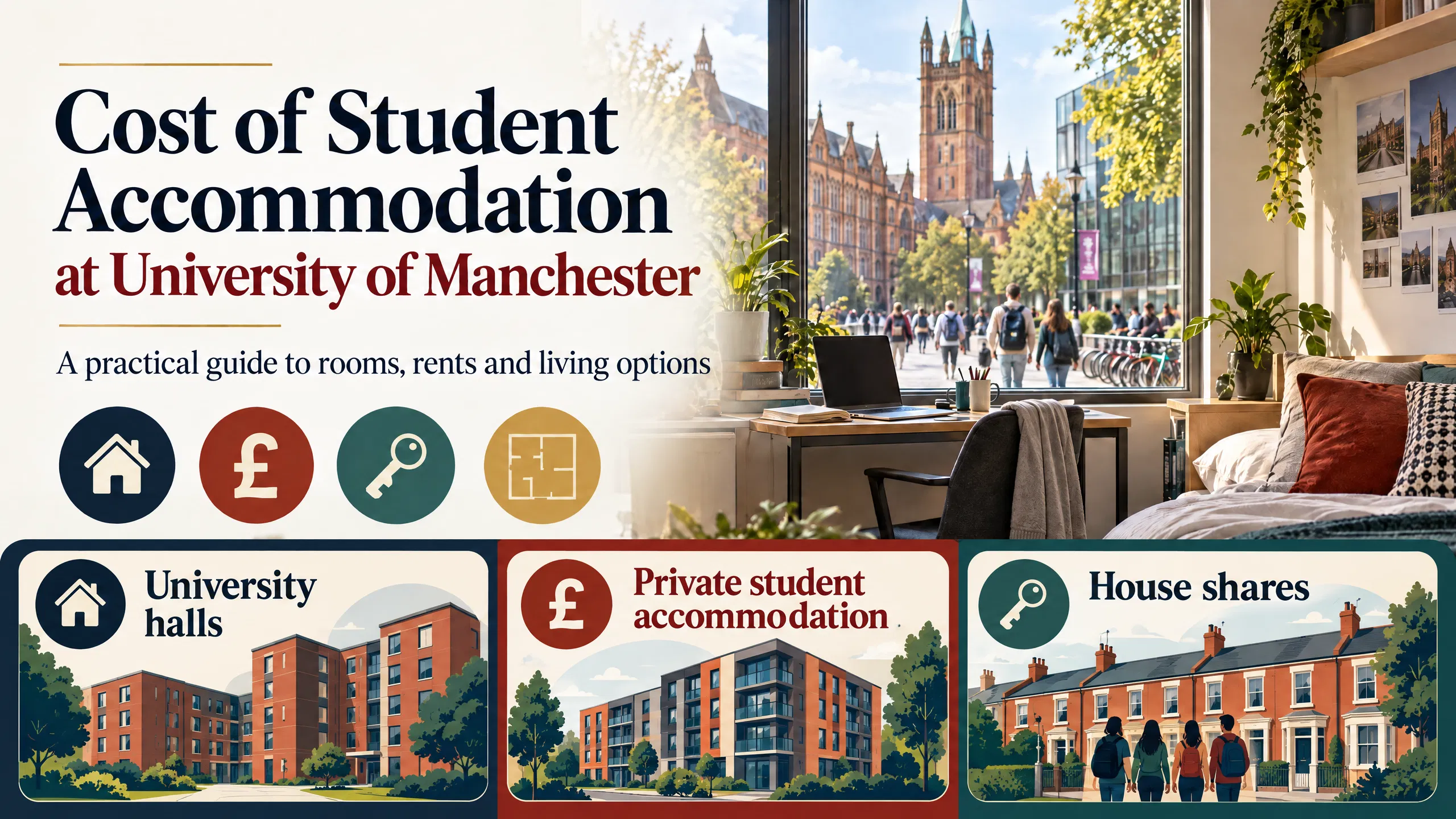



The cost of living in Manchester for students ranges from £900 to £1,350 per month, excluding tuition fees. As one of the UK’s major student cities, Manchester is home to the University of Manchester, Manchester Metropolitan University and a vibrant student community. The city offers a mix of student accommodation, diverse food options, convenient public transport and cultural attractions, giving students different ways to manage their budgets. Student accommodation typically costs £460–£850 per month, depending on the room type and location, while groceries, transport, utility bills and entertainment make up the remaining expenses. Students can manage the cost of living in Manchester by comparing accommodation near their university, choosing between shared houses and private student rooms, cooking at home and using student discounts. Understanding the cost of living in Manchester, England, before moving can help students plan a realistic monthly budget and choose accommodation that suits their finances and commuting needs.
Average Cost of Living in Manchester for Students
Students can divide their monthly budget into accommodation, food, transport and other living expenses to understand where their money goes. The following breakdown provides a practical starting point for planning student life in Manchester in 2027.
| Expense | Monthly Cost |
|---|---|
| Student Accommodation | £460–£650 |
| Groceries | £160–£220 |
| Transport | £40–£80 |
| Utilities and Internet | £0–£50 |
| Mobile Phone | £10–£20 |
| Study Materials and Personal Expenses | £110–£150 |
| Entertainment and Socialising | £120–£180 |
| Total | £900–£1,350 |
These figures are flexible planning estimates, not amounts every student will spend. The cost of accommodation depends on whether students rent a room in a shared house, choose an en-suite room or live in a private studio. Utility costs may also be included in the rent, so students should check their tenancy agreement to avoid counting the same expense twice.
For students working with a £900–£1,350 monthly budget, the key is to balance rent against everyday spending. Choosing a room with bills included can make costs easier to predict, while preparing meals at home and walking to university where practical can leave more money for study materials and social activities. The sections below examine each major expense in more detail.
Cost of Living in Manchester, England: Detailed Breakdown
Student Accommodation Costs in Manchester
Student accommodation in Manchester typically costs around £460–£650 per month, depending on the room type, location, facilities and tenancy agreement. Shared houses and rooms with shared facilities are often more affordable, while en-suite rooms and private studios usually cost more.
University Halls of Residence
On-campus university accommodation is a popular choice for students who want convenient access to teaching facilities and more opportunities to socialise with fellow residents. At the University of Manchester, estimated accommodation costs for 2026/27 range from £487 to £1,060 per month for self-catered halls and £555 to £982 per month for catered halls, with some postgraduate studio flats costing up to £1,255 per month.
Manchester Metropolitan University offers a range of university halls and partner residences, with published prices ranging from £159.95 to £245 per week. Options include shared rooms at Cavendish and Birley residences, as well as en-suite rooms at Archway and Artisan Heights. Most listed contracts run for 44 weeks, although some properties offer 51-week contracts.
At the University of Salford, accommodation prices vary by residence and room type. For 2026/27, published listings show rates starting at approximately £129 per week at John Lester and Eddie Colman Courts and £169.50 per week at Peel Park Quarter, rising to around £199.50 per week for higher-specification rooms at Peel Park Quarter.
Purpose-built Student Accommodation
Private purpose-built student accommodation (PBSA) is a popular choice for students who want modern facilities, flexible room options and a more independent living experience. In Manchester, uhomes.com lists 300+ verified student accommodation options, serving students at the University of Manchester, Manchester Metropolitan University and the University of Salford. Prices start from £158 per week, with water, electricity, internet and contents insurance included in the rent for eligible listings. Students can choose from non-en-suite rooms, en-suite rooms, studios and shared apartments to suit different budgets and preferences.
uhomes.com also helps students save on accommodation costs through its Price-Match Guarantee, exclusive property offers, early-booking discounts, group-booking cashback and selected provider promotions. Eligible properties may offer additional savings, while the referral programme can reward students with £50 when a referred friend completes a booking, subject to the programme’s terms. Offers vary by property and booking period, so students should check the Manchester accommodation listings and each property’s special offers, or contact a uhomes.com consultant to find out which discounts are available. With free booking assistance and support throughout the accommodation search, students can compare suitable homes, understand their options and make a more informed booking decision.
| Room Type | Typical Weekly Rent |
|---|---|
| Non-en-suite Room | £158–£210 |
| En-suite Room | £180–£220 |
| Studio | £257–£300 |
| 1-Bedroom Apartment | £277–£320 |
| 2-Bedroom Apartment | £210–£310 |
| 3- or 4-Bedroom Apartment | £220–£450 |
Grocery Costs in Manchester
Students in Manchester can budget approximately £160–£220 per month for groceries if they mainly cook at home. Food costs depend on diet, shopping habits and the balance between home cooking and eating out.
Typical supermarket purchases include bread, milk, eggs, rice, pasta, vegetables, fruit and other everyday essentials. Prices change by shop, brand and season, so students should treat individual item prices as a guide rather than a fixed cost.
Aldi and Lidl are useful options for budget-conscious students, while larger supermarkets offer a wider selection of products. Planning meals for the week, buying ingredients for several dishes and freezing leftovers can help reduce food waste.
| Everyday Item | Typical Price |
|---|---|
| Milk (Regular, 1 Liter) | £1.11 |
| Fresh White Bread (1 lb Loaf) | £1.31 |
| White Rice (1 lb) | £0.65 |
| Eggs (12, Large Size) | £2.97 |
| Local Cheese (1 lb) | £3.28 |
| Chicken Fillets (1 lb) | £3.03 |
| Beef Round or Equivalent Back Leg Red Meat (1 lb) | £5.28 |
| Apples (1 lb) | £1.07 |
| Bananas (1 lb) | £0.53 |
| Oranges (1 lb) | £1.02 |
| Tomatoes (1 lb) | £1.17 |
| Potatoes (1 lb) | £0.52 |
| Onions (1 lb) | £0.45 |
| Lettuce (1 Head) | £0.93 |
| Bottled Water (50 oz) | £0.94 |
| Bottle of Wine (Mid-Range) | £8.29 |
| Domestic Beer (16.9 oz Bottle) | £1.87 |
Transport Costs in Manchester
Students who mainly use buses can budget around £40–£80 per 28 days, depending on their eligibility for student fares. A standard adult Bee Network bus ticket costs £80 for 28 days, while eligible students aged 16–26 can buy a 28-day Bee AnyBus ticket for £63.30. A single bus journey costs £2, and the Hopper fare allows passengers to change to another Bee Network bus within 60 minutes without paying again. Students who travel by tram as well as bus should budget separately, as combined tickets cost more.

| Ticket Type | Current Fare |
|---|---|
| Single Bus Journey | £2 |
| Adult 7-Day Bus Ticket | £20 |
| Adult 28-Day Bus Ticket | £80 |
| Student 7-Day Bee AnyBus Ticket (Eligible Students Aged 16–26) | £18.60 |
| Student 28-Day Bee AnyBus Ticket (Eligible Students Aged 16–26) | £63.30 |
| Bus and Tram, All Zones, 7-Day Cap | Up to £41 |
Utility Bills and Internet Costs in Manchester
Utility bills and internet costs in Manchester can range from £0 to £50+ per month for students, depending on whether bills are included in their accommodation rent. Many university halls and purpose-built student accommodation (PBSA) offer all-inclusive rent covering electricity, gas, water and Wi-Fi, allowing students to avoid separate monthly bills. This makes all-inclusive student accommodation in Manchester a practical option for managing living costs.
Students renting private shared houses may need to pay separately for electricity, gas, water and broadband. The total depends on the property’s energy efficiency, the number of housemates sharing the bills and seasonal heating use. Before signing a tenancy agreement, check exactly which utilities are included in the rent and whether broadband or other services incur additional charges. Comparing the total monthly cost of rent and bills can help students choose affordable accommodation in Manchester and budget more accurately.
| Cost | Monthly Amount |
|---|---|
| All-Inclusive Student Accommodation (Utilities and Wi-Fi Included) | £0 extra |
| Electricity and Gas (If Not Included in Rent) | £30–£50 per person |
| Water (If Not Included in Rent) | £10–£20 per person |
| Shared Home Broadband | £10–£15 per person |
Study Materials and Personal Expenses
| Expense | Estimated Monthly Cost |
|---|---|
| Textbooks and study materials | £15–£30 |
| Stationery and printing | £5–£10 |
| Toiletries and personal care | £20–£30 |
| Laundry | £10–£20 |
| Clothing and other essentials | £30–£40 |
| Miscellaneous expenses | £30–£40 |
| Total | £110–£150 |
Entertainment and Socialising Costs in Manchester
Students in Manchester can budget around £120–£180 per month for entertainment and socialising, although frequent nights out, concerts and sports activities can increase spending. Here are some typical costs to include in a student budget:
| Activity | Typical Cost |
|---|---|
| Cinema at HOME Manchester (Off-Peak Concession Ticket) | £7.15 per visit |
| Student Gym Membership at the University of Manchester | £140 per year (about £11.67/month) |
| Student Gym Membership at Manchester Metropolitan University (Monthly Direct Debit) | £17 per month |
| Pint of Beer at a Typical Student Venue | Around £4.80 |
| Nightclub Entry on a Student Night | Around £7 |
| Manchester Museum | Free |
| Manchester Art Gallery | Free |
Prices are based on published venue and university information. Check the latest rates before booking, as ticket prices vary by event.
For example, a student who watches two off-peak films (£14.30), pays for a University of Manchester gym membership (£11.67 per month when the £140 annual fee is spread over 12 months) and enjoys one restaurant meal (£20–£25) would spend around £46–£51 per month on these activities. This leaves approximately £69–£134 from a monthly entertainment budget of £120–£180 for other activities, such as nights out, concerts and social events. Students can also visit free exhibitions at HOME Manchester and explore Manchester Museum to keep entertainment costs down.
Is Manchester Expensive for Students?
Manchester is relatively affordable for students compared with London, with estimated living costs of £900–£1,350 per month, excluding tuition fees. The exact amount depends mainly on accommodation, location and lifestyle. Students who share a house or choose budget-friendly student accommodation can generally spend less than those renting private studios or premium city-centre apartments.
Accommodation is usually the largest expense, followed by groceries, transport and personal spending. Students can reduce costs by choosing accommodation with bills and Wi-Fi included, cooking at home, using student travel passes and taking advantage of student discounts. When comparing properties, it is worth considering rent, utility bills and commuting costs together rather than choosing the cheapest room alone. Overall, Manchester offers a range of housing and lifestyle options, making it possible for many students to manage their budget with careful planning.
Smart Ways to Reduce Cost of Living in Manchester, UK
Students can reduce the cost of living in Manchester by choosing affordable accommodation, using student travel tickets, shopping at budget supermarkets and taking advantage of free local attractions.
1. Choose Affordable Student Accommodation
Compare rent, included bills and commuting costs before booking. Fallowfield and Rusholme are worth considering for shared housing, while students near Oxford Road should compare properties based on their journey to campus. Use uhomes.com to compare student accommodation by room type, location and price.
2. Save on Public Transport
The Bee Network operates buses and trams across Greater Manchester. Eligible students aged up to 26 can check the 28-day Bee AnyBus student ticket, currently priced at £63.30. Walking or cycling for shorter journeys can reduce travel costs further.
3. Shop at Budget Supermarkets
Aldi and Lidl are useful options for affordable groceries. Students can also explore local food shops around Rusholme for fresh produce and international ingredients. Planning meals, preparing packed lunches and limiting takeaway orders can help keep food spending under control.
4. Use Free University and City Facilities
Students at the University of Manchester can check the availability of free Cosy Campus spaces, which provide facilities for heating food and studying. Manchester Museum, the Whitworth and local parks also offer opportunities to enjoy the city without spending much on entertainment.
5. Take Advantage of Student Discounts
Check student offers through TOTUM, Student Beans and UNiDAYS before paying full price for eligible purchases, meals and events. For UK rail travel, a 16–25 Railcard costs £35 per year and can reduce eligible fares by up to a third. Booking train tickets in advance may also help students save on trips from Manchester to nearby cities.
Conclusion
The cost of living in Manchester for students is manageable with careful financial planning, although actual expenses depend on accommodation choices and lifestyle. A monthly budget of £900–£1,350 can serve as a starting point for estimating living costs, excluding tuition fees. Before moving, students should consider their overall budget, preferred living arrangements and university location to make an informed decision. With a clear understanding of these costs, students can prepare for university life in Manchester with greater confidence.
FAQ
Manchester is moderately expensive compared with other UK student cities, but it is generally more affordable than London. Students can expect to spend around £900–£1,350 per month, excluding tuition fees, depending on accommodation, transport and lifestyle.
The cost of living in Manchester for students is approximately £900–£1,350 per month, excluding tuition fees. This budget covers accommodation, food, transport, utilities and personal expenses, with the total depending mainly on rent and lifestyle. Students who choose more expensive private studios or dine out frequently may need a larger budget.
The average rent for student accommodation in Manchester around £460–£650 per month, depending on the property, room type and location. Shared houses are generally more affordable, while private student halls and studios often cost more. Students should also check whether rent includes utilities, internet and other bills.
Students can save money on transport in Manchester by using student bus passes, walking or cycling for shorter journeys, and choosing accommodation close to their university. Eligible students aged up to 26 who study at a Greater Manchester college or university can buy a 28-day Bee AnyBus student ticket for £63.30, which provides unlimited bus travel across Greater Manchester during its validity period.