



Wondering NUS acceptance rate? As the 8th university in the world and the 1st in Asia, the National University of Singapore has long been a top higher education destination, offering cutting-edge programs and strong career prospects, attracting students from India, the US, Europe, and more. If you’re planning to apply to NUS, read this blog to know everything about this university before you go. In this blog, we’ll dive into key aspects such as NUS Singapore acceptance rate, fees, courses, and admission requirements, while providing the latest data to help students and parents make informed decisions.
National University of Singapore Overview
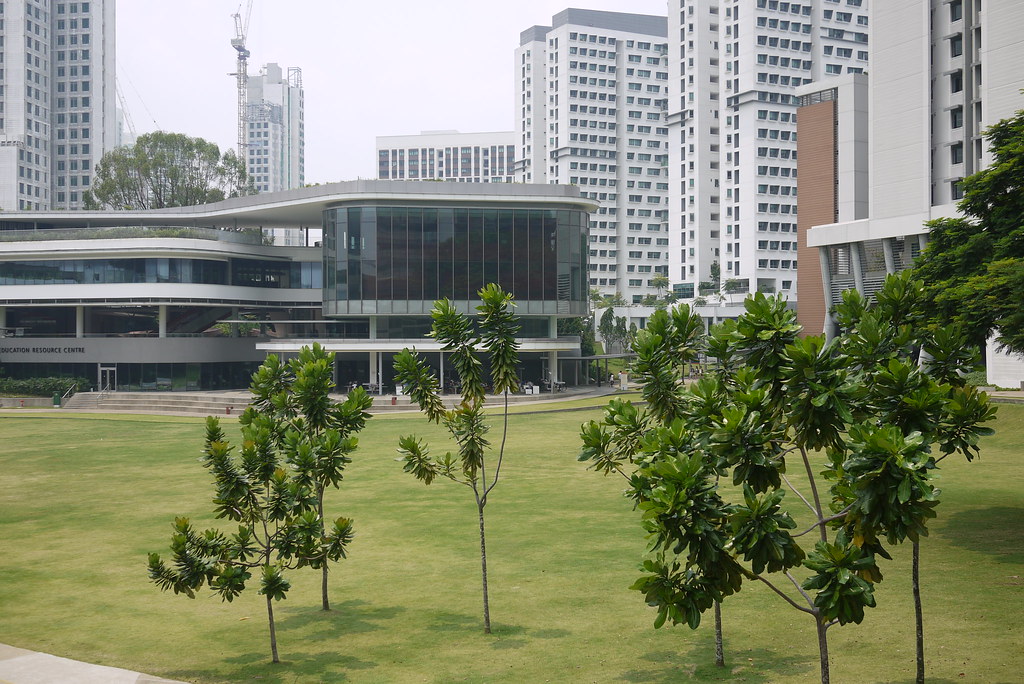
NUS actually started way back in 1905 as a tiny medical school before merging its way to the top. By 1980, it combined with Nanyang University to become Singapore’s undisputed flagship campus. Today, the scale is massive: it spans three main areas (Kent Ridge, Bukit Timah, and Outram) and sits on an SGD 6.33 billion endowment.
Despite having over 38,000 students, the vibe is incredibly global. More than 14,000 of those students fly in from over 100 different countries, keeping the student-to-faculty ratio at a respectable 21:1. The appeal really depends on what you’re looking for. Indian students usually flock here because it’s close to home, teaches in English, and offers a direct pipeline to Asian business markets. Meanwhile, local Singaporeans and US applicants are typically drawn in by the heavy-hitting research facilities and the sheer safety of the city. It’s a global powerhouse, but it still leans heavily into its unique Asian roots.
| Category | Details |
|---|---|
| Ranking | 8th in the World, 1st in Asia |
| History | 121 years (began as a small medical school) |
| Population | 30,000+ undergraduates, 2,700 faculty members |
| Academics | 60+ bachelor’s degrees, 130+ double, concurrent and joint degrees |
| Global Exposure | 300+ partner universities (over 40 countries), 25+ NUS Overseas College locations (2,664 students participated in AY2024/2025) |
| Employability | 8th/9th Most Employable in the World, > 9 in 10 fresh graduates employed within 6 months after final exams |
| Student Life | 200+ student organisations/clubs, 70+ freshmen orientation projects, 4 types of campus accommodation |
NUS Ranking
NUS Singapore ranking has long been top among the global elite, excelling in research and employability. In QS World University Rankings 2026, it’s #8 globally and #1 in Asia. Times Higher Education (THE) 2026 places it at #17 worldwide. US News & World Report ranks it highly in Asia. Subject-wise, it’s top 10 globally in Computer Science, Engineering, and Business. For Indian, Singaporean, and US students, its #8 global employability (GEURS 2026) adds immense value. Here’s a comparison:
| Ranking Source | Global Rank | Asia Rank | Key Strengths |
|---|---|---|---|
| QS 2026 | #8 | #1 | Employability, International Research |
| THE 2026 | #17 | #3 | Research Quality, Industry Impact |
| USNWR | #32 | #2 | Engineering (#10), Computer Science |
NUS Acceptance Rate
The National University of Singapore acceptance rate is a major focus for prospective students, particularly international students from India, the US, and elsewhere, as the university is highly selective. NUS does not officially publish exact acceptance rates, so figures are estimates based on enrollment trends, applicant volumes, and reliable third-party analyses (e.g., from sources like Vedantu, Shiksha, Yocket, and Collegedunia). For 2025-2026 admissions, the overall rate remains low due to intense global competition.
Overall Acceptance Rate for 2026
Competition for NUS admission continues to rise each year, with rates varying by applicant type, program, and nationality. Key estimates include:
- Overall NUS acceptance rate: 5-10% (highly selective, comparable to top global universities).
- For international students (including Indians and Americans): Approximately 5-9%, often cited as 7-9% for undergraduates in recent analyses.
- Recent trends show graduate enrollment growing significantly (up ~79.5% since 2020), while undergraduate spots have seen slight declines (~2.1%), contributing to tighter competition for UG programs.
These are estimates, actual odds depend on the applicant pool and program demand.
Acceptance Rate by Program and Faculty
Selectivity varies widely across faculties, with STEM and professional programs being the most competitive. Here’s a breakdown of estimated rates for international applicants (2025-2026 data):
| Program/Faculty | Estimated Acceptance Rate (International) | Notes |
|---|---|---|
| Engineering / Computing | 3-5% | Super low, AI and data hot. |
| Business Administration (UG/PG) | 5-8% | Tight for global tracks. |
| Science | 8-12% | Bit easier than core STEM. |
| Medicine, Dentistry, Law | Below 3% | Toughest, few spots. |
| Arts and Social Sciences | 10-15% | Better shot vs pro fields. |
| MBA | 4-15% (~12.6% some say) | Experience, tests matter. |
| Masters (General) | 5-20% (varies) | Easier in niche areas. |
International vs. Domestic Student Acceptance Rates
NUS prioritises local talent while maintaining a global intake:
- Singaporean citizens/PRs: 15-25% (higher due to ~80% reserved undergraduate spots and subsidised access).
- International students: 7-9% (or 5-10% range); internationals make up ~39% of the student body from over 100 nationalities, but face fiercer competition from high-volume regions like India.
This quota system makes domestic admission noticeably easier, while internationals compete in a smaller pool of spots.
To stand out in this competitive landscape, focus on building a distinctive profile, details on what NUS truly values are covered in the Admission section below.
NUS Admission Requirements and Process
Applying to NUS undergrad? It’s not just about having killer grades anymore. A few years back, NUS admission moved to what they call aptitude-based admissions. Basically, your scores get your foot in the door, but what really matters is showing real interest, potential, and proof that you’ve already been doing stuff that fits the program.
When to Apply (for AY2026/2027 – International Students)
Most students from India, the US, or anywhere outside Singapore apply under “All International High School Qualifications.” Key dates:
- Opens: 3 December 2025 (noon Singapore time)
- Closes: 23 February 2026
Other streams have slightly different windows:
- IB Diploma: 17 Dec 2025 – 23 Feb 2026
- Singapore GCE A-Level: late Feb to 19 Mar 2026 (mostly locals)
- Local Polytechnic Diploma: 17 Dec 2025 – 4 Feb 2026
Transfers from other universities have shorter slots (usually mid-Feb). Miss the deadline and you’re waiting another year. Offers usually roll out from mid-May to end of July 2026.
NUS Application Process
- Before you start: Go to nus.edu.sg/oam and check the programs you like. Read the prerequisites carefully (engineering needs strong math/physics, for example). Decide on your top-choice program; listing it first might give you bonus points under the First Choice Bonus Points Scheme (not guaranteed, but it helps in tiebreakers).
- Submitting the application: Everything goes through the Applicant Portal: myaces.nus.edu.sg/applicantPortal Fee: SGD 20 (pay by card, AliPay, or PayNow). Upload: transcripts, English test (IELTS 6.5+ / TOEFL 92+ / PTE 62+), SAT/ACT if you have them (Indian students usually need 90%+ in CBSE/ISC + solid SAT for a real shot).
- The part that actually sets you apart: Aptitude & Achievements: Here’s where most people trip up. You have to list up to 4 real achievements (academic, co-curricular, or non-academic) and answer a few short questions. NUS gives clear examples of what impresses them:
- Medal at International Olympiads (Math, Physics, Chemistry, Informatics, Biology)
- Represented your country in arts, sports, or community service
- Deep involvement in volunteering or national-level community projects
- Leadership roles outside school (starting a club, captaining a team, running an entrepreneurship project)
- Built something useful, like an open-source app or software lots of people actually use
Regular school club stuff? It usually doesn’t move the needle unless you led it to something big. Some programs (Medicine, Dentistry, Architecture, Law, etc.) will call you for interviews or extra tests if you make the shortlist.
- After you hit submit Keep checking the portal. You can update things, see your status, and prep for interviews if invited. Accept any offer by the deadline (or appeal if you really want to push). Don’t sit on an offer hoping for a better one — it can disappear.
Quick tip for Indian students: CBSE 90%+ is the minimum bar, but competition is brutal. Add real international-level wins or leadership that ties to your major and you stand out way more. US applicants: high SAT + unique personal projects help a lot too.
Bottom line: Show NUS why this program is your thing and prove you’ve already started walking the walk. Start early, the portal gets slammed close to deadline. For the freshest info, always check nus.edu.sg/oam directly.
NUS Singapore Courses
Picking the National University of Singapore courses? You’ve got options galore, over 60 undergrad programs across colleges like Business, Computing, Law, Music, Design and Engineering, Humanities and Sciences, Pharmacy, Dentistry, Medicine, and Nursing. Many let you mix majors, minors, or double degrees for that custom fit. Popular picks for Indians and internationals include comp sci (AI focus, 4 years UG), engineering (civil or mechanical with industry ties), business (global emphasis), medicine (clinical hands-on). Programs run 3-4 years UG, 1-2 for masters. Check out joint setups with overseas schools if you’re into that.
- Business: Majors like finance, marketing, entrepreneurship, real-world projects with orgs.
- Computing: AI, cybersecurity, data analytics, build stuff that matters.
- Design & Engineering: Architecture, robotics, biomedical, hands-on, specializations like space tech.
- Humanities & Sciences: 30+ majors from history to stats, cross-disciplines like data sci & econ.
- Health fields: Pharmacy for drug dev, dentistry for patient care, medicine for holistic training, nursing for leadership.
Libraries back it up with 3M+ books, tech like VR for projects. Dive in, it’s flexible to switch or add as you go.
NUS Fees and Scholarship
Fees at NUS stay reasonable, especially with subsidies. For internationals (Indians/Americans), non-subsidized starts around SGD 27,000-38,000/year for most UG (INR 16-23 lakhs). Singapore PRs get cuts. Breakdown (per year, SGD for internationals):
| Program | SGD | Approx. INR |
|---|---|---|
| Business | 33,000-46,000 | 20-28 lakhs |
| Computing/Engineering | 38,000-52,500 | 23-32 lakhs |
| Medicine | 63,750-181,000 | 38-109 lakhs |
| Humanities/Sciences | 30,000-34,900 | 18-21 lakhs |
Add accommodation SGD 5,000-10,400/year, living SGD 10,000-15,000/year. Total for Indians: INR 30-50 lakhs first year. MOE grant drops it to ~$8,250/year after subsidy for many, bond-free for locals, 3-year service for others. Living estimate: $6,000/year, housing $5,750. Use their calculator for your numbers.
Scholarships make NUS doable; they cover tuition, living, and even trips. Key ones for 2025-2026:
- NUS Global Merit: Full tuition, SGD 5,800 living, and housing help.
- ASEAN Undergrad: Full for Southeast Asians (some Indians qualify via ties).
- Science & Tech: STEM full ride, airfare included.
Apply through admissions, no extra form, mostly. 20% internationals snag aid, highlight leadership. Open Feb 1 to Mar 19. Other options: Stephen Riady for entrepreneurs, Wee Cho Yaw for needy locals. Check eligibility, Singapore citizens first, but internationals get ASEAN, S&T. No bond for many.
NUS Placements
One big draw for NUS is how grads land jobs quick. From the latest surveys, about 90% get employed within six months, even with global bumps. That’s held steady, with full-time permanent rates around 83-88% for hot fields like tech, business, and health. Indians often head into tech or finance roles, pulling solid starts, while US students tap into global networks for gigs abroad.
The Centre for Future-ready Graduates hooks you up with internships, resume tweaks, and overseas stints to build that edge. Top recruiters? Think Google, Microsoft, DBS Bank, PwC, McKinsey, they show up at career fairs regularly. MBA folks see 95% placement, sometimes hitting USD 141,000. Overall, NUS ranks #8 worldwide for employability, so you’re set up well.
Pay-wise, fresh grads averaged SGD 5,101 gross monthly in 2024 (up from 4,875 the year before), median at 4,600. That’s about INR 3-4 lakhs to start, but varies by field. Tech and law lead the pack. Here’s a quick table from the 2024 grad survey, expect similar for 2025:
| Faculty/Program | Mean Gross Monthly Salary (SGD) | Median Gross Monthly Salary (SGD) | Notes |
|---|---|---|---|
| Computing (Comp Sci) | 6,788 | 6,500 | High demand in AI/data |
| Law | 6,999 | 7,000 | Tops the list |
| Business (BBA) | 6,903 | 5,100 | Global roles boost it |
| Engineering (Average) | 4,800-5,000 | 4,500-4,900 | Chem/Mech strong |
| Arts & Social Sciences | 4,476 | 4,419 | Solid for policy/media |
| Science (Hons) | 4,469 | 4,150 | Data analytics up to 5,855 |
| Dentistry | 4,641 | 4,550 | Steady clinical pay |
NUS Student Life
Life at NUS isn’t all books, it’s got that buzz you want. Over 200 clubs cover everything from sports teams to cultural groups, so whether you’re into debate, dance, or drones, there’s a spot. Freshman orientations kick things off with 70+ projects to meet people fast. Think inter-faculty games, wellness fests, or cultural fairs like mOSAic, keeps things fun mid-week when afternoons are free.
Campus spots like YIH (Yusof Ishak House) are hangout central, with cafes, events, and even massage chairs at PitStops for quick breaks. Housing options fit your vibe: Halls of Residence are sporty and rowdy (S$114-168/week, think team spirit), Houses offer quiet singles (S$178-210), Residential Colleges mix academics with community (S$117-216, great for deep chats), and Student Residences from year 2 give independence (S$178-294). PGPR and UTR blend locals with internationals from 68 countries, perfect for making global friends.
Step off campus, and Singapore’s city life amps it up for internationals. It’s super safe, efficient transport (MRT gets you anywhere cheap), and a food scene that’s unreal, hawker centers for cheap eats like chili crab or roti prata. Humidity hits hard at first, so pack light clothes and get used to it quick. Work culture’s intense, but weekends mean exploring, beaches, Sentosa for adventure, or quick trips to nearby spots like Malaysia. As an Indian student, join cultural societies for familiar vibes; Americans, dive into the melting pot with events mixing East and West. Overall, it’s balanced,study hard, but plenty of ways to unwind and grow.
On-Campus vs Off-Campus Housing
On-campus rocks for convenience, walk to class, dive into hall events, build quick bonds. But spots fill fast (freshmen and internationals apply early via portal; not guaranteed).
Off-campus suits upper years or if you miss out, think HDB shares (SGD 800-1,500/month) or condos near Clementi/Jurong/Bukit Timah (SGD 1,500-2,500/month, often with utilities). More freedom, but pricier and solo hunts can be tricky.
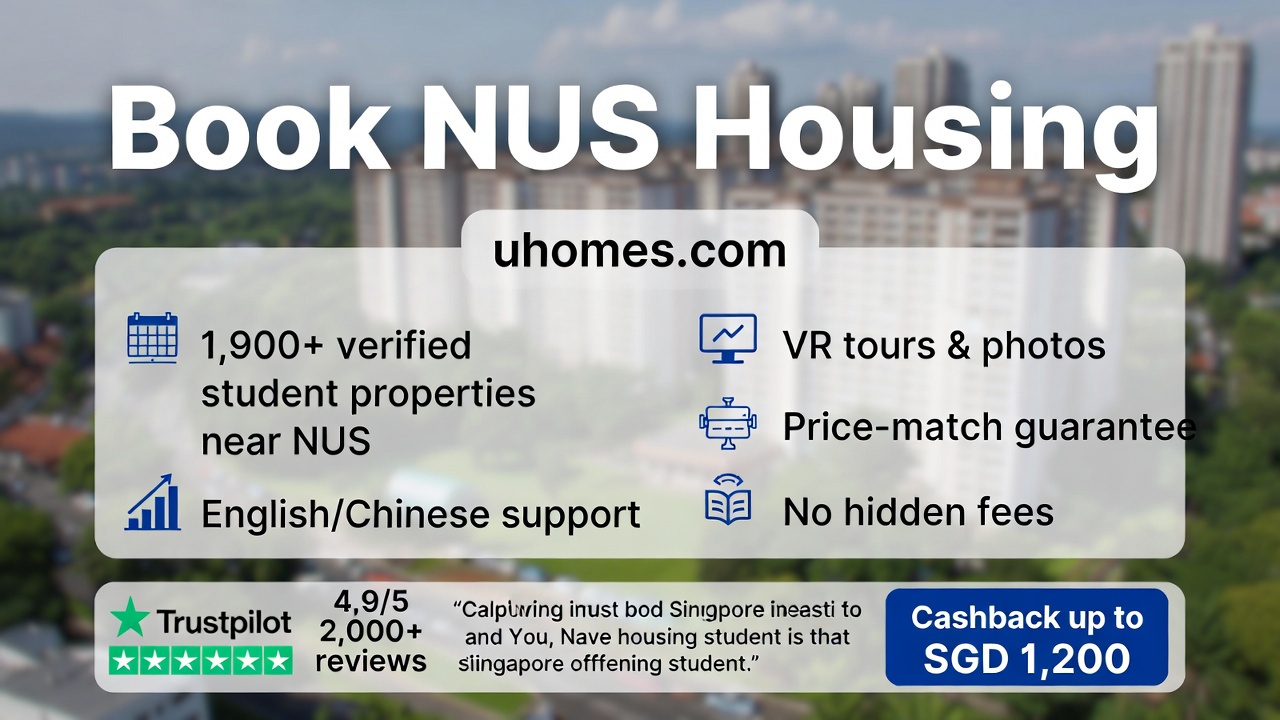
For off-campus NUS accommodation, uhomes.com is a go-to: 1,900+ verified spots near NUS, with VR tours, photos, and real checks to avoid surprises. We offer multilingual help (English/Chinese), price-match guarantees, no hidden fees, high cashback and discounts. 4.9/5 on Trustpilot from 2,000+ reviews; many internationals (especially from China/Southeast Asia) book everything through them, including move-in support.
Conclusion
NUS acceptance rate remains one of the toughest hurdles for international applicants, but if you’re ready to put in the work on a strong, authentic profile, the payoff at National University of Singapore is huge. With world-class academics, unbeatable global exposure, top employability, and a vibrant campus life in one of the safest and most dynamic cities, NUS truly helps you become stronger, more authentic, and deeply inspired. If this feels like your kind of place, start building your story now, the doors are competitive, but they’re worth it. Head to nus.edu.sg and make your move. Good luck!
FAQ
What is NUS acceptance rate?
NUS acceptance rate is estimated at 5-10% overall for international applicants. This makes it highly selective, similar to top global universities, though exact figures aren’t officially published and vary by program and applicant pool.
What is NUS acceptance rate for Indian students?
NUS acceptance rate for Indian students is typically 7-9% for undergraduates. Indian applicants face intense competition due to high application volumes from the region, though strong CBSE/ISC scores (90%+) plus standout extracurriculars can improve chances.
What is NUS acceptance for engineering?
NUS acceptance rate for engineering is very low, around 3-5% for international applicants. Engineering and Computing are among the most competitive programs due to high demand in fields like AI, data science, and technology.
Is getting into NUS difficult?
Yes, getting into NUS is quite difficult, especially for international students. The university uses a holistic, aptitude-based process where strong grades are only the baseline, exceptional achievements, leadership, and program fit are what truly differentiate applicants.
Is NUS as good as Ivy League?
Yes, NUS is often considered on par with or better than many Ivy League schools in certain areas. It ranks #8 globally (QS 2026), #1 in Asia, and #8 worldwide for employability, frequently outperforming several Ivies in research impact, global reputation, and graduate outcomes.
What GPA do I need for NUS?
You generally need a very strong GPA, equivalent to 90%+ in CBSE/ISC or a 3.8-4.0 US scale. While high GPA is essential as the academic threshold, NUS’s aptitude-based admissions means exceptional achievements and fit matter more than perfect scores alone.
Is NUS a Tier 1 college?
Yes, NUS is widely regarded as a Tier 1 university globally. It consistently ranks in the top 10-20 worldwide, #1 in Asia, and is one of the most respected institutions outside the US/UK, especially for employability and research.