


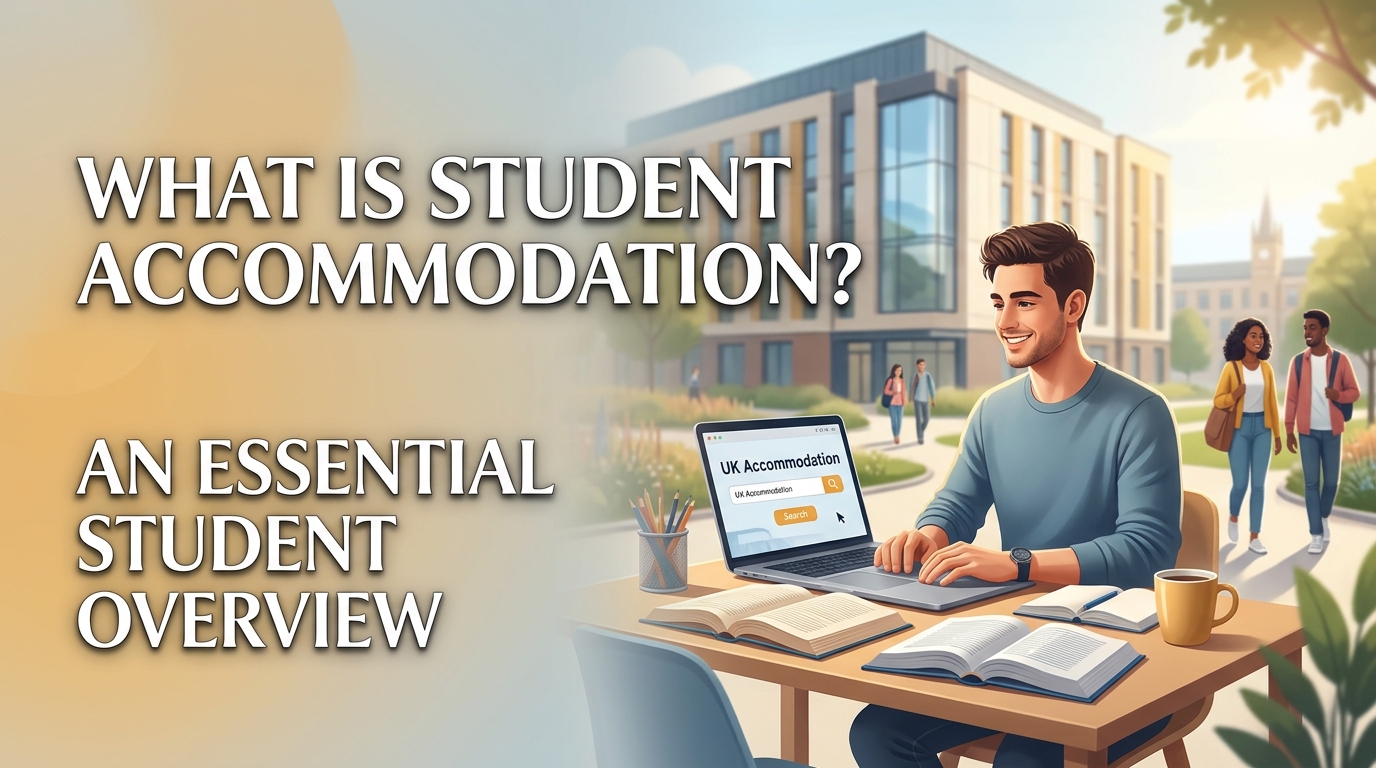
What is student accommodation? Student accommodation refers to purpose-built housing that is specifically designed for university students. You can choose from several popular options, including university halls, purpose-built student accommodation, private house shares, and rented apartments. Travelling to a foreign country to study is an exciting journey. But looking for an ideal foothold thousands of kilometres away will inevitably make people feel a little pressured. For international students, your residence is far more than a place to sleep. It is also an overseas life base for you to study, feel safe and make friends.
Through this panoramic guide, you will have a comprehensive understanding of all aspects of student apartments, from room style and real cost, to application steps and convenient booking, which will help you pass the customs easily.
What is Student Accommodation?
Student accommodation refers to housing specifically designed or adapted for students studying at universities and colleges. It provides a convenient and comfortable living environment close to university campuses, with facilities and services tailored to students’ academic and daily needs.
Student accommodation in the UK generally includes university halls of residence, purpose-built student accommodation (PBSA), and private student housing. These options offer different living arrangements, from individual rooms with shared facilities to self-contained studio flats and shared apartments.
Most student accommodation comes fully furnished, with essentials such as comfortable mattresses, study desks, chairs, and storage areas. Many properties also offer all-inclusive rent covering water, electricity, heating and high-speed Wi-Fi, making it easier for students to manage their living costs.
Other common features include flexible tenancy periods that suit academic schedules, secure key-card entry systems, 24-hour security and communal spaces where students can study, relax and socialise.
Types of Student Accommodation
1. University-Owned Accommodation (University Halls UK)
University halls of residence are student accommodation buildings owned and managed directly by universities. They are usually located on or near campus and offer a range of room types, shared facilities and on-site support services. First-year undergraduates and international students are often given priority when applying.
Suitable for: First-year students, international students and those who value campus life, convenient locations and on-site support.
Pros:
- Convenient campus location and shorter commuting times.
- Opportunities to socialise and meet other students.
- Rent often includes utility bills and internet.
- On-site security, maintenance and student support services.
Cons:
- Higher rental costs at some universities.
- Shared facilities and potentially limited privacy.
- Standardised room designs with fewer personalisation options.
- Tenancy periods often follow the academic year.
2. Purpose-Built Student Accommodation (PBSA)
Purpose-Built Student Accommodation, or PBSA, refers to modern residential buildings specifically designed and operated by private companies for students. If you are looking for student accommodation in UK, PBSA offers a wide range of options, including private bedrooms, en-suite rooms, studios and shared apartments, alongside a range of communal facilities and student-focused services.
Suitable for: Undergraduates and postgraduates who value modern facilities, security, convenience and an all-inclusive rental arrangement.
Pros:
- Modern facilities such as gyms, cinemas, study rooms and shared lounges.
- Secure access systems and on-site management.
- All-inclusive rent covering utilities and internet in many properties.
- Social events and communal spaces for meeting other students.
- Additional services such as cleaning in some properties.
Cons:
- Higher rental costs, particularly in central locations.
- Potential noise in shared facilities and communal areas.
- Fixed tenancy periods with limited flexibility.
- Less freedom to personalise rooms.

3. Private House-Shares (HMOs)
Private house-shares are ordinary houses or flats owned by private landlords and rented to small groups of students. These properties are often classified as Houses in Multiple Occupation, commonly known as HMOs, when they meet the relevant legal requirements. Students usually have their own bedrooms while sharing kitchens, bathrooms and living areas.
Suitable for: Students on a tighter budget, those who prefer independent living and groups of friends who want to share a property.
Pros:
- More affordable rent, particularly when sharing costs with others.
- Greater choice of locations and property types.
- Opportunities to live with friends and choose housemates.
- A more independent and homely living experience.
Cons:
- Utility bills may need to be managed and paid separately.
- Tenants may need to arrange maintenance through the landlord or letting agent.
- Varying property conditions and management standards.
- Potential commuting costs if located far from campus.
Possible disagreements over household bills, cleaning and shared living arrangements.
4. Rented Apartments (BTRs)
Build-to-Rent apartments are privately owned residential properties specifically developed for long-term rental and professionally managed by property management companies. Although primarily designed for the wider rental market, they are also an option for students seeking independent accommodation. They typically offer private living spaces, modern interiors and a range of property types, from studios to multi-bedroom flats.
Suitable for: Students with larger budgets who prioritise privacy, independent living and professionally managed accommodation.
Pros:
- Greater privacy and independent living space.
- Professional property management and maintenance services.
- Modern interiors and household appliances.
- A range of apartment sizes and layouts.
Cons:
- Higher rental costs, particularly in city centres.
- Utility bills may be charged separately.
- Longer tenancy commitments in some properties.
- Fewer student-focused social facilities in some developments.
Types of Student Room
Choosing the right room type for you depends on your daily life habits and budget. The following are the mainstream room layout forms:
- En-suite Room: Private Bedroom, Private Bathroom, Shared Kitchen
- Student Studio: Combined Living and Sleeping Area, Private Bathroom, Private Kitchenette
- Student Apartment: Private Bedrooms, Shared Living Room and Kitchen
1. En-Suite Room
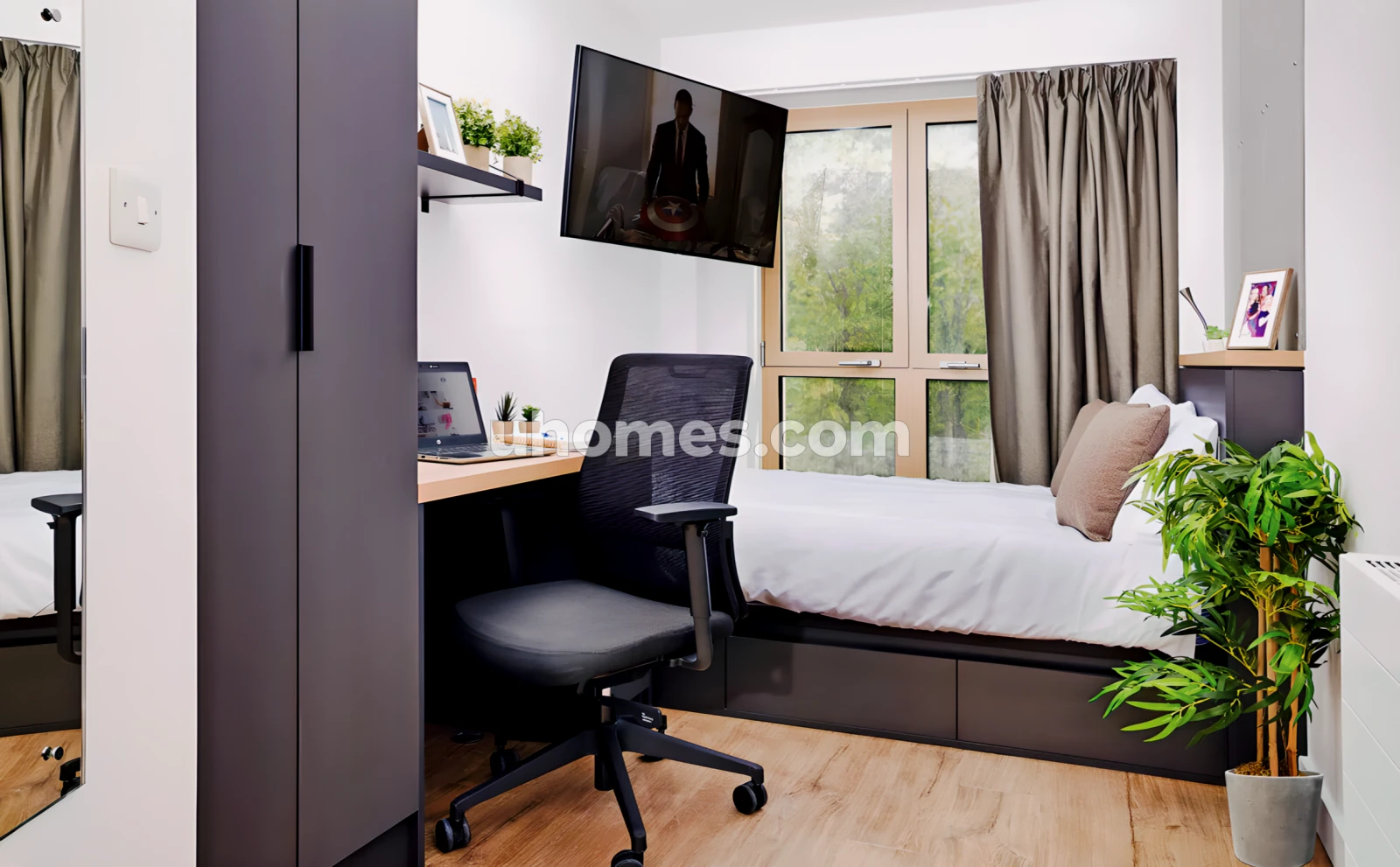
An en-suite room includes a private bedroom and an attached bathroom for exclusive use. The kitchen and living areas are shared with other students, usually between 3 and 8 people. This is one of the most popular room types among students because it offers a good balance between affordability, personal privacy and social interaction, without the higher cost of a fully self-contained studio.
Most suitable for: First-year undergraduates and international students.
2. Student Studio
A student studio is a self-contained private living space that combines a bedroom, study area, private bathroom and kitchenette in one room. It provides all the essential facilities for independent living without the need to share indoor spaces with other residents. Some studios also offer dual occupancy options, allowing two people, such as couples or friends, to share the same studio under the property’s occupancy policy.
Most suitable for: Postgraduate students, PhD students, final-year undergraduates and couples.
3. Student Apartment
A student apartment typically consists of multiple private bedrooms, a shared living room and a kitchen. Depending on the layout, bathrooms may be private or shared. Each apartment forms a self-contained living unit with its own entrance, separate from the communal areas of the wider building.
Most suitable for: Second-year and third-year undergraduates, groups of friends and students booking accommodation together.
Where Can I Find Student Accommodation?
There are many ways to choose from when looking for and securing student housing in UK. The following are the three most common routes taken by students:
- University dormitory application portal: Some universities provide initial booking channels for students (especially freshmen) through online forms, and are equipped with a set of allocation mechanisms.
- Local landlords and social forums: Browse the open market or social media groups to find private house rental information. However, for international students, this is risky. They may encounter false housing resources, illegal advance payment requirements and uncertified landlords.
- Professional global booking platform: The certified booking platform can prove that the housing has passed the field inspection, support remote real-time viewing, provide transparent contracts, and provide direct multilingual customer service assistance.
You can choose uhomes.com to start a safe and easy housing search in the UK. As a dedicated platform for overseas students, our main strength is our massive supply of UK Purpose-Built Student Accommodation. Whether you study in London, Manchester, or any other UK university town, we offer a huge variety of PBSA options near your campus. You can easily find cost-effective en-suite rooms, private studio flats, or spacious cluster apartments for group bookings that fit your budget and lifestyle.
We also address the specific challenges that students face when renting in the UK. Selected UK PBSA listings have been verified through site inspections, so you can check HD photos and video walkthroughs to learn more about the property condition and distance to your university. Our prices are completely transparent, with all utility bills included in the rent. We also offer the highest cashback and exclusive offers to help students save even more. Our expert team offers free 1-on-1 support to guide you through contract signing, tenancy deposit protection, and safe payment steps for a stress-free transition to the UK.

What is the Average Cost of Student Accommodation?
The average cost of student accommodation in the UK is approximately £551 to £563 per month, or £6,600 to £6,756 per year, according to recent student housing and money surveys. Costs vary significantly depending on the type of housing, whether bills are included, and your location, with London being much more expensive.
Weekly rent reference ranges for different regions and room types:
- London: En-suite rooms typically cost around £280 to £450 per week, while studio rooms range from £350 to £600+ per week.
- Major regional cities: In cities such as Edinburgh, Oxford, Cambridge, Bristol and Manchester, en-suite rooms cost around £180 to £280 per week, while studio rooms range from £230 to £380 per week.
- Other popular university cities: In cities such as Birmingham, Leeds, Sheffield, Glasgow and Cardiff, en-suite rooms cost around £150 to £220 per week, while studio rooms range from £180 to £300 per week.
- More affordable university cities: En-suite rooms typically cost around £130 to £180 per week, while studio rooms range from £170 to £250 per week.
What is a Good Price for Student Accommodation in UK Cities?
A good price for student accommodation should offer a comfortable and safe living environment, convenient access to university, and good value for money without exceeding your budget.
In cities other than London, renting a modern all-inclusive en-suite room for about £150 to £185 per week is considered a very cost-effective and reasonable price. In London, centrally located and conveniently located en-suite rooms are reasonably priced at about £260 to £300 per week. Early bird reservations (for September enrolment) between January and April every year are usually more cost-effective than last-minute reservations near the start of the school year.
Will I Get a Place to Stay in the UK as a First-Year Student?
Yes, many British universities will provide dormitory guarantees for students enrolled in the first year, provided that certain conditions are met. You usually need to accept the school’s academic offer before the deadline, which is usually between the end of May and July, and submit the college dormitory application before the deadline.
If you apply late, the visa issuance is delayed, or you are admitted through the clearing stage, the university dormitory may be in short supply. In these cases, you can quickly lock in a private PBSA student apartment through uhomes.com.
Do I Have to Pay a Deposit for Student Accommodation?
Yes, most accommodation providers will require a certain form of financial commitment when booking:
- Holding Deposit / Advance Rent: Paid (usually 1 to 2 weeks’ rent) when applying for a room, and this fee will be directly offset against your first rent instalment.
- Security Deposit: A refundable cash deposit (usually £150 to 350) to cover possible damage to the house or unpaid bills. British law requires intermediaries and suppliers to deposit your deposit in a government-approved protection scheme (such as DPS or MyDeposits). As long as the room is kept clean and intact when checking out, the deposit will be fully refunded.
Does Student Accommodation Include Bills?
Yes, most student accommodation rent in the UK includes all basic utility bills and essential services in a single weekly or monthly payment. All-inclusive pricing is one of the core advantages of private customised apartments. The rent of most PBSA apartments and university dormitories includes:
- High-speed wireless network and wired network connection
- Electricity, water and heating fees
- Basic contents insurance for personal belongings in the room
- The right to use public facilities and shared self-study areas in the building
Student Housing Amenities
- Security and service: 24-hour CCTV monitoring, access control card sensing system, secure package collection service
- Learning facilities: high-speed Wi-Fi, quiet self-study capsule, conference room
- Fitness and entertainment: free gym, game lounge and private cinema in the building
- Practical additional facilities: laundry room in the building, safe indoor bicycle parking

What is Student Accommodation Like?
How Does Student Housing Work?
Student housing typically involves five simple steps: searching and comparing properties, booking a room, arranging a guarantor and payment plan, signing the tenancy agreement, and checking in.
- Search and compare: Use uhomes.com to filter housing resources according to the distance from the school, budget and room type preferences.
- Book a room: Choose the rental period, fill in personal details, and pay the deposit.
- Guarantor and payment plan: If you don’t have a local financial guarantor in the UK, you can choose to prepay the rent in installments in private PBSA apartments.
- Sign the lease contract online: Review and sign the electronic Tenancy Agreement lease contract with legal effect online.
- Check-in: Go to the front desk to collect the key on the day of check-in, complete the inventory check, and start your new life!
What is the Best Student Accommodation for Your Needs?
| Housing Option | Target Student Group | Pricing Level | Top Feature |
|---|---|---|---|
| University Halls | First-year undergraduates | Moderate | Integrated campus life |
| PBSA (via uhomes.com) | International students & postgrads | Moderate to High | All-inclusive, top security, high-end facilities |
| Private House Shares | Groups of 2nd/3rd-year friends | Lower to Moderate | Homely feel, higher independence |
| Private Studios | Postgraduates, couples, final-years | Premium | Total privacy and quiet study focus |
Summary
When you are ready to start a house search journey, welcome to visit uhomes.com at any time, browse the high-quality student accommodation that have been verified by actual survey, check the real scene, and get free expert advice, and take the first step of college life without worry!
FAQ
How do students pay for accommodation in the UK?
Students usually pay rent online through bank transfers, debit cards, or credit cards. University halls and PBSA providers typically offer payment plans in one full upfront amount or in three to four termly instalments that align with Student Maintenance Loan payouts. If you do not have a UK-based financial guarantor, some accommodation providers may ask for full advance rent or require you to use an approved UK guarantor service to qualify for instalment payments.
Do full-time students need to pay Council Tax in the UK?
No, full-time students in the UK are exempt from paying Council Tax. When you live in purpose-built student accommodation or university halls, the exemption applies automatically. If you live in a private house share, you simply need to request an official student exemption certificate from your university portal and submit it to the local council to waive the bill.
Will my student loan cover these accommodation costs?
Yes, the UK Maintenance Loan is specifically designed to help full-time students cover living expenses, including accommodation costs. The total loan amount depends on your household income, your university location, and whether you live with your parents or away from home. In most cases, students use their Maintenance Loan payouts to cover their termly rent instalments directly. If your loan amount does not cover the full annual rent, you can make up the difference using personal savings, part-time jobs, or parental support.
Does student accommodation include meals?
No, most student accommodation in the UK does not include meals because the majority of properties are self-catered. Students usually prepare their own food in shared or private kitchens. However, some university halls offer catered accommodation options, where daily breakfast and dinner are included in the weekly rent and served in a central dining hall. Purpose-Built Student Accommodation (PBSA) properties and private house shares are almost exclusively self-catered, but they are typically located near local supermarkets, cafes, and grocery stores for convenient meal planning.
How long is a student accommodation contract?
Student accommodation contracts in the UK usually range from 40 to 51 weeks depending on your course duration.
Most undergraduate contracts last 40 to 44 weeks to cover the standard academic terms from September to June. Postgraduate contracts typically run for 50 to 51 weeks to cover the full year including the summer dissertation period. Private house shares with local landlords usually require a fixed 12-month lease.