


Figuring out the best neighbourhoods in Singapore is about more than just finding a clean street or a nearby MRT station. While the city is famous for its efficiency and mix of cultures, the real challenge is finding a location that matches your actual daily grind. It makes a huge difference whether you need a student rental near NUS or SMU, or if you are an expat setting up base near Changi Business Park. We are cutting through the noise to look at the real market trends of 2026, covering everything from family spots to budget hacks, so you can confidently find the best place to live in Singapore!
Best Place to Live in Singapore: Recent Trends
Singapore’s property market in 2026 is finally taking a breather. After years of wild fluctuations, private condo rents have stabilized right around the S$4,500 mark. You might still see a slight 2-4% bump near the CBD thanks to incoming finance and biotech workers, but HDBs are holding steady between S$3,200 and S$4,800. The real shift, though, is location. With hybrid work sticking around, people are trading central postcodes for suburbs like Jurong East or Woodlands, where new MRT lines and green buildings make life easier. While prime spots still demand a 20-30% premium, looking at areas like the East Coast or near the Rail Corridor gets you way more space and better amenities for your money. Key trends in 2026 for residential places in Singapore include:
City vs. Suburbs: Central is great for speed, but you pay heavily for it. Unless you need a 10-minute commute, the suburbs are the better value play.
Lifestyle: Neighbourhoods like East Coast offer perks like beaches and parks without the massive price tag.
Co-living: This is fast becoming the standard for students and expats who want flexibility over long leases.
Smart Bets: Keep an eye on tech districts like Punggol; development there points to long-term value.
The Math: You might spend an extra S$100-200 on transport living further out, but the rent savings usually cover that easily.
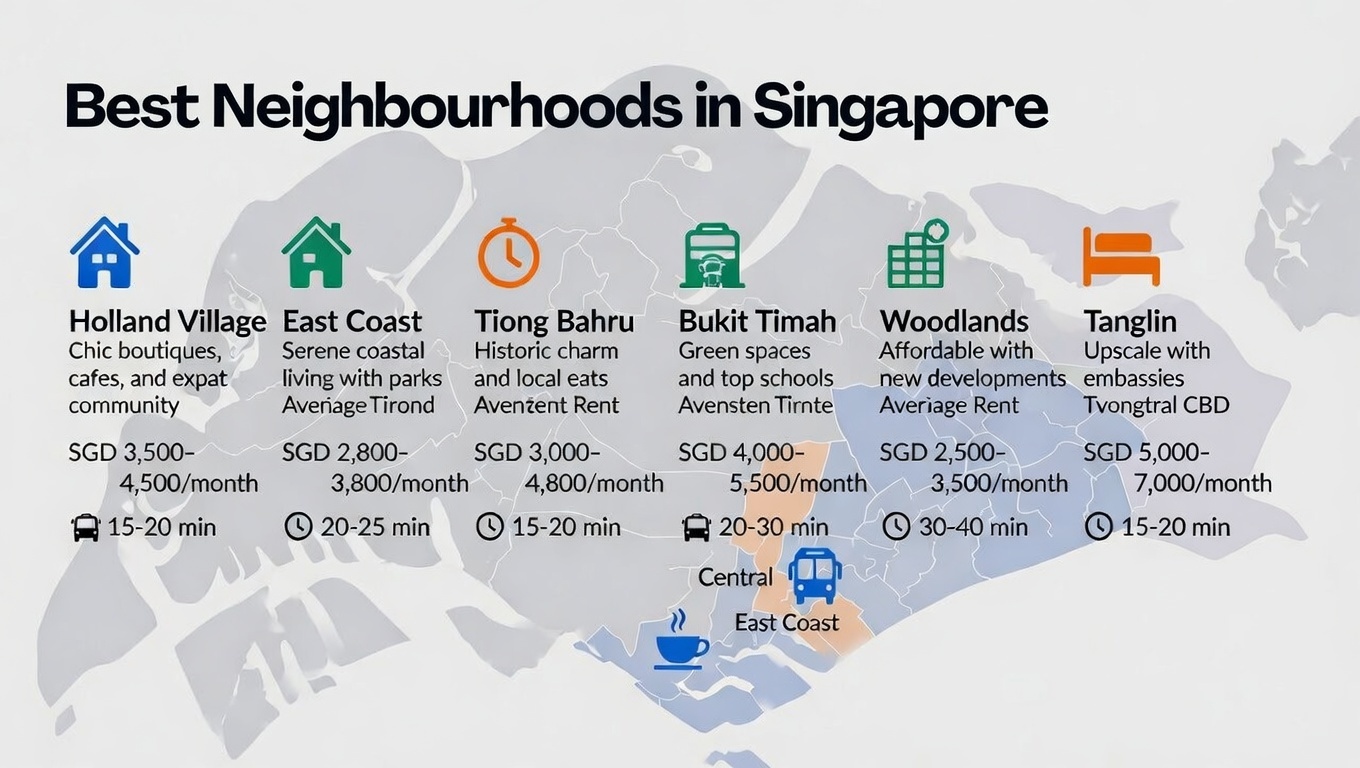
Best Neighbourhoods in Singapore for Students
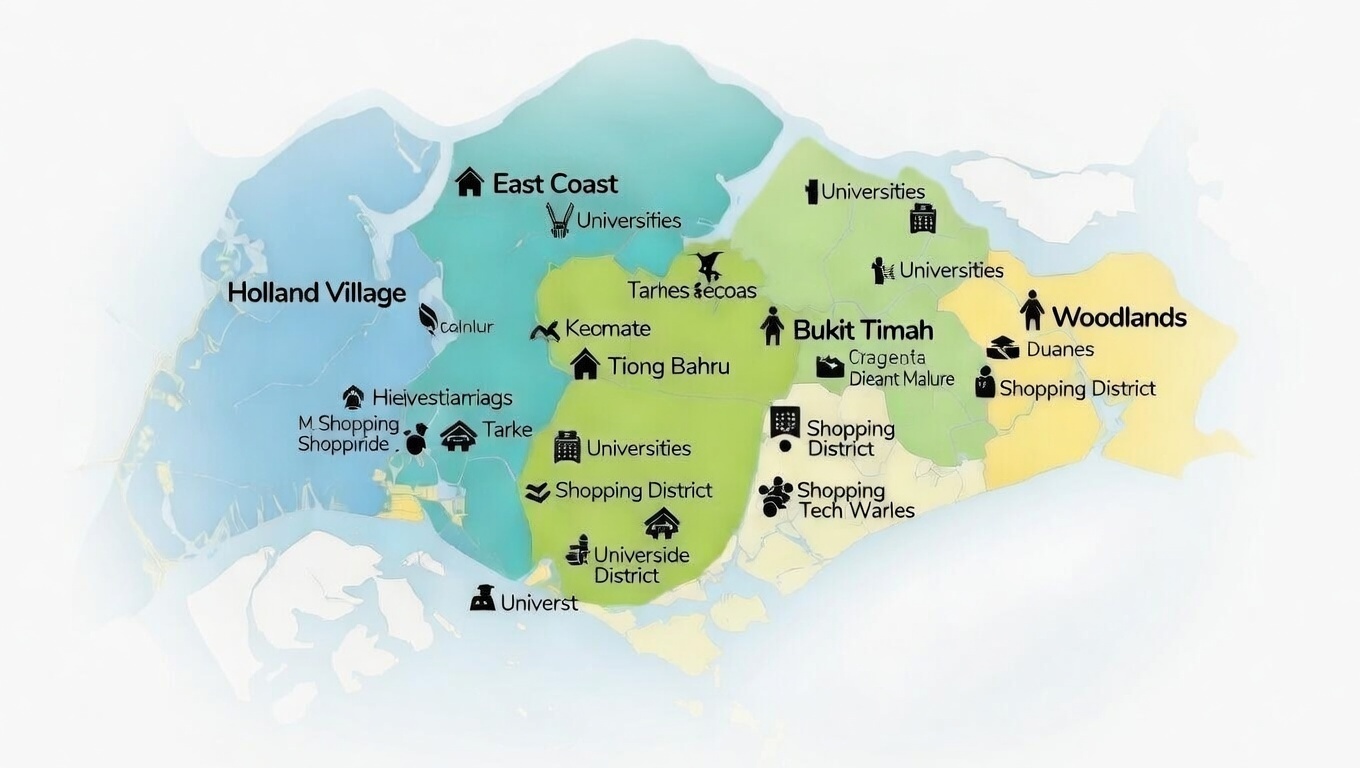
For students, the priority is simple: find a neighbourhood that balances a short commute with cheap hawker centres. You need reliable MRT links to save energy, not just time. While 2026 sees slightly higher enrollments, new co-living hubs are keeping rental options open. Safety is standard everywhere here, so focus on the lifestyle to look for areas with late-night kopitiams and easy library access. Budget-wise, expect to pay S$1,500–3,500 depending on how much privacy you want, and decide early if you prefer city buzz or a quiet, green retreat.
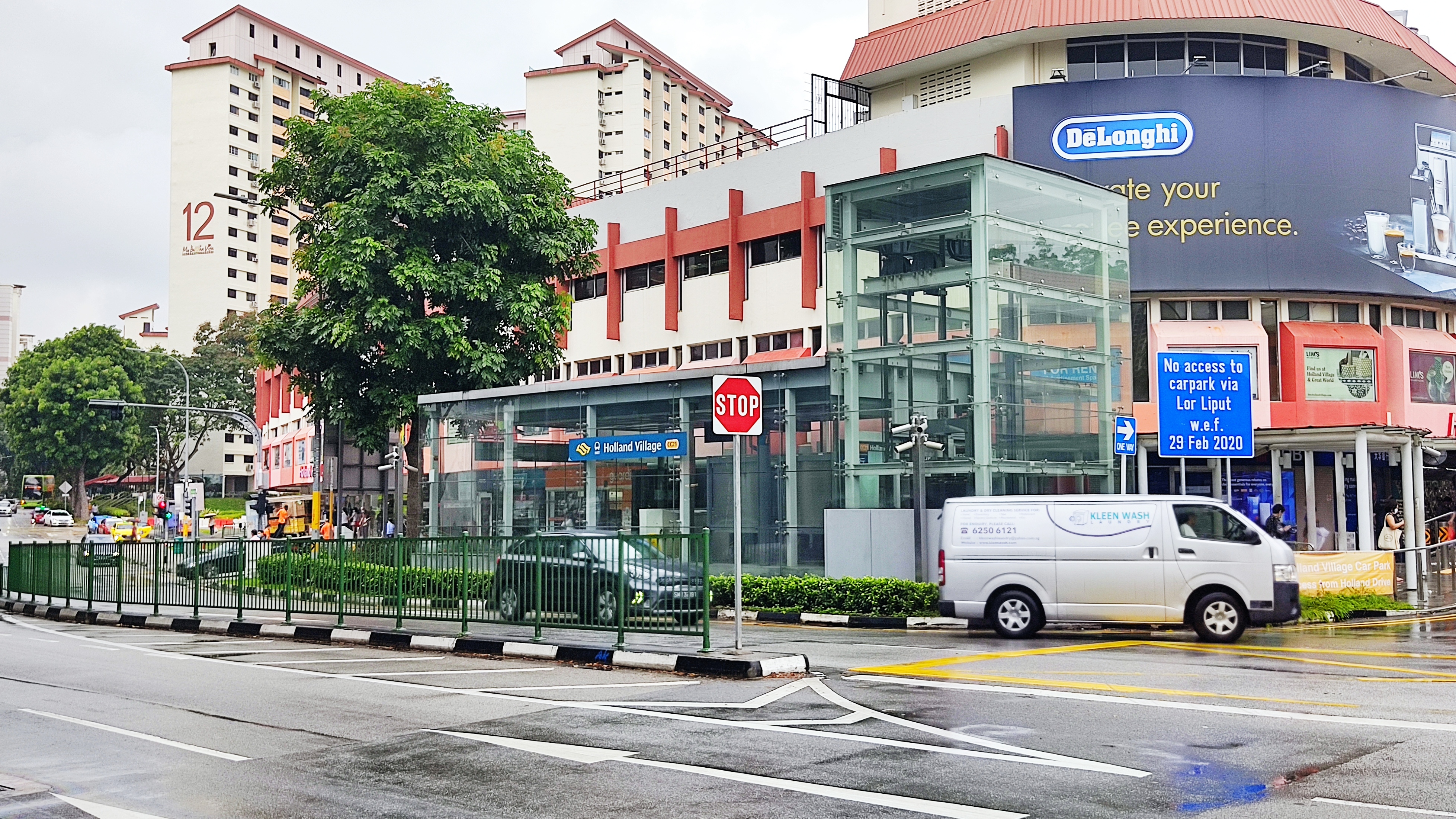
Holland Village
Holland Village is simply the best place to live in Singapore for students who want a social life. It’s practically an extension of the NUS campus culture, but it works for anyone willing to commute via the Circle Line. The vibe here is distinct: daytime is for coffee at Chip Bee Gardens; nights are for unwinding at the bars along Lorong Mambong. It’s not cheap, and it’s not exactly “steps” from the Botanic Gardens (it’s one MRT stop away), but the convenience is unmatched. In 2026, co-living spaces here are the smart play for expats wanting that “village” feel without dealing with old condo maintenance.
Rent (2026 Est.): S$2,000–3,200 (Shared/Studio)
The Commute: 15 mins to NUS (Circle Line); 25-30 mins to SMU.
The Vibe: Cafe hopping, busy nightlife, expat-heavy.
Real Talk: Great social scene, but can get noisy and pricey.
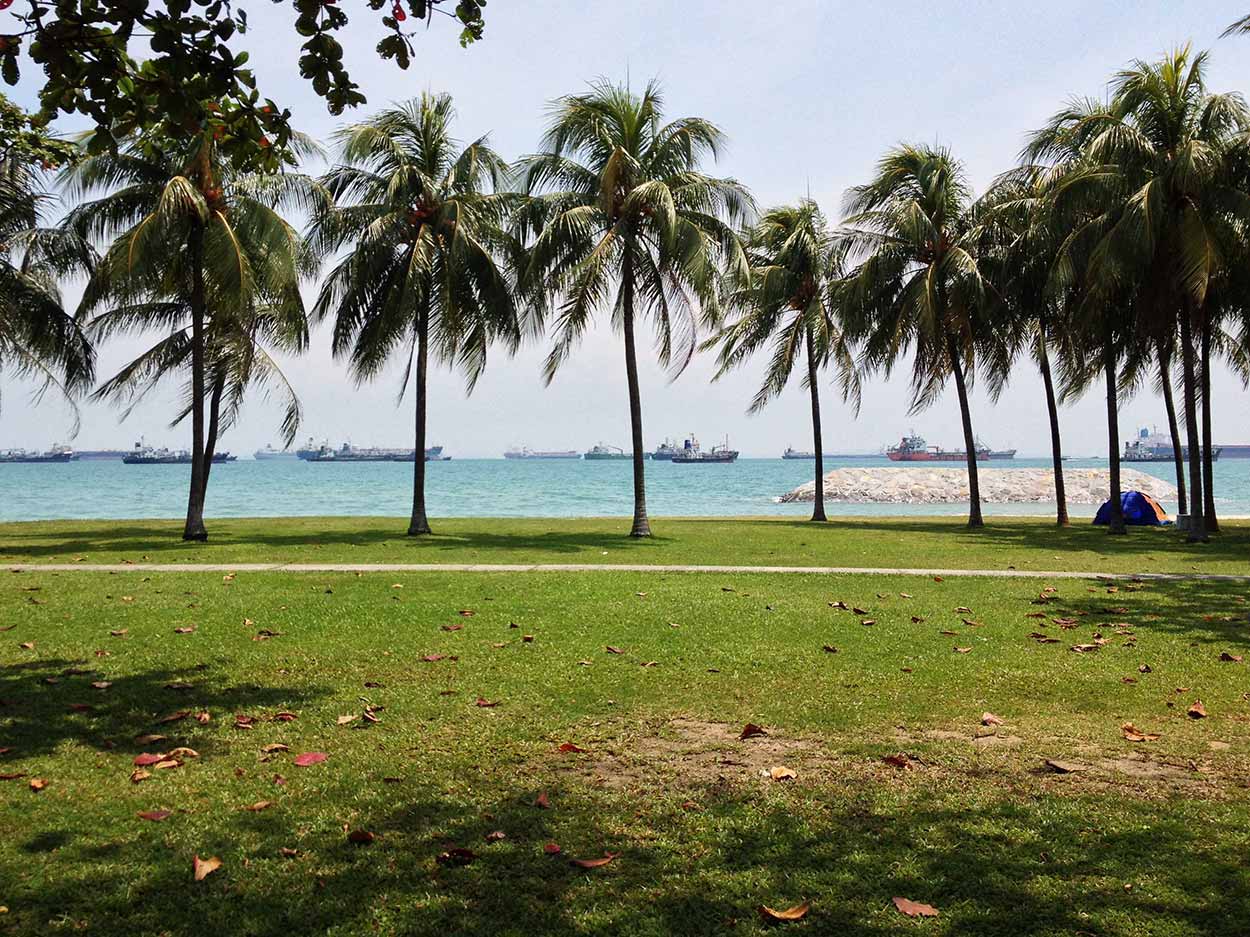
East Coast (Katong/Marine Parade)
If you hate the concrete jungle, go East, and you will find East Coast one of the best neighbourhoods in Singapore to stay. The trade-off has always been the commute, but the fully operational Thomson-East Coast Line (TEL) has finally fixed that, connecting you to the city much faster. This area is for students who want to cycle to East Coast Park on weekends or grab a late-night supper at Simpang Bedok. It is not ideal for NUS students (it’s a cross-island trek), but perfect for those at SMU or SUTD. You get more square footage here, but you lose the “campus town” feel
Rent (2026 Est.): S$1,800–2,800
The Commute: 25-40 mins to Central areas via TEL; typically too far for Jurong/West campuses.
The Vibe: Laid-back, beachside cycling, famous laksa and seafood.
Real Talk: Best lifestyle-to-rent ratio, provided your uni isn’t in the Wes
Tiong Bahru
Tiong Bahru is one of the original hipster places in Singapore. It’s less about “student vibes” and more for those who appreciate heritage architecture and decent coffee. You are paying for the aesthetic, Art Deco walk-ups and the famous market, and the incredible location right on the city fringe. It’s very close to SGH (Duke-NUS) and a quick bus ride to SMU. Just note: “short-term” leases are tricky in private estates here due to local laws (min. 3 months usually), so co-living operators are your safest bet.
Rent (2026 Est.): S$2,000–3,000
The Commute: 10-20 mins to SMU/Central via East-West Line (Outram Park).
The Vibe: Artsy, quiet mornings, bustling market food.
Real Talk: Visually stunning and central, but older apartments can have quirks (and stairs).
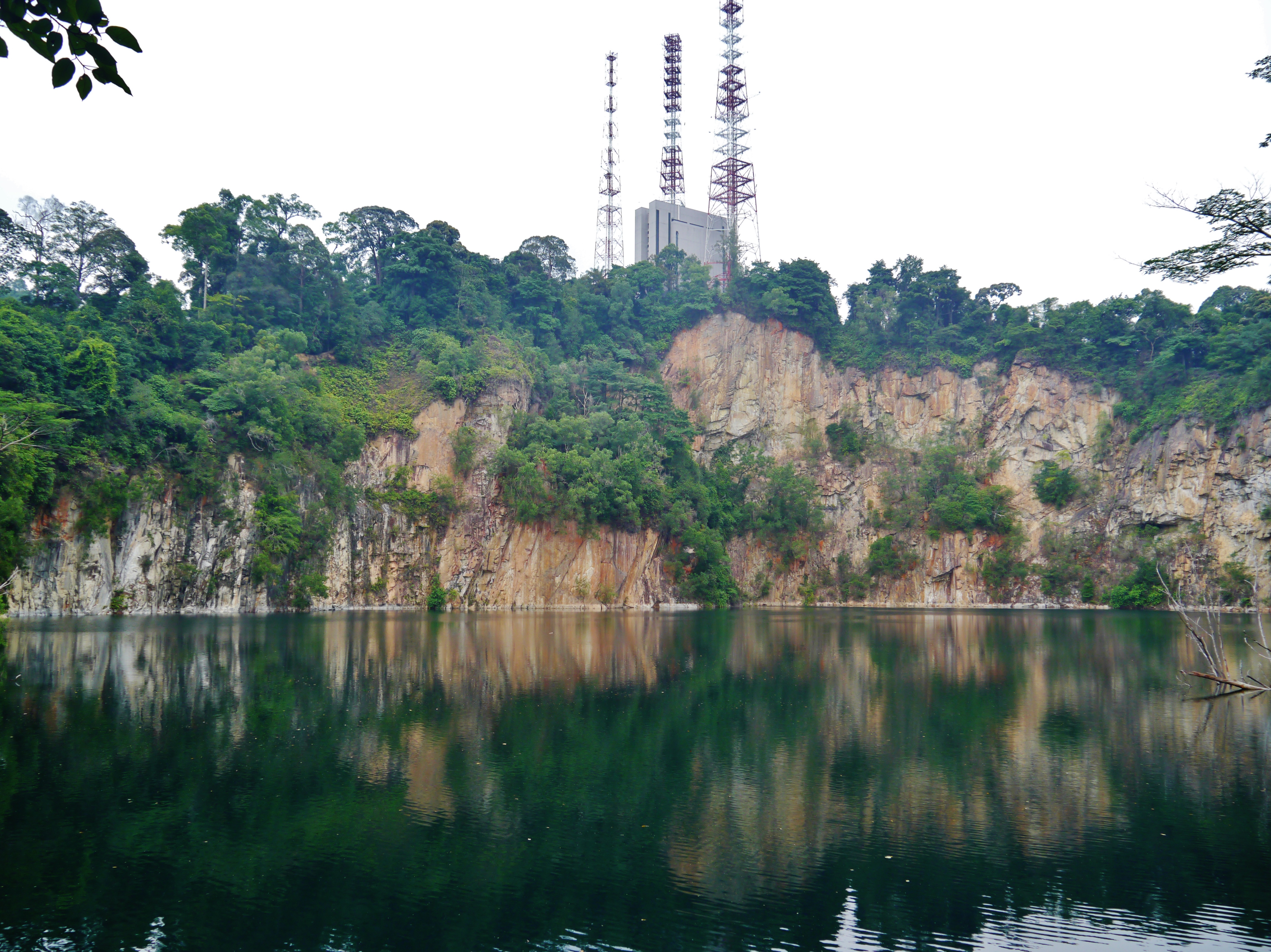
Bukit Timah
Bukit Timah is one of the most upscale Singapore neighbourhoods. It’s quiet, green, and expensive. Living here puts you near the Bukit Timah Nature Reserve and the Downtown Line (Blue), which is a straight shot to the Bugis/City area for SMU/NAFA students, or a quick interchange to the Circle Line for NUS. It’s a serious academic zone with fewer bars, more brunch spots and international supermarkets like Cold Storage. If you need absolute focus and have a higher budget, this is it.
Rent (2026 Est.): S$2,200–3,500
The Commute: 20-30 mins to NUS (via Botanic Gdns interchange) or Bugis (Direct).
The Vibe: lush greenery, private, polished.
Real Talk: Peaceful and safe, but zero nightlife. You will need Grab or the MRT to find excitement.
Clementi
Clementi is practical, unpretentious, and aggressively convenient, making it also one fo the best areas in Singapore. It is effectively “University Town” for NUS, SIM, and Ngee Ann Poly students. You don’t live here for the “glamour”; you live here because you can roll out of bed and be in class in 15 minutes. The amenities are functional: huge hawker centres, a reliable mall (Clementi Mall), and decent sports halls. It’s busy, crowded, and loud, but it saves you hours of travel time every week.
Rent (2026 Est.): S$1,700–2,800
The Commute: 5-15 mins to NUS (Bus 96 is legendary) or Poly.
The Vibe: Local heartland, student-dense, budget-friendly food.
Real Talk: Zero “cool factor,” but unbeatable logistics for West-side students.
How uhomes.com Help Students?
Finding a rental in a foreign city can be overwhelming, but uhomes.com removes the guesswork. We don’t just list properties in Singapore; we curate homes across every neighbourhood mentioned above, from the social buzz of Holland Village to the quiet focus of Bukit Timah. Here is why students trust us to handle their housing:
Massive Inventory, Tailored to You: Whether you need a private studio for deep work or a shared suite for socialising, we have the largest selection of 100% verified student housing in Singapore. We cover every lifestyle and budget preference.
1-on-1 Expert Consultants: No bots here. Our multilingual team knows Singapore inside out. You tell us your budget, university, and preferred vibe, and our consultants will pinpoint the exact area and property that fits. They guide you through the whole process, so nothing gets lost in translation.
Best Price Guarantee: We partner directly with major accommodation providers to unlock exclusive offers you won’t find on other platforms. With our Lowest Price Guarantee and frequent seasonal discounts, you are assured the best deal possible.
Proven Track Record: Safety and reliability matter. We are proud to be officially recommended by NTU and hold a stellar 4.9/5 rating on Trustpilot. When you book with uhomes.com, you are booking with confidence.

Best Neighbourhoods in Singapore for Expats
For expats, the priority is usually finding a neighbourhood that softens the landing. Let’s be real: it’s less about shaving ten minutes off your CBD commute and more about sanity, like finding a condo that actually allows big dogs or a supermarket with the cheese you miss from home. The 2026 shift is obvious. With hybrid work sticking, nobody feels glued to the city centre anymore; people are happily moving to the fringe for actual grass and bigger balconies. Rents hover between S$3,500 and S$7,000, and while you are safe walking anywhere at 3 AM, that premium price tag is really just buying you an instant social life and a pool that looks like the brochure
Holland Village
Holland V is essentially the “Expat Starter Pack“, the best district to stay in Singapore for expats, and that is not a bad thing. It is the easiest place to land if you want a social circle from day one. You have Chip Bee Gardens for your Sunday brunch and Lorong Mambong for Friday night drinks. It feels like a small town. The main trade-off? It can get noisy, and you are paying a premium for the “village” vibe rather than the apartment size.
Rent (2026 Est.): S$4,000–6,000 (1-2 bed condo)
The Commute: 20 mins to CBD (One-North is closer); Circle Line access is solid.
The Vibe: Very social, Western-friendly amenities, walkable.
Real Talk: Perfect for your first year in Singapore, but can feel a bit of a “bubble.”
East Coast (Katong & Siglap)
For years, people avoided the East because of the commute. But with the Thomson-East Coast Line (TEL) fully running in 2026, that argument is dead. This is the spot for lifestyle: cycling along the beach park, landed houses with actual backyards, and arguably the best local food in the country. It is less “polished” than Orchard but has way more character.
Rent (2026 Est.): S$3,800–5,500 (1-2 bed condo)
The Commute: 20-30 mins to CBD (much faster now with TEL).
The Vibe: Breezy, family-oriented, pet-friendly.
Real Talk: If you want a dog and a sea breeze, live here. If you need a skyscraper view, look elsewhere.
Tanglin
Tanglin is “Old Money” Singapore, also the best district in Singapore. It is leafy, quiet, and surrounds the Botanic Gardens and Dempsey Hill. There are no HDBs here, just embassies, Good Class Bungalows, and upscale low-rise condos. It’s for expats with a higher budget who want to be near Orchard Road shopping but hate the noise.
Rent (2026 Est.): S$5,000–7,500+ (Expect steep prices)
The Commute: 10-15 mins to Orchard/CBD (mostly by bus or car; MRT is on the fringe).
The Vibe: Exclusive, green, private.
Real Talk: You need a car (or a big Grab budget) to make the most of living here.
Woodlands
Woodlands is called the “Deep North.” Why live here? Two reasons: Size and School. It is the hub for families attending the Singapore American School (SAS). You get massive American-style houses or sprawling condos for half the price of a central shoebox. It is a long haul to the city, but the upcoming RTS link to Johor Bahru (Malaysia) makes weekend trips across the border incredibly easy.
- Rent (2026 Est.): S$3,000–4,800 (You get way more space for this).
- The Commute: 35-50 mins to CBD (The brown line helps, but it is still a trek).
- The Vibe: Suburban America meets Singapore heartland.
- Real Talk: Only choose this if you work in the North or your kids go to SAS. Otherwise, the commute will drain you.
Tiong Bahru
If Tanglin is for the suit-and-tie crowd, Tiong Bahru is the best district to stay in Singapore for the creatives. It is famous for its pre-war walk-up apartments (often no elevators/pools) and hipster alleyways. You are paying for the aesthetic and the location, it is incredibly close to the CBD. Just be warned: “heritage” living often means dealing with older plumbing and less soundproofing.
Rent (2026 Est.): S$4,000–6,000
The Commute: <15 mins to CBD (Green Line or bus).
The Vibe: Indie bookstores, French bakeries, wet market chaos.
Real Talk: Incredibly cool, but make sure you are okay with the quirks of living in an older building.
Best Place to Live in Singapore for Families
For families, the housing equation changes completely. It is no longer about being near the coolest bars; it is about asking, “How long is the school bus ride?” and “Can we actually afford a 3-bedroom unit here?” In 2026, with hybrid work sticking around, more parents are willing to trade a longer commute for the space and sanity of the suburbs.
- Woodlands
If your kids attend the Singapore American School (SAS), you live here. Period. It is known as “Little America” for a reason. While it is a long haul to the CBD (40+ mins), the trade-off is undeniable: you get massive condos or landed houses with actual backyards for a fraction of the cost of central areas. Plus, the community is tight-knit, Halloween here is legendary.
- Serangoon (Lorong Chuan)
This is the strategic middle ground. It is the go-to zone for families with kids at the Australian International School (AIS) or the International French School (IFS). You are not right in the city, but you are not in the wilderness either. The Circle Line connects you everywhere, and the massive NEX Mall means you can get groceries, banking, and dinner done without leaving the postcode.
- East Coast (Katong & Siglap)
This is the “lifestyle” choice. If you want your kids growing up cycling to the beach on weekends rather than just hanging out in air-conditioned malls, pick the East. It feels less like a concrete jungle and more like a neighbourhood. It is popular with families at the Canadian International School (Tanjong Katong) or those willing to bus to UWCSEA East.
- Bukit Timah
The “Blue-Chip” suburb. It is expensive, leafy, and quiet. You are paying a premium for privacy and proximity to a cluster of top schools (Swiss School, German European School, Hollandse School). It is fantastic for hiking at the Rail Corridor, but be warned: unless you live right next to a Downtown Line station, you will likely want a car here to shuttle the kids around.
Most Expensive Districts in Singapore
Let’s talk big money, the most expensive districts in Singapore. If you are looking at these areas, you are likely dropping S$6,000 a month minimum, and that is just the entry price. But don’t assume they are all the same; a penthouse in Orchard feels completely different from a villa in Sentosa.
- Tanglin
This is proper “Old Money” territory. It is quiet, green, and packed with embassies and Good Class Bungalows (GCBs). The catch? It is arguably the least connected spot for public transport. You live here if you have a car, value privacy above all else, and want your Sunday brunch at Dempsey Hill without the trek. It is elite, but it can feel a bit isolated.
- Orchard
Orchard is loud. You are essentially paying for the privilege of living inside a shopping mall. It is incredibly convenient if you hate commuting, you can literally take an elevator down to buy luxury goods, but don’t expect a “neighbourhood” feel. It is tourists, traffic, and neon lights, 24/7. If you want peace, look elsewhere; this is strictly for the city slickers.
- Bukit Timah (District 10)
This is where the real money sits. It is lush, private, and full of massive landed homes that make you forget you are in a city. The catch? The traffic on Bukit Timah Road during school drop-off hours is legendary. You live here for the status and the space, not the accessibility. Unless you have a driver, the morning rush can be a headache.
- Sentosa (The Cove)
Sentosa Cove is its own universe. It is the only spot in Singapore where you can park a yacht at your back door. But let’s be real: the “resort life” wears off the moment you need to commute back to the mainland for a meeting. Crossing that bridge every day gets old fast. It’s a bubble, a very expensive, beautiful bubble.
- River Valley
River Valley used to be just “near Orchard,” but since the Great World MRT station opened, it has become the default choice for high-earners. It feels less sterile than the CBD and more livable than Orchard. You see tons of young expat families and dogs along the river promenade in the evenings. It’s pricey, but it actually feels like a community.
Affodable Areas in Singapore
Let’s be realistic: Singapore is expensive. But if you are willing to trade a bit of travel time for space, or swap a condo pool for a public park, you can absolutely live here without burning a hole in your pocket. The “Heartlands” (suburbs) are where the real local life happens anyway. Check our listed budget-friendly areas to live in Singapore:
- East Coast (Bedok & Siglap)
Don’t confuse this with the pricey condos on Amber Road. If you look slightly further out at Bedok or the HDB estates in Siglap, the rent drops significantly. You still get the beach lifestyle and the cycling paths, but you are paying “heartland” prices. Plus, you are next to the Bedok 85 Fengshan Centre, arguably the best late-night supper spot in the country.
The Trade-off: Older buildings, but way more character (and food).
- Woodlands
We mentioned this for families, but it applies to budget hunters too. It is the cheapest entry point for renting a whole unit. In 2026, the big bonus here is the RTS Link to Johor Bahru. You can hop on a train and be in Malaysia in minutes for cheap groceries and shopping. You get massive square footage here; you just have to accept the long MRT ride to the city.
The Trade-off: Distance. You will be reading a lot of books on your commute.
- Serangoon
This is the pragmatic choice. It sits comfortably in the “central-north” sweet spot. The rents are reasonable because it’s a dense residential zone, not a tourist hub. But between the massive NEX Mall (which has everything) and the famous Chomp Chomp Food Centre for satay, you barely need to leave the neighbourhood. It is safe, busy, and incredibly convenient thanks to the Circle Line.
The Trade-off: It’s crowded. The mall and trains are packed during rush hour.
- Tiong Bahru (The HDB Hack)
The white Art Deco walk-up apartments you see on Instagram are expensive. But, if you rent an HDB flat in the blocks right behind them (Bukit Ho Swee or Boon Tiong), you get the same location, 5 minutes to the CBD, trendy cafes at your doorstep, for a fraction of the price. It is the smartest way to live centrally on a budget.
The Trade-off: You are living in a standard public housing block, not the “aesthetic” heritage units.
Tips for Choose Best Place to Live in Singapore
Finding a place in Singapore is less about “aligning lifestyles” and more about managing trade-offs. You rarely get the trifecta of Big, Central, and Cheap. You usually have to pick two. Here is how to make the right choice without the headache:
1. The “Sweat Test” is Real: Don’t just look at a map and say, “Oh, it’s only a 15-minute walk to the MRT.” In Singapore’s humidity, a 15-minute walk in work clothes is a nightmare. Always test your commute during the day. If the walk to the station isn’t sheltered, you will arrive at the office drenched. Use Citymapper (it’s better than Google Maps here) to check the actual door-to-door time, including bus transfers.
2. Scout the Food Options: Your kitchen might be small, so you will likely eat out a lot. Visit the neighbourhood at 7 PM. Is the local Hawker Centre buzzing? Is there a 24-hour NTUC FairPrice supermarket nearby? If you have to take a bus just to buy milk or grab a S$5 chicken rice, the location isn’t convenient, no matter what the agent says.
3. Know the “Hidden” Costs: Rent is just the start.
Utilities: Factor in S$150–300 monthly depending on how much you run the air-con.
The “Diplomatic Clause”: If you are an expat on a 2-year lease, ensure this clause is in your contract. It lets you break the lease early if you lose your job or get transferred.
Agent Fees: In the lower rental brackets (<S$3,500), tenants often have to pay the agent’s commission (usually half a month’s rent per year of lease). clarify this before viewing.
4. Avoid the “Short-Term” Trap Warning: Be very careful with “short-term trials.” Airbnb is heavily restricted in Singapore (minimum 3-month rentals for private condos). Don’t get caught in an illegal rental scam. If you need a temporary landing pad, stick to serviced apartments or legitimate co-living hotels.
5. The Ultimate Shortcut: uhomes.com Let’s be honest: scrolling through endless listings and dodging dodgy agents is exhausting. This is where uhomes.com changes the game.
Zero Guesswork: We filter out the noise. Whether you need a student-friendly studio near NUS or a family condo in the East, our listings are 100% verified.
Bypass the Scams: Our consultants act as your safety net, handling the viewing arrangements and paperwork so you don’t have to worry about fake landlords or illegal lease terms.
Exclusive Student Perks: If you are studying, we have established partnerships that often waive admin fees or secure lower deposits, deals you won’t find going solo.
Final Thoughts
Let’s be real: the best neighbourhoods in Singapore are the ones that actually fit your daily grind, not just the ones that look good on paper. Holland Village might have the energy, but maybe the quiet stretch of the East Coast is what you actually need to recharge. With rents in 2026 finally stabilising, you have the luxury to be picky. Whether you choose the massive space in Woodlands or the practical convenience of Serangoon, do the legwork. Go there, walk the streets, and trust your gut over a glossy brochure. The right home isn’t about the amenities list; it’s about where you feel comfortable after a long day.
FAQ
What are the best neighbourhoods to live in Singapore for students?
The best areas for students in Singapore are Holland Village, East Coast, Tiong Bahru, Bukit Timah, and Clementi. These neighbourhoods offer good proximity to universities (especially NUS and SMU), affordable shared/studio options (S$1,700–3,500/month), vibrant cafes, hawker food, and easy MRT access for daily commutes.
What is the best place to live in Singapore for foreigners?
The best places for foreigners (expats) in Singapore are Holland Village, East Coast, Tanglin, Woodlands, and Tiong Bahru. These areas provide strong international communities, English-friendly environments, global supermarkets, and convenient commutes to CBD or Changi, with condo rents typically S$3,500–7,000/month.
What is the best area to live in Singapore for families?
The best areas for families in Singapore are Woodlands, Serangoon, East Coast, and Bukit Timah. They feature proximity to international schools, spacious condos/HDB, parks, playgrounds, and safe suburban vibes, offering good value and family-oriented amenities.
What is the best area to live in Singapore for tourists?
Singapore is not typically a long-term “live” destination for tourists; most visitors stay short-term in central areas like Orchard, Marina Bay, or Chinatown. For short stays, these offer easy access to attractions, shopping malls, nightlife, and major MRT lines, with hotels and serviced apartments widely available.
What are the best neighbourhoods in Singapore to visit?
The best neighbourhoods to visit in Singapore are Orchard, Chinatown, Little India, Kampong Glam, and Tiong Bahru. They provide iconic shopping, cultural heritage, street food, vibrant street art, and historic shophouses, making them perfect for day trips or weekend exploration.
What is the best place to live in Singapore for couples?
The best places for couples in Singapore are Holland Village, Tiong Bahru, River Valley, and East Coast. These neighbourhoods offer trendy cafes, romantic dining, walkable streets, nightlife options, and a mix of urban energy or relaxed coastal vibes, with convenient central access.
Where do expats live in Singapore?
Expats in Singapore commonly live in Holland Village, East Coast, Tanglin, Woodlands, Bukit Timah, and Tiong Bahru. These areas attract international communities with English-speaking environments, expat clubs, international schools, and amenities like global supermarkets and easy CBD/airport commutes.
Which is the most expensive street in Singapore?
The most expensive streets in Singapore are located in Tanglin, Orchard, and Bukit Timah neighborhoods. These areas feature luxury condos and villas with rents often exceeding S$6,000+ monthly, thanks to prime locations near embassies, shopping, gardens, and high-end amenities.
Are there any cheap places in to live Singapore?
Yes, there are affordable places to live in Singapore such as East Coast, Woodlands, Serangoon, and Tiong Bahru. These neighbourhoods offer good value with rents typically in the S$1,500–3,500 range, solid MRT access, hawker food, parks, and everyday amenities suitable for students or budget expats.
Is Singapore a good place to live?
Yes, Singapore is widely considered one of the best places to live in the world. It offers exceptional safety, world-class public transport, clean streets, multicultural food, high-quality healthcare/education, and efficient infrastructure, making it highly attractive for students, expats, and families despite the higher cost of living in central areas.