



Home for Global Students
4.9/5
GET APP

Buffalo Cost of Living: A Complete Guide

By Loria
buffalo cost of living
Buffalo is cheaper than many people expect, especially for a city in New York State. Housing and transportation make the biggest difference to a monthly budget. This guide looks at what people actually pay for rent, utilities, food, transportation and other living expenses in Buffalo, New York.

Buffalo Cost of Living: Monthly Budget Breakdown

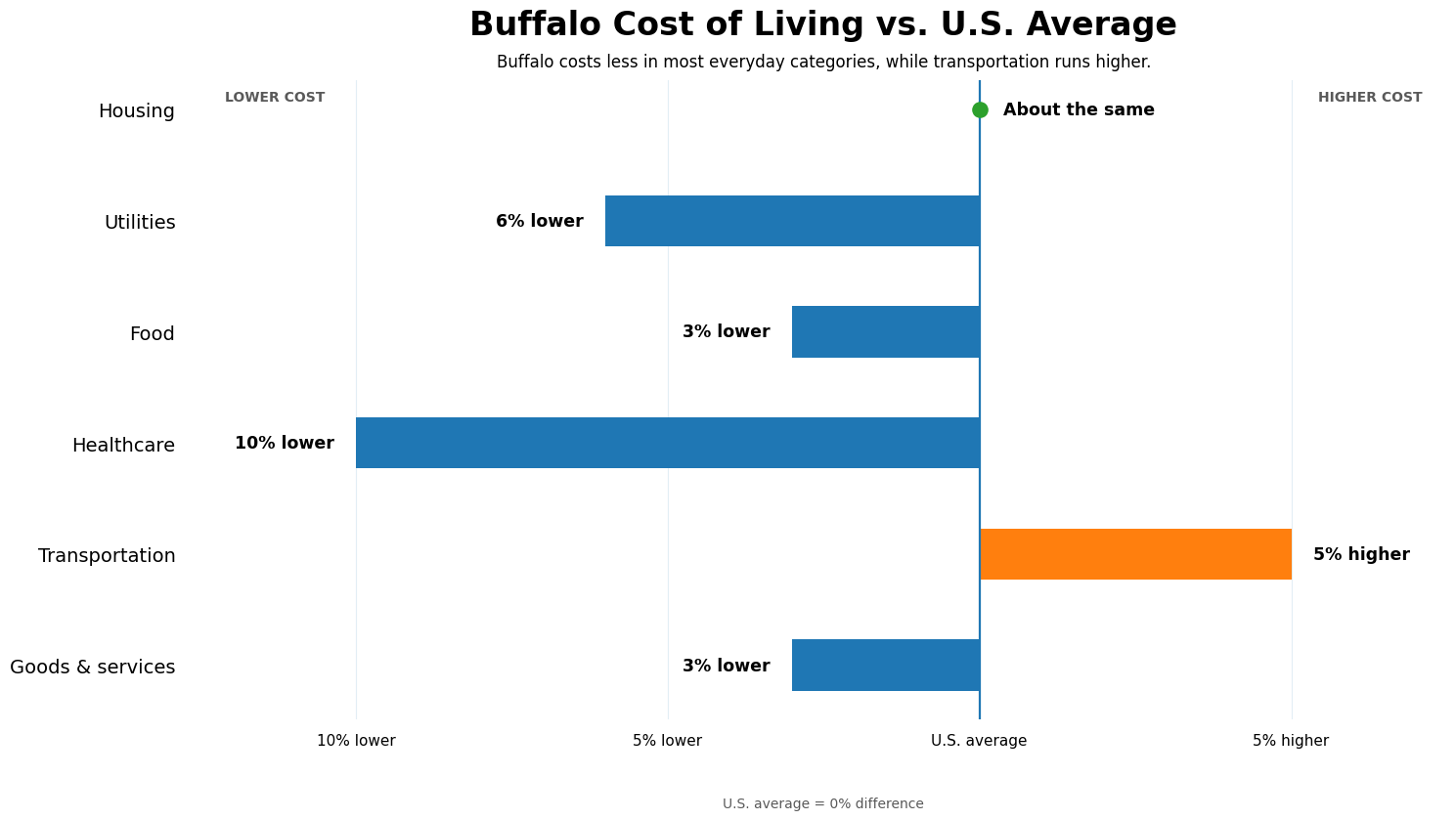
The cost of living in Buffalo, NY is about 2% below the U.S. average and 45% below the New York State average. The lower overall figure does not mean every expense is cheaper. Utilities and healthcare come in below the national average, housing is roughly on par, and transportation is one of the few areas where Buffalo costs more.

buffalo cost of living vs. U.S. Average

Cost of living in Buffalo NY for single person is about $39,340 after tax per year in Erie County. That works out to about $3,278 per month. Housing takes the largest share at about $1,144 per month. Transportation is next at about $652.

Basic Expense for One Adult Approx. Monthly Cost
Housing $1,144
Transportation $652
Food $386
Medical $289
Internet & mobile $127
Other and civic expenses $681
Total $3,278

For a single adult in Buffalo, the living wage is about $23.13 per hour, or roughly $48,102 per year before tax. By comparison, the average salary in Buffalo, NY, is around $66,477 a year for full-time work, based on an average hourly wage of $31.96.

Buffalo Cost of Living for Students

Student living costs in Buffalo are easier to estimate from university off-campus budgets. Below is a comparison between two major universities in Buffalo. For undergraduates, University at Buffalo estimates $25,422 per academic year for housing, food, books, transportation and personal expenses. Buffalo State estimates $23,514 for the same main categories. Tuition and required university fees are separate. These are planning allowances rather than fixed bills. Actual spending changes with the lease, room type and commute. Both universities also state that students may spend more or less than the published estimates.

Living Expense University at Buffalo Buffalo State University
Housing $10,376 $10,988
Meals $8,230 $7,500
Books and supplies $1,500 $1,052
Personal expenses $2,238 $1,992
Transportation $3,078 $1,982
Total living expenses $25,422 $23,514

Students who want more control over the budget can find UB off-campus housing and Buffalo State housing with shared apartments and furnished rooms. Some listings also include utilities or campus shuttle access, which can make monthly costs easier to manage. Those features can reduce move-in costs or transportation spending instead of simply lowering the advertised rent.

Buffalo Cost of Living: Housing

Housing takes the largest share of the budget for many people living in Buffalo, NY. The average rent in Buffalo NY is currently $1,451 per month, up 4.66% from a year earlier. Rent varies much more by apartment size than the citywide average suggests. Studios average just over $1,000. One-bedroom apartments cost about $1,301, while a typical two-bedroom rents for $1,542.
Apartment Type Average Rent Average Size
Studio $1,048/month 447 sq. ft.
1 bedroom $1,301/month 669 sq. ft.
2 bedrooms $1,542/month 879 sq. ft.
3 bedrooms $1,602/month 1,217 sq. ft.

Student Housing in Buffalo, NY

Student housing buffalo NY gives students more budget-friendly choices than renting a typical apartment alone. You can find cheap student apartments built around campus life starting from $575/month on uhomes.com. Properties near University at Buffalo and Buffalo State can offer easier access to campus, public transit, and everyday shopping. Furnished rooms, flexible room types and shared amenities make them more practical for students who do not want to set up a full apartment from scratch.

Buffalo Cost of Living: Utilities

bill

Utilities in Buffalo cost about 6% less than the national average. A typical household energy bill is around $199.38 per month. The average electric bill in Buffalo, NY is usually around $105–$243 per month, depending on apartment size, electricity use and the season. Larger homes or electric heating can push the bill toward the higher end of the range.

Internet and mobile service add about $127 per month for one adult. Renters should also check whether water, heat or internet is already included in the rent before adding these costs to the monthly budget.

Buffalo Cost of Living: Food & Groceries

A single adult in Buffalo spends about $386 a month on groceries, or roughly $4,627 a year. Food costs are about 3% below the U.S. average. So cooking at home can ekpp this part of the budget fairly manageable.

Here are some sommon grocery prices in Buffalo for reference.

Grocery Item Average Price
Bread $3.66
Milk, 1 gallon $4.90
Eggs, dozen $4.48
Ground beef $7.59
Potatoes $4.94
Bananas $0.74
Coffee $6.48
Cooking oil $7.95

Eating out can change the living expenses in Buffalo, New York, quickly. A benchmark hamburger costs about $6.97. And pizza is around $12.99. A meal at an inexpensive restaurant is around $22.50 per person, while a three-course meal for two at a mid-range restaurant is about $95. A fast-food combo costs around $12, and a regular cappuccino is about $5.88.

Buffalo Cost of Living: Transportation

Transportation is one of the few parts of the Buffalo NY cost of living that sits above the national average, about 5% higher. NFTA Metro charges $2 for a regular bus or rail ride. The Metro Rail runs between universities and Downtown Buffalo. And the above-ground section between Fountain Plaza and DL & W Station is free to ride. 

NFTA Metro Fare Cost
Single ride $2
Daily fare cap $5
Weekly fare cap $25
Monthly fare cap $75

Students also have extra transportation options:

  • University at Buffalo: UB Stampede buses and campus shuttles connect the North, South, and Downtown campuses. Students can use these services without paying a separate fare. And students parking registration also has no additional charge for most students.
  • Buffalo State University: Campus shuttles run during the day and evening. A separate grocery shuttle also takes students to Tops and Wegmans. Students who bring a car pay $70 per academic year for a campus parking permit.

Cycling is another low-cost option for shorter trips. Reddy Bikeshare charges a $3 setup fee and $0.1 per minute on its pay-as-you-go plan. Frequent riders can choose a $40 annual pass, with standard bike rides costing $0.01 per minute.

Driving is usually more expensive choice once gas, parking, insurance, and maintenance are added. This is why a slighly higher rent near downtown or a Metro Rail stop can sometimes lead to lower total cost of living in Buffalo New York.

Buffalo Cost of Living: Healthcare

Healthcare costs in Buffalo are about 10% below the national average. MIT budgets $3,464 per year for medical expenses for one adult, which works out to roughly $289 per month. Current C2ER prices for common services are:
Healthcare Expense Average Cost
Doctor visit $120.79
Dentist visit $105.46
Optometrist visit $98.47
Ibuprofen $11.73

Health insurance makes the biggest difference to the final cost. Someone covered by an employer or university plan may mainly pay premiums, copays and deductibles, while an uninsured resident can face much higher out-of-pocket costs.

  • Individual insurance: A low-cost Silver plan in Erie County is around $582/month before subsides. Eligible residents may pay much less after financial assistance.
  • Domestic students: Many domestic students use family, employer, private, or Marketplace coverage. There is no fixed student insurance price.
  • University at Buffalo international students: Health insurance is about $2,403 per year.
  • Buffalo State international students: Mandatory international student health insurance is about $2,371 per academic year.

Buffalo Cost of Living: Entertainment

Entertainment and everyday services in Buffalo cost about 3% less than the national average. Entertainment and personal spending in Buffalo can stay fairly modest, but regular small expenses add up over a month. A movie ticket is around $15.92, while a gym membership averages about $36 per month. Personal services such as haircuts and dry cleaning usually cost around $20–$25 each.
Item Average Cost
Movie ticket $15.92
Gym membership $36/month
Yoga session $15.05
Haircut $24.00
Beauty salon $54.01
Dry cleaning $20.83

So, $100–$200 per month is a more realistic starting range for basic entertainment and personal spending living in Buffalo NY. Someone who goes out often or pays for several subscriptions will need more.

Buffalo Cost of Living: Taxes

Taxes are another part of the Buffalo cost of living that can change the final monthly budget. Buffalo does not charge a separate city personal income tax, but residents still need to consider New York State income tax, sales tax and property tax.

  • New York State income tax: Single filers pay rates from 3.9% to 10.9%. Taxable income between $13,900 and $80,650 falls into the 5.4%marginal tax bracket.
  • Sales tax: Most taxable purchases in Buffalo are subject to an 8.75% combines sales tax. This comes from the 4% New York State rate plus the local Erie County rate.
  • Groceries: Most groceries bought for home cooking are exempt from sales tax. Prepared food, restaurant meals, and some drinks are still taxable.
  • Property tax: Homeowners also need to budget for city, county, and school property taxes. The amount depends on the property’s assessed value and any exemptions that apply.
For renters, income tax and sales tax are the costs that show up more often in everyday spending. Homeowners have more to factor in. Property tax, insurance and maintenance all sit on top of the mortgage and can raise the real cost of living in Buffalo, New York.

How to Lower the Cost of Living in Buffalo?

The easiest way to lower the living cost in Buffalo, NY is usually to look at housing and transportation first. These are also the areas where a few practical choices can save the most each month.

  • Share a larger apartment: A two- or three-bedroom apartment can bring the average rent in Buffalo down compared with living alone. Roommates can also split utilities and internet.
  • Look for furnished or bills-included housing: Furnished apartments save the upfront cost of buying basic furniture. Bills-included options can also make the monthly budget easier to control.
  • Use a rental platform to look for better-value options: uhomes.com is a professional housing platform offering apartments for rent in Buffalo. Listings can be filtered by rent, room type, furnishing, amenity, and lease term. The platform also offers no service fee, cashback and discounts, plus a Lowest Price Gurantee on eligible bookings. These benefits can reduce the extra cost of finding and booking accommodation.
  • Check the commute before choosing the cheapest rent: A lower-priced apartment may not save much if it comes with regular gas or parking costs. Living near downtown or an NFTA route can keep the average cost of living in Buffalo, NY lower over the full lease.
  • Use Buffalo’s free Metro Rail section when the route works: People who live or study along Fountain Plaza and DL & W Station in Downtown Buffalo can make short downtown trips without paying a fare. Regular riders outside the free section are capped at $75/month.
  • Apply for heating assistance if eligible: Buffalo winters can make heating one of the bigger seasonal bills. Erie County’s HEAP program helps eligible households with heating costs. For 2026-27, a one-person household can earn up to $3,563 per month. Benefits start at $21 when heat is included in subsidized housing, while households paying directly for electric or natural-gas heat may receive around $400 plus applicable add-ons.
  • Add up the full cost before signing a lease: Rent is only one number. Utilities, furniture, and transportation should be counted too. Looking at them together gives a much clearer picture of the living expenses in Buffalo, New York.

Conclusion

Buffalo is relatively affordable by New York standards, but it is not uniformly cheap. Housing, utilities and healthcare are manageable compared with many other parts of the state. Transportation is the category most likely to push the budget higher. For a single person, MIT’s basic-needs estimate of about $3,278 per month is a useful starting point. Renters can move above or below that figure quickly depending on apartment choice and car use. Students have more room to adjust the housing portion through shared, furnished or campus-connected rentals. That makes the Buffalo cost of living less about one citywide index and more about two practical decisions: where to live and how to get around.

FAQ

The cost of living in Buffalo, NY is about 2% below the national average and 45% below the New York State average. Utilities, food and healthcare are cheaper than the U.S. average, while transportation costs about 5% more.

No, Buffalo is not particularly expensive by U.S. standards. Its overall living costs are slightly below the national average. A single adult in Erie County needs about $48,102 before taxes to cover basic annual expenses according to MIT.

The average rent in Buffalo, NY is $1,451 per month. Studios average $1,048, one-bedroom apartments cost $1,301 and two-bedroom apartments average $1,542.

A single adult needs about $3,278 per month after taxes for basic needs in Erie County based on MIT’s current estimate. This figure covers housing, food, transportation, healthcare, internet and other basic expenses.

One adult with no children needs $48,102 before taxes per year to cover basic needs in Erie County. A comfortable salary would normally need to be higher because the MIT figure does not represent discretionary or luxury spending.

Non-tuition living expenses is about $25,422 per academic year for University at Buffalo undergraduates and $23,514 for Buffalo State students. These estimates cover housing, meals, books, transportation, and personal expenses.

Yes, Buffalo can work well for people who want living costs close to or slightly below the national average. Rent, utilities and healthcare are relatively manageable, while transportation can take a larger share of the budget. For students, the best value depends heavily on housing type and distance from campus.

uhomes.com | Student Accommodation,Flats,Houses,Apartments for Rent
What can I do for you?
ASK ME