

London travel zones can be confusing for tourists and students, but understanding them is crucial for navigating the city’s transport system. Here, we’ve compiled the most comprehensive guide about London travel zones, also known as London transport zones or London metro zones, covering details of London Zones 1-9, along with their fares and rents. Read on with us and commute through this stunning city in a breeze!
What are London Travel Zones?
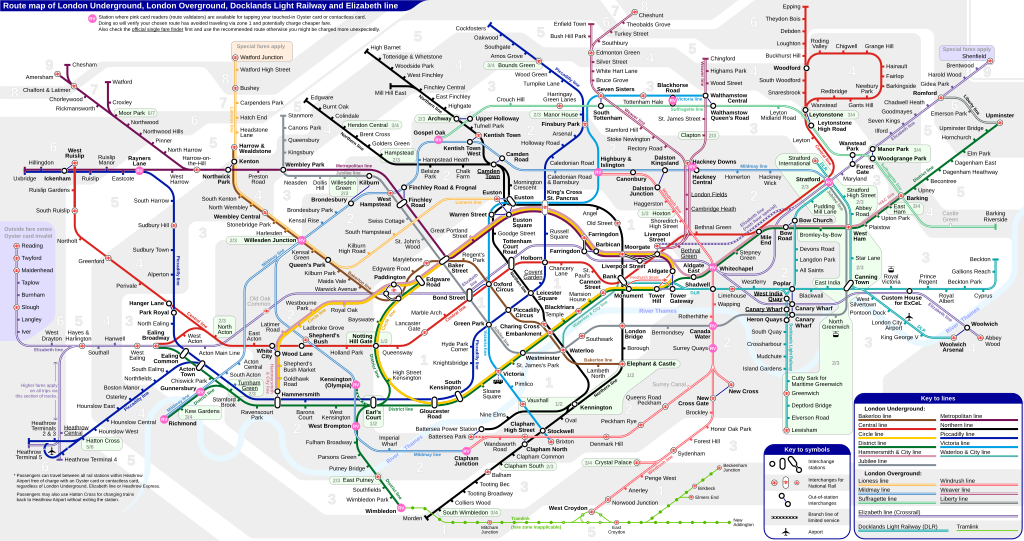
London Travel Zones are a fare system used to determine public transportation costs in London, covering the Tube, Overground, DLR, National Rail, and buses. The system is divided into nine concentric zones, with Zone 1 at the center, encompassing Central London and its major landmarks, and Zones 2-9 radiating outwards to the city’s outskirts and neighboring areas. Travel fares depend on the number of zones crossed, and maps provided by Transport for London (TfL) help travelers plan their journeys and understand fare structures.
Here are London zones 1 to 9, which are the 9 main travel zones in London:
- Zone 1: Central London, key stations like Waterloo and King’s Cross.
- Zone 2: Bustling inner districts with hotspots such as Camden Market and the Olympic Park.
- Zone 3: A mix of residential areas and new developments, with major hubs like Stratford.
- Zone 4: Quieter suburban edges begin here, offering large green parks near stations like Richmond.
- Zone 5: A commuter belt zone, linking to major districts including Bromley and Croydon.
- Zone 6: London’s boundary, home to Heathrow Airport and stretches of green belt.
- Zone 7: Northwestern commuter areas along the Metropolitan line, serving towns such as Watford.
- Zone 8: A smaller zone with limited stops, including the interchange at Chalfont & Latimer.
- Zone 9: The outermost stops on the Metropolitan line, like Amersham, connect to National Rail.
What Are Zones 1 to 9 in London?
London Zone 1: Central London
What Areas are in Zone 1 in London?
What Attractions are in London’s Zone 1?
| Station Name (Tube/Rail) | Major Attractions Nearby |
|---|---|
| Westminster | Houses of Parliament, Big Ben, Westminster Abbey |
| Waterloo | London Eye, Southbank Centre, National Theatre |
| Southwark (Jubilee Line) | Tate Modern, Shakespeare’s Globe Theatre |
| Leicester Square | Chinatown, West End Theatres, National Gallery, National Portrait Gallery, Covent Garden |
| St. Paul’s | St. Paul’s Cathedral |
| London Bridge | The Shard, HMS Belfast, Tower Bridge (short walk), Borough Market (short walk) |
| Green Park | Buckingham Palace (for Changing the Guard), Green Park itself |
| South Kensington | Victoria and Albert Museum (V&A), Natural History Museum, Science Museum |
| Charing Cross | Trafalgar Square, National Gallery, Nelson’s Column |
| Tower Hill | Tower of London, Tower Bridge |
| Covent Garden | Covent Garden Market, Royal Opera House |
| Baker Street | Madame Tussauds, Sherlock Holmes Museum |
What Tube Lines are for London’s Zone 1?
All London Underground lines have stations located within Zone 1. Stations in this zone are usually nearby, such as Covent Garden and Leicester Square, which are just 0.3 kilometers (0.2 miles) apart—the shortest distance between any two stations in the network.
London Zone 2: Inner London
What Areas are in Zone 2 in London?
What Attractions are in London’s Zone 2?
| Station Name | Major Attractions Nearby |
|---|---|
| Hampstead | Hampstead Heath, Burgh House & Hampstead Museum, Kenwood House |
| Greenwich | Royal Observatory & Greenwich Meridian Line, National Maritime Museum,Greenwich Park |
| Canary Wharf | Fairgame |
| North Greenwich | The O2 Arena |
| Camden Town | Camden Market |
| Brixton | Brixton Market |
| Wimbledon | Wimbledon Lawn Tennis Museum |
| Putney | Wetland Centre |
What Tube Lines are for London’s Zone 2?
London Zone 3: Inner-Suburban Transition
What Areas are in Zone 3 in London?
London Zone 3 covers parts of several boroughs, forming a diverse community landscape. These areas usually feature mature commercial streets, green parks, and an increasing number of residential development projects.
The main administrative regions (parts) covered by Zone 3:
- East: Newham, Tower Hamlets, Greenwich, Waltham Forest
- South: Lewisham, Wandsworth, Lambeth, Merton, Croydon
- West: Ealing, Richmond upon Thames
- North: Haringey, Barnet, Hackney, Brent
These areas are characterized by a high degree of urbanization, but at the same time retain a strong sense of community. For instance, the Stratford area underwent a large-scale reconstruction due to the 2012 Olympics and has now become a modern center integrating shopping, entertainment and transportation hubs.
What Attractions are in London’s Zone 3 ?
| Attraction Name | Nearest Station | Highlight |
|---|---|---|
| Alexandra Palace | Alexandra Palace (National Rail) | Historic entertainment venue offering spectacular panoramic views of London and hosting various concerts and exhibitions. |
| Tooting Bec Lido | Tooting Bec (Northern Line) | One of the largest freshwater open-air swimming pools in the UK, a popular summer leisure spot. |
| Royal Air Force Museum | Colindale (Northern Line) | Houses a vast collection of historic aircraft and aviation artifacts, a must-visit for aviation enthusiasts. |
| Richmond Park | Richmond (District Line/Overground) | One of Europe’s largest urban parks, famous for its free-roaming deer and extensive natural landscapes. |
What Tube Lines are for London’s Zone 3 ?
- Tube: District Line, Central Line, Jubilee Line, Piccadilly Line, Metropolitan Line, Northern Line, Victoria Line
- Overground: The London Overground network has numerous stations in Zone 3, providing orbital and radial transport services.
- National Rail: Many commuter train stations are located in Zone 3, facilitating travel to areas outside London.
The transport convenience of Zone 3 is central to its appeal, especially for professionals and students who commute daily to Zone 1 or Zone 2.
London Zone 4: Quintessential Suburban Living
What Areas are Zone 4 in London?
- West/Southwest: Richmond upon Thames, Kingston upon Thames, Harrow, Hounslow, Ealing
- East/Southeast: Bexley, Havering, Redbridge, Bromley
- North: Enfield, Barnet
These areas are known for their excellent schools, low-density housing, and abundant green spaces. For example, Richmond upon Thames is famous for its riverside scenery along the Thames and its historic architecture.
What Attractions are in London’s Zone 4?
| Attraction Name | Nearest Station | Highlight |
|---|---|---|
| Royal Botanic Gardens, Kew | Kew Gardens (District Line/Overground) | World-famous botanical gardens; while partly in Zone 3, its main entrance and most of the area are a key landmark in Zone 4. |
| Alexandra Park | Wood Green (Piccadilly Line) | Extensive parkland offering an ideal spot for leisurely walks and family picnics. |
| Hampton Court Palace | Hampton Court (National Rail) | The famous palace of Henry VIII, a significant testament to the history of the Tudor dynasty in England. |
| Richmond Park | Richmond (District Line/Overground) | One of Europe’s largest urban parks, famous for its free-roaming deer and extensive natural landscapes. |
What Tube Lines are for London’s Zone 4?
- Tube: Piccadilly Line (e.g., to Cockfosters), Metropolitan Line (e.g., to Harrow-on-the-Hill), Central Line (e.g., to Hainault), District Line
- Overground: The London Overground continues to serve multiple stations in Zone 4.
- National Rail: National Rail plays a crucial role in Zone 4, connecting further suburbs with central London train stations.
The transport design in Zone 4 is aimed at supporting daily commuting, and despite longer journey times, it often provides a more comfortable travel experience.
London Zone 5: Gateway to Outer London
What Areas are in Zone 5 in London?
Zone 5 covers many important boroughs, which typically have well-established local amenities, shopping centers, and large parks.
Key Boroughs Covered by Zone 5 (Partial):
- West: Hillingdon, Hounslow, Harrow, Ealing
- South: Bromley, Croydon, Kingston
- East: Bexley, Havering
These areas are characterized by lower residential density, offering more detached or semi-detached houses, making them very suitable for families with children. Zone 5 is also home to many large businesses and business parks, providing local employment opportunities.
What Attractions are in London’s Zone 5?
| Attraction Name | Nearest Station | Highlight |
|---|---|---|
| Hampton Court Palace | Hampton Court (National Rail) | The famous palace of Henry VIII, a significant testament to the history of the Tudor dynasty in England. |
| Harrow on the Hill | Harrow-on-the-Hill (Metropolitan Line) | A historic hilltop town, home to the famous Harrow School and charming architecture. |
| Bushy Park | Hampton Court (National Rail) | London’s second-largest Royal Park, known for its wild deer and tranquil ponds. |
| Richmond Park | Richmond (District Line/Overground) | One of Europe’s largest urban parks, famous for its free-roaming deer and extensive natural landscapes. |
What Tube Lines are for London’s Zone 5?
Transport in Zone 5 primarily relies on the end extensions of Tube lines and National Rail, forming a key component of the London commuter belt.
Main Transport Lines Serving Zone 5:
- Tube: Metropolitan Line, Piccadilly Line, Central Line, Jubilee Line, District Line
- Overground: The London Overground continues to serve multiple stations in Zone 5.
- National Rail: National Rail plays a vital role in Zone 5, connecting further suburbs with central London train stations.
Commuting time from Zone 5 is typically around 40-50 minutes, but due to its lower daily and weekly travel cap costs, it remains a preferred choice for budget-sensitive commuters.
London Zone 6: The Boundary of Greater London
What Areas are in Zone 6 in London?
Zone 6 covers boroughs that border surrounding counties, and these areas are typically home to vast green spaces and low-density housing.
Key Boroughs Covered by Zone 6 (Partial):
- West: Hillingdon (includes Heathrow Airport), Harrow, Hounslow
- South: Bromley, Croydon, Kingston
- East: Havering, Bexley
A key feature of Zone 6 is its strategic transport location, especially for air travel. It is not only the end of the London travel zones but also a National Rail hub connecting London with the rest of the UK.
What Attractions are in London’s Zone 6?
| Attraction Name | Nearest Station | Highlight |
|---|---|---|
| Heathrow Airport | Heathrow Terminals (Piccadilly Line/Elizabeth Line) | London’s main international gateway and the most important landmark in Zone 6. |
| Richmond Park | Richmond (District Line/Overground) | One of Europe’s largest urban parks, famous for its free-roaming deer and extensive natural landscapes. |
| Epping Forest | Epping (Central Line) | An ancient forest in the northeast, offering extensive routes for hiking and cycling. |
| Richmond Park | Richmond (District Line/Overground) | One of Europe’s largest urban parks, famous for its free-roaming deer and extensive natural landscapes. |
What Tube Lines are for London’s Zone 6?
Transport services in Zone 6 represent the terminus of the London Underground network and a crucial interchange point for National Rail and the Elizabeth Line.
Main Transport Lines Serving Zone 6:
- Tube: Piccadilly Line (to Heathrow), Metropolitan Line (to Amersham/Chesham), Central Line (to Epping)
- Elizabeth Line: The new commuter line running through London, with several important stations in Zone 6.
- National Rail: National Rail services in Zone 6 are vital for connecting London with the surrounding counties.
Important Note: Zone 6 is the furthest zone where Oyster card and contactless payments are valid. Travel beyond Zone 6 (i.e., Zones 7-9) requires purchasing specific tickets or using National Rail payment methods.
London Zone 7: Beyond the Core
What Areas are in Zone 7 in London?
Zone 7 in London covers parts of Hertfordshire, including towns such as Watford, Croxley, Rickmansworth, and Chorleywood. Watford, Croxley, and Rickmansworth fall within Zone A, while Chorleywood is in Zone B. These areas provide a suburban lifestyle with convenient transport connections to central London.
What Attractions are in London’s Zone 7?
| Station Name | Main Attractions Nearby |
|---|---|
| Warner Bros. Studio | Warner Bros. Studio Tour London – The Making of Harry Potter |
| Hampton Court | Hampton Court Palace |
| Kew Gardens | Royal Botanic Gardens, Kew |
| Richmond | Richmond Park |
| Wimbledon | Wimbledon Lawn Tennis Museum |
| Whipsnade (National Rail) | ZSL Whipsnade Zoo |
What Tube Lines are for London’s Zone 7?
Both the Metropolitan line and the Chiltern Main Line serve Zone 7. Stations such as Watford, Croxley, and Rickmansworth are on the Metropolitan branch, while the Chiltern Main Line also covers the outer parts of the zone, with stops including Amersham and Chalfont & Latimer.
London Zone 8: Greater London's Edge
What Areas are in Zone 8 in London?
London’s Travel Zone 8 includes places such as Chalfont & Latimer and stretches into parts of Watford, Croxley Green, Rickmansworth, and Amersham. This area is part of outer London and feels much more suburban and quiet compared to the busy city centre.
What Attractions are in London’s Zone 8?
| Station Name | Nearby Attractions |
|---|---|
| St John’s Wood | Abbey Road Studios, Lord’s Cricket Ground |
| Regent’s Park | ZSL London Zoo, Queen Mary’s Gardens |
| Battersea Park | Battersea Park (Gallery, Festival Site) |
| King’s Cross | Gasholder Park (Historic structure & canalside) |
| Shoreditch | Brick Lane Market, Street Art |
| Barbican | Barbican Conservatory (Tropical plants) |
What Tube Lines are for London’s Zone 8?
Zone 8 on the London Underground is mainly served by the Metropolitan line, with stations such as Chalfont & Latimer, Chorleywood, and Amersham all located there. Although the Metropolitan is the primary route, other lines also extend into parts of Zone 8 depending on your exact destination.
London Zone 9: London's Final Frontier
What Areas are in Zone 9 in London?
Wondering about the London Travel Zone 9? It’s pretty much the end of the line. You’ll find it includes stations like Amersham, Chesham, Brentwood, and Epsom. This is the final frontier for your Oyster card. Beyond here, you can’t use PAYG.
What Attractions are in London’s Zone 9?
| Station Name | Main Attraction Nearby |
|---|---|
| Colindale | Royal Air Force Museum (RAF Museum) |
| Hendon Central | Brent Cross Shopping Centre |
| Colindale/Hendon | Bang Bang Oriental Foodhall |
| West Hendon | Welsh Harp Reservoir (Brent Reservoir) |
What Tube Lines are for London’s Zone 9?
London Underground’s Zone 9 is made up of five stations on the edges of the network: Amersham, Brentwood, Chesham, Cuffley, and Epsom. They’re not all connected by the same line, so which one you need depends on where you’re going.
You can reach Amersham and Chesham on the Metropolitan line, which also stops at Chalfont & Latimer. If you’re heading to Brentwood, you’ll need the Elizabeth line. Cuffley is served by the Overground, while Epsom is connected via the Southern line.
How Does London Travel Zones Affect Travel Costs?
London Travel Zones significantly affect travel costs, as the public transportation fare structure is based on the number of zones crossed. For example, during peak hours, a single adult fare on the Tube using an Oyster card or contactless payment costs £2.80 for a journey within Zone 1, but increases to £3.70 if travelling from Zone 1 to Zone 3. A journey spanning Zones 1 to 6 costs £5.60. Similarly, daily caps and travelcards are priced according to the zones covered, with a daily cap of £8.50 for Zones 1-2 and £15.60 for Zones 1-6. By understanding the zone system, travellers can better plan their trips and manage transportation expenses.
| Zone(s) | Daily Cap (Pay As You Go) | 7-Day Travelcard Price |
|---|---|---|
| Zone 1 only | £8.50 | £40.70 |
| Zones 1-2 | £8.50 | £40.70 |
| Zones 1-3 | £10.00 | £47.80 |
| Zones 1-4 | £12.30 | £58.40 |
| Zones 1-5 | £14.60 | £69.30 |
| Zones 1-6 | £15.60 | £74.10 |
| Zones 1-7 | £17.00 | £80.90 |
| Zones 1-8 | £20.10 | £95.60 |
| Zones 1-9 | £22.30 | £106.30 |
Peak and off-peak single journey fares:
| Zone(s) | Peak Fare (Oyster/Contactless) | Off-Peak Fare (Oyster/Contactless) |
|---|---|---|
| Zone 1 only | £2.90 | £2.80 |
| Zones 1-2 | £3.50 | £2.90 |
| Zones 1-3 | £3.80 | £3.10 |
| Zones 1-4 | £4.60 | £3.60 |
| Zones 1-5 | £5.20 | £3.60 |
| Zones 1-6 | £5.80 | £3.80 |
How Does London Zones 1 - 6 Affect Rental Costs?
London Travel Zones significantly impact rental costs, with properties in Zone 1 generally being the most expensive due to their central location and proximity to major attractions and business districts. As you move outward to Zones 2 and 3, rental prices tend to decrease, offering more affordable options while still maintaining relatively good access to central London via public transport. For example, a one-bedroom flat in Zone 1 can cost over £2,500 per month. Moving to Zone 2, which covers neighborhoods like Camden and Hammersmith, rental prices drop slightly, with one-bedroom flats averaging around £1,800 per month. Zone 3, encompassing areas such as Stratford and Wimbledon, offers even more affordable options, with one-bedroom rentals averaging about £1,500 per month. Zones 4 and beyond often provide even more budget-friendly London Student accommodation choices, but with longer commute times.
Tips for Navigating London Travel Zones
Oyster Card vs. Contactless Payments
Daily and Weekly Caps
Daily and weekly caps on London Tube fares ensure you don’t overpay for your journeys. If you travel frequently across zones, a weekly cap offers savings as it limits your spending for the entire week. For occasional travelers or those staying within the same zones, a daily cap suffices, preventing you from being charged more than needed for daily travel. Choose based on your travel frequency and zones to maximize savings.
Peak and Off-Peak Hours in London
The peak and off-peak hours play a significant role in determining the cost of travel zones in London on public transport, including the Tube. Peak fares apply during the busiest times of the day, typically Monday to Friday between 6:30 am and 9:30 am, and 4 pm to 7 pm, excluding public holidays. During these hours, fares are higher to manage demand and encourage travelers to consider alternative times for their journeys.
For commuters, it’s essential to plan travel outside of peak hours whenever possible to save money. Consider adjusting your work schedule, if feasible, to avoid the busiest times on public transport. Additionally, for leisure travel, exploring the London travel zones during off-peak hours not only saves on fares but also offers a more relaxed and enjoyable experience without the crowds.
How can uhomes.com help you?
When choosing student accommodation in London, considering the proximity to your university and the cost of travel is crucial. If your university is centrally located, the student accommodation in Zone 1 or 2 might be ideal for easy access. However, if your university is further out, opting for accommodation in higher zones can offer more affordable rent while still providing convenient travel options.
uhomes.com offers a wide range of London student accommodation options across different zones, allowing you to find accommodation that suits your budget and location preferences. Whether you prefer the vibrant city life of Zone 1 or the quieter suburbs of Zone 3 or beyond, uhomes.com can help you find the perfect student home. Consider factors like proximity to public transport, amenities, and the overall atmosphere of the area when choosing your accommodation to ensure a comfortable and convenient student experience in London
Conclusion
Through our detailed guide about the 9 London travel zones, you now get to know what areas, attractions, and tube lines are in each zone, as well as detailed costs and rental information. Now you can start your new life in London with confidence and easily navigate this majestic city!
London Travel Zones FAQ
Which London zones are central London?
Central London primarily encompasses Zones 1 and 2. Zone 1 is the heart of the city, including major attractions like the West End, Buckingham Palace, the Houses of Parliament, and the City of London financial district. It is the most vibrant and busiest area, with numerous cultural landmarks, shopping districts, and dining options. Zone 2 surrounds Zone 1 and offers a mix of residential and commercial areas, providing a balance between city access and slightly more affordable living. Both zones are well-connected by public transport, making them highly desirable for both living and tourism.
What are the best zones in London?
The best zone in London depends on your priorities. Each zone has its own unique benefits depending on what you are looking for.
- Zone 1: Ideal for those wanting to be in the heart of the city with easy access to major attractions, business districts, and cultural landmarks. It is, however, the most expensive.
- Zone 2: Offers a balance of central access and residential comfort, with slightly lower costs than Zone 1.
- Zone 3: Provides more affordable housing options while still being reasonably close to central London.
- Zones 4-6: Best for quieter, suburban living with more green spaces, though travel times to central London are longer.
What is Oyster card zones?
Oyster card zones refer to the fare zones of London’s public transport system, where the Oyster card can be used for payment. London is divided into nine fare zones, with Zone 1 covering central London and Zones 2 to 9 radiating outward to cover the suburbs and outskirts. The fare you pay with your Oyster card depends on the number of zones you travel through.
What is the London Underground price cap?
The price cap is the maximum amount you will pay for travel in a day. No matter how many trips you take within a 24-hour period (from 4:30am to 4:30am), you won’t be charged more than this set amount. The price cap applies across all modes of transport, including buses, the Underground, and the DLR.
What are zones 1 to 3 in London?
London’s transport network is split up into numbered zones, so the cost of your trip depends on how many zones you pass through. Zone 1 sits right in the centre and includes most of the famous landmarks. Wrapped around it, Zone 2 is largely made up of inner suburban neighbourhoods. Finally, Zone 3 stretches even further out, where you’ll find more residential areas and plenty of green space.
What does zone 1 and 2 mean in London?
London uses a zoning system from 1 to 9, though most of the city falls within zones 1 to 6. Zone 1 covers Central London, with zone 2 forming a ring around it.
What are zones 1 to 4?
Most of London’s main attractions are located in Zones 1 and 2. If you venture a bit further out into the suburbs, you’ll find famous places like Wembley Stadium and the Wimbledon tennis club, which are within Zones 1 to 4.
What zone is Buckingham Palace in?
Buckingham Palace is situated in London’s Zone 1.
What zone is Heathrow in?
You can find the Tube station for Heathrow Terminal 5 in the building’s basement. It’s in Travelcard Zone 6, along with the other Heathrow stations.
What zone is hyde park in?
Hyde Park is served by the Piccadilly Line. Its station is located between Knightsbridge and Green Park in London’s Travelcard Zone 1.
What transportation options can I find in London?
London offers various modes of transport to get around the city, including the Underground, Overground, Docklands Light Railway (DLR), buses, Emirates Air Line cable car, Santander Cycles, and River Bus services along the Thames.
Can I travel between different London transport zones with one ticket?
Yes, you can travel between different zones with a single ticket. The cost of the ticket will depend on the number of zones you cross during your journey. Using an Oyster card or contactless payment makes this process seamless and often cheaper than buying individual tickets.