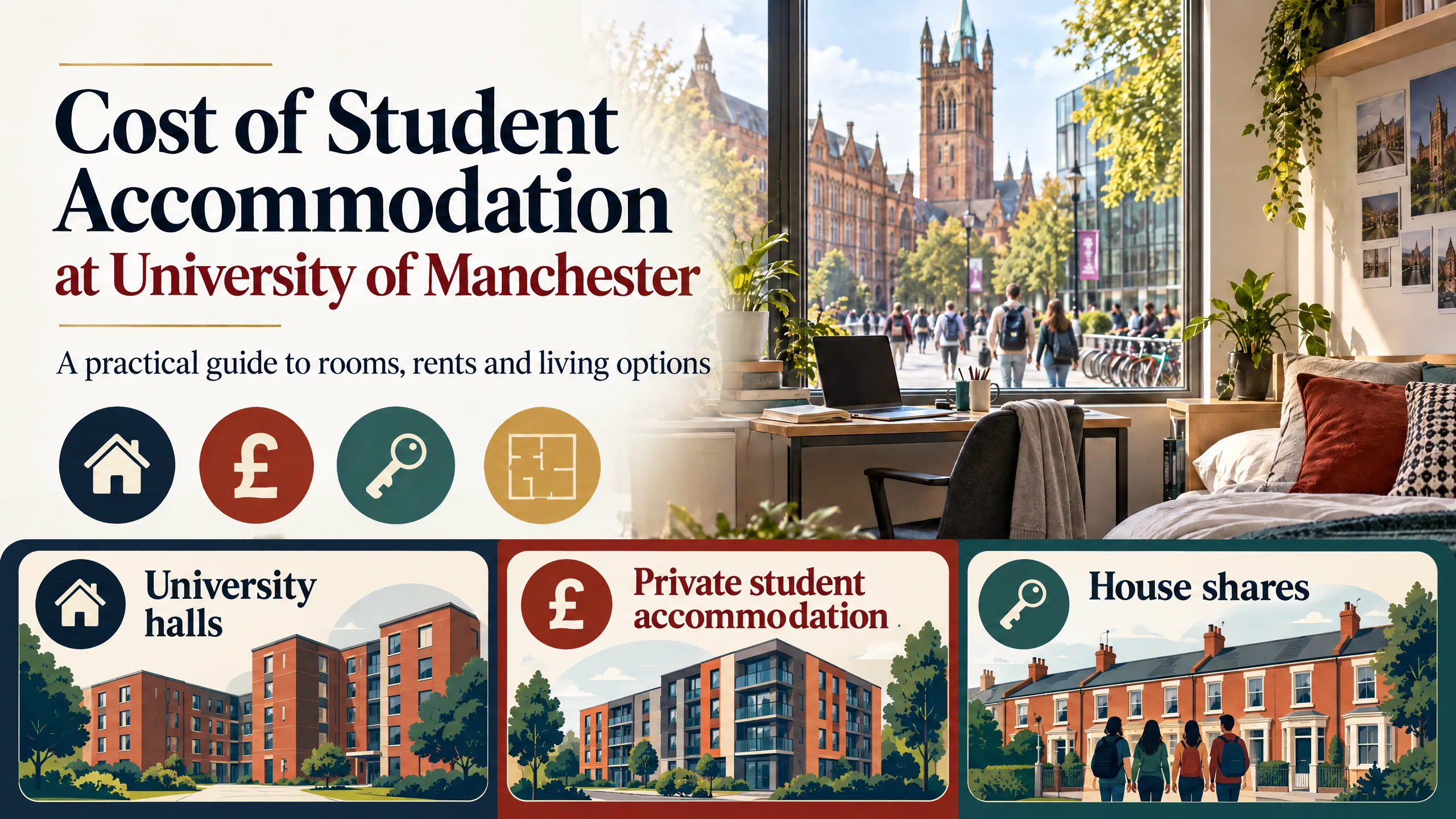




Finding accommodation abroad can be challenging for international students, especially when booking from overseas. From choosing the right housing and preparing documents to managing costs and understanding rental agreements, careful planning can make the process easier. This international student booking guide covers the essential steps to help you find suitable accommodation and prepare for student life in a new country.
What Should You Consider Before Choosing Student Accommodation?
Before choosing student accommodation, consider your total budget, location, room type, contract terms, and social environment. These factors can help you compare options and find suitable international student accommodation.
Budget and Hidden Costs: Compare weekly or monthly rent with your budget and check whether electricity, gas, water, and Wi-Fi are included. Confirm the deposit amount, deposit protection arrangements, and whether a UK-based guarantor is required. Include additional expenses in your overall budget.
Location and Commute: Decide whether you prefer walking or cycling to campus or using public transport. Check nearby bus stops, train stations, supermarkets, laundry facilities, gyms, and other essential services. Research the surrounding area to assess local safety and convenience.
Accommodation and Room Types: Explore on-campus halls and off-campus student housing. Choose a suitable room type, such as a shared room, single room, en-suite room, or self-contained studio. Consider whether catered accommodation with meals provided or self-catered housing with kitchen access better suits your lifestyle.
Contracts and Legal Details: Check that the tenancy period matches your study plans. Review the rules for early termination, finding a replacement tenant, and cancelling your booking if your circumstances change. Read the written agreement carefully, including the inventory, visitor policies, maintenance arrangements, and payment terms.
Social Environment and Lifestyle: Consider whether you prefer living with a small group or sharing a larger student household. Check whether the accommodation offers a quiet study environment or a more social atmosphere. Think about your privacy needs and whether you are comfortable sharing kitchens, bathrooms, and communal facilities.
What Types of International Student Housing Are Available?
On-Campus Accommodation
On-campus accommodation, often called university halls of residence, refers to rooms owned and managed directly by a university, usually located on or near campus. It is a popular option for students who want convenient access to classes and university facilities.
What It Offers: Room options may include single rooms, shared rooms, and en-suite rooms with private bathrooms. Depending on the university, students can choose self-catered accommodation with access to communal kitchens or catered options with meals provided.
Why Choose It: Living close to campus makes it easier to attend lectures, use university facilities, and participate in student activities. It can also help international students meet classmates and adjust to university life.
What to Expect: Rooms are often furnished, and rent typically includes utilities and internet. Some halls provide communal kitchens, study areas, and on-site support. However, facilities, catering options, costs, and application requirements vary by university, so students should check the details before applying.
Off-Campus Accommodation
Off-campus accommodation generally falls into two main categories: Purpose-Built Student Accommodation (PBSA) and Private Student Houses.
Types of Housing: Purpose-Built Student Accommodation (PBSA) refers to properties specifically designed for students, often offering furnished rooms, communal facilities, and on-site support. Private Student Houses include privately rented houses, shared apartments, and private studios, which may offer more flexibility in living arrangements.
Location and Flexibility: Students can choose accommodation near campus, in city centres, or in other neighbourhoods that suit their commute and budget. PBSA properties are often located near universities or popular student areas, while private rentals offer a wider range of locations.
Costs and Facilities: Rent, utilities, internet, and other expenses vary by property. Some PBSA providers include bills and furnishings in the rent, while private rentals may require separate arrangements for utilities, furniture, and internet.
Independence and Privacy: Both options can offer greater independence than university-managed accommodation. PBSA may provide shared social spaces and on-site support, while private student houses can offer more choice over housemates and living arrangements. Private renters may need to manage bills, household responsibilities, and tenancy agreements themselves.
What Documents Do You Need Before Booking International Student Accommodation?
You need a valid passport, a university offer or enrolment letter, visa or immigration documents, proof of funds, and guarantor information before booking international student accommodation. Here is a list of these documents:
- Valid Passport: Your primary form of photo identification. Check that it will remain valid for your planned stay and meets the destination country’s entry requirements.
University Offer or Enrolment Letter: A conditional or unconditional offer letter, or a certificate of enrolment, may be required to confirm your connection to the university.
Visa or Immigration Documents: Depending on your destination, you may need a student visa, residence permit, or other proof of immigration status. In the UK, for example, some renters may need to provide a right-to-rent share code.
Proof of Funds: Bank statements, scholarship letters, or student loan approval documents can help demonstrate that you can afford the rent and related expenses.
Guarantor Information: Some landlords or providers may request a guarantor’s contact details and supporting identification, particularly if you cannot pay the full rent upfront or do not meet their standard financial criteria.
Previous Address or Landlord Reference: Private landlords may ask for your previous address or a reference from a former landlord to assess your rental history.
How Much Should You Budget for International Student Accommodation?
The cost of international student accommodation varies by country, city, and housing type. Before setting a budget, compare on-campus and off-campus options, check what is included in the rent, and allow for additional living expenses.
How Much Does On-Campus Student Accommodation Cost?
On-campus accommodation is managed by universities and is a convenient option for international students who want to live close to their classes and campus facilities. Prices vary by university, location, room type, and whether meals or utilities are included.
United States: On-campus housing commonly costs $8,196 per academic year, although prices may be higher at universities in expensive cities. Some universities offer meal plans that increase the total cost.
United Kingdom: University accommodation often costs around £120 to £300 per week, depending on the city, room type, and facilities. London and other high-demand locations may charge more.
These figures are general estimates rather than fixed rates. Check your university’s official accommodation pages for current prices, contract lengths, and included services. University halls are usually booked directly through the university or its designated accommodation service.
How Much Does Off-Campus Student Accommodation Cost?
Off-campus options include purpose-built student accommodation (PBSA), shared houses or flats, private studios, and apartments. They offer more choice in location, room type, and living arrangements.
For students comparing off-campus housing, uhomes.com provides listings that can be filtered by destination, room type, facilities, and price. Based on its country accommodation pages, student accommodation in the United States typically costs around US$400 to US$800 per month, while accommodation in the United Kingdom averages around £130 to £300 per week. These are estimated average price ranges, and actual costs vary by city, property type, location, and included amenities.
United States: Browse student accommodation in US to compare off-campus housing options. Prices vary by city, room type, and property facilities. Students in New York, Boston, San Francisco, and Los Angeles may need a larger budget.
United Kingdom: Explore student accommodation in UK to compare available properties. London generally has higher rents than many other UK university cities, so comparing listings in your intended destination is important.

What Additional Costs Should You Include?
Rent is only one part of your accommodation budget. Beyond rent, students may need to budget around £250 to £400 per month in the UK and $330 to $630 per month in the US for utilities, internet, transportation, groceries, and other daily expenses. These are rough estimates and vary by city, housing arrangement, and lifestyle.
Before booking, check which bills and services are included in the advertised rent. Many student accommodation listings on uhomes.com offer bills-inclusive options, which may cover electricity, water, gas, heating, and Wi-Fi. This can make monthly budgeting easier.
If bills are not included, students can use these estimates as a guide:
Utilities: In UK shared accommodation, electricity and gas may cost around £83 per person per month, with water at approximately £13. In the US, costs vary by state. For example, electricity in California averages around $167 per household, while water and sewer charges may add around $221.
Internet: UK broadband may cost around £7.50 per person per month in a shared house. US home internet typically costs around $30 to $80 per month.
Security Deposit and Initial Payments: In the UK, the average student rental deposit was around £433 in 2026. In the US, landlords commonly require a deposit equivalent to around one month’s rent, although local rules vary. You should also budget for the first rent payment. Some accommodation options on uhomes.com are available without a security deposit, so check individual listings for details.
Furniture and Household Essentials: In the UK, basic bedding may cost around £30 to £40. In the US, budget approximately $100 to $300 for basic bedding, kitchenware, and other household essentials. Furniture may require an additional budget.
Transportation and Daily Expenses: UK students may spend around £73 per month on transport and £155 on groceries. In the US, a starting budget of $50 to $150 for local transport and $250 to $400 for groceries per month may be suitable, depending on the city and lifestyle.
Check the listing and rental agreement to confirm which bills are included and whether usage limits or extra charges apply. Bills-inclusive accommodation can make budgeting easier, but compare the total cost before booking.
Where Can You Find Reliable International Student Accommodation?
International students can find accommodation through two main channels: university accommodation services and off-campus student housing platforms. The right option depends on your preferred living environment, budget, and destination. Wherever you search, compare prices, check the booking terms, and confirm the property’s details before making a payment.
University Accommodation Services
University websites are a good starting point for students looking for on-campus accommodation. Most universities provide information about their halls of residence, room types, facilities, application deadlines, and booking procedures.
To find suitable university accommodation:
Visit your university’s official website and look for its accommodation or housing section.
Compare room types, rental costs, contract lengths, and included facilities.
Check application deadlines, deposit requirements, and cancellation policies.
Contact the university’s accommodation team if you have questions about availability or eligibility.
University halls can be convenient for students who want to live close to campus and meet other students. However, availability may be limited, so apply early and prepare alternative options in case your preferred room is unavailable.
Off-Campus Student Accommodation Platforms
If you prefer more flexibility in location, room type, or lease length, you can explore off-campus options such as purpose-built student accommodation (PBSA), shared apartments, and private studios.
uhomes.com helps international students find accommodation across multiple countries and cities. Beyond property search, the platform offers remote viewing options, local rental guidance, and booking assistance to help students make informed decisions before moving abroad.
When using uhomes.com, you can:
Find Housing Near Your University: Search by city or university and filter listings by budget, room type, and location. Map-based search can help you compare nearby properties and find options within your preferred walking distance.
Explore Properties Remotely: Review property details, real-life photos, floor plans, and 360° VR tours where available. Some properties also offer live guided viewings or inspection reports, helping you assess accommodation before booking.
Understand Local Rental Requirements: Ask accommodation advisers about local deposit requirements, tenancy terms, and payment procedures so you can better understand the rental process.
Explore Accommodation Offers: Check eligible listings for exclusive discounts, cashback, or price-match offers. Some partner properties may also offer zero agency fees, subject to the conditions of each listing.
Confirm Availability and Booking Steps: Check whether your preferred room is available, prepare the required documents, and follow the property’s reservation and contract process. Review payment arrangements and cancellation terms before committing.
Get Help with Your Booking: Contact an accommodation adviser for assistance with property enquiries, contract questions, and booking arrangements. Multilingual support can also help international students navigate unfamiliar rental processes.
Start your search on uhomes.com to compare available properties, check eligible offers, and review the booking conditions before making your decision.
How Can International Students Verify a Property Listing Before Booking?
For international students booking accommodation from abroad, verifying a property listing is an important step before paying a deposit or signing a tenancy agreement. Since an in-person viewing may not be possible, students should use trusted accommodation platforms, review property details carefully, and confirm that the listing matches the actual property.
Use trusted university services or accommodation platforms such as uhomes.com to compare off-campus housing listings. uhomes.com works directly with accommodation providers to offer students access to verified property listings, helping them find reliable housing options and reduce the risk of misleading advertisements. Its UK accommodation partners include Vita Student, Downing Students, and Student Roost. In the United States, students can explore housing options from providers such as Campus Apartments and Peakmade Real Estate. Selected properties offer virtual tours or live viewings, allowing students to check room layouts and facilities remotely before booking.
Verify the property address, price, and facilities using reliable sources. Before paying, review the tenancy agreement, deposit, cancellation policy, and additional charges. Use official payment channels and keep receipts.
Be cautious of unusually low rents, pressure to pay immediately, inconsistent listing details, or requests for untraceable payments. Carefully checking property information and payment terms can help you book accommodation with greater confidence.

What Should International Students Check Before Signing a Rental Agreement?
Before signing a rental agreement, international students should carefully review the contract terms, payment obligations, and cancellation conditions. These checks can help avoid unexpected costs and make informed decisions about international student accommodation.
Verify the landlord’s or letting agent’s identity and contact details. Review the tenancy type, rental period, and responsibilities of both parties. In England, check whether a Right to Rent check applies and prepare the required documents.
Confirm the deposit amount, rent due dates, and all upfront charges. In England, most covered tenancy deposits are capped at five weeks’ rent when annual rent is below £50,000. Check whether electricity, gas, water, heating, and Wi-Fi are included, and clarify any additional charges. Eligible full-time students in the UK are generally exempt from Council Tax. If a guarantor is required, ask whether alternatives are accepted.
Before signing, check the tenancy start and end dates, early termination rules, notice periods, and cancellation or refund conditions. Confirm who is responsible for repairs and maintenance, and review the inventory to ensure all included furniture and appliances are recorded. If you need to cancel due to visa refusal, check whether a refund is available and what evidence is required.
Keep a copy of the signed agreement, payment receipts, and written confirmations of any special arrangements. Carefully reviewing these details before signing can help you understand your obligations and choose suitable student accommodation abroad.
What Should You Check When You Arrive at Your Student Accommodation?
When you arrive, inspect your room, furniture, appliances, and shared facilities. If you notice damage, missing items, or problems that do not match your booking details, report them promptly and keep photos as evidence.
If you live in university accommodation, contact the accommodation team, report the issue through the university’s housing portal, or speak to reception. For urgent maintenance or safety concerns, follow the university’s emergency reporting procedure.
If you booked through uhomes.com, contact your sales adviser if you encounter problems with your international student accommodation. The adviser can help communicate with the accommodation provider based on your booking details and contract, and follow up to help clarify the issue and explore possible solutions.
Keep your booking confirmation, rental agreement, and photos of any problems. These records can help the relevant team understand your situation and assist with resolving accommodation issues.
How Can International Students Book Accommodation Safely from Abroad?
International students can book accommodation from abroad through university accommodation services or off-campus housing platforms. To make informed decisions, compare available options, verify property details, and review booking terms before making a payment.
Booking University Accommodation
Students can visit their university’s official website and find the accommodation section to explore available rooms, rental prices, facilities, and application deadlines. Follow the university’s booking process and check the deposit, payment, and cancellation policies before confirming a reservation. If you have questions, contact the university’s accommodation team for guidance.
Booking Off-Campus Accommodation
For off-campus housing, students can use platforms such as uhomes.com to compare international student accommodation in different cities and countries. Check room types, locations, rental costs, and contract terms carefully. Where available, use virtual tours or live video viewings to inspect the property remotely. Before paying, verify the accommodation provider, review the deposit and cancellation policies, and use official payment channels. Keep copies of your booking confirmation, rental agreement, and payment receipts for reference.
What Should You Do If You Have Problems with Your Accommodation Booking?
If you have problems with your accommodation booking, report the issue to the accommodation provider as soon as possible, collect clear evidence, and follow the appropriate complaint process. Whether you booked university halls, private student accommodation, or a room through a third party, acting promptly can help you resolve the problem and protect your rights as a tenant or guest.
For international students booking accommodation from abroad, it is important to understand who is responsible for resolving the issue and which cancellation, refund, or complaint procedures apply.
What Is a Guarantor for Student Accommodation?
A guarantor for student accommodation is someone who legally agrees to cover a student’s rent and other financial obligations if the student fails to pay. Depending on the agreement, this responsibility may include unpaid rent, property damage, or other costs specified in the contract.
For international students renting abroad, a guarantor can help meet a landlord’s financial requirements, particularly if they do not have a local credit history or regular income. Before signing a guarantee agreement, both the student and guarantor should understand the financial responsibilities involved.
Landlords may require a guarantor because full-time students often have limited income or credit history in their destination country. A guarantor provides additional financial security if the student fails to pay rent. For shared houses or flats, check whether the guarantee covers only the student’s rent or wider joint tenancy obligations.
A parent, guardian, or close relative can often act as a guarantor, although eligibility requirements vary by provider. They may need to be at least 18, meet residency requirements, provide proof of income, or pass a credit check. Some landlords may also require property ownership.
If you do not have a suitable guarantor, you can explore alternative options. University-managed accommodation may not require one, while some private landlords accept advance rent instead. Professional services such as Housing Hand may also provide guarantor services for eligible students for a fee.
You can also book student accommodation through uhomes.com without a UK-based guarantor. However, accommodation providers typically require a guarantor if you choose to pay rent in instalments. Always check the payment terms and eligibility requirements for your chosen property before booking.
What Does “No Visa, No Pay” Mean for Student Accommodation?
“No Visa, No Pay” is a cancellation and refund policy offered by many student accommodation providers, including private student halls and purpose-built student accommodation (PBSA). It allows eligible international students to cancel their booking and request a refund if their UK student visa application is refused.
Students usually need to provide official evidence of visa refusal from UK Visas and Immigration (UKVI) and submit their request within the provider’s specified deadline. As conditions vary between providers, check the cancellation policy and make sure the terms are confirmed in writing before booking.
What Are the Most Common Questions About International Student Booking Guide?
You may need a UK guarantor when renting private accommodation, especially if you have no UK credit history or regular income. Requirements vary by provider, and some accept advance rent or professional guarantor services as alternatives.
Yes, you can book student accommodation before arriving in the UK. Many international students arrange housing online in advance. On uhomes.com, you can explore student accommodation in different UK cities and compare properties by location, room type, facilities, and price. Before booking, check the property details, tenancy agreement, payment terms, and cancellation policy.
Some student accommodation options include bills in the rent. uhomes.com offers student accommodation options with bills included, which may cover electricity, water, gas, heating, and Wi-Fi. The exact inclusions vary by property, so check the listing and tenancy agreement for any additional charges or usage limits before booking.
Your deposit is usually paid before you move in and may be used to cover unpaid rent or damage beyond normal wear and tear, subject to the applicable rules and tenancy terms. Check how your deposit is protected, when it will be returned, and what deductions may apply.
No, October is not too early to start looking for accommodation for the following academic year. Researching early gives you more time to compare properties and may improve your chances of securing your preferred room, particularly in popular university cities.
Yes, many international students book accommodation before receiving their visa. However, you should check the provider’s cancellation and refund policy in case your visa application is refused. Confirm the conditions in writing before paying.
If your preferred room is unavailable, you can consider alternative room types, nearby properties, or different accommodation providers. Starting your search early gives you more options and increases your chances of finding suitable housing.
PBSA may be a convenient option for international students, particularly those living abroad for the first time. It often offers furnished rooms, shared facilities, and on-site support, with bills sometimes included. Private renting may provide more flexibility in location and living arrangements, but compare the total costs, contract terms, and responsibilities before deciding.
For students starting university in September, the main booking period is often between January and June. Availability varies by city and provider, so starting your search early can help you compare options before demand increases.