

Home for Global Students
4.9/5
GET APP

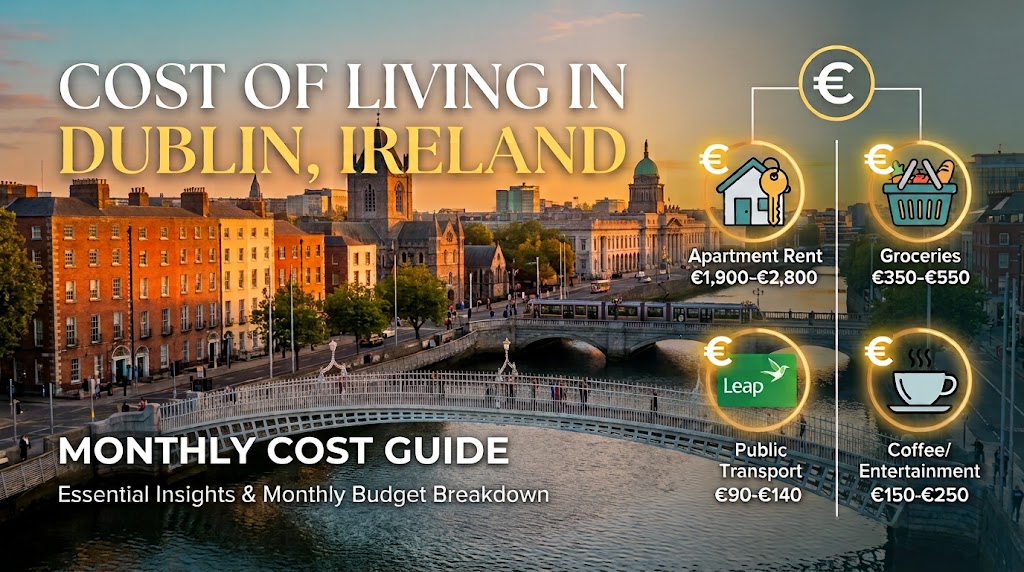
Cost of Living in Dublin, Ireland: Monthly Cost Guide

By Diana
cost-of-living-dublin-ireland

The cost of living in Dublin, Ireland, depends on accommodation, food, transport, healthcare, and lifestyle. Dublin is one of the more expensive places to live in Ireland, but what you actually spend depends on where you live and how you spend it. This guide will take you through the main costs to plan for before you move to Dublin.

Average Cost of Living in Dublin, Ireland

The average cost of living in Dublin, Ireland, is €1,087-€3,546 per month for a single person. The biggest difference between the budgets is housing. You’ll also have to budget for your weekly food, transport and social activities to suit your lifestyle. The following table shows the main price of living in Dublin:

Expense Average Monthly Cost
Accommodation €1,970-€3,040
Utilities About €312
Food €250-€470
Transport €95-€160
Healthcare €50-€100
Entertainment €100-€200
Total €1,087-€3,546

Accommodation Cost

The average rent in Dublin is around €1,970–€3,040 per month, which can make up a large part of your living costs. Rent depends on location, room type, lease length and facilities. So, you’ll need to figure out what rental budget will work for your housing needs. The following table shows rental costs for different apartment types and locations:

Rent Per Month Cost
1 Bedroom Apartment in City Centre € 2,192.59
1 Bedroom Apartment Outside of City Centre € 1,970.60
3 Bedroom Apartment in City Centre € 3,894.12
3 Bedroom Apartment Outside of City Centre € 3,040.91

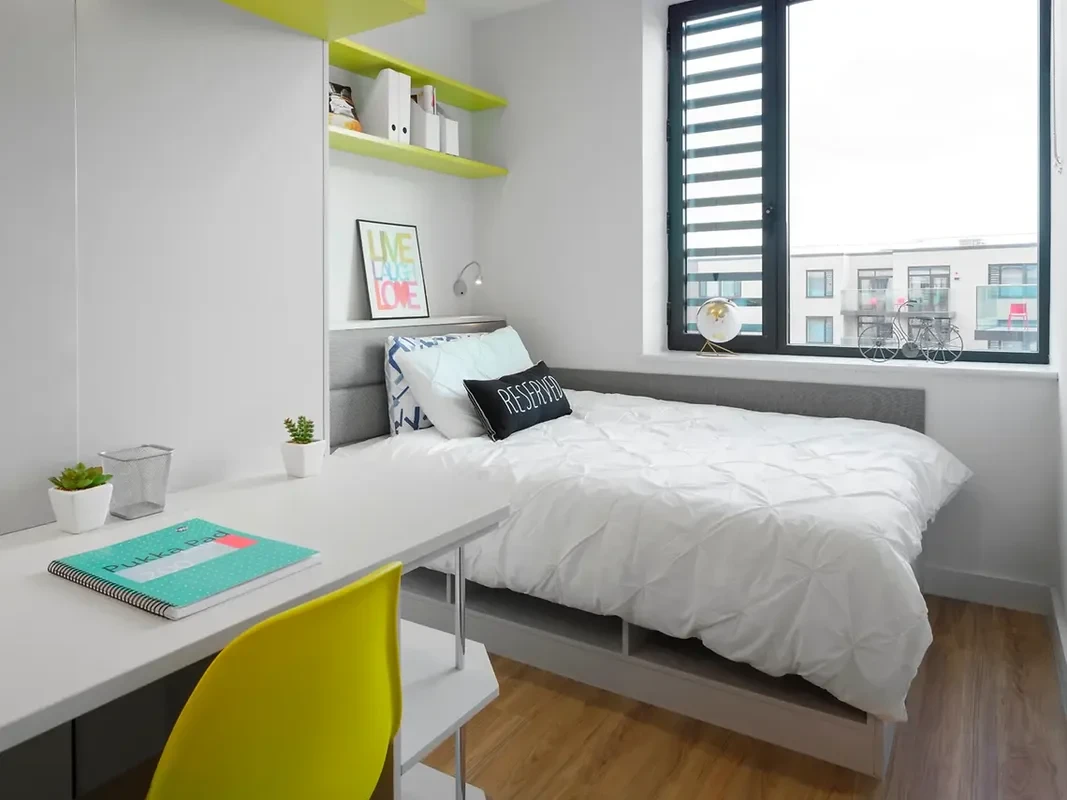
If you are a student, student accommodation can be a practical option. uhomes.com lists off-campus student accommodation in Dublin at around €600–€1,800 per month, with bills included. Cashback, exclusive offers, seasonal promotions, group booking discounts, and coupons can help you reduce your accommodation costs. uhomes.com also provides clear rental information and a low-price guarantee. As a global student accommodation platform, uhomes.com allows students to compare different student housing options in Dublin easily and conveniently.

student-accommodation-dublin

Deposits & Tenant Rights

Rental deposits in Ireland are generally limited to one month’s rent. The Residential Tenancies Board states that tenants should receive a receipt. The deposit should be returned when the tenancy ends unless there is a valid reason for deductions. Ireland has a national rent control system from 1 March 2026. For most private tenancies, rent can increase once a year. The increase is limited to 2% or the inflation rate, whichever is lower. Some new apartments and student accommodation have different rules. Before signing a rental agreement, you should read the full contract carefully and ask for a receipt when you make a payment. You should also check the condition of the property before paying the deposit to help avoid disputes later.

Utilities

Your utility costs are based on your home size, number of people in the home and your energy usage. If you’re living alone in a 45 m² studio in Dublin, you’d be paying approximately €151 per month for basic utilities, and internet is around €35 per month. Sharing an apartment can lower your share of the utility costs. Student accommodation often includes utilities in the rent.

Utilities (Monthly) Cost
Basic Utilities for 915 Square Feet Apartment € 248.59
Mobile Phone Plan (Monthly, with Calls and 10GB+ Data) € 16.40
Broadband Internet (Unlimited Data, 60 Mbps or Higher) € 46.62

Grocery & Eating Out

You can expect to pay around €350-€670 per month on food, which is a regular part of the cost of living in Dublin, Ireland. Prices can range from store to store and brand to brand so how much you spend depends on what you buy and where you shop. Plan your food budget each week based on your eating habits and budget.

Grocery

Cooking at home is often a more affordable option in Dublin. Lidl and Aldi are generally good for budget shoppers. Own-brand products can help reduce your grocery costs. If you’re a bit more flexible with your grocery budget, you’ll find a wider range of products in Tesco, SuperValu and Dunnes Stores. Here is a price list for everyday groceries:

Grocery Cost
Milk (Regular, 1 Liter) € 1.41
Fresh White Bread (1 lb Loaf) € 1.93
Eggs (12, Large Size) € 4.38
Local Cheese (1 lb) € 3.98
Chicken Fillets (1 lb) € 5.12
Beef Round or Equivalent Back Leg Red Meat (1 lb) € 6.51
Tomatoes (1 lb) € 2.19
Potatoes (1 lb) € 0.77

Restaurant

Eating out can quickly increase your monthly living costs in Dublin, Ireland. A meal at an inexpensive restaurant in Dublin costs about €20, while a cappuccino costs about €4.35. If you eat out often, you should set a weekly dining budget. Many restaurants offer lunch deals and student discounts. Sharing costs with friends can also help you save money. The following table shows the approximate costs of different dining options:

Restaurants Cost
Meal at an Inexpensive Restaurant € 20.00
Meal for Two at a Mid-Range Restaurant (Three Courses, Without Drinks) € 90.00
Combo Meal at McDonald’s (or Equivalent Fast-Food Meal) € 12.00
Imported Beer (12 oz Small Bottle) € 6.50
Cappuccino (Regular Size) € 4.35

Transport

Public transport costs around €95–€160 per month and is an important part of your daily living expenses in Dublin. The city has a well-developed public transport network with buses, trams, trains, and cycling options. Car ownership can also be expensive, so many residents use public transport for daily travel. You can use a TFI Leap Card and benefit from capped fares, depending on your age and eligibility. Young adults and students may also have access to lower fares. The TaxSaver Commuter Ticket Scheme can also help you save money on regular commuting. Ride-hailing services such as Uber can be more convenient but are usually more expensive, especially during peak times and holidays. Choosing the right transport options can help you control your monthly spending. The following table shows the costs of different transport options:

Transportation Cost
One-Way Ticket (Local Transport) € 2.00
Monthly Public Transport Pass (Regular Price) € 96.00
Taxi Start (Standard Tariff) € 4.60
Taxi 1 mile (Standard Tariff) € 2.17
Taxi 1 Hour Waiting (Standard Tariff) € 33.64
Gasoline (1 Liter) € 1.88
Volkswagen Golf 1.5 (or Equivalent New Compact Car) € 34,830.00
Toyota Corolla Sedan 1.6 (or Equivalent New Mid-Size Car) € 34,716.82

Healthcare and Insurance

Healthcare costs in Dublin depend on your eligibility and the type of service you use. Ireland has a public healthcare system, but not every service is free for everyone. People with a Medical Card can get free GP visits and many public health services, while a GP Visit Card covers GP visits only. Non-EEA international students must also have private medical insurance when registering their immigration permission in Ireland. The insurance can be provided through a college group scheme or bought privately.

Healthcare Expense Cost
Medical Card GP visit Free if eligible
GP Visit Card visit Free if eligible
Private GP visit Usually €45–€65+
Prescription Depends on medicine and eligibility
Private medical insurance Depends on policy
Dental treatment Depends on treatment

Lifestyle & Entertainment

Lifestyle spending depends on how often you eat out, visit pubs, attend events, or use gyms and other services. If your Dublin cost of living is limited, check for student discounts before buying tickets or paying for activities. You can also check official websites for free museums, parks, and other activities. Many universities also offer events and student societies that provide affordable entertainment options. The following table shows the approximate costs of different activities and items:

EntertainmentCost
Monthly Fitness Club Membership€ 61.00
Tennis Court Rental (1 Hour, Weekend)€ 17.77
Cinema Ticket (International Release)€ 13.75
2 Tickets to the Theater (best available seats)€ 180.00
Jeans (Levi’s 501 or Similar)€ 96.15
Summer Dress in a Chain Store (e.g. Zara or H&M)€ 101.00
Nike Running Shoes (Mid-Range)€ 66.00
Men’s Leather Business Shoes€ 110.82

Average Salary in Dublin, Ireland

The monthly average salary in Dublin, Ireland, is around €2,800–€4,200, which varies by industry, experience, and job type. Students working part-time should use the legal minimum wage as a basic guide, as pay can vary between jobs. Ireland’s national minimum wage increased to €14.15 per hour from 1 January 2026. When planning your monthly expenses, you should calculate your actual take-home income instead of relying only on your gross salary. If you plan to move to Dublin, compare your income with rent and other expenses to plan your future budget.

Salary Average price
Average Monthly Net Salary €2,800–€4,200
Mortgage Interest Rate (Annual) 3.2% – 4%

Conclusion

The cost of living in Dublin, Ireland, varies significantly depending on your accommodation choice and your daily spending habits. Food, transport, healthcare and entertainment will all add to your monthly budget, though rent is normally the biggest outlay. Students can keep their costs down by choosing student accommodation, cooking at home, using public transport and taking advantage of student discounts. Before you move to Dublin, calculate what you will need for rent, bills, food, transport and personal spending, and then create a realistic monthly budget.

FAQ

In Ireland, earning a gross monthly salary of €3,000 is not a good salary in Ireland, as it sits below the nationwide average and falls into a modest income bracket. However, this amount can comfortably cover essential living costs if you choose shared housing or reside outside key metropolitan areas.

Yes, Dublin is widely recognized as a costly place to live or visit, with housing and everyday expenses ranking among the highest across Europe.

A comfortable lifestyle in Ireland typically calls for a pre-tax salary of €50,000 to €60,000 per year for an individual, which equals about €3,000 to €3,500 in monthly take-home pay. For a family of four, the monthly budget usually starts at €6,000, or more than €72,000 per year.

In Dublin, a family of four typically needs about €3,850 to €5,600 per month for basic living costs without rent. When you add rental payments for a multi-bedroom apartment or house, the total monthly budget rises to roughly €5,550 to €8,500 or more.

Healthcare, IT, and engineering represent the leading sectors for employment demand across Ireland.

uhomes.com | Student Accommodation,Flats,Houses,Apartments for Rent
What can I do for you?
ASK ME