

Home for Global Students
4.9/5
GET APP

Cost of Living in Brisbane: A Student Budget Guide

By Leslie
cost of living in brisbane

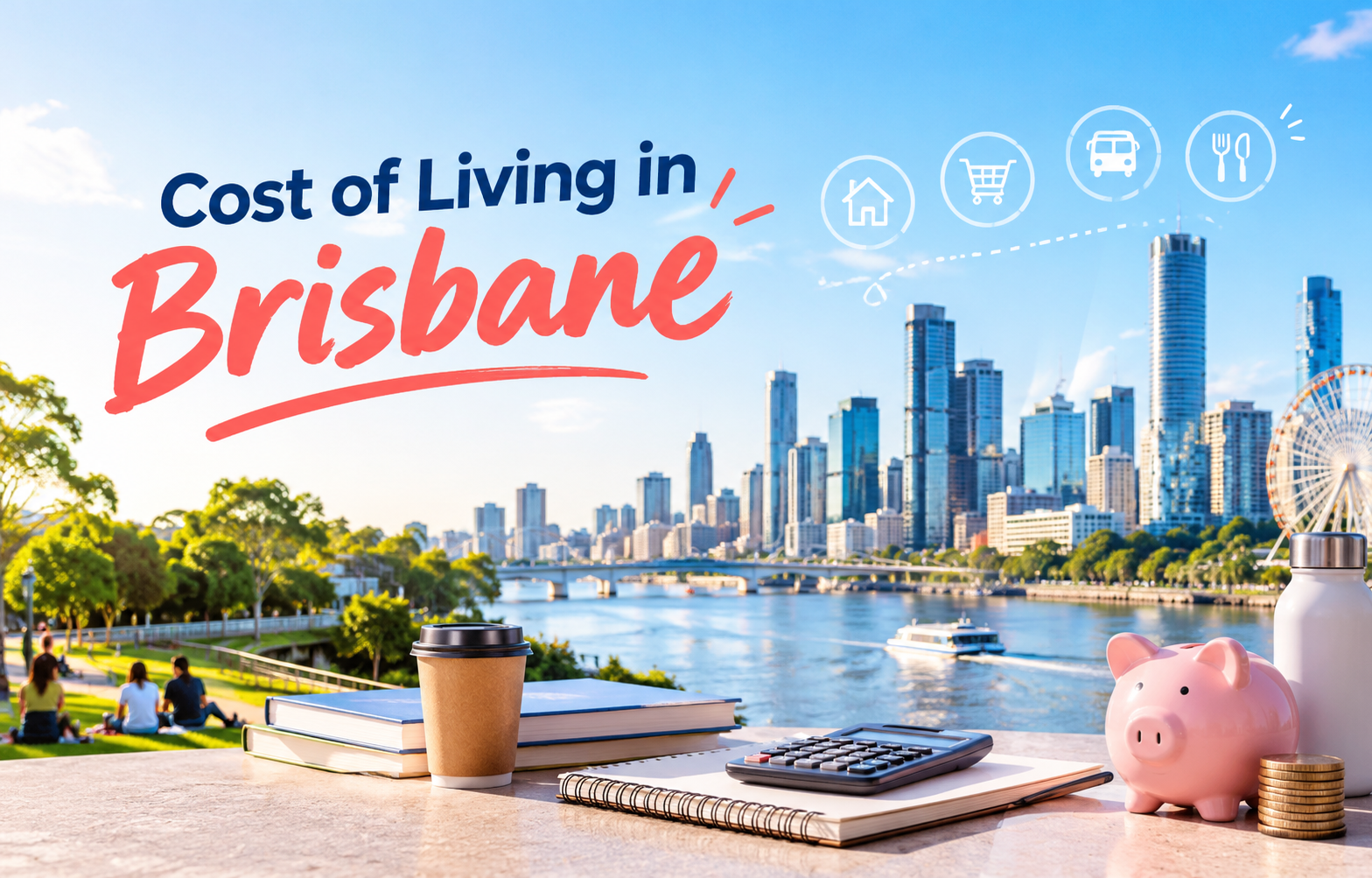
The cost of living in Brisbane is about A$3,373 a month for a single person renting a one-bedroom apartment outside the city centre, including rent. Brisbane is cheaper than Sydney in this like-for-like comparison, but prices have continued to rise. Brisbane’s Consumer Price Index rose 4.1% in the year to August 2026. This guide looks at living expenses in Brisbane, compares Brisbane with Melbourne and Sydney, and explains what students and other residents can expect to spend.

Cost of Living in Brisbane Australia: Key Takeaways

The living expenses in Brisbane depends most on rent, utilities and everyday spending. A single person renting a one-bedroom apartment outside the city centre spends about A$3,373 a month, including rent, less than the equivalent estimate for Melbourne or Sydney. Brisbane cost of living has also risen, with the CPI up 4.1% in the year to August 2026.
    • Brisbane’s Consumer Price Index rose 4.1% in the year to August 2026.
    • A single person renting a one-bedroom apartment outside the city centre spends about A$3,373 a month including rent.
    • A student sharing a larger house can budget A$1,325-A$1,870 a month including rent and basic bills.
    • Average rent for a one-bedroom apartment is A$1,925 a month outside the city centre and A$2,784 in the centre.
    • Off-campus students should allow A$282-A$350 a month for gas, electricity and water combined.
    • An off-campus student’s food budget is about A$268-A$606 a month.
    • One eligible Translink journey costs 50 cents, and two weekday trips a day cost about A$22 a month.
    • Numbeo estimates Brisbane’s average monthly salary after tax at about A$5,890.
    • A one-bedroom renter’s monthly total is about A$3,373 in Brisbane, A$3,742 in Melbourne and A$4,317 in Sydney.
    • Students who need Overseas Student Health Cover (OSHC) should budget about A$100-A$117 a month.
    • Greater Brisbane added 58,223 residents in 2024-25, a 2.1% increase. Population growth adds to demand for housing.

What Is the Cost of Living in Brisbane?

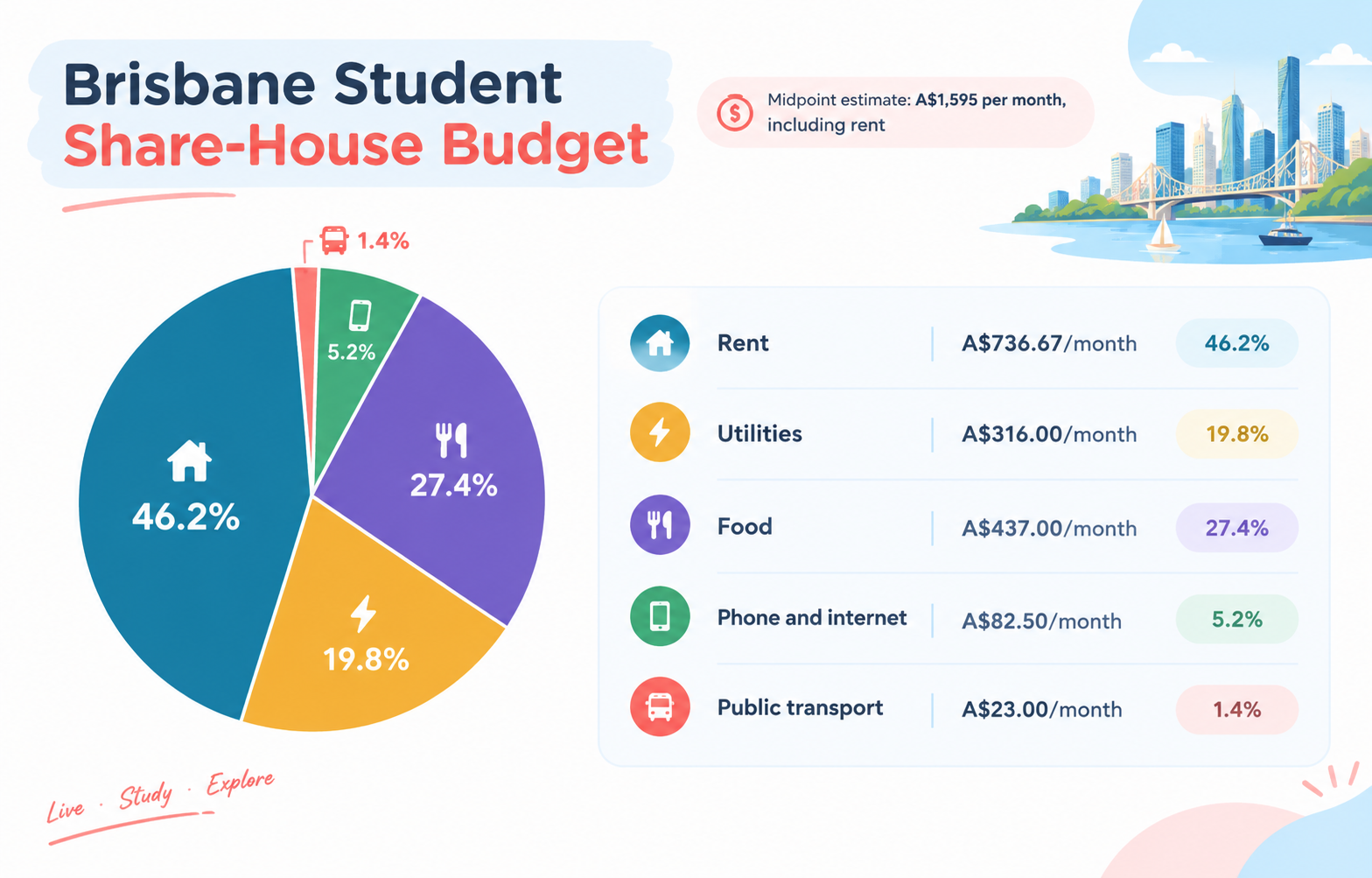
The living cost in Brisbane, Australia, is about A$3,373 a month for a single person renting a one-bedroom apartment outside the city centre. A student sharing a larger house can budget A$1,325-A$1,870 a month including rent and basic bills. The table shows the main monthly costs for a student share-house budget.
Monthly expense Budget amount Notes
Rent About A$737 Based on a room starting at A$170 a week, converted to a monthly average.
Gas, electricity and water A$282-A$350 Combined off-campus student budget.
Food A$268-A$606 Off-campus student budget.
Phone and internet A$15-A$150 Depends on plan and sharing arrangements.
Public transport From A$23 UQ’s minimum monthly transport estimate. Eligible Translink trips cost 50 cents.  
Core monthly living costs About A$1,325-A$1,870 Includes rent, utilities, food, phone or internet and basic transport. Rounded planning range.
OSHC, when required A$100-A$117 Monthly equivalent for students who need Overseas Student Health Cover. Not included above.  
Books and study supplies About A$101 Monthly average based on UQ’s annual estimate of A$1,212. Not included above.
Core budget plus OSHC and study supplies About A$1,526-A$2,088 For students who need OSHC. Does not include tuition, leisure or personal spending.  
Tuition Course-specific Check the fee with your education provider. Not included above.
Leisure and personal spending Varies Depends on lifestyle. Not included above.

A student who needs OSHC can add A$100-A$117 a month to the core budget. Adding UQ’s average study-supplies allowance of A$101 a month brings the total to about A$1,526-A$2,088 per month. Tuition, leisure and personal spending are extra. The pie chart below shows the midpoint of the core budget only.

brisbane student budget

How Much Do Housing and Rent Cost in Brisbane?

A one-bedroom apartment in Brisbane rents for about A$1,925 a month outside the city centre and A$2,784 in the centre. Student housing can cost less when rent is shared. A room in a larger share house near UQ starts at A$170 a week per person.

These prices cover different types of housing. The one-bedroom figures are average rents for an entire apartment. Student room prices are per person and may not include utilities, internet or meals. Rent also changes by suburb, lease length and what the property includes. St Lucia is close to UQ, Gardens Point and Kelvin Grove serve QUT students, and Griffith students should check travel times to their own campus.

Brisbane rental reference Rent What the price covers
One-bedroom apartment outside the city centre A$1,925/month on average The whole apartment.
One-bedroom apartment in the city centre A$2,784/month on average The whole apartment.
Larger share-house room near UQ From A$170/week per person One room. Check bills and other inclusions.

On-Campus Accommodation Cost in Brisbane

At UQ’s St Lucia campus, a catered residential college room costs A$633-A$958 a week. UQ RES accommodation starts at A$414 a week. College rates include meals and utilities, while Kev Carmody House does not include catering.

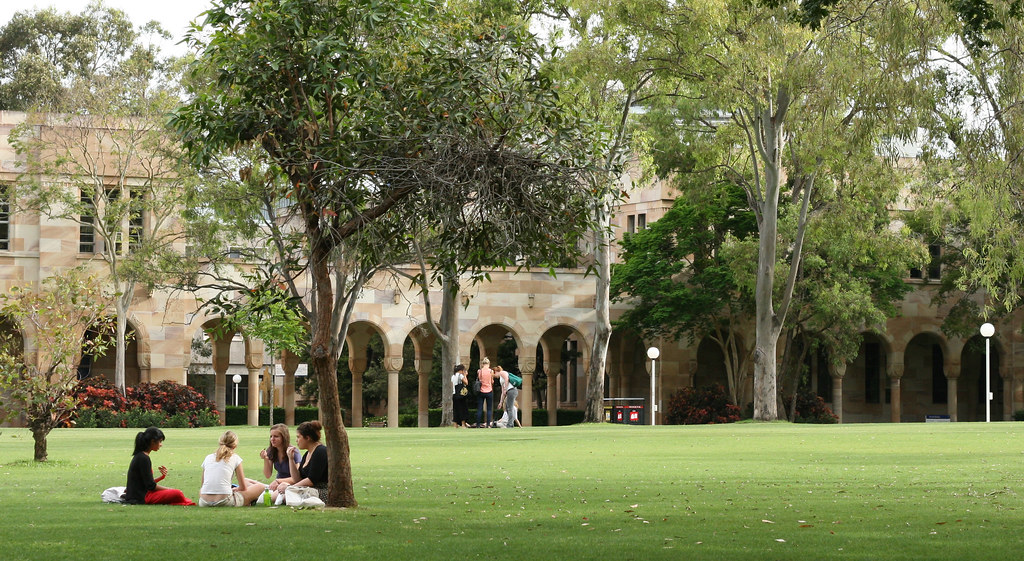
St Lucia is a riverside university area with bus and ferry links to central Brisbane. A catered college can suit students who want meals organised around study. UQ RES suits students who prefer more independence. Compare the room price with food, transport and extra residence fees before choosing.
    • A catered UQ Residential College room in St Lucia costs A$633-A$958 a week and includes meals and utilities.
    • A room at Kev Carmody House starts at A$414 a week and includes utilities but not catering.
    • A room at Walcott Street starts at A$439 a week. Check for extra fees.

Off-Campus Accommodation Cost in Brisbane

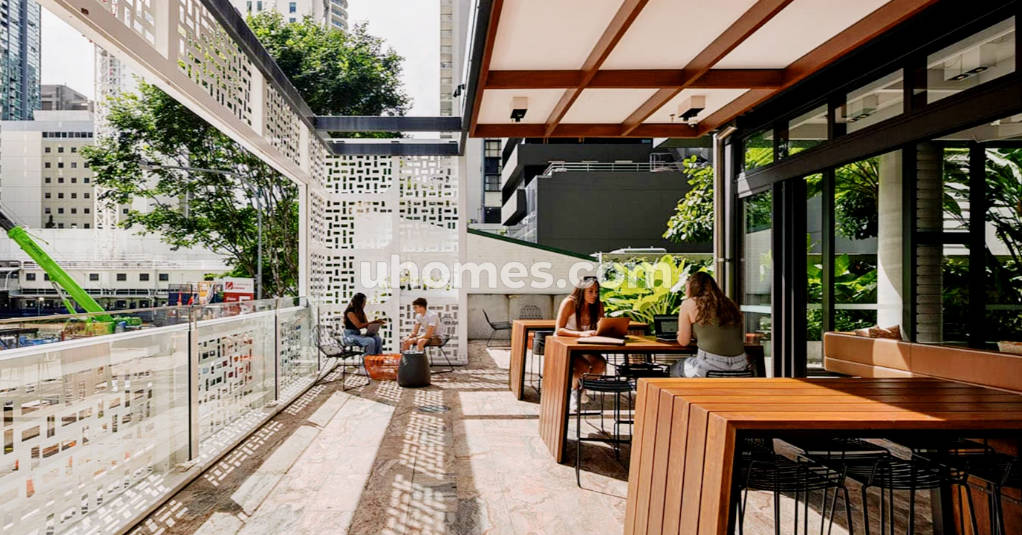
Off-campus rent near UQ starts at A$170 a week per person in a larger share house. A shared purpose-built student room starts at A$359 a week, while a private one-bedroom apartment near UQ and the inner city starts at A$564 a week.

Off-campus housing gives students more choice of suburb and room type. It can also mean managing bills, cooking and furniture. Before signing a lease, check the bond, rent in advance, permitted occupants, utility arrangements, internet, furniture and commute to your Brisbane campus. A lower rent farther away may mean more travel time and extra transport costs.

Off-campus accommodation near Brisbane universities Starting rent What to check
Larger share house near UQ A$170/week per person Bills, housemates, furniture and commute.
Share a three-bedroom home near UQ A$345/week per person Utility split, room arrangement and lease terms.
Share a two-bedroom home near UQ A$540/week per person Whether the room is shared and how bills are split.
Purpose-built student accommodation, shared room A$359/week Electricity, gas, internet, meals and laundry.
Purpose-built student accommodation, whole apartment A$480/week Bills, facilities and lease period.
Private one-bedroom apartment near UQ or the inner city A$564/week Utilities, internet, furniture and travel to campus.

Where to Find Affordable Off-Campus Accommodation in Brisbane?

If rent is taking up a large share of your Brisbane student budget, comparing accommodation by location, room type and what is included in the weekly rent can help you keep costs under control. uhomes.com brings together 200+ verified student housing in Brisbane near UQ, QUT and Griffith University, as well as popular student areas such as St Lucia, Toowong, South Bank and Brisbane CBD. Options range from en-suites and private studios to shared apartments, with selected rooms starting from AU$180/week and some properties offering all-inclusive bills.

Instead of checking properties one by one, you can filter listings by price, location, lease length, room type and amenities, then compare rent and bill inclusions before making a decision. uhomes also provides real photos, videos, virtual viewings and 24/7 assistance, which can be particularly useful if you are arranging your accommodation from overseas. Exclusive offers and a lowest-price guarantee on eligible listings can also help you find a better-value option without compromising on location or facilities.

How Much Are Utilities in Brisbane?

Utilities in Brisbane are estimated at A$282-A$350 a month for gas, electricity and water combined in UQ’s off-campus budget. 

Use A$173 a month as a broad guide to the average electricity bill in Brisbane. Canstar’s May 2026 survey recorded an average of A$518 per quarter across Queensland. This is a statewide benchmark, not a Brisbane-specific average. 

The cost of electricity in Brisbane depends on the tariff, air-conditioning use and how many housemates share the bill, which can rise during hot summers when cooling use increases. UQ does not list an average water bill in Brisbane separately because its budget combines water with gas and electricity.

Brisbane utility reference Cost Scope
Broad guide to the average electricity bill in Brisbane A$518 per quarter, about A$173 a month Canstar survey from May 2026. This is a Queensland average, not a Brisbane student tariff.
UQ off-campus gas, electricity and water A$282-A$350/month Combined utilities budget for students
UQ phone and internet budget A$15-A$150/month Depends on plan and sharing arrangement
Two-person electricity reference A$1,548 a year, about A$129 a month Canstar national average, not specific to Brisbane.

How Much Does Food Cost in Brisbane?

Food costs in Brisbane are about A$268-A$606 a month in UQ’s off-campus budget estimate. Cooking most meals at home can keep spending lower, while regular takeaway, café meals and dining out raise the total.

Students in Brisbane can shop at major supermarkets and local produce markets. The cheapest option depends on where you live and how you travel with groceries. If you share a kitchen, agree which staples and cleaning products you will buy together. Compare unit prices and plan meals before shopping. UQ’s sample prices give a local reference for common items.

Food item in Brisbane UQ example price
White bread, one loaf A$3.57
Eggs, 12 large A$5.95
Milk, 1 litre A$2.14
White rice, 1 kilogram A$3.38
Regular coffee A$5.35
Fast-food burger meal with large fries and drink A$18.05

How Much Does Public Transport Cost in Brisbane?

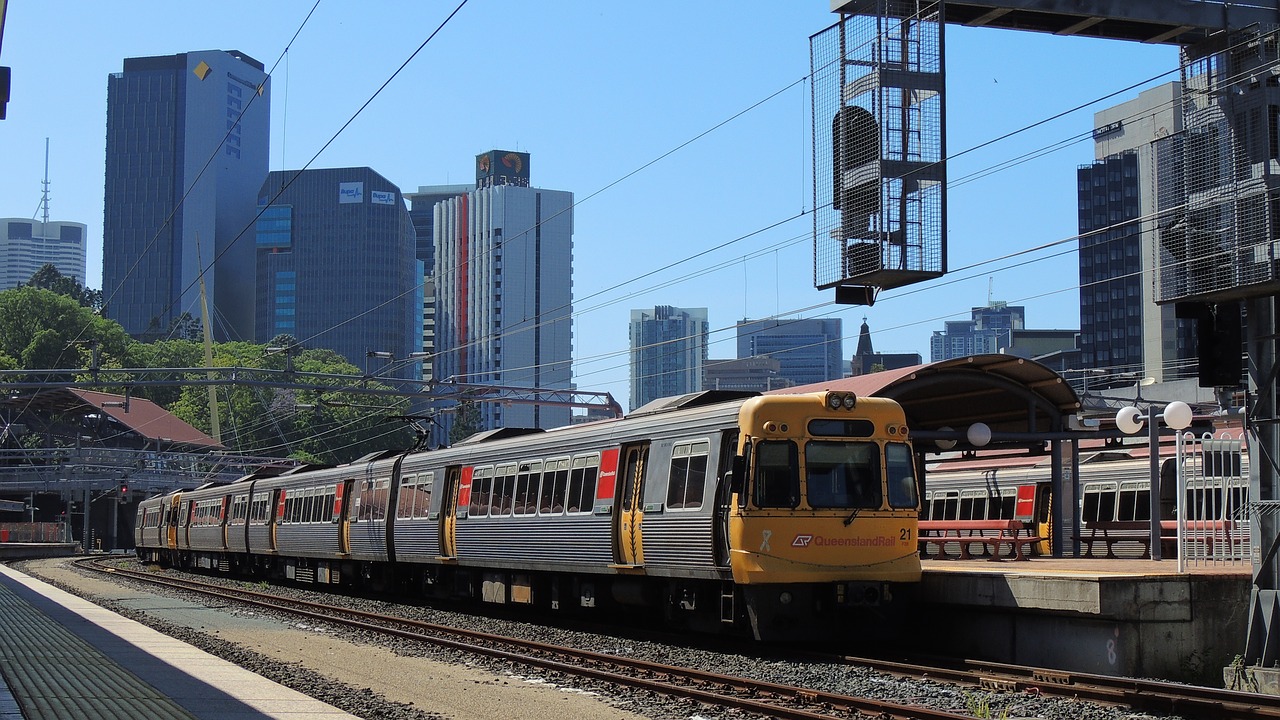
An eligible Translink journey in Brisbane costs 50 cents, regardless of distance. Airtrain is excluded. Two weekday trips a day cost about A$22 a month, and UQ’s monthly transport estimate starts at A$23.

Brisbane’s bus, train and ferry network connects major student locations such as St Lucia, the Brisbane CBD and inner suburbs. Where you live affects travel time more than the flat fare itself. Students travelling to the airport should budget separately because Airtrain does not qualify for the 50-cent fare. Translink says concession fares do not reduce the 50-cent flat fare during this arrangement. Walking or cycling can reduce spending for students living close to campus, but compare rent, route safety, weather and commute first.

Brisbane transport example Estimated cost
One eligible Translink journey A$0.50
Two journeys a day, five days a week A$5/week
Same weekday routine, averaged over a month About A$22/month
UQ estimated monthly transport budget From A$23/month
Airtrain Not covered by the 50-cent fare
brisbane transport

How Much Do Leisure and Miscellaneous Costs Add in Brisbane?

There is no single monthly figure for leisure and personal spending in Brisbane. A concession cinema ticket costs about A$20, and a gym membership costs about A$88 a month. Jeans cost about A$120, while mid-range running shoes cost about A$160. Toiletries, stationery, subscriptions and social activities vary by person.

Brisbane offers outdoor activities along the river and in its parks, which can provide lower-cost alternatives to paid entertainment. Students can also check campus events, participating student discounts and second-hand shops before paying full price. UQ notes that discounts depend on the retailer and student eligibility. Keep a small buffer for replacing a phone, medical gap fees, travel to visit family or a higher-than-expected bill. Buy second-hand or borrow items that are only needed for one semester.

Leisure or personal item Brisbane reference price
Concession cinema ticket About A$20
Jeans About A$120
Mid-range running shoes About A$160
Gym membership About A$88/month
Toiletries, stationery and household supplies Varies by student

How Much Do Healthcare and OSHC Cost in Brisbane?

OSHC costs about A$1,200-A$1,400 a year, or A$100-A$117 a month, for students who must maintain cover under an Australian student visa. UQ provides this cost estimate. Premiums vary by provider and cover.

Basic OSHC usually helps cover GP visits, some hospital treatment, ambulance and limited medicines. It does not generally cover dental, optical or physiotherapy, so students should check the policy wording and allow for any extra cover or out-of-pocket costs.

Healthcare cost or cover Brisbane student reference
OSHC A$1,200-A$1,400/year, based on UQ’s estimate
Monthly equivalent for budgeting About A$100-A$117/month
Basic OSHC commonly helps cover GP visits, some hospital treatment, ambulance and limited medicines
Common exclusions from basic OSHC Dental, optical and physiotherapy

How Much Do Tuition and Study Supplies Cost in Brisbane?

Books and study supplies cost about A$1,212 a year on average at UQ. Tuition depends on the course and education provider. Check your course fee separately from your everyday Brisbane budget.

Study costs can also include software, lab equipment, uniforms or specialist materials. A business student and a health or engineering student may need different supplies, so check the course handbook before setting an annual budget.

Study cost Budget guidance
Books and study supplies About A$1,212/year on average at UQ
Tuition Check the exact course and provider fee
Extra course items Costs vary. They may include software, lab equipment, uniforms or specialist materials.

Cost of Living in Brisbane vs Melbourne vs Sydney

A single person renting a one-bedroom apartment outside the city centre spends about A$3,373 a month in Brisbane, A$3,742 in Melbourne and A$4,317 in Sydney, including rent. Numbeo’s figures use the same rent type in all three cities.

For a one-bedroom apartment outside the city centre, Brisbane’s monthly total is about 10% lower than Melbourne’s and 22% lower than Sydney’s. A student sharing a house may have a different budget. Compare room rent, campus distance and travel costs before choosing where to live.

Average one-bedroom rent in the city centre is A$2,784 in Brisbane, A$2,479 in Melbourne and A$3,616 in Sydney. This comparison shows that your suburb and housing type matter. Numbeo gathers user-submitted and manually collected prices.

City Other monthly costs One-bedroom rent outside centre Monthly total including rent
Brisbane A$1,448 A$1,925 A$3,373
Melbourne A$1,723 A$2,019 A$3,742
Sydney A$1,812 A$2,504 A$4,317

What Is the Average Salary in Brisbane?

The average salary in Brisbane, Australia is about A$5,890 a month after tax, according to Numbeo. This city-wide average income estimate is not the official median income in Brisbane or a forecast of student earnings.

The average wage in Brisbane varies by occupation, hours and experience. Students should not rely on unconfirmed work hours to cover rent and bills. Check current work rights before planning income.

Salary reference Figure How to interpret it
Numbeo average monthly net salary About A$5,890 after tax City-level estimate, not a student wage forecast
Student part-time income Varies Depends on work rights, hours, role and pay

How to Minimise Living Expenses in Brisbane?

Students and other residents can reduce living costs in Brisbane by sharing accommodation, planning meals and choosing a home near reliable public transport. A cheap room can cost more overall if it is far from campus or excludes bills.

    • Compare rent that includes bills with rent that charges for electricity, gas, water and internet separately.
    • Share a house if the facilities and household arrangements suit you.
    • Choose a home near a reliable route to UQ, QUT, Griffith or your campus.
    • Use eligible Translink services at the 50-cent fare. Budget separately for Airtrain.
    • Plan meals and grocery shops to reduce takeaway spending and food waste.
    • Check student discounts and second-hand options before buying new items.
    • Set aside money for OSHC, books, moving costs and unexpected bills.
    • Track your spending during your first month in Brisbane and update your budget.

Conclusion

The cost of living in Brisbane is about A$3,373 a month for a single person renting a one-bedroom apartment outside the city centre, including rent. A student sharing a larger house can spend about A$1,325-A$1,870 a month including rent and basic bills. Brisbane costs less than Sydney in this comparison, but the city’s CPI rose 4.1% in the year to August 2026. Compare your rent, bills and commute to build a budget that suits your plans.

FAQs on Cost of Living in Brisbane Australia

A single person renting a one-bedroom apartment outside Brisbane’s city centre spends about A$3,373 a month including rent. Students sharing a home may spend less, depending on the room and included bills.

A one-bedroom apartment averages about A$1,925 a month outside the city centre and A$2,784 in the centre. These figures refer to an entire apartment, not a student room in a share house.

A single person renting a one-bedroom apartment outside Brisbane’s city centre spends about A$3,373 a month including rent. This is the average rent plus other estimated monthly expenses.

The estimated cost of living in Brisbane for a couple is A$3,700-A$5,700 a month, including rent for a modest one-bedroom home. This planning range combines current rent data with UQ and QUT cost guides and Translink fares. The total varies with suburb, housing type and lifestyle.

The estimated cost of living in Brisbane for a family of three is A$3,755-A$5,461 a month. This off-campus budget covers two adults and one child who is not school-aged, including rent, utilities, food, phone and internet, and public transport. Childcare is not included.

Brisbane is about 10% cheaper than Melbourne and 22% cheaper than Sydney for a single person renting a one-bedroom apartment outside the city centre. Numbeo compares the same apartment type in each city. Actual costs depend on rent, location and transport needs.

The average monthly take-home salary in Brisbane is about A$5,890. Numbeo reports this as a city-wide estimate, not an official median salary or a forecast of student earnings.

For a broad guide to the average electricity bill in Brisbane or average power bill in Brisbane, allow about A$173 a month. This is based on Canstar’s Queensland average of A$518 per quarter, not a Brisbane-only figure. No separate average electricity bill in Brisbane for two people is available, so Canstar’s national two-person average of A$1,548 a year, or about A$129 a month, is only a comparison point.

A separate average water bill in Brisbane is not listed in this student budget. UQ groups water with gas and electricity at A$282-A$350 a month for off-campus students. Each household pays a different amount based on usage and its bill-sharing arrangement.

A student sharing a larger Brisbane house can plan for about A$1,325-A$1,870 a month including rent and basic bills, while a shared purpose-built student room is about A$1,860-A$2,335. OSHC, books, leisure and personal expenses are additional, and meals or utilities may be included depending on the accommodation.

Brisbane offers several major universities, varied student accommodation and a 50-cent fare on eligible Translink journeys. The best location depends on your campus, budget, commute and preferred lifestyle.

uhomes.com | Student Accommodation,Flats,Houses,Apartments for Rent
What can I do for you?
ASK ME