



Home for Global Students
4.9/5
GET APP

How to Find Accommodation in the UK for International Students: Your Journey Starts Here

ukview
Table of Contents

Knowing how to find accommodation in the UK for international students is an important step when planning to study abroad. In the UK, there are many types of student accommodation from campus housing to private rentals. There are different options with different price, living environment and lifestyle to suit different students’ needs. But if you are not familiar with the UK rental market, finding accommodation abroad can be difficult. You need to consider not just the rent, but the location, room facilities and rental contract. If you are looking for international student accommodation in the UK, this article will guide you on how to find a house, when to get ready, and how to finalize your booking before you arrive in the UK. We will also introduce the matters that need to be paid attention to before signing the lease contract, so as to help you arrange accommodation in advance and prepare for your future study abroad life.

What Types of Accommodation Are Available for International Students in the UK?

International students in the UK can choose from four main types of accommodation: halls of residence, purpose-built student accommodation, shared houses and flats, private rentals and homestays. Each option offers a different living experience, level of privacy and range of facilities. These options cover a wide range of international student housing needs and budgets.

Halls of Residence

University halls of residence are provided or managed by universities and are usually located on or near campus. They are popular with first-year and international students, as they offer opportunities to meet other students and settle into university life.

Room options include single rooms, en-suite rooms, studios and shared rooms. Halls can be catered, with meals usually provided in a dining hall, or self-catered, with shared kitchens for preparing meals. Some universities also offer mixed-sex and single-sex accommodation, depending on availability.

Most halls have Wi-Fi, laundry rooms, shared kitchens and communal areas. Some also provide study rooms, social spaces and on-site security. Utility bills are usually included in the rent.

To find out how to apply for uni accommodation, visit your university’s official accommodation website for available rooms, application deadlines and booking requirements.

hall

Purpose-Built Student Accommodation (PBSA)

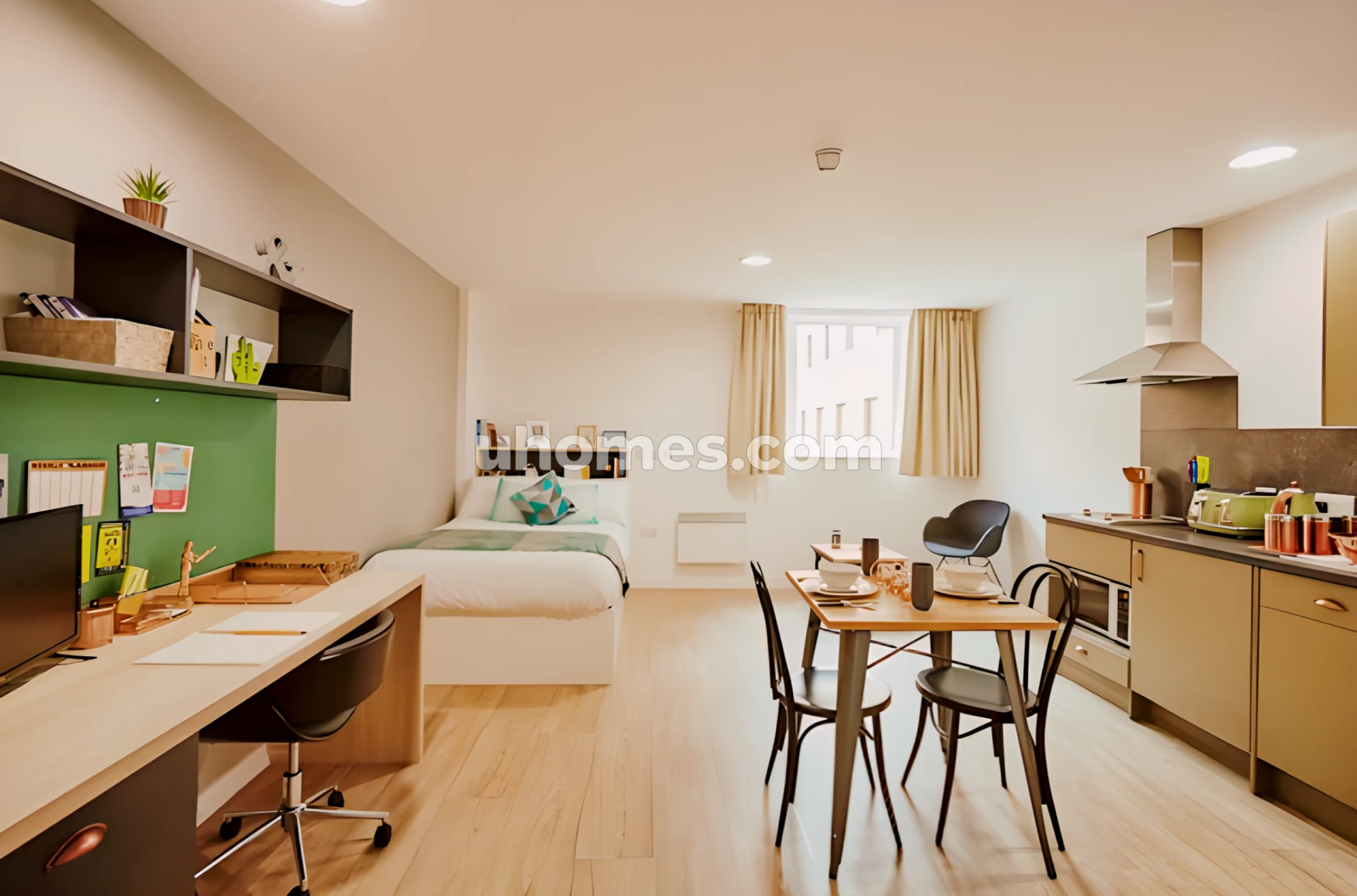
Purpose-built student accommodation (PBSA) is privately owned accommodation built specifically for students. It ranges from budget-friendly to luxury student apartments. The typical room types are en-suite, studios and shared apartments. Its biggest selling point is the variety of modern facilities and services it offers, including gyms, study rooms, cinema rooms, social spaces and 24-hour security. PBSA also provides international students with the opportunity to live with students from other universities and meet people from different backgrounds. In many cases, the rent includes the utility bills and Wi-Fi, which is convenient for international students.

Shared Houses and Flats (HMOs)

Shared houses and flats are private properties rented by several tenants, often students. Each tenant usually rents a bedroom and shares facilities such as the kitchen and bathroom with others. They are often cheaper than university halls and PBSA, although utility bills may not be included in the rent. Some shared properties are registered as Houses in Multiple Occupation (HMOs).

Private Rentals

Private rentals are made up of studios and apartments rented directly from landlords or through letting agents. They offer more privacy than shared houses and are suitable for students who want to live alone, as well as couples or families. They do tend to be more expensive though and you may have to pay the utility bills separately.

Homestay Accommodation

Homestay is when international students stay with local families in the UK. This type of accommodation is more suitable for students under 18 years and international students taking short-term English courses. By living with local families, students have more opportunities to practice English in everyday communication, and learn more about British culture and life.

But living in someone else’s home also means adapting to the family members’ daily habits. Each host family has different arrangements for meals. Some offer breakfast and dinner, some provide full-board meals. Students can get help from their school or university to find a homestay. Education agents or specialist accommodation providers can also help students find suitable housing resources.

When Should International Students Start Looking for Accommodation in the UK?

International students starting a course in September should begin looking for accommodation from October to March and try to book a room from January to May, or by June at the latest.

Some universities also have intakes in January or May. If you want to start at a different time of year, then schedule your accommodation search and booking accordingly.

The best time to book also depends on the type of accommodation and when you get your university offer. University halls usually have deadlines for applications so check the accommodation information on your university’s official website as early as you can.

You don’t need to wait to reach the UK to find accommodation. If you start early, you’ll have more time to compare available properties and room types, and less risk of finding fewer options in popular student cities.

Where Can International Students Find Accommodation in the UK?

International students can look for accommodation in the UK via university accommodation offices, student accommodation websites, private rental websites, letting agents, and student communities.

  • University Accommodation Offices and Official Websites: If you’re looking to apply for halls of residence, start by checking your university’s official website for types of rooms, application deadlines and booking requirements. If you have any inquiries regarding the application process, you can also contact the accommodation office directly.
    Student
  • Accommodation Platforms: Platforms like uhomes.com focus on overseas accommodation and living services for international students. uhomes.com offers a range of student accommodation options across 27 major study destinations including UK. Its listings contain property details, photos, videos and VR views, so you can have a look around before booking from abroad. The platform offers multi-language support, secure online booking and one-to-one help from rental consultants through the whole process, from finding a property to moving in. Compare rent, room types, facilities and locations in different UK cities and verify whether the utility bills are included.
  • Private Rental Websites and Letting Agents: There are lots of websites that list private rental accommodation. You can find private rooms, shared houses and apartments. You could also contact letting agents in the local area to find a property that meets your needs.
  • Student Communities and Social Platforms: University communities and student groups can also be good sources of rental information. Students often share info about available rooms, recommend properties or look for housemates. You can also make use of social media groups to get in contact with potential housemates before you arrive in the UK.
uhomes.com logo

How to Choose the Right Accommodation for International Student?

The best accommodation choice will depend on your budget, university location, living preferences and personal needs. Consider the following factors before deciding.

Rental Costs and Budget

Your budget is one of the biggest things to consider when considering student accommodation. Check weekly/monthly prices for each property. See if bills included.

Prices of accommodation also vary from cities in UK. London is one of the most expensive to rent in, and Manchester and Birmingham have some reasonable places to rent. There are plenty of places in Liverpool that may suit your budget. Compare prices for student accommodation in and around the cities to see what your budget can afford.

Don’t forget to budget for extra costs such as deposits, transport and the cost of living. And don’t forget to factor in the cost of utility bills and other household costs when calculating the expense of private rentals.

Choose a place to live that is well connected to your university and local amenities. If you live close to campus, you’ll save on commuting, but you may find lower rents farther away.

Before you book, have a look at the nearby bus stops, train stations and supermarkets. International students should also take into account their religious and cultural needs, including the availability of places of worship and shops selling food that meets their dietary requirements. And consider the time it takes to reach your university at peak hours.

Room Types and Facilities

Consider how much privacy and space you need. En-suite rooms have their own bathroom and studios have their own kitchen and bathroom. Cheaper can be shared rooms and flats.
Also verify that the property has essential facilities such as Wi-Fi, laundry rooms, study areas and secure bike storage.

studio

Housemates and Living Environment

If you’re sharing accommodation, think about who you’ll be living with and whether your lifestyles are compatible. Cleanliness, noise, study habits and shared responsibilities are all factors that can affect your everyday life.

If you can, ask about the current housemates and the household setup before you sign a contract.

Safety and Security

Safety should be a priority when choosing a place to stay. Verify that the building has secure entry systems, CCTV and on-site staff.

If you’re renting from an individual landlord, check the property has working smoke alarms and meets basic fire safety standards. Or you can check out the neighborhood and read reviews from previous tenants before booking.

How to Book Student Accommodation in the UK as an International Student?

From choosing a property to preparing to move in, here are five steps international students can take to find and book appropriate accommodation in the UK.

Step 1. Shortlist Your Preferred Properties

Begin by browsing for properties that match your budget, preferred room type, and the proximity of the university. Then compare the availability, facilities and term of contract of the shortlisted properties.

Step 2. Arrange a Viewing

Before booking, please organize a visit of the accommodation, the social areas and the facilities. You can also ask questions about the property, how it operates and what is included in the rent. If you can’t visit in person, talk to the accommodation provider or landlord to arrange a virtual inspection.

Step 3. Prepare the Required Documents

When you apply to live in most places you’ll be asked for personal and student details. Typical criteria include:

  • Show a valid passport or other ID.
  • University acceptance letter or enrolment verification.
  • Visa or immigration status information, if applicable.
  • Information of guarantor, if any

Not all suppliers have the same requirements, so check what you need to send before applying.

Step 4. Check the Booking Terms and Pay

Please read the booking terms carefully before making any payment. Please check the rent, deposit, payment plan, cancellation policy and refund terms. Make payment through the provider’s official channel and save the payment confirmation. Do not send money to people or accounts that have not been verified.

Step 5. Confirm Your Booking and Prepare for Move-in

Once your application and payment have been accepted, you should receive written confirmation of your booking and a copy of your agreement. Confirm your move-in date, key collection details and any instructions from your accommodation provider. So have these data handy to get settled in smoothly.

What Should International Students Know Before Renting Accommodation in the UK?

International students should be aware of guarantor requirements, Right to Rent checks, tenancy agreements, rental scams and Council Tax rules when renting accommodation in the UK.

Do International Students Need a UK Guarantor?

You won’t need a UK guarantor for all international students, but many private landlords and accommodation providers will ask for one. A guarantor is usually a UK resident who will pay your rent if you don’t. If you don’t have one some providers may take international guarantors or commercial guarantor services. Some will take rent paid in advance.

What Is a Right to Rent Check?

In England, landlords have to do a Right to Rent check to ensure that tenants aged 18 or over have the right to rent. Students with an eVisa normally can provide a share code from their UK Visas and Immigration account. University halls of residence are exempt but some private student accommodation may require these checks. The rules apply in England and not across the UK.

What Should You Check in a Tenancy Agreement?

Check the following details before you sign a tenancy agreement:

  • Rent and Payment Terms: Check the rent amount, dates of payment, instalments and any other fees.
  • Deposit and Deposit Protection: Check the deposit amount and deposit protection arrangements. For most private tenancies in England deposits are capped at five weeks’ rent where the annual rent is less than £50,000. Covered deposits must qualify for a government-backed program.
  • Tenancy Length and Early Termination: Check the dates of the tenancy, the notice period, the conditions for early termination and the cancellation policy.
    If anything is not clear, ask the landlord or accommodation provider to explain before you sign.

How Can International Students Avoid Rental Scams?

Students traveling from outside should be vigilant when seeking for accommodation, especially if they are organizing a property from abroad. Check if the landlord or letting agent is genuine and the property exists. Look before you leap, if you can. Be wary of ads with extremely low rents or landlords who are anxious to get paid. Always read the rental contract and pay through verified means. Do not send money to private accounts or to unknown individuals without checking their credentials.

Do International Students Need to Pay Council Tax?

Most full-time international students are exempt from paying Council Tax if they qualify. In England, households where all members are qualifying full-time students are exempt. If you live with non-students Council Tax may still be payable, but you may be eligible for a discount. Your university may require you to submit a student status certificate. Rules vary across the UK so check with your local council.

How Much Does Student Accommodation Cost in the UK for International Students?

Student accommodation in the UK costs around £135–£190 per week on average, although prices vary depending on the city and type of accommodation. The table below shows the typical monthly rent for different types of student accommodation in London and other parts of the UK.

Accommodation TypeOther UK CitiesLondon
Shared Private House£390–£690/month£780–£1,500/month
University Halls£520–£950/month£860–£1,950/month
Purpose-Built Student Accommodation (PBSA)£600–£1,200+/month£1,080–£1,950/month
Private Studio Apartment£730–£910+/month£1,500–£2,600+/month

These figures are approximate and can vary depending on the location, room facilities and contract length. Properties in smaller cities and towns are generally more affordable than those in London, Oxford and Cambridge.

Summary

How to find accommodation in the UK for international students depends on your budget, preferences and study plans. From university halls and purpose-built student accommodation to private rentals and homestays, there are options to suit different lifestyles. Start your search early, compare properties and consider factors such as location, facilities and rental costs. Before booking, check the contract terms, payment requirements and relevant rental rules. Careful planning can help you secure a comfortable place to live and enjoy a smooth start to student life in the UK.

FAQ

Yes, your family may be able to live with you in the UK, but this depends on your visa eligibility and accommodation arrangements. Student visa holders can generally bring eligible dependants, such as a partner or child, only if they meet the immigration requirements. You should also check whether your accommodation allows family members, as university halls rarely offer family housing.

Pack essential documents, clothing, toiletries, chargers and personal items for daily use. You may also need bedding, towels and basic kitchenware, depending on what your accommodation provides. Check the facilities and packing guidance from your accommodation provider before travelling. You can buy most household items after arriving in the UK, so avoid bringing things you do not need.

If you have a time-limited right to rent, your landlord will need to carry out a follow-up check before your permission expires. If you hold an eVisa, you can use a share code to prove your right to rent. Make sure your immigration permission remains valid and provide updated evidence if your visa is extended. These checks apply to private rentals in England.

Yes, you may be able to cancel your booking, but this depends on your accommodation agreement and cancellation policy. Some providers allow cancellations before a certain date or under specific circumstances, such as a visa refusal. Others may charge a cancellation fee or refuse a refund. Read the terms carefully and contact your accommodation provider as soon as possible if you need to cancel.

Shared houses are generally among the cheapest accommodation options for international students in the UK. Renting a room in a shared property usually costs less than booking a studio or private student apartment. Smaller university cities and towns also tend to have lower rents than London. Remember to compare utility bills and transport costs before choosing a property.

To apply for a UK Student visa, you first need an offer from a university or other licensed student sponsor and a Confirmation of Acceptance for Studies (CAS). You can then complete the online application and submit the required documents, such as your passport and proof of funds, if applicable. You may also need to provide biometric information at a visa application centre. If you are applying from outside the UK, you can usually apply up to six months before your course starts.

uhomes.com | Student Accommodation,Flats,Houses,Apartments for Rent
What can I do for you?
ASK ME