



Can College Students Rent a House?
Basic Requirements for Student Renters
If you’re trying to work out how to rent a house as a student, it pays to understand what landlords actually look at before approving your rental application.
You’ll frequently run into these key requirements:
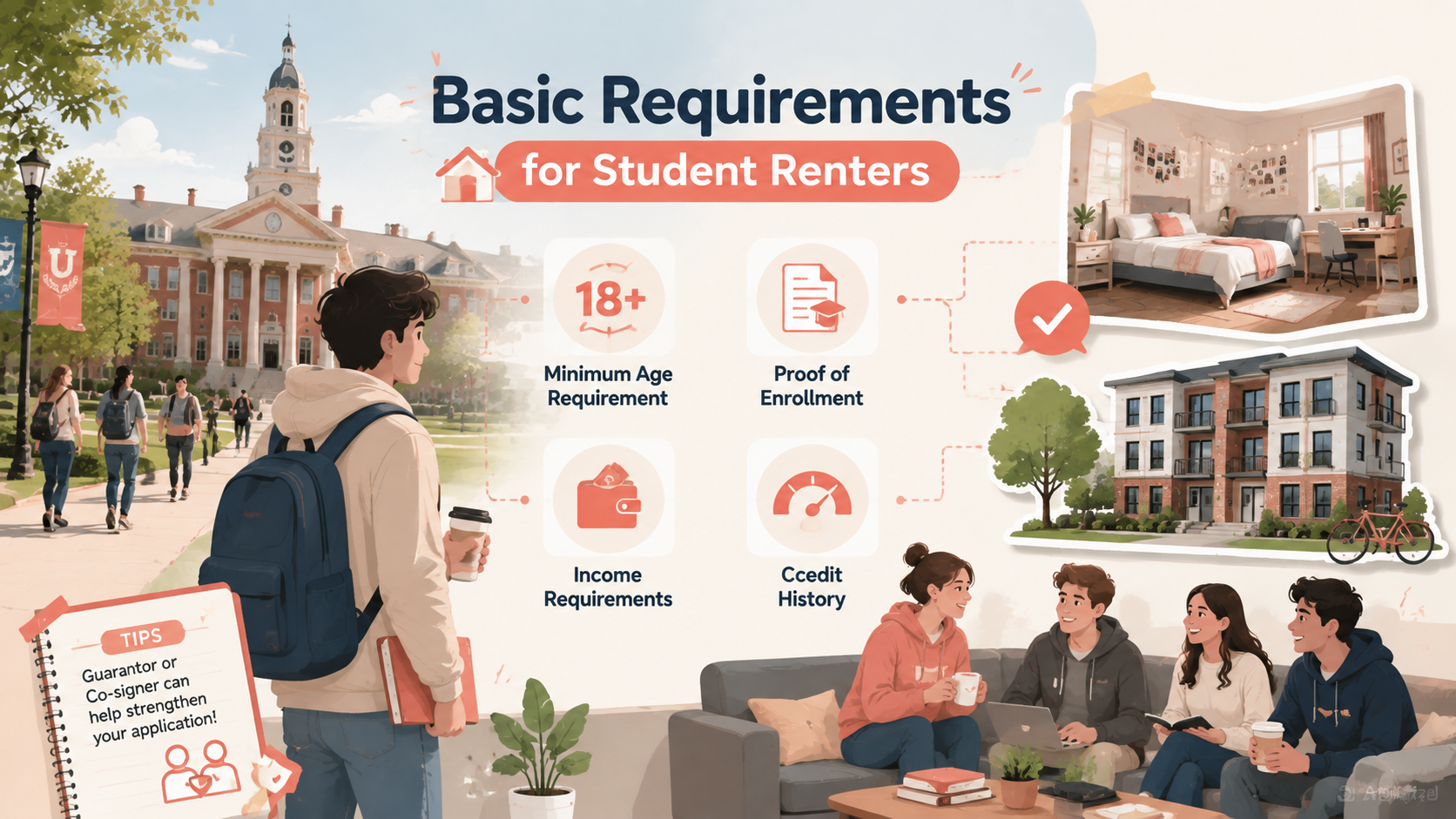
| Requirement | Description |
|---|---|
| Minimum age requirement | Local law dictates the age you can sign a lease independently. For most locations, you have to be 18 or older. |
| Proof of enrollment | Landlords may ask for your university acceptance letter, enrollment paperwork or student ID. These items prove you are currently attending college. |
| Income requirements | Property owners need to see you can afford regular monthly rent. You can provide income evidence, savings details or documents that show you get financial backing. |
| Credit history | Having decent credit helps show you’re a reliable tenant. The reality is most college students have almost no credit background when renting for the first time. |
It’s okay if you can’t meet every single requirement on your own. Lots of students fix this by using a guarantor or getting a co‑signer to support their rental application.
Can Students Rent Without Income?
A lot of college students question if they can rent a private house without holding a steady full-time job or fixed monthly income. The short answer is that it is absolutely possible, though students will need extra supporting materials to prove they can keep up with consistent on-time rent payments.
Most college students fund their living expenses through family aid, academic scholarships, personal savings or other forms of financial help. Because of this, most landlords are open to accepting non-traditional documents to verify a student’s financial capability. In most cases, parents or other family members can submit financial paperwork or serve as a guarantor to strengthen a student’s rental application.
A guarantor for student renters takes on financial accountability if the student fails to pay rent in line with the terms of the lease. A co-signer serves a nearly identical purpose; they sign the official rental contract and agree to cover any missed rent payments on the student’s behalf.
Co-signers are typically individuals with stable income and a clean credit record, most commonly parents, relatives or close trusted friends. This form of support greatly helps students who are new to renting and have not yet built up personal credit, letting them successfully secure off-campus housing.
Knowing these practical rental rules is an essential part of renting a house as a student, particularly for undergraduates going through the off-campus housing hunt for the very first time. For property owners learning how to rent to college students, setting transparent rental standards and flexible application rules streamlines the whole process for both student tenants and landlords alike, making renting to college students far more hassle-free.
As students accumulate more rental experience and gradually build their personal credit profile, they will eventually be able to rent housing independently without external support. Mastering the core knowledge of how to rent a house as a college student fully equips new learners to tackle their first rental journey with confidence and clarity, and lays a solid foundation for how to rent a house as a student in future scenarios.
How Much Does It Cost to Rent a House as a College Student?

Monthly Rent
Monthly rent normally makes up the bulk of housing spending for students. How much you pay will hinge on multiple points: your study location, what kind of home you pick, and whether you move in with other people.
Location plays a huge role in rent pricing. Homes near major university campuses, city centres or well connected transport links generally cost more than properties further out.
Your university city itself also creates big price gaps. Places with large student communities see heavy competition for rental homes, and this pushes up average housing rates.
Home size is another key variable. Bigger houses with extra bedrooms and more living space will naturally carry higher price tags. Splitting the home with roommates however brings those personal costs down to a manageable level.
Teaming up with roommates remains one of the most popular ways for students to cut their housing budget. Splitting rent and household bills lets you move into larger homes without overspending on your individual share.
When renting to college students, landlords should keep in mind that student finances look very different from those of full time working professionals. Laying out straightforward rental rules and fitting housing choices helps deliver a smoother experience for property owners and student tenants alike.
Additional Rental Costs Students Should Expect
Lots of people renting for the very first time fixate solely on monthly rent and overlook all the extra costs tied to renting a place. Getting to know these extra charges ahead of time forms a vital piece of figuring out how to rent a house as a student.
Apart from regular rent payments, students should set money aside for the following out of pocket costs:
| Additional Cost | Description |
|---|---|
| Security deposit | A oneoff sum most landlords collect before move in. This money covers any property damage or leftover unpaid rent down the line. |
| Utilities | Costs for power, water, gas and heating. Whether you pay these separately will depend entirely on what your rental contract states. |
| Internet | Almost every college student needs internet access. It supports online classes, school research and everyday personal communication. |
| Renter’s insurance | This insurance policy can safeguard your personal possessions and offer extra protection throughout your rental stay. |
| Furniture | If you move into an unfurnished home, you will need to buy basic items such as beds, desks and kitchen supplies. |
| Application fees | Certain landlords and rental platforms will charge you a fee to process and look over your rental application. |
These separate charges can pile up fast. Be sure to factor all of them in when you work out your full housing budget.
If you feel confused sorting through different places to live, uhomes.com lets students compare many housing options such as private rooms, shared apartments and studios. This makes it far simpler to find housing that matches both your budget and daily living needs.
How to Create a Student Rental Budget
Putting together a practical rental budget keeps students on top of their finances and steers them away from unnecessary money related pressure. Before you sign any lease paperwork, you need to work out not just how much rent you can afford, but also what you will spend on day to day living costs.
The 50/30/20 budgeting rule works well for many student renters. It splits up your income or financial support into three separate spending buckets:
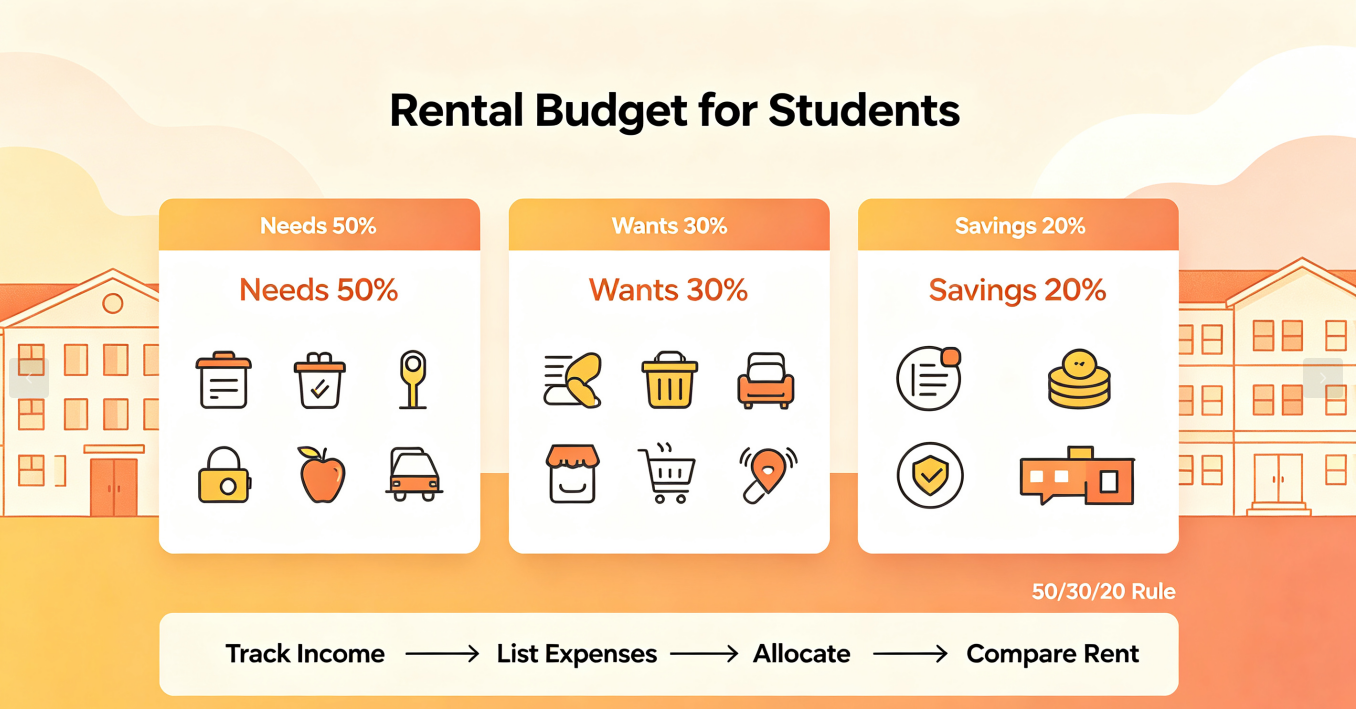
| Budget Category | Suggested Percentage | Purpose |
|---|---|---|
| Needs | 50% | Must have costs covering rent, utility bills, groceries and travel |
| Wants | 30% | Money spent on fun activities, shopping and personal leisure |
| Savings | 20% | Cash set aside for emergencies or longterm financial targets |
Every student’s circumstances look different, but this framework gives you a solid baseline to build your college housing budget around.
Take time to list out all your incoming money, whether that comes from parttime jobs, scholarships, family help or personal savings. Knowing exactly where your funds come from will smooth out the whole process of renting a house as a student.
For anyone picking up tips on how to rent to college students, these financial points are well worth keeping in mind. Landlords who understand what student budgets can handle and what hurdles student renters face are better positioned to offer housing options that fit real world student demands.
When you look ahead and account for every foreseeable expense, you can feel far more assured while picking out your very first off campus rental home.
How to Rent a House as a College Student Step by Step
When you first start renting off campus, the whole thing can feel messy. You can make things far less stressful by handling one part at a time. You might be moving out of student dorms for the first time, or just wanting a different place part way through college. Either way, sticking to a simple plan helps you find housing that actually works for you.
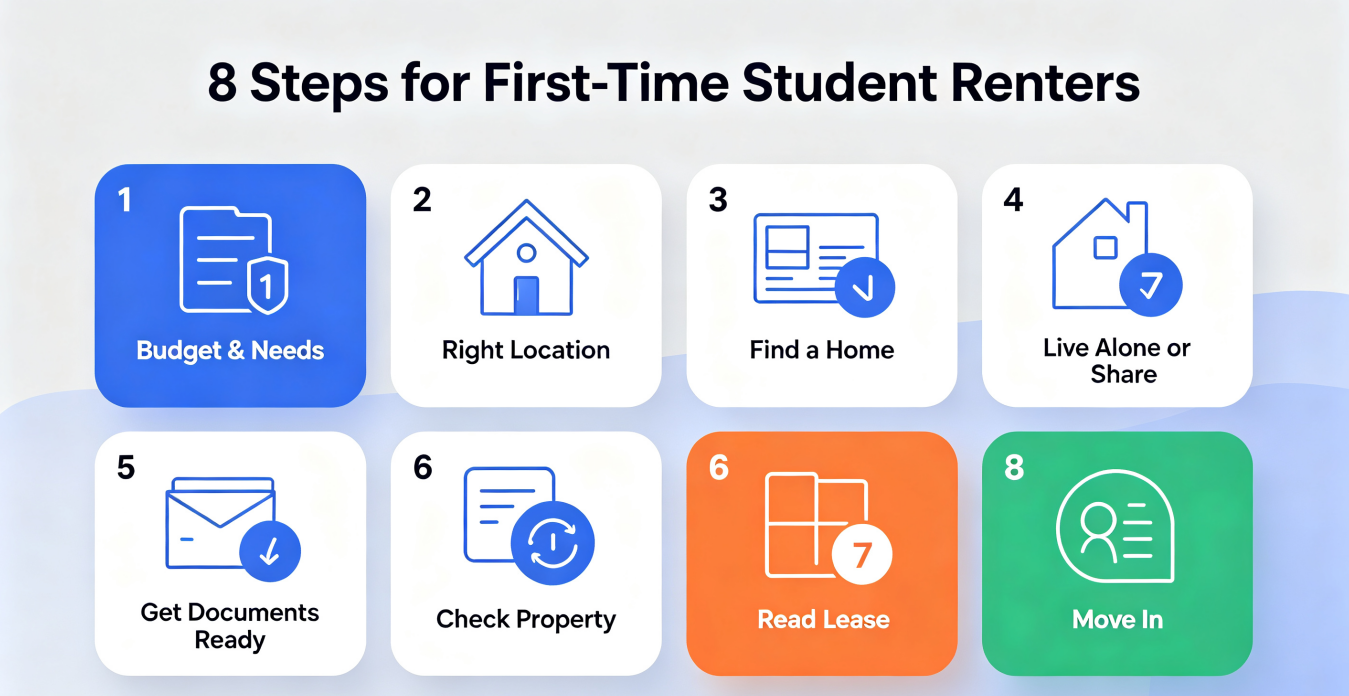
Determine Your Budget and Housing Needs
Before you go scrolling through rental homes, stop and ask yourself what you really want from where you live, and what you can actually pay each month.
Work out your monthly housing spending, which neighbourhoods you like, how many rooms you need, and whether you’d rather live solo or with other people. Your daily routine plays a big part here too. Some students need peace and quiet to keep up with their studies, while others love the vibe of sharing a place with friends.
When you know what matters most to you, you won’t waste time looking at unsuitable homes. You also steer clear of places that would put too much strain on your finances.
Choose the Right Location
Location weighs heavily when renting a house as a student. A cheaper rent home is not always a great pick. You could end up spending lots of time travelling back and forth, and those transport fees will add extra costs on top of your housing bill.
You need to think over how far the home sits from campus, how good local public transit is, whether the neighbourhood feels safe, and how close you are to grocery shops, eateries and other everyday amenities.
It can be really tough for students settling into a brand new city, since they know very little about local neighbourhoods. uhomes.com takes much of that pressure away. It lets students look for housing close to university campuses and line up different homes side by side by location, price and what facilities each one offers. uhomes.com cuts down hours spent hunting for places, so students can focus more on getting ready for college life ahead.
Find the Right Rental House
Once you have locked in your budget and target area, you can begin checking out what properties are up for rent. This stage tends to eat up most of students’ time throughout the whole rental journey. There is plenty to weigh up, from price and position to room layouts, onsite facilities and individual rental terms.
Students have multiple places to source housing leads. You can turn to your school’s housing office, local rental sites, real estate agents and dedicated student housing platforms. Never jump on the first decent looking listing you come across; take time to run through a few different choices.
It gets even trickier for students relocating to an unfamiliar city or heading overseas for their studies, as reliable housing resources can be hard to track down. uhomes.com provides a user-friendly and comprehensive search experience for student accommodation, allowing students to easily browse and find housing options that match their individual needs via its app, website, and mini programme. The platform offers detailed property listings, covering accommodation facilities, surrounding environment, and transport connections, helping students gain a clear and accurate understanding of each student housing. Powered by an AI-driven recommendation system, uhomes.com matches students with suitable properties based on their university location, budget range, and lifestyle preferences, such as en-suite rooms or pet-friendly options, improving the efficiency and accuracy of the search process.
No matter you want a private bedroom, shared flat or self contained studio, a wide pool of housing picks makes it much simpler to land somewhere matching your budget and day to day living style.
Decide Whether to Rent Alone or With Roommates
One big call you will make when renting a house as a student is whether you want to live on your own or move in with roommates.
Going solo gives you far more privacy and freedom. That works well if you value peace and quiet to focus on your schoolwork. Still, covering an entire house by yourself will cost you more. You pay the full rent plus all utility bills with no one else to chip in.
Lots of college students opt for shared housing, and for good reason. It brings overall living costs right down. You can divide rent and everyday household bills, plus get more social interaction day to day. Even so, sit down and talk over ground rules before you move in together. Work out who handles cleaning, how you will split costs, and where each person’s personal boundaries lie.
Cost should not be your only point of focus when picking somewhere to stay. Think about what sort of living setting fits your regular routines best.
uhomes.com carries a wide range of student housing. You can look through private rooms, shared flats and studios, and filter results based on how much privacy you want, how much you can spend, and the kind of daily life you lead.
Prepare Your Rental Application Documents
Preparing the necessary documents in advance can make the rental process much smoother. Many students lose good housing opportunities because they are not ready to submit an application quickly.
Common documents include:
- Identification documents
- Student enrollment proof
- Proof of income or financial support
- Guarantor information
- References if required
International students will benefit a great deal from getting their paperwork sorted well ahead of time. Rental rules overseas often do not line up with what they are used to back home. When you have all your papers organised beforehand, you will feel much more assured putting in applications for the accommodation you really want.
Visit the Property and Check Important Details
Never rush to sign a lease without taking a close look at how the property holds up. List photos and online write ups do give you some helpful background, yet nothing beats viewing the place face to face or joining a virtual tour. These real world observations let you make far more informed choices.
While you check over the housing space, look closely at every part of the home. Go through bedrooms, the kitchen, bathroom, household appliances, furniture and all safety related fittings. Be sure to also ask who takes care of repair work, and double check if utility charges are covered within your rent payment.
Snap photos or take short videos of any existing flaws before you move in. This simple habit stops disagreements from popping up between you and your landlord further down the line. Doing a thorough walk through offers solid protection as you figure out how to rent a house as a college student.
Review the Lease Agreement Before Signing
If you are renting a house as a student, your lease paperwork carries huge weight. Never put your signature down without reading through it first. Give yourself time to work through each section, so you are fully aware of everything you are responsible for as someone renting the property.
There are several practical points you ought to look over. Note how long your tenancy runs, your monthly rent amount, how the security deposit works, who will cover utility costs, who takes care of property fixes, and what rules apply if you need to move out ahead of schedule.
Quite a few students who rent for the first time fixate only on what the place looks like, and skip past small print contract points. This common oversight can create unforeseen issues later on in your stay. Getting to grips with your lease forms a key part of how to rent a house as a college student.
uhomes.com accommodation consultants bring together professional expertise and international experience to support students with accommodation services. The consultants are familiar with rental regulations, housing policies, and tenancy agreements across different countries. This enables them to help students understand the rental process and documentation, and provide detailed contract review support when needed. The student accommodation advisors carefully review contracts line by line and provide a written “Key Terms Summary”, highlighting essential terms such as rental duration, payment schedules, deposit deductions, cancellation policies, and maintenance reporting procedures. This ensures students fully understand all terms before signing.
Prepare for Move In
Once you’ve put your name on the lease, you’re ready for the last part: getting set up to move in. Pulling off a stress free move goes beyond just hauling your stuff into the new place. You want to get all the small logistics sorted out right from the start.
Before your move in date, double check a handful of practical items. Sort out utility accounts, get your internet arranged, work out when and where to pick up your keys, and go over any move in guidance from your housing provider. It also pays to walk through the property one more time to note its condition, and save physical or digital copies of every rental related paper you have.
This early on organisation makes settling into your new home much easier, and keeps avoidable headaches from popping up down the line for anyonerenting a house as a student.
House vs Apartment: Which Is Better for College Students?
Common Mistakes College Students Make When Renting a House
Renting for the first time can throw up plenty of hurdles. Lots of students slip up simply because they have little real world experience with the whole rental workflow.
Some learners only look at how much rent they pay each month and overlook other extra spending. Security deposits, utility bills and furniture costs all add up. It is also fairly common for people to sign a lease before they know exactly what rules and obligations they are taking on.
Never commit to a home without checking its location, nearby transport and what the local area has to offer. A seemingly cheap property can turn into a bad fit. You may face higher travel fees, or find it cannot support your normal day to day life.
Watch out for rental scams too. This matters most when you look for housing in a city you do not know well. Double check property facts, stick to safe communication channels, and walk away from any offers that feel too good to be real.
Conclusion
Renting a house as a college student does not need to feel overwhelming. If you plan ahead, manage your money well, and get familiar with how renting works, hunting for a nice place to stay can turn into an easy, satisfying process.
Whether you are brand new to how to rent a house as a college student or just checking out different options renting a house as a student, take time to look over various homes, know what you will be responsible for, and pick housing that suits you. Doing this lets you make your final choice with real confidence.
Everything from working out your budget and picking a good location, to signing your lease and turning the place into somewhere you feel at home, moves you toward greater independence during college.
Platforms such as uhomes.com give students trustworthy housing resources. You can look through many different accommodation types, weigh your options side by side, and lock in somewhere that fits what you need and how you live. This guide aims to get you ready and build up your confidence as you set off on your own rental search.
FAQs:
Most students need to hand over photo ID, their school‑enrollment proof, and papers showing they can cover housing costs. Some landlords will also ask for guarantor details. What you need to provide differs depending on who owns the property and which area you are moving into.
Students can look for housing options through their university housing team, common rental websites, local property agents, and platforms made just for student renters.
If you would like an easy way to compare different homes side‑by‑side, uhomes.com lists student‑oriented housing across many cities and countries. You can filter through listings and find something that matches what you really need.
There is no one‑size‑fits‑all rent figure. It changes based on where you live, your college town, your income and any financial support you get. Living in big cities costs more, while smaller university towns tend to have cheaper housing choices.
A useful tip: avoid spending too much of your monthly budget purely on housing. When renting a house as a student, leave enough money to cover all your other day‑to‑day necessities.
Yes, you certainly can. Many college students get a rental place without having a full‑time job. Landlords will accept other proof you can pay rent, such as personal savings, scholarship funds, financial support from family, or a guarantor.
If you are figuring out how to rent a house as a student, having a parent or someone you trust co‑sign your lease improves your odds of being accepted. This helps a lot when you barely have any credit history.
For most college students, renting makes far more sense than buying a property. Renting gives you plenty of flexibility. You will likely only live in the area for a few school years, and most students do not want the long‑term commitments that come with owning a home.
You can find student rentals via your university housing department, local rental websites, property agents, and special‑purpose student accommodation platforms.
While searching, take location, cost, neighbourhood safety, public transport and on‑site facilities into account. uhomes.com lets you look through private rooms, shared apartments and studios. It works especially well if you are moving to an unfamiliar city or studying abroad.
You can still secure a rental home even with poor or little credit history, but you will need extra supporting paperwork. Plenty of first‑time student renters have never built up credit. Landlords often request a co‑signer, guarantor, or documents proving you have steady financial backing.
Getting familiar with these requirements matters a great deal when learninghow to rent a house as a college student, especially for your very first rental application.