



Choosing where to live can shape your university experience in Lancaster. This Lancaster student accommodation guide covers when to search for properties, main student areas, accommodation options, typical rental costs and practical tips to help you find a home that suits your lifestyle and budget.
Key facts about Lancaster
Lancaster is a compact university city with two main higher education campuses, most areas are within easy reach of the city centre and Lacaster University, making location an important factor when choosing accommodation.
- Student population: Lancaster University has more than 16,000 students based at its Bailrigg campus, while the University of Cumbria has around 15,000 students across its campuses and partner locations. The University of Cumbria figure includes students outside Lancaster, so the Lancaster campus population is smaller.
- Top universities: Lancaster University is the city’s largest university, based at Bailrigg about three miles south of the centre. The University of Cumbria’s Lancaster Campus is on Bowerham Road, much closer to the centre.
- University ranking: Lancaster University is 10th in the Complete University Guide 2027 and 14th in the Guardian University Guide 2026.
- Student accommodation supply: LLancaster University offers around 6,700 on-campus bed spaces, with thousands more approved rooms available through its city accommodation scheme. The off-campus rental market also provides plenty of choice, including private student residences, studio apartments and shared houses in popular student areas around Lancaster.
- Transport: Students can travel easily between Lancaster city centre and the Bailrigg campus, with at least 14 buses running each hour during term time. The main campus bus routes stop at the University Underpass, while Lancaster Railway Station is only around a five-minute walk from the city centre.
- Cost of living: Compared with larger student cities in the UK, Lancaster offers more affordable accommodation and living costs. Students can choose from a range of housing options, from university halls to private rentals, while keeping monthly expenses more manageable.
When to start looking for student accommodation in Lancaster
Students planning to rent in Lancaster should start searching from November for the following September intake. Most students compare options between January and March, then secure a room after reviewing the tenancy agreement, costs and contract terms.
Returning Lancaster University students often begin earlier because the university holds its annual Housing Fair in November. Starting early gives students more time to agree on a budget, choose suitable housemates and view available properties before demand increases. Popular private student accommodation in Lancaster city centre, Bowerham and Scotforth may become harder to find later in the academic year. New undergraduates usually apply for university accommodation from April after accepting their course offer.
Halls of residence are allocated on a first-come, first-served basis. Students considering private student housing in Lancaster should confirm visa requirements, guarantor options and cancellation policies before signing a contract.
Best areas for students to live in Lancaster
The most popular areas for student accommodation in Lancaster include the city centre, Bowerham, Scotforth and Galgate, with the best choice depending on your university, budget and lifestyle. Lancaste University students often prioritise locations with easy access to the Bailrigg campus, while University of Cumbria students may prefer areas closer to the city centre and Bowerham.
Lancaster city centre
Lancaster city centre is one of the most popular areas for students from both Lancaster University and the University of Cumbria. It offers easy access to shops, restaurants, nightlife, Lancaster Railway Station and bus routes to both campuses. Students can choose from private student accommodation, studios and shared houses, with many rentals located around areas such as Penny Street, Marton Street and St George’s Quay. The city centre suits students who want convenience and a more social lifestyle, although properties close to bars and late-night venues may experience more noise.
Bowerham, Primrose and Greaves
Bowerham, Primrose and Greaves are popular residential areas, particularly for University of Cumbria students because they are close to the Lancaster Campus on Bowerham Road. Many students can walk to lectures, while Lancaster University students also choose these areas for more affordable shared houses and quieter surroundings. Compared with the city centre, these neighbourhoods offer a more residential atmosphere, but students should check bus routes carefully if they need to travel to the Bailrigg campus.
Scotforth and Hala
Scotforth and Hala are located south of Lancaster city centre and are popular with Lancaster University students who want a quieter place to live while staying within easy reach of Bailrigg. The areas offer mainly residential housing, including shared student houses, with local shops available for everyday essentials. They are better suited to students who prefer a calm neighbourhood and regular campus routine rather than those who want to be close to city-centre nightlife.
Galgate
Galgate is a convenient option for Lancaster University students who want to live close to the Bailrigg campus while enjoying a quieter village setting. The area has local shops, pubs and housing options popular with students, although it offers fewer social and entertainment choices than Lancaster city centre. Students considering Galgate should check the exact property location and evening transport options before signing a contract.
Lancaster University campus accommodation (Bailrigg)
Lancaster University’s Bailrigg campus is home to most university-managed accommodation, making it the most convenient option for first-year students who want to stay close to lectures, college facilities and campus services. Living on campus eliminates the daily commute, but students may need to travel to Lancaster city centre for larger shops, nightlife and broader social activities. This option is mainly suitable for Lancaster University students rather than University of Cumbria students.
| Area | Typical weekly rent (2026/27) | Best for |
|---|---|---|
| Lancaster City Centre | £140–£190/week | Students who want shops, nightlife and easy access to transport |
| Bowerham | £110–£150/week | University of Cumbria students and those looking for affordable shared houses |
| Scotforth & Hala | £100–£140/week | Lancaster University students who prefer quieter areas near Bailrigg |
| Galgate | £120–£160/week | Lancaster University students who want to live close to campus |
| Bailrigg (University accommodation) | £185–£275/week | First-year Lancaster University students who prefer living on campus |
How much does student accommodation in Lancaster cost?
Student accommodation in Lancaster currently starts at about £95 per week on uhomes.com, while 2026/27 university-managed rooms range from £108 per week at the University of Cumbria Lancaster Campus to £278.05 per week for Lancaster University’s highest-priced catered option.
When comparing rents, look beyond the weekly price. A cheaper room may cost more if the contract is longer or bills are not included, so always check what is covered before signing.
Lancaster student accommodation prices can change by room, contract, promotion and availability.
Lancaster student accommodation rents for 2026/27
| Accommodation type | Typical weekly rent (2026/27) | Suitable for |
|---|---|---|
| En-suite room (shared kitchen) | £130–£180/week | Students who want a private bathroom while sharing social spaces |
| Studio | £180–£250/week | Students who prefer more privacy with their own kitchen and living area |
| Shared house room | £90–£150/week | Students looking for lower-cost housing with friends |
| One-bedroom apartment | £200–£300+/week | Students who want a private living space |
Types of student accommodation available in Lancaster
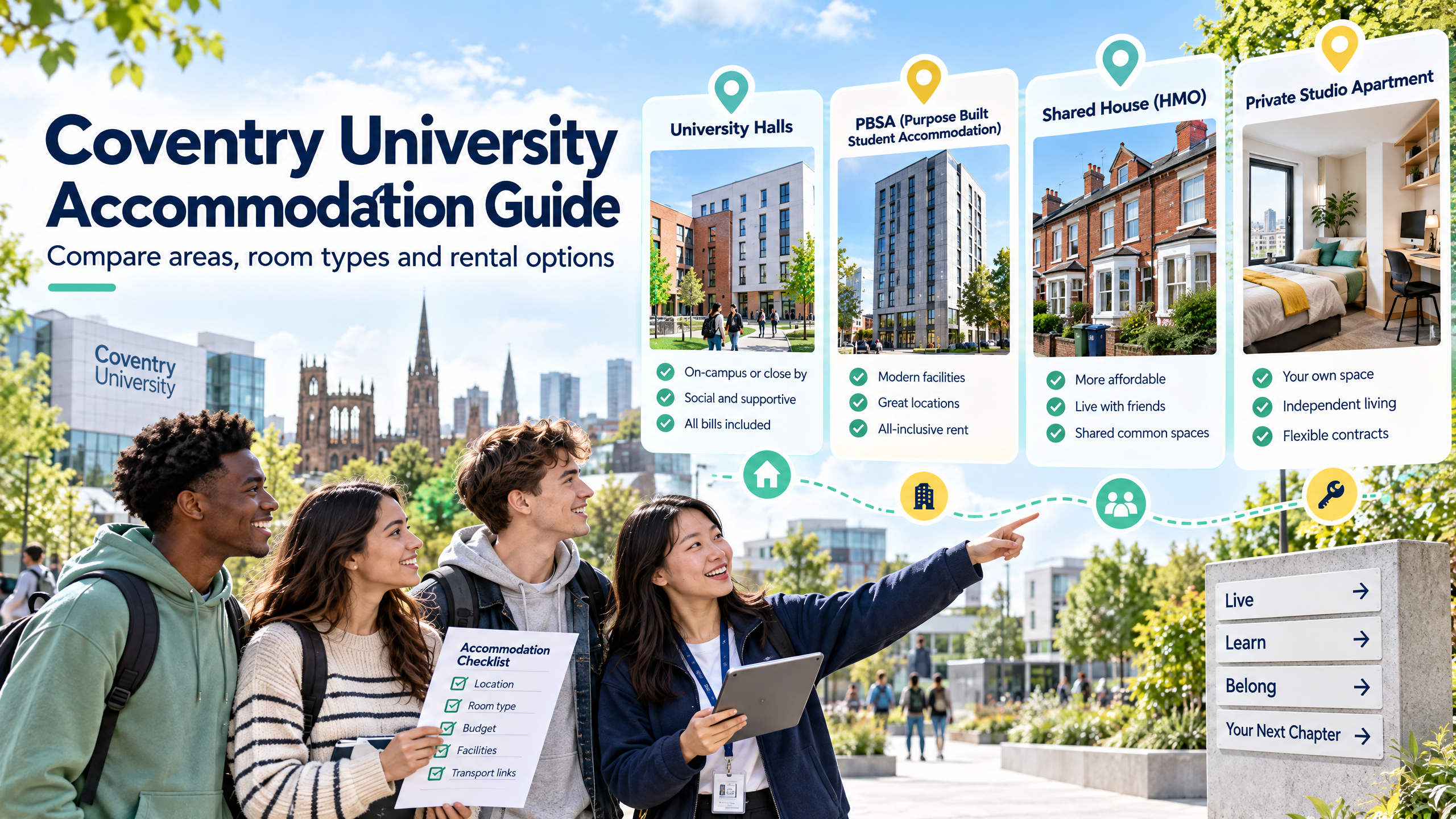
Lancaster students can choose university halls, private purpose-built student accommodation, en-suite rooms, studios, shared houses and private flats. Different property type offering a different balance of community, privacy and cost.
University halls
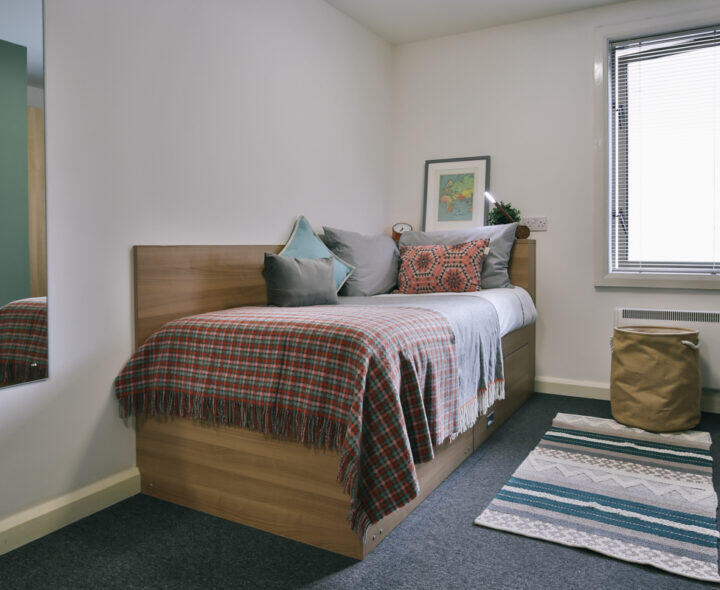
University halls are institution-managed rooms designed for enrolled students, usually with furniture, utilities and on-site support included. Lancaster University halls are integrated into its college system at Bailrigg, while the University of Cumbria’s Waddell Halls are on its Lancaster Campus. Halls simplify the first move away from home, but room choice and contract flexibility may be more limited than in the private market.
Private purpose-built student accommodation
Private purpose-built student accommodation is a professionally managed student-only building with furnished rooms and shared facilities. It usually includes en-suites or studios and may include bills, study rooms, gyms, communal lounges, cycle storage, or on-site teams. Facilities in PBSAs vary by building, so students should verify them on the individual property page rather than assume every private hall includes the same services.
En-suite rooms
An en-suite room is a private bedroom with its own shower room and a kitchen shared with flatmates. It is often the best middle ground for students who want bathroom privacy without paying for a completely self-contained studio. Compare the number of residents sharing the kitchen, refrigerator space and cleaning arrangements.
Studios
A studio is a self-contained room with a private bathroom and private cooking area. Studios suit postgraduates, mature students and anyone who needs quiet or does not want to share a kitchen. They usually cost more than rooms in shared flats, and the extra privacy can mean fewer automatic opportunities to meet neighbours.
Shared student houses
A shared student house gives a group separate bedrooms and shared kitchens, bathrooms and living space under one tenancy or individual contracts. It can provide good value in Bowerham, Scotforth, Hala and other residential areas, but students must check how bills, cleaning and responsibility for unpaid rent are divided. In a joint tenancy, all tenants are responsible for the rent, meaning one person’s unpaid share can impact everyone else.
Private flats and one-bedroom apartments
A private flat gives one student or a couple more independence than halls and may offer a separate bedroom and living room. Students should confirm whether the building accepts student tenants, whether double occupancy changes the price, and whether council tax applies to anyone in the household. A home occupied entirely by qualifying full-time students is normally exempt from council tax, but mixed student and non-student households are treated differently.
How to book student accommodation in Lancaster
Students can book Lancaster accommodation safely by setting a complete budget, comparing verified options, checking the exact journey, reviewing the contract and paying only through an approved method.
- Set a total budget. Multiply the weekly rent by the full contract length, then add any utilities, transport, laundry, food and one-off payments. Do not compare weekly prices alone.
- Choose the right campus route. Check whether daily travel is to Lancaster University at Bailrigg or the University of Cumbria on Bowerham Road. Test the journey at the time classes will start, including the walk to and from the bus stop.
- Shortlist suitable room types. Decide whether a shared bathroom, en-suite, studio or complete house matches the budget and desired level of privacy. Students who are unsure where to live can ask uhomes.com’s one-to-one advisers for Lancaster area suggestions based on campus, commute, budget and lifestyle.
- Inspect the accommodation. Attend a viewing or request current photos, floor plans and a virtual viewing. Confirm the actual room number or room category, window position, storage, kitchen-sharing ratio, laundry cost and any construction nearby.
- Read the tenancy agreement. Check the start and end dates, cancellation rules, payment schedule, guarantor requirements, deposit protection, included bills, fair-usage limits and the process for finding a replacement tenant.
- Verify every payment. In England, a holding deposit is capped at one week’s rent, and a tenancy deposit is normally capped at five weeks’ rent where annual rent is below £50,000. From 1 May 2026, a landlord or agent cannot require rent before both parties have signed the tenancy. After signing, they may request no more than one month’s rent before the start date.
- Keep a complete record. Save the advert, contract, payment receipt, inventory, correspondence and cancellation policy. On move-in day, photograph the room and report damage in writing promptly.
5 popular student accommodations in Lancaster
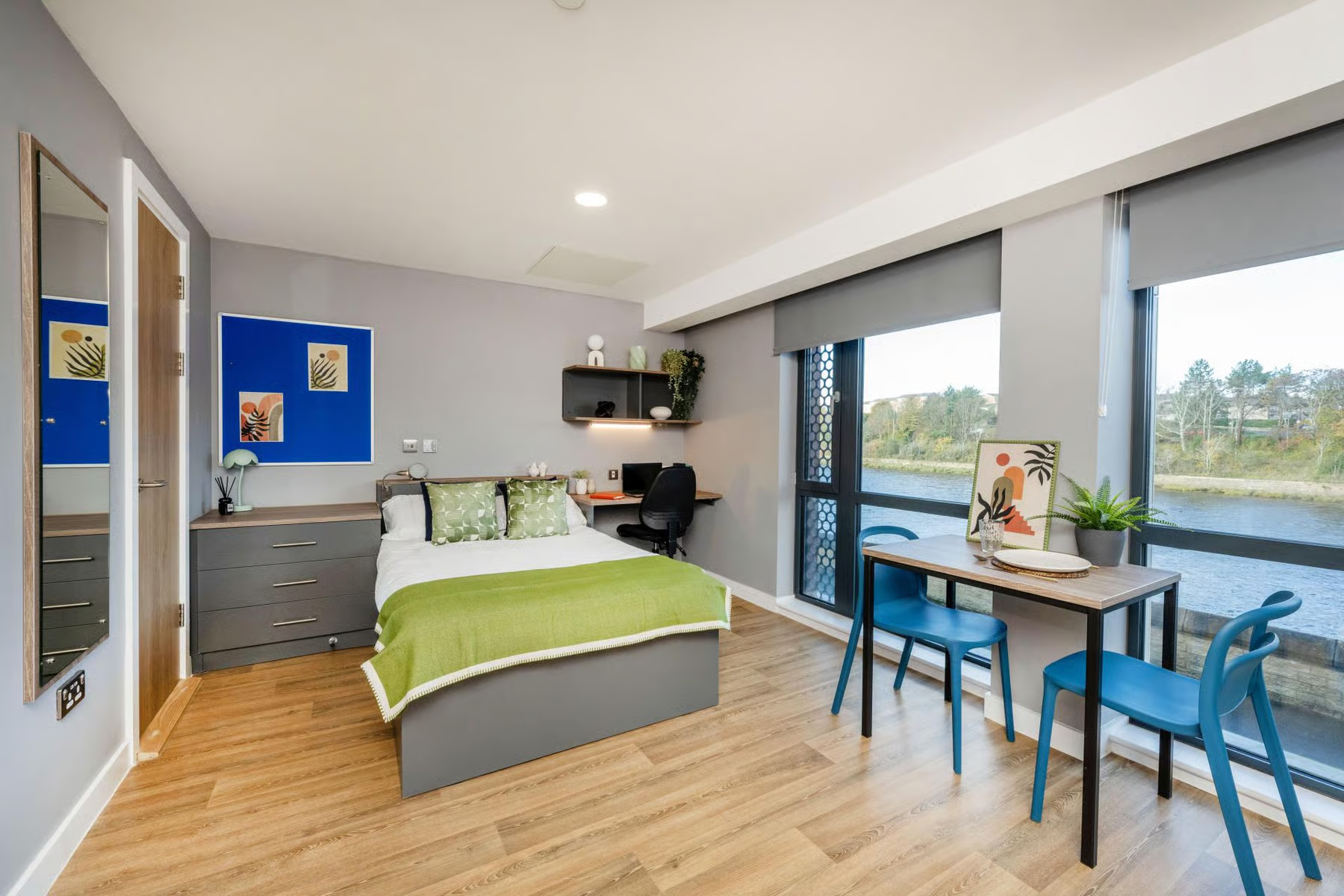
The following are some of the best Lancaster accommodation options, including Luneside, The Sail Works, Penny Street, Marton Street and Victoria Court, all of which are off-campus properties with direct city access and different combinations of room types, facilities and prices.
Victoria Court Lancaster
Victoria Court is at 102 Penny Street and offers shared-apartment en-suite rooms and studios. It is currently shown as about 18 minutes by bus to Lancaster University and around 16 minutes on foot to the University of Cumbria. The rent including water, electricity, heating and Wi-Fi. There are Queen Square and Infirmary bus stops nearby. Current prices start from £115 per week, although availability at the lowest rate may be limited by room and tenancy.
Luneside Lancaster
Luneside is a riverside student property at 69 St George’s Quay with en-suite rooms and studios. Its Lancaster University journey is currently shown as about 24 minutes by bus on the city listings page, while Lancaster railway station is within walking distance. The property page lists all-inclusive bills, a gym, games and study space, a cinema room, cycle storage and controlled entry. Current prices start from £147 per week, and students should check the exact room layout because studio sizes and views vary.
The Sail Works
The Sail Works is a studio-only building at 3 Bulk Road, north-east of the centre. Current route estimates show roughly 20 minutes by bus to Lancaster University and about 27 minutes on foot to the University of Cumbria. It provides several studio categories, plus a gym, cinema lounge, private dining room, study space, meeting room and courtyard. Prices are currently shown from £191 per week, so it suits students who value private facilities and extensive communal amenities more than the lowest weekly rent.
Penny Street
Penny Street is a small city-centre property at 114 Penny Street offering en-suite rooms and studios. The current listings page estimates about 18 minutes by bus to Lancaster University, while the University of Cumbria is around an 18-minute walk away. Bills, Wi-Fi, communal areas, laundry and cycle storage are listed, and en-suite residents share kitchens in clusters. Current advertised prices start from £181 per week. This option fits students who want shops, restaurants and southbound buses close by.
Marton Street Lancaster
Marton Street is a city-centre building at 11 Marton Street with en-suite rooms and studios. Current travel estimates are about 18 minutes by bus to Lancaster University and around 14 minutes by bus to the University of Cumbria. The property lists inclusive utilities, communal space, on-site laundry, cycle storage, parcel handling and regular cleaning of relevant shared areas. Prices currently start from £171 per week, making it useful for students comparing city access with a private bathroom.
What should students avoid when booking Lancaster accommodation?
Students should avoid booking Lancaster accommodation from an unverified advert, paying before reading the contract, assuming every bill is included or choosing an area without testing the campus journey.
- Avoid paying because someone creates artificial urgency. Verify the person, property, bank details and written terms independently. Never send money to an account that changes unexpectedly by email or message.
- Avoid treating a holding payment as casual or automatically refundable. Ask in writing when it will be returned or retained and what checks must be completed.
- Avoid relying on the model-room photographs. Ask which images and floor plan match the room category being offered, especially for studios where size, floor and outlook affect value.
- Avoid ignoring joint liability. A joint house contract can make every tenant responsible for the whole rent, not only their own share, if the agreement says tenants are jointly and severally liable.
- Avoid confusing straight-line distance with a practical commute. Check the walking route, bus stop, frequency, last service and likely travel time during term.
- Avoid assuming an all-inclusive label has no limits. Look for energy allowances, excluded TV licences, laundry charges, summer gaps and extra fees permitted by the agreement.
- Avoid signing before the whole group is ready. Friendship groups can change. Confirm budgets, guarantors, course plans and room allocation first because leaving a fixed contract may require an approved replacement.
What to consider when choosing Lancaster student accommodation
Students choosing accommodation in Lancaster should compare the complete annual cost, campus commute, room and building facilities, contract terms, household fit and support available when something goes wrong.
- University and teaching location: Bailrigg and Bowerham Road are not interchangeable. Confirm where most classes, placements or laboratory sessions take place.
- Door-to-door travel: Include the walk, wait and transfer, not only the bus timetable. Students with early placements should check services outside standard lecture hours.
- Annual cost: Compare rent multiplied by tenancy weeks, bills, transport, deposits and move-in purchases. A 51-week studio and a 40-week hall serve different needs.
- Room reality: Check bed size, desk space, storage, natural light, ventilation, noise and accessibility. Ask how many people share each kitchen and bathroom.
- Contract flexibility: Read cancellation, replacement-tenant and early-release clauses. A course withdrawal, visa refusal or placement does not automatically end every private tenancy.
- Safety and management: Look for working locks, controlled entry, suitable fire information, well-lit access and a clear out-of-hours reporting process. City-level safety rankings cannot assess a particular building.
- Lifestyle: Decide whether proximity to nightlife, green space, a gym, a quiet study area or friends matters most. Do not pay for shared amenities that will rarely be used.
- Household compatibility: Agree expectations about guests, cleaning, quiet hours and shared purchases before taking a house. A good property cannot compensate for a group with incompatible routines.
Best student rental platforms in Lancaster
The best Lancaster rental channel depends on whether a student needs university-managed halls, an approved local house or a broad comparison of private student accommodation with booking support.
University accommodation websites
Lancaster University and the University of Cumbria websites are the authoritative booking routes for their own halls. They provide official eligibility rules, application dates, fixed room categories and institution-managed support. Lancaster University also participates in a city housing approval scheme backed by both universities and Lancaster City Council, which lists landlords and properties that meet its code. University channels are particularly useful for first-year halls and approved private housing, although their stock is limited to rooms they manage or approve.
Local approved landlords and accommodation providers
Local approved landlords and accommodation providers can offer direct knowledge of a particular house or building, including maintenance arrangements and viewing availability. Direct booking can be efficient when a student already knows the exact property, but a single landlord or operator cannot provide a neutral view across the whole Lancaster market. Students should still compare the total price, inspect the property, verify deposit protection and read the contract rather than relying on a verbal promise.
uhomes.com for Lancaster student accommodation
uhomes.com is a student accommodation platform that brings together more than 150 Lancaster listings. Students can compare different options, from affordable shared houses and en-suite rooms to private studios, in one place. The platform allows students to check prices, room types, locations, photos, floor plans, virtual tours where available and property facilities without contacting multiple providers separately.
The main advantage of uhomes.com is that it helps students compare a wider range of off-campus options. University websites provide the most accurate information about university-owned halls, while property operators provide details about their own buildings. For students who are still deciding where to live, uhomes.com makes it easier to compare areas, budgets, room types and commuting options. Its advisers can also help students understand available choices and booking steps. Students should always review the final tenancy agreement, as contract length, bills, deposits and cancellation policies depend on the selected property.
Tips for students living in Lancaster
Students living in Lancaster can make daily life cheaper and easier by planning transport, budgeting weekly, using their student status correctly and preparing for the local weather.
- Use buses for the Bailrigg commute, but walk around the compact city centre where practical. Check current student passes against the number of days spent on campus before buying.
- Register for the correct council tax treatment. A home occupied entirely by qualifying full-time students is normally exempt, but students may need to provide proof to Lancaster City Council.
- Budget for start-up costs such as bedding, kitchen equipment, warm waterproof clothing and society membership. Lancaster University reports that international students often spend about £300 when settling in.
- Plan food shopping and cook in batches. Students living at Bailrigg may find city supermarkets cheaper for larger shops, but transport and delivery costs should be included.
- Bring waterproof outerwear and shoes suitable for wet, windy days. A short walk feels much longer when waiting for a bus in poor weather.
- Photograph the inventory and meter readings on move-in day, even when bills are included. Report damage and maintenance issues in writing.
- Save the university security, property out-of-hours support and trusted taxi details before they are needed. Do not rely only on city-wide safety rankings.
- Use the railway for wider travel and compare advance tickets with railcard fares. Lancaster’s station is close to the centre, so city accommodation can simplify weekend journeys.
FAQ
Most students in Lancaster live either on Lancaster University’s Bailrigg campus or in the city centre and southern residential areas such as Bowerham, Scotforth, Hala and Galgate. Lancaster University first years commonly choose Bailrigg halls, while returning students often move into city accommodation or shared houses. University of Cumbria Lancaster Campus students usually favour Bowerham, Primrose, Greaves or the city centre because these areas offer a shorter walk or bus journey to Bowerham Road.
Lancaster is generally regarded as a comparatively safe university city, and it ranked 13th in the Complete University Guide’s 2025 table of safer university locations in England and Wales. That ranking uses selected police-reported offences across a three-year period and does not predict risk at a particular address. Students should still inspect access routes, use secure doors, protect valuables and learn the university and accommodation emergency procedures.
Lancaster is affordable for students compared with many larger UK cities because rooms are available across a broad price range and the centre is compact enough for many journeys on foot. Current uhomes.com listings start at about £95 per week, while university-managed options vary by room type. Affordability depends on tenancy length and included bills, so students should compare annual totals rather than assuming the lowest weekly advert is cheapest.
A student in Lancaster should usually plan roughly £900 to £1,300 per month including accommodation, food, transport and personal spending, with a higher budget for a private studio or frequent travel. As a national reference, Lancaster University cites 2025 survey respondents’ average total spending of £1,142 per month, including £529 rent. Individual costs vary widely, so calculate the exact rent and contract first and keep an emergency buffer for move-in and unexpected expenses.
Affordable student areas in Lancaster commonly include Bowerham, Primrose, Greaves, Scotforth, Hala and Galgate, particularly for students sharing a house. The lowest-cost area is not automatically the best value: Lancaster University students must account for transport to Bailrigg, while University of Cumbria students can often save both time and bus fares by living near Bowerham Road. Compare the total rent, bills and commute for each specific property.
On-campus accommodation is usually better for Lancaster University first years who want immediate access to lectures, college communities and university support, while off-campus accommodation is often better for returning students who want city life, broader room choice or a house with friends. University of Cumbria students already have a campus close to the city. The right answer depends on contract length, privacy, social preferences and the real door-to-door commute.
Students can find student housing in Lancaster by searching the uhomes.com website and filtering listings by university, weekly budget, room type, move-in date and preferred location. Each shortlist should then be checked for travel time, included bills, contract length, deposit and cancellation terms. Students who have not chosen an area can contact a one-to-one adviser for recommendations before comparing and booking a specific room.