



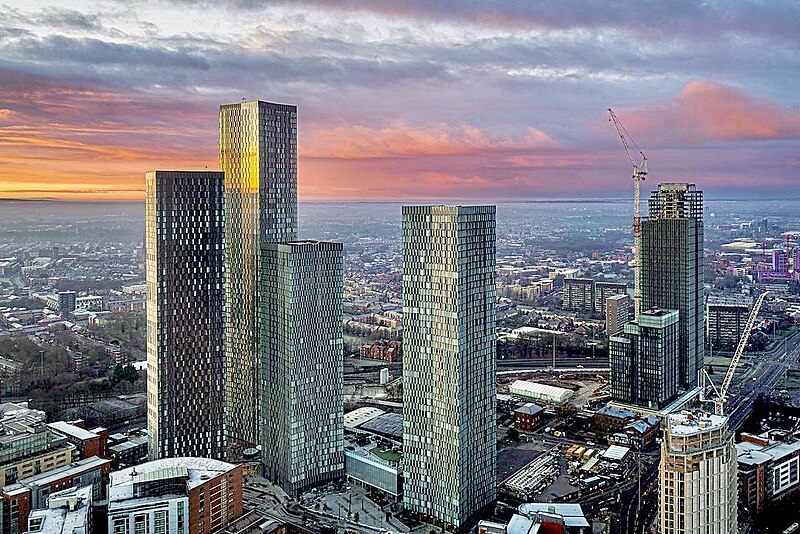
Manchester is a thriving city known for its rich history, cultural diversity, and dynamic lifestyle. Whether you’re a young professional looking for an energetic city-centre vibe, a family in search of quieter, more suburban living, or a student hoping for affordable and accessible housing, Manchester offers a variety of areas to suit different lifestyles. From trendy neighbourhoods with bustling nightlife to peaceful, green suburbs with excellent schools, this guide highlights the best places to live in Manchester. We cover the safety, advantages, and features of each area to help you make the right choice when finding your new home.
Best areas to live in Manchester
Sale - Southwest Manchester
- Average rents in Sale: £1,379 pcm
- Average house prices in Sale: £392,768
Safety: Sale is regularly listed among the safer outer-Manchester suburbs with lower-than-average crime and a calm suburban atmosphere.
Advantages: Offers a suburban lifestyle with relatively affordable housing, good local amenities, and quiet streets, suitable for families and commuters.
Sale is a town in Trafford, Greater Manchester, on the south bank of the River Mersey. In the Middle Ages, Sale was a rural town where fields and meadows were used for growing crops. The Bridgewater Canal was built for the city in 1765, spurring the urbanisation of Sale. The Altringham Railway on Manchester’s south boundary opened in 1849, leading the middle classes to regard Sale as a commuter town. By the end of the 19th century, the town’s population had more than tripled. As Sale’s third industry flourished, agricultural development gradually declined.
Altrincham - Southwest Manchester
- Average rents in Altrincham: £2,679 pcm
- Average house prices in Altrincham: £551,025
Safety: Altrincham is known for low crime rates and a strong community feel, popular among families.
Advantages: Features good schools, lively high streets, green spaces and strong transport links, making it ideal for families and professionals.
Altrincham is located on the south bank of the River Mersey. Within Cheshire that has a long history, Altrincham was founded as a market town in 1290. The economy of most communities at the time was based on agriculture rather than trade, and there was a market in the town. With the extension of the Bridgewater Canal to Altrincham in 1765, and the arrival of the railway in 1849, the social economy was further developed, stimulating the industrial activity here. This historic market town developed into a residential area in the 19th century, although it still retains its retail heritage in the old Market square (conservation area) and the new pedestrian shopping centre.
Rusholme - South Manchester
- Average rents in Rusholme: £1,603 pcm
- Average house prices in Rusholme: £203,849
Safety: Rusholme has a relatively low crime rate compared with other parts of Manchester, making it a safer city option.
Advantages: Offers affordable living close to the city centre, suitable for students and renters seeking convenience and value.
Rusholme is a district of Manchester, Greater Manchester, England, located 2 miles south of the city centre. The region has always had a high political profile in Britain. It has a large student population, with several student halls of residence and many student rented terraced houses, as well as suburban houses towards Victoria Park. This makes it one of the best places to live in Manchester.
Spinningfields - Central Manchester
- Average rents in Spinningfields: £1,650 pcm
- Average house prices in Spinningfields: £297,927
Safety: Spinningfields benefits from central-city policing and surveillance, making it generally safe, though vigilance is advised at busy times.
Advantages: Provides modern housing, access to offices, restaurants and nightlife, perfect for professionals seeking a central and upmarket lifestyle.
Spinningfields, one of the best places to stay in Manchester city centre, is an area of Manchester, Greater Manchester, England. It was developed in the 2000s by Allied London Properties between Deansgate and River Irwell. The £1.5 billion project consists of 20 buildings with a total area of approximately 430,000m2 (4,600,000 sq ft), including commercial, residential and retail areas. It takes its name from Spinningfield, a narrow street that runs west from Deansgate. Landmarks in the scheme include the Manchester Civil Justice Centre and 1 Spinningfields, a 90-metre (300-foot) office tower.
Prestwich - North Manchester
- Average rents in Prestwich: £1,349 pcm
- Average house prices in Prestwich: £314,496
Safety: Prestwich is a safe and community-oriented suburb with calm residential streets suitable for families.
Advantages: Offers green spaces, good transport links, and a friendly atmosphere, appealing to those seeking quieter suburban living.
Prestwich is centred on the Grade I listed St Mary the Virgin Church. It has grown in popularity as a commuter town in Manchester in recent years, being named by the Sunday Times as one of the best places to live in the UK and also the best place to live in Manchester. It was nicknamed “New Didsbury” in comparison to the affluent suburbs to the south of the city. Together with neighbouring Whitefield, Broughton and Crumpsall, it forms the second largest Jewish community in the UK outside London.
Didsbury - South Manchester
- Average rents in Didsbury: £1,352 pcm
- Average house prices in Didsbury: £395,892
Safety: Didsbury consistently ranks among Manchester’s safest residential suburbs with a below-average crime rate and a strong community feel.
Advantages: A leafy, village-style suburb with green spaces, top-rated schools and easy transport connections, ideal for families or professionals seeking a quiet but connected lifestyle.
In its early days, Prestwich was a part of a feudal estate that covered much of what is now South Manchester. In the mid-19th century, Didsbury experienced urbanization during the Industrial Revolution. During the Victorian expansion of Manchester, Didsbury developed into a thriving settlement and one of the nicest places to live in Manchester, UK. Some stately homes from that period still stand on Wilmslow Road, but they are now nursing homes and offices. The opening of the Midland Railway Manchester Southern Line in 1880 contributed greatly to Didsbury’s rapid population growth. It became a part of Manchester in 1904.
Castlefield - Southwest Manchester
- Average rents in Castlefield: £1,368 pcm
- Average house prices in Castlefield: £246,982
Safety: Castlefield is generally safe with low-level incidents, though caution is advised at night around nightlife zones.
Advantages: Combines historic charm and canalside living with city-centre convenience, ideal for young professionals seeking urban lifestyle.
Castlefield is located at the south-west end of Deansgate, is the industrial and Roman heart of Manchester. It’s an inner-city conservation area in Manchester, North West England. It is the terminus of the Bridgewater Canal, the world’s first industrial canal, built in 1764. It’s a beautiful setting and one of the nice places to live in Manchester.
Ancoats - Northeast Manchester
- Average rents in Ancoats: £1,619 pcm
- Average house prices in Ancoats: £291,509
Safety: As inner-city districts, these areas have a higher density of nightlife and a transient population, so crime and anti-social incidents can be higher; caution is advised at night.
Advantages: Excellent for urban living with proximity to city-centre jobs, nightlife, cultural venues, restaurants, and modern or renovated housing, ideal for young professionals seeking convenience and vibrancy.
Ancoats is also one of the best places to live in Manchester. Historically, Ancoats became the cradle of the Industrial Revolution in Lancashire and is known as “the world’s first industrial suburb”. From the late 18th century, Ancoats became a thriving industrial area. Since the 1990s, Ancoats’ industrial heritage has been recognised and its location close to the city centre has led to investment and extensive redevelopment. The southern part of the area has been named New Islington by property developer Urban Splash, with the redevelopment centred on the Daily Express Building.
Chorlton - South Manchester
- Average rents in Chorlton: £1,226 pcm
- Average house prices in Chorlton: £371,270
Safety: Chorlton is one of the safer south-Manchester neighbourhoods with moderately low crime rates and a community-oriented vibe.
Advantages: Known for its independent cafés, green spaces, arts-friendly community, and good transport links, combining relaxed suburb-style living with city-centre convenience.
During the late Victorian and Edwardian eras, Chorlton’s rural character made it popular among the middle classes. In the 1970s, the loss of the railway station, the conversion of larger houses into flats, and major social housing developments in the south of the area again changed its character. Irish immigrants came to help develop industry in this area and worked in small-scale horticulture and agriculture as well as domestic service. They also brought Roman Catholics. Thus, there are a number of Catholic churches and schools in the area. It was officially incorporated into the City of Manchester in 1904.
Salford - Central Manchester
- Average rents in Salford: £1,651 pcm
- Average house prices in Salford: £229,874
Safety: Salford has a moderate crime rate and safety varies across neighbourhoods, so checking specific areas is recommended.
Advantages: Offers affordable housing, good local amenities and strong transport links, making it ideal for commuters and first-time buyers.
As an important area of Greater Manchester in England, Salford is also one of the best areas to live in Manchester. Landmarks in the city include the former Town Hall, Salford Cathedral, the Salford Boys’ Club, and St Philip’s Church. For a long time, it was an independent city in the UK, eventually being merged with Manchester during the Industrial Revolution. Although it has already lost its glory, it is still considered one of the best places to live in Manchester. University of Salford in this area also attracts many students from home and abroad.
Why moving to Manchester?
Manchester, the second largest city in the United Kingdom, attracts global attention with its unique charm and advantages. The characteristics of the economy, living expenses, transport, etc. make Manchester a dynamic and multicultural city. As a result, many people want to move to Manchester. Here are some of the attractions of Manchester.
1. Education
Manchester is an important educational centre in the United Kingdom, especially known for its higher education. Many students from all over the world come here to study. Here is a list of some of the top universities in Manchester.
- University of Manchester: University of Manchester is one of the UK’s leading research universities, with a wide range of research areas and an outstanding academic reputation. It is also one of the largest universities in Manchester. The school is ranked 34th in the QS World University Rankings 2025.
- Manchester Metropolitan University: Manchester Metropolitan University is a multidisciplinary university with a wide range of academic programmes in areas such as arts, business, science and social sciences.
- University of Salford: The University of Salford is a Manchester-based university that offers a variety of undergraduate and postgraduate courses, with a strong reputation particularly in media, creative industries, and engineering.
2. Economy
Manchester was the cradle of the Industrial Revolution and its rich industrial heritage has made it an important economic centre for the North West of England. Manchester’s factories were transformed from labour-intensive to capital/high-technology-intensive, so as to adapt to the challenges of the global market. In terms of investment, Manchester is a city with great investment potential. In recent years, the proportion of house price appreciation is expected to increase by 25.8%, and the rental growth rate is expected to increase by 15.9%, showing the strong momentum of its real estate market.
3. Cost of living
Compared to some major cities, like London, the cost of living in Manchester is more affordable. In the city centre of Manchester, you can have your own apartment for a third of the price in London. Various expenses, such as food, entertainment and transportation, are relatively low, allowing for a guaranteed quality of life. The cost of ensuite is from £600 a month, while food costs are around £150-200 a month.
4. Transportation
Manchester has a well-developed transport network, including trams, buses and trains. Manchester’s tram system, known as Metrolink, is the city’s primary mode of public transport and the longest tram system in the UK. Manchester’s bus network is extensive and operated by several companies, including Stagecoach and Go North West. Manchester has two main railway stations: Piccadilly and Victoria, which provide train services to all parts of the UK, including Leeds and Nottingham. In addition to this, Manchester International Airport is the third busiest airport in the UK for passengers.
5. Entretainment
Manchester is a vibrant city that offers a wealth of entertainment. It is home to many famous bands, such as The Smiths and Oasis. Music lovers can head to large venues such as the AO Arena and Co-op Live to enjoy concerts by international superstars. Sports also play an important role in Manchester, with Old Trafford and Etihad Stadium serving as the home of Manchester United and Manchester City respectively. In addition, there are many art exhibitions and cultural events in Manchester for localts and visitors to relax.
Find your Manchester accommodation
Thinking of moving to Manchester? You are about to enter a vibrant and multicultural city that is not only a football-loving land, but also a center of academics and business. Whether you’re travelling for academic research, business, or leisure, choosing the right place to stay is key to experiencing the city’s unique charm. uhomes.com offers a wide range of accommodation types to suit different budgets and needs. Let’s start exploring accommodation in Manchester and find your ideal place to make your experience even more comfortable and memorable.
Tips for finding good accommodation in Manchester
When looking for the right Manchester accommodation, taking these factors together can help you find accommodation in Manchester that is both comfortable and affordable.
- Budget: Determine your accommodation budget and look for accommodation options that match your financial means.
- Location: Consider the distance between your accommodation and the main destinations you visit, such as universities, business districts, tourist attractions, or airports. uhomes.com provides plenty of student accommodation in Manchester close to many universities. So don’t wait and contact us!
- Transportation: Check public transportation facilities such as metro, train, and bus stops near your accommodation to make it easier for you to get around.
- Accommodation type: Choose your accommodation type according to your preference, including ensuite, single room, shared room, 1b apartment, 2b apartment and so on.
- Amenities and services: Consider the amenities offered by the property, such as free Wi-Fi, breakfast service, gym, laundry service, 24-hour reception and more.
- Security: Research the safety of your accommodation area and choose a well-policed area, especially if you are travelling or studying alone in a foreign city.
- Reviews and recommendations: Check out online reviews and recommendations to learn about other travelers’ stay experiences, which can help you make more informed choices. uhomes.com is widely recognized by students and our reviews and rating data are authentic. You can learn more on the Internet.
Best Manchester Student Accommodation
Are you spoiled for choice? Here is a list of some of the best student accommodation in Manchester available from uhomes.com for your reference.
- Location: 5 Botanic Avenue, Manchester, England M15 6AJ
- Price: From £225/week
- Distance from Universities: 0.71 miles from the University of Manchester
- Amenities and Services: Free Wi-Fi, laundry room, reception, delivery alert system, package room, conference room, gym, yoga studio, courtyard
- Location: 8 Nobel Way, Manchester, England M1 7FA
- Price: From £315/week
- Distance from Universities: 0.49 miles from the University of Manchester
- Amenities and Services: Free Wi-Fi, laundry room, reception, delivery alert system, package room, cinema room, gym, coffee bar, courtyard
- Location: Kincardine Road, Manchester, England M13 9JA
- Price: From £212/week
- Distance from Universities: 0.23 miles from the University of Manchester
- Amenities and Services: Free Wi-Fi, laundry room, reception, package room, cinema room, table tennis, courtyard
- Location: River Street Tower, 2 River Street, Manchester, England M15 5GQ
- Price: From £237/week
- Distance from Universities: 0.68 miles from the University of Manchester
- Amenities and Services: Free Wi-Fi, laundry room, bike storage, reception, package room, cinema room, table tennis, gym, courtyard
- Location: Assembly, Manchester, England M1 5GB
- Price: From £284/week
- Distance from Universities: 0.60 miles from University of Manchester
- Amenities and Services: Free Wi-Fi, reception, balcony, 24-hour security, elevator, controlled access
Living in Manchester with uhomes.com
As we delve deeper into the best places to live in Manchester, it’s clear that each area has its own appeal. Whether you’re looking for the fast pace of life in a bustling city or prefer a more leisurely time in a quiet suburb, one of the nice places to live in Manchester will touch you. From the lively city centre to the historic surrounding areas, Manchester’s multiculturalism and dynamics are reflected in every corner. Choosing the best places to live in Manchester should not only consider geographical location and economic factors, but also combine personal lifestyle and preferences. As you explore Manchester further, you will find your own home in this city.
FAQ
What are the best areas to live in Manchester?
The 10 best areas to live in Manchester: Sale, Altrincham, Rusholme, Spinningfields, Prestwich, Didsbury, Castlefield, Ancoats, Chorlton, Salford. With consideration of price, safety, pros and features.
Is Manchester a good place to live?
Yes. Manchester is certainly a good place to live in. No matter you are a student or a worker, you can get good opportunities in Manchester. As a multicultural city, you can also meet friends with different backgrounds.
What is the cheapest place to live in Manchester?
What are the most expensive places to live in Manchester?
The most expensive places to live in Manchester are listed:
- Chorlton South – Average house price: £404,000
- Beech Road and Chorlton Meadows – Average house price: £385,000
- East Didsbury – Average house price: £373,500
- Chorlton North – Average house price: £360,000
Is Manchester cheaper than London?
Yes, Manchester is cheaper than London. Generally, in London, the monthly cost for a family of four is £3,778.4 without rent, and for a single person, it is £1,073.7 without rent. In Manchester, the estimated monthly cost for a family of four is £2,951.3 without rent, and for a single person, it is £855.8 without rent.
What is the safest place to live in Manchester?
According to crime statistics, Altrincham is considered the safest place to live in Manchester. People living there can enjoy a variety of activities and a high quality of life. Surrounded by tourist attractions, Altrincham also provides residents with beautiful scenery. Therefore, Altrincham has always been one of the best areas to live in Manchester.