



Home for Global Students
4.9/5
GET APP

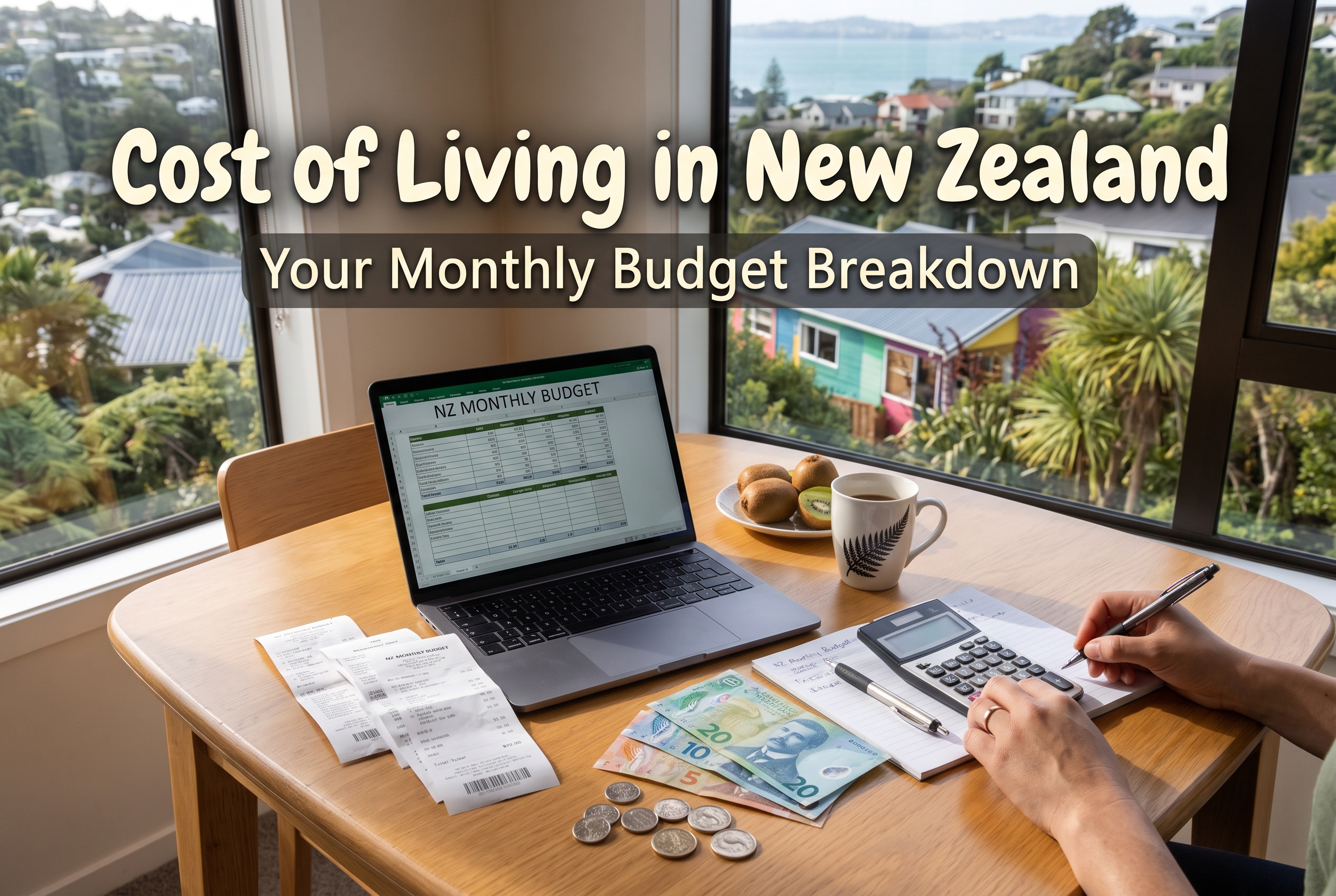
Cost of Living in New Zealand: Your Monthly Budget Breakdown

By Feliks
cost-of-living-in-new-zealand

The cost of living in New Zealand is relatively high. A single person needs about NZ$1,700 per month, excluding rent, while a family of four needs around NZ$6,172. This guide breaks down the average monthly costs of housing, food, transport, utilities, healthcare, and other essentials.

Average Cost of Living in New Zealand

The cost of living in New Zealand for a single person is about NZ$1,700 every month, excluding rent. A family of four requires around NZ$6,172 per month without rent. The average cost depends on your family size and lifestyle. Here is a complete summary table of average monthly expenses across all major categories:

Expense Category Average Monthly Cost
Housing (1 Bedroom Rent) NZ$1,665.34 – NZ$1,927.66
Utilities (Basic, Internet, Mobile) NZ$419.00
Food (Groceries and Dining) NZ$320.00 – NZ$600.00
Transportation (Monthly Public Pass) NZ$180.70
Healthcare (Standard GP Visit + Medicine) NZ$45.00 – NZ$65.00
Entertainment NZ$50.00 – NZ$200.00

These combined categories show the true New Zealand prices for everyday life. Housing and food always take the largest amount of your monthly budget. Adding internet and phone plans to your basic utility bill makes that cost higher. Tracking each specific category helps you build a safe and accurate personal budget.

Cost of Housing in New Zealand

The cost of housing in Newzealand is the largest expense in your monthly budget. Your location and housing type decide how much money you spend.

Renting a House

Renting a house in New Zealand costs a different amount depending on where you live. Your monthly rent is much higher if you choose to live near the city centre.

Apartment Type Monthly Rent (City Centre) Monthly Rent (Outside City Centre)
1 Bedroom NZ$1,927.66 NZ$1,665.34
3 Bedrooms NZ$3,040.93 NZ$2,616.54

Living further from the city centre is a simple way to save money. Sharing an apartment with flatmates is another common choice for students and young professionals. Furthermore, choosing a smaller town instead of a major city can also reduce living costs in New Zealand.

Student Accommodation

University students in New Zealand face different choices for their housing. Comparing university halls and private rentals is an important step to lower living costs.

Accommodation Type Average Weekly Cost
University Halls NZ$330 – NZ$775
Shared Flat NZ$180 – NZ$300

Private rentals are often cheaper than university halls in New Zealand. Many students book their student accommodation in New Zealand through dedicated platforms like uhomes.com. This platform provides a professional one-stop service with verified property listings. Complete search filters allow direct room comparisons. Transparent pricing shows the final rent without any hidden fees. Furthermore, uhomes.com offers a lowest-price guarantee and special cashback rewards. These helpful tools allow students to find safe and affordable rooms easily.

uhomes.com logo

Buying Property

Buying property requires a large amount of money. The house price changes based on the exact location.

Location Price per Square Foot
City Centre NZ$918.41
Outside City Centre NZ$608.62

While buying a house outside main business districts is usually more affordable, it’s important to factor in current mortgage rates before deciding. Right now, the annual interest rate on a 20-year fixed loan is around 6.27%, which will dictate your monthly payments. To get a clear picture of the best mortgage options for your situation, consulting a local financial advisor is a smart move.

Cost of Utilities in New Zealand

Basic utilities for a standard apartment in New Zealand cost around NZ$276 per month. This amount covers electricity, heating, water, and garbage collection. Internet and mobile phone plans are separate monthly expenses.

Utility Service Average Monthly Cost
Basic Utilities (Electricity, Heating, Water) NZ$276.00
Unlimited Broadband Internet NZ$87.00
Mobile Phone Plan (Calls & Data) NZ$56.00

Comparing different energy providers is a smart way to lower these regular bills. A well-insulated home also requires less heating during the cold winter months.

Cost of Food in New Zealand

Food is a major regular expense in New Zealand, with an average person spending between NZ$320 and NZ$600 per month. Total spending depends on whether meals are cooked at home or purchased at restaurants.

Groceries

Grocery costs make up the largest part of most food budgets. Basic foods such as milk, bread, and local produce are usually cheaper than imported packaged goods.

Grocery Item Average Cost
Milk (1 litre) NZ$3.17
Fresh White Bread (1 lb Loaf) NZ$2.95
White Rice (1 lb) NZ$1.42
Eggs (12, Large Size) NZ$10.78
Chicken Fillets (1 lb) NZ$7.42
Apples (1 lb) NZ$2.23

Buying seasonal fruits and vegetables is a solid way to handle fluctuating food prices in New Zealand. You can often find fresh produce for less at local farmers’ markets compared to the big supermarket chains. Plus, mapping out your meals each week helps cut down on food waste and keeps your grocery budget in check.

Eating out

Dining out is more expensive than preparing meals at home. A quick lunch at a casual eatery typically costs around NZ$25 per person.

Dining Option Average Cost
Meal at an Inexpensive Restaurant (1 person) NZ$25.00
Three-Course Meal at a Mid-Range Restaurant (2 people) NZ$120.00
Fast Food Combo Meal NZ$16.00
Regular Cappuccino NZ$5.87

Choosing lunch specials rather than dinner menus helps cut dining costs. Many casual spots and bakeries also sell fresh takeaway options at lower rates than sit-down venues. Eating out mainly on weekends or for social occasions can help reduce monthly food costs.

Cost of Transportation in New Zealand

Transportation costs depend on the type of transport used each day. In New Zealand, public buses and trains offer a cheaper alternative to driving a private car.

Transportation Type Average Cost
One-Way Ticket (Local Transport) NZ$3.39
Monthly Public Transport Pass NZ$180.70
Gasoline (1 Litre) NZ$3.06
New Mid-Size Car (Toyota Corolla or equivalent) NZ$42,073.22
Taxi Start (Standard Tariff) NZ$4.00

Purchasing a monthly public transport pass saves money for daily commuters. University learners can often use a student ID card to get cheaper tickets. Owning a private car requires extra funds for petrol, regular maintenance, and vehicle insurance. Walking or cycling for short distances is a great free option.

Healthcare Costs in New Zealand

Medical fees in New Zealand vary widely depending on whether you are a resident, enrolled with a clinic, or needing a specialized service like a visa medical exam.

General Practice (GP) Visits

  • Enrolled Residents: Standard 15-minute consultations range from free (for children under 14) to around NZ$40–NZ$60 for adults, as costs are subsidized by the government.
  • Unenrolled / Casual Patients: Visiting a clinic where you are not enrolled usually costs more, often ranging from NZ$80 to over NZ$100 per visit.
  • Non-New Zealand Residents: Unfunded standard consultations for visitors typically start around NZ$100 to NZ$200, plus separate laboratory and radiology charges.

Immigration and Visa Medical Assessments

Prices depend on your age and the specific type of certificate required by Immigration New Zealand:

  • Children (Ages 0–10 / Under 11): Usually range from NZ$80 to NZ$140 if no X-ray or blood tests are required.
  • Children (Ages 11–14): Around $145 (or roughly NZ$220+ if a chest X-ray is included).
  • Adults (Ages 15+): Full general medical exams generally range from NZ$380 to NZ$460, while combined packages with a chest X-ray range from NZ$450 to NZ$570+.
  • Chest X-Ray Only: Typically costs an extra NZ$100 to NZ$200 depending on the radiology provider.

Education and Childcare Costs in New Zealand

Education and childcare costs vary greatly depending on child age and residency status. In New Zealand, public education is largely state-funded for domestic residents, while private schooling and tertiary education require separate financial preparation.

Public Schools

Public schools provide tuition-free education for New Zealand citizens and permanent residents from age 5 to 19. Parents generally only cover school uniforms, stationery, and small annual donations.

Private Schools

Private schools and early learning centres charge direct tuition fees to all enrolled families. Early childcare represents a major ongoing bill for parents with children under school age.

Childcare and Schooling Type Average Cost
Full-Day Private Preschool / Daycare (Monthly) NZ$1,561.00
Private Primary School (Annual) NZ$20,000.00 – NZ$28,817.00
Private Secondary School (Annual) NZ$25,000.00 – NZ$35,000.00

The government offers the “20 Hours ECE” programme, which covers up to 20 hours of early childhood education per week for children aged 3 to 5. Enrolling in home-based childcare networks instead of large commercial centres can also lower monthly childminding fees.

Add Your Heading Text Here

Higher education tuition depends on the chosen degree and citizenship status. Domestic university students pay subsidised rates, whereas international students pay full standard international fees. Fees can also vary between institutions such as the University of Auckland, Victoria University of Wellington,the University of Canterbury and the University of Otago, as well as between different subjects and levels of study.

Tertiary Education Category Average Cost
Undergraduate Degree (Domestic, Annual) NZ$6,000 – NZ$10,000
Undergraduate Degree (International, Annual) NZ$25,000 – NZ$55,000
Postgraduate Degree (International, Annual) NZ$19,000 – NZ$45,000
Postgraduate Degree (Domestic, Annual) NZ$5,000 – NZ$10,000

Tuition is only one part of the overall cost of university study. Students attending institutions such as the University of Auckland may face different accommodation and everyday living expenses from those studying at the University of Otago in Dunedin or the University of Canterbury in Christchurch. Domestic university students can rely on state assistance to support their day-to-day spending. Eligible candidates can apply for student loan living costs through StudyLink to cover essential bills like accommodation and course supplies. Sharing a rental house with other university students remains the most practical way to reduce weekly living fees.

Entertainment Costs in New Zealand

Entertainment costs in New Zealand average between NZ$50 and NZ$200 per month, depending on personal leisure habits. Spending stays relatively low for people who enjoy outdoor activities, while regular nightlife and ticketed events raise monthly expenses.

Activity Average Cost
Cinema Ticket (1 Seat, International Release) NZ$20.00
Fitness Club Monthly Membership (1 Adult) NZ$63.32
Tennis Court Rental (1 Hour on Weekend) NZ$26.19

A Summary of Living Cost in New Zealand

The cost of living in NZ for a single person is typically around NZ$3,200–NZ$4,800 per month, including rent and other essential expenses. Housing and groceries make up the largest share of daily spending, while transportation and utilities require steady allocations. Although everyday prices remain relatively high, strong average wages and quality public infrastructure help balance these household expenses. Planning a detailed budget in advance allows residents and newcomers to manage their finances effectively while enjoying the high standard of living across the country.

FAQ

The cost of happiness in New Zealand is about NZ$193,727 per year. This annual income level brings maximum life satisfaction. Earning extra money above this amount does not increase your daily happiness. Global studies use this exact number to show the ideal income for emotional well-being.

Yes, international students can afford basic living expenses in New Zealand with a part-time job. This regular income usually covers daily food and local transport. However, total expenses depend heavily on the chosen city and personal lifestyle. Students still need savings because part-time wages cannot pay for university tuition fees.

The total cost of living payment in New Zealand is a one-off NZ$350. The government provides this money for targeted economic relief. They split the NZ cost of living payment into three monthly parts. Each installment is roughly NZ$116. You can check official websites to find specific cost of living payment dates.

Moving a full household to New Zealand usually costs somewhere between NZ$24,000 and NZ$35,000. If you’re moving solo or heading over as a student, you can expect a much lower baseline of around NZ$6,500 to NZ$10,000. Ultimately, your total bill will really come down to things like visa fees, how much you decide to ship, and the initial funds you’ll need to get settled.  

As of September 1, 2026, the official living wage in New Zealand is NZ$29.90 an hour. This rate is calculated independently by the Family Centre Social Policy Research Unit to reflect the actual everyday cost of basics like housing, food, and transport. While it is a voluntary rate, many employers choose to pay it to ensure their staff can live comfortably.

Tauranga and Auckland are currently the least affordable cities in the country, with Auckland topping the charts for the highest median house prices. On the flip side, Invercargill and Christchurch are among the most affordable. Invercargill offers the lowest weekly rent nationwide, while Christchurch gives you big-city infrastructure on a much better budget. Meanwhile, Dunedin continues to be a great, cost-effective option for students.

No, it’s actually generally cheaper to live in New Zealand. Overall living costs tend to be about 18% to 25% lower than in Australia. A big part of this comes down to rent, which is significantly more expensive in major Aussie cities like Sydney. You’ll also find that everyday things like groceries, eating out, and standard medical prescriptions cost noticeably less in New Zealand.

uhomes.com | Student Accommodation,Flats,Houses,Apartments for Rent
What can I do for you?
ASK ME