



Home for Global Students
4.9/5
GET APP

Durham University Acceptance Rate: A Comprehensive Analysis

durham university acceptance rate

Gaining a clear understanding of the Durham University acceptance rate is the crucial first step for any prospective student. Exploring the admission process for a world-class institution like Durham University is an exciting but demanding journey. In this blog, we comprehensively unpack the 2025 data on Durham University UK acceptance rate, and the admission, eligibility, fees, programme introductions, and application process. We also provide guidance that may help you better prepare.

Durham University Acceptance Rate: Overview

The Durham University acceptance rate is a key metric for many potential students to consider before applying. Recent public data shows that the acceptance rate of Durham University has stayed around 40% in recent years for both domestic UK students and international students. This reflects that it is moderately difficult to get admitted into, as fewer than half of the applicants receive an offer of admission. In fact, the actual acceptance rate can change based on how popular a course is, who applies, and the level of the degree (undergraduate or postgraduate). For many popular or competitive programmes, such as some Arts and Humanities subjects, Durham’s acceptance rate might become lower, thus requiring a well-prepared application.

Importantly, there is another metric: offer rate. It refers to the percentage of applications that receive an offer, calculated by dividing the number of offers made by the total number of applications. Because not all offers lead to enrolment, the actual Durham University UK acceptance rate will be lower than the offer rate. This rate is also noteworthy as it indicates how competitive a programme is. Here are the offer rates of Durham University for UK applicants in the past 5 years:

YearOffer Rate (UK)
2024~ 67.6%
2023~ 62.0%
2022~ 48.0%
2021~ 71.0%
2020~ 72.2%

Overall, these figures suggest that Durham University remains relatively less selective, but prospective students should ensure they meet degree requirements and present strong applications.

Durham University Admission

Durham Admission teams are looking for academic excellence and potential. While the numbers give you a general idea, statistics vary significantly by department or programme. This section begins with an overview of Durham’s enrollment statistics to present a general picture of its admission profile. Then, we’ll introduce Durham University Business School’s admission as an example to give you a deeper understanding.

Durham Enrollment Statistics

According to the latest enrollment statistics for Durham University in 2025, the total student population is around 21,265, and international students account for roughly 35%. This suggests a substantial international community, which is a factor that can influence academic and cultural diversity.

ItemNumberUG students percentagePGT students percentage
Total enrollment2126580%20%
International students743060%40%

Durham BBA Admission

Durham University Business School is a highly reputable institution and one of the oldest business schools in the UK. It holds triple accreditation from Advance Collegiate Schools of Business (AACSB), the Association of MBAs (AMBA), and European Quality Improvement System (EQUIS). The school performs exceptionally well in the Financial Times rankings, with its Online MBA program recognized as globally top-tier. Consistently ranked within the top ten in the UK, it enjoys high international recognition and prestige.

If you’re considering applying, you should understand what the course offers, and what the admission requirements are, etc.

BBA programme overview

Durham University’s BBA (Bachelor of Business Administration) is designed to give students a broad but solid grounding in business, management theory and practice. You will study foundational business disciplines (management, marketing, human resources, finance, organisational behaviour, etc.), while gaining flexibility to tailor your path.

BBA admission process

  • All undergraduate applications go through UCAS. Use the institution codeand the course code when applying.
  • For 2026 entry, the main equal-consideration deadline is 14 January (GMT). Applying by this date gives you the best chance of receiving an offer.
  • After submission, UCAS processes your application and forwards to Durham, and decisions will come back through UCAS.

BBA entry requirements

Qualification routeRequired grades / conditions
A-level (standard UK route)AAB, plus if Mathematics is not taken at A-level, GCSE Maths grade 6 (B) or Core Maths grade B is required.
BTEC Level 3 National Extended DiplomaDDD, with GCSE Maths grade 6 (B) (if Maths not studied at extended level).
International Baccalaureate (IB)35 points overall, with 665 at Higher Level including HL subjects; if Maths is not taken at Higher Level, SL Maths with grade 5 is accepted.
Access / Access to HE Diploma (UK / equivalent)Access to HE Diploma with specified credits — passes at appropriate levels (see official requirements) plus Maths condition if Maths not studied at higher level.

Durham University Eligibility

In addition to the Durham University England acceptance rate, you must meet the eligibility. But for competitive programmes, you will likely need to exceed them. Below is a comprehensive analysis of Durham University’s eligibility for both undergraduate and postgraduate levels, providing a clear benchmark against the general acceptance rate for Durham University.

Undergraduate

The eligibility for undergraduate admission at Durham is similar across all degrees.

UG ProgrammeAcademic QualificationsEnglish Proficiency RequirementsMandatory MaterialsPossible Required MaterialsAdditional Materials (for International Students)Interview
BSc (3-4 years)A-level requirements: AAA to A*AA (or equivalent: IB 34-38 points)IELTS: 6.5 & Above, PTE: 62 & AboveApplication through the UCAS;

SAT/ACT

-Copy of Passport;
-English Test Certificate

Not required

BA (3-5 years)
BBA (3-4 years)
BE/BTech (3-4 years)

Postgraduate

Postgraduate admissions are equally selective, with requirements slightly different across degrees.

PG ProgrammeAcademic QualificationsEnglish Proficiency RequirementsMandatory MaterialsPossible Required MaterialsAdditional Materials (for International Students)Interview
MBA/PGDM (1 year)

A 2:1 degree from a UK university (or overseas equivalent)

IELTS: 6.5 – 7; PTE: 62 – 68

Transcripts; PSCV; LOR; Degree Evaluation; GMAT; Any programme-specific docs-Copy of Passport; English Test CertificateBy invitation online
MSC (1 year)IELTS: 6.5 – 7; PTE: 62 – 68CV; LORMay be required for certain programmes
MA (1 year -2 years)IELTS: 6.5 – 7; PTE: 68 & AboveCV; LORMay be required for certain programmes

Durham University Programmes and Tuition

When assessing the Durham University England acceptance rate, it’s also vital to consider the differences between programmes. This section also provides a clear introduction of the subject’s strengths and the tuition required for UK and international students.

Durham’s Leading Programmes

Durham is consistently ranked among the UK’s top universities, and its strength is concentrated in Arts and Humanities, and Social Sciences. Many programmes in these fields are regularly placed within the global top 30 in 2026 QS ranking, attracting a high volume of talented applicants from the UK and internationally. This concentration of excellence directly impacts the Durham acceptance rate of these programmes, which are generally lower than the average rate.

The table below details a selection of Durham’s standout programmes and their associated fees. Let’s explore what distinguishes them to better understand their competitive acceptance rates for Durham University.

1. Archaeology

  • The Archaeology department at Durham is recognized worldwide as a leader in the field.
  • It involves traditional excavation and fieldwork with cutting-edge laboratory scientific techniques. Students gain expertise in areas such as osteology, isotopic analysis, ancient DNA research, remote sensing, geographic information systems (GIS), and heritage studies.
  • The curriculum covers global prehistory, early complex societies, classical and Roman archaeology, South Asia, Eurasia, as well as medieval and modern historical periods.
  • Students can access to diverse historical settings and equips them for careers in both academic research and practical heritage management.

2. Theology, Divinity, and Religious Studies

  • This program provides an in-depth exploration of religious history, belief systems, and their societal influences.
  • It is ideal for students interested in philosophy, ethics, cultural and religious studies, or interdisciplinary approaches that combine religion, history, and society.
  • Durham’s Faculty of Arts and Humanities provides research opportunities, scholarships, and a community engaged with both historical and contemporary religious discussions for students.

3. Classics and Ancient History

  • It offers an immersive study of ancient civilizations, including their literature, history, languages such as Latin and Greek, archaeology, and cultural development.
  • Students can examine the politics, culture, art, and legacies of ancient societies, developing strong analytical, historical, and linguistic skills.
  • With Durham’s strong humanities tradition and academic support, this program is an excellent choice for those passionate about the ancient world.

4. Geography

  • It combines natural sciences, social sciences, and environmental studies.
  • Students can focus on human geography, physical geography, environmental change, and related interdisciplinary subjects.
  • This program attracts those interested in climate, environment, urban studies, sustainability, and global change, which are areas of increasing relevance in today’s world.
  • Durham’s geography department offers a blend of theoretical and practical teaching, preparing graduates for both academic and professional careers.

5. Anthropology

  • This provides a broad study of human societies, cultures, languages, and social structures. Whether your interests lie in cultural anthropology, social dynamics, human evolution, or global societies, this program offers a solid foundation in anthropological theory and methods.
  • Anthropology at Durham appeals to students eager to explore human diversity, social transformation, cross-cultural interactions, and global issues within a rigorous academic framework.

Tuition

Durham’s tuition vary significantly across different study level and programmes. The table below shows clearly the tuition structure of Durham University.

Student CategoryCourse LevelTypical Tuition Fee (Per Year)Key Notes & Variations
UK StudentsUndergraduate£9,535(2025/26)Fixed rate for most full-time courses.
£9,790(2026/27)
Postgraduate Taught (PGT)£5,006 – £16,500+Varies greatly by subject.
International StudentsUndergraduateVaries by courseYou should check the specific course pag in the university database for the exact fee.
Postgraduate Taught (PGT)£13,600 – £34,000+Varies greatly by subject. Premium programmes (e.g., some Business courses) are at the higher end.

Durham University Application Process

The Durham University application process is streamlined but demands careful attention to detail and deadlines. Success depends on understanding the distinct pathways for undergraduate and postgraduate applicants and preparing each component with care.

Key Stages and Deadlines

Timing is critical. Missing a deadline is the quickest way to derail an otherwise strong application. Durham primarily operates on a September intake, but key dates vary.

1. Undergraduate Applications (Via UCAS)

  • Main Deadline: January 14, 2026, for most courses.
  • Early Deadline: October 15, 2025, for all applications to Oxford, Cambridge, and most Medicine, Dentistry, and Veterinary Medicine courses.
  • Last Deadline: June 30, 2026, last date to apply before clearing
  • UCAS Hub: You’ll track your application, receive updates, and manage offers here.

2. Postgraduate Applications (Direct to Durham)

The application deadlines for postgraduate programs differ between programs but most taught programs require students to submit their applications by late July for visa applicants and late August for non-visa applicants. Furthermore, the majority of programmes accept applications on a rolling basis, so applying early is crucial. Always check your specific course page for exact dates, as deadlines can differ significantly.

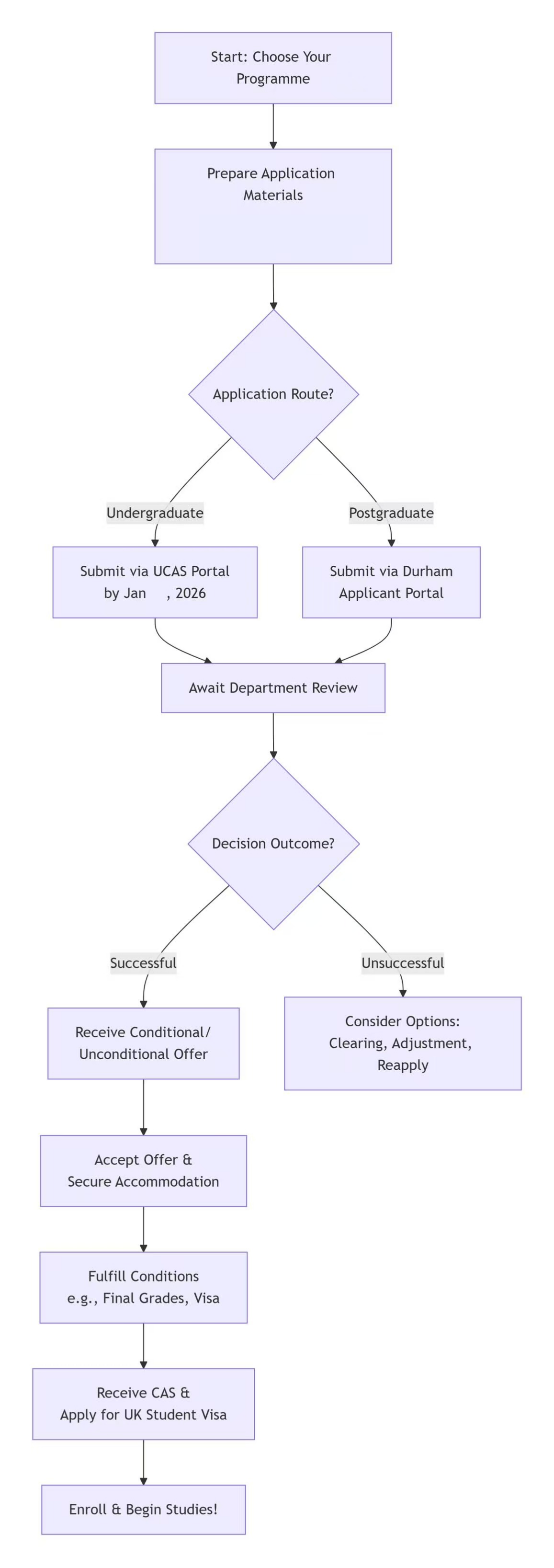
Step-by-Step Application Walk-through

Follow this visual guide to understand your journey. It outlines the critical path from choosing a program to finally enrolling as a Durham student.

application walkthrough

Durham University UK Acceptance Rate: Advice

Admission Advice

Let’s now translate the Durham University UK acceptance rate from a statistic into a practical framework. A reported overall offer rate of around 72% for undergraduates means the university is selective but not impossibly so. Your goal is to ensure your application rises to the top.

Beating the Durham University England acceptance rate requires a careful and strategic application. Here is how to approach each component.

  1. Academic Excellence and Subject Fit

Your grades are the foundation. You must meet, and ideally exceed, the entry requirements, which often range from A*AA to AAA for competitive courses. For postgraduate study, a strong upper-second-class (2:1) bachelor’s degree is typically the minimum.

  • Demonstrate Subject Passion: Go beyond the syllabus. Read academic journals, books, or follow relevant news related to your chosen field. Mention this engagement in your personal statement to show intellectual curiosity.
  • Connect Your Background: Clearly articulate how your previous studies have prepared you for the specific modules and rigour of the Durham course.

2. Crafting a Compelling Personal Statement

This is your personal pitch. For undergraduate applications, it’s your primary tool to differentiate yourself.

  • Structure is Key: Start with a strong opening about your passion. Use the main body to detail relevant academic experiences, skills gained, and extra-curricular activities that demonstrate required competencies (e.g., leadership, teamwork, critical thinking). Conclude with your career aspirations and why Durham is the perfect fit.
  • The “Why Durham?” Question: Be specific. Don’t just praise the university’s reputation. Mention a particular research institute, a unique module, the teaching style, or the collegiate system that attracts you. This shows targeted research.
  • Present, Don’t Just Tell: Instead of saying “I am a leader,” describe a time you led a team project and what you learned.

Accommodation Advice

Students should take immediate action regarding their accommodation after receiving their Durham acceptance letter. The collegiate system at Durham University provides first-year undergraduate students with college housing availability when they submit their application before the deadline. International students and Durham University students who want private accommodation with convenient access to the university select off-campus student accommodation near Durham University through uhomes.com. Because it offers students worldwide their best accommodation options, and provides students with access to numerous verified student apartments throughout the UK through its search function which allows users to select their preferred budget, room type, location, university and additional features. Additionally, uhomes.com allows users to view high-quality photos and virtual tours while they can book their room through simple online documentation which completes before their arrival. Using such a service can remove significant stress, allowing you to focus on your studies.

For example, if you are looking for the best value, Houghall Court, Durham is an excellent choice. It offers two room types, ensuring a comfortable living space at a budget-friendly price, and within a short walk from campus.

Houghall Court

Overall, here are 3 tips on identifying suitable accommodation:

  1. Start Early: The best rooms get booked quickly, don’t wait until the last time.

2. Understand Your Options:

  • On-campus University Halls: Offer a strong community, often with catered or self-catered halls. Ideal for first years.
  • Purpose-built Student Accommodations (PBSA): Modern, comfortable, strike a perfect balance between privacy and socialisation, provide well-equipped facilities and social spacesat a reasonable price.
  • Private Rentals: Flats or houses shared with others. Tenants often need to handle utility bills, and the negotiation process might be more cumbersome compared to managed student housing.

3. Location:  Consider proximity to the university library, or to the city centre. Durham is a walkable city, but check transport links if you look further afield.

Durham University Acceptance Rate: Conclusion

Understanding the Durham University acceptance rate, and related metrics such as eligibility, programmes, and application process requires more than just glancing at a percentage. While Durham’s acceptance rate of around 40% gives a useful benchmark for overall selectivity, actual admission chances depend heavily on applicant background, credentials, and even programme demands and competitiveness. By understanding the detailed eligibility requirements, preparing a compelling application, and submitting ahead of key deadlines, you can strategically enhance your chances. Approach the process with thorough preparation and clarity, turning your aspiration to study at this prestigious university into reality.

FAQs about Durham University Acceptance Rate

UPSC Civil Services Examination (UPSC CSE) is the toughest exam in India, due to its massive syllabus, three-stage process (Prelims, Mains, Interview), and extremely low success rate among hundreds of thousands of yearly applicants.

Durham University is moderately hard to get into. Durham University’s acceptance rates hover around 40-45% in recent years, making it competitive but not as restrictive as the most elite UK universities. Also, the admission difficulty depends heavily on course demand and applicant credentials.

University of Oxford is the hardest Russell-Group university to get into, with an offer rate around 20.3%. Closely followed by London School of Economics and Political Science (LSE) (around 21.0%) and University of Cambridge (≈24.5%).

Durham is prestigious because of its consistent global and UK-level ranking performance, excellence in teaching and research, strong graduate employability and student satisfaction, as well as its long history and collegiate university structure. It was recently named “University of the Year 2026” by a major UK university guide.

Yes, Durham is the world’s top 100 university in the QS World University Rankings for every year since 2010. In the 2026 QS ranking, it is placed joint 94th globally.

UCL is generally considered better than Durham. UCL tends to be more selective (with a lower acceptance rate), which can reflect very high competition and prestige. From there, UCL may appear “harder to get into.” Durham, on the other hand, combines strong academic standing, world-top 100 global ranking, high student satisfaction and excellent employability outcomes, which may make it more balanced overall for many students.

Durham University is particularly known for subjects like Archaeology (6th), Theology and Religion (6th), Classics and Ancient History (9th), Geography (11th), and Anthropology (29th), which are ranked in the global top 30 lists.

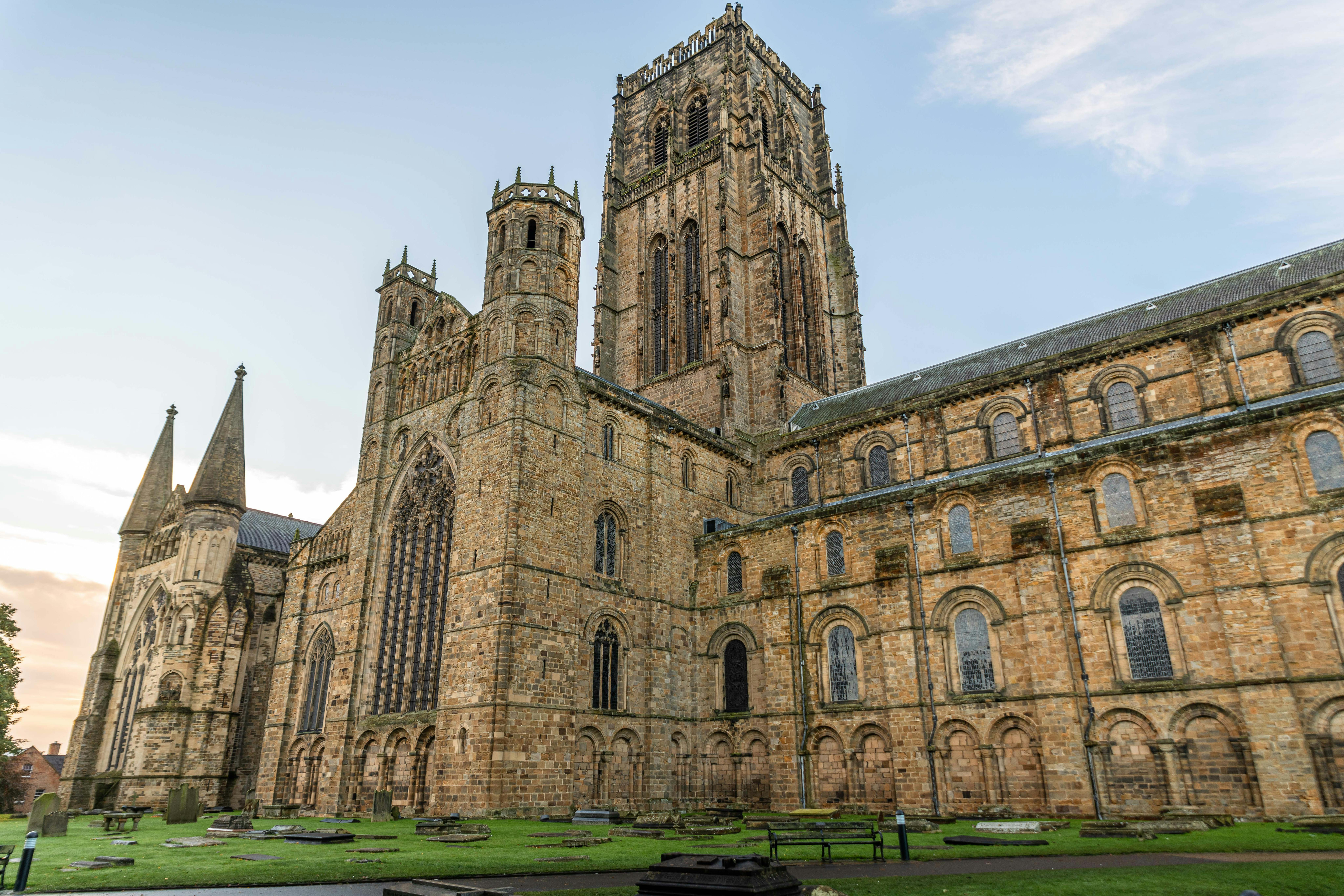
Yes, parts of Harry Potter were filmed at Durham Cathedral, which sits next to Durham University. Scenes inside the cloisters served as corridors at “Hogwarts,” and the Chapter House doubled as a classroom for the character Minerva McGonagall in the first two films.

uhomes.com | Student Accommodation,Flats,Houses,Apartments for Rent
What can I do for you?
ASK ME