


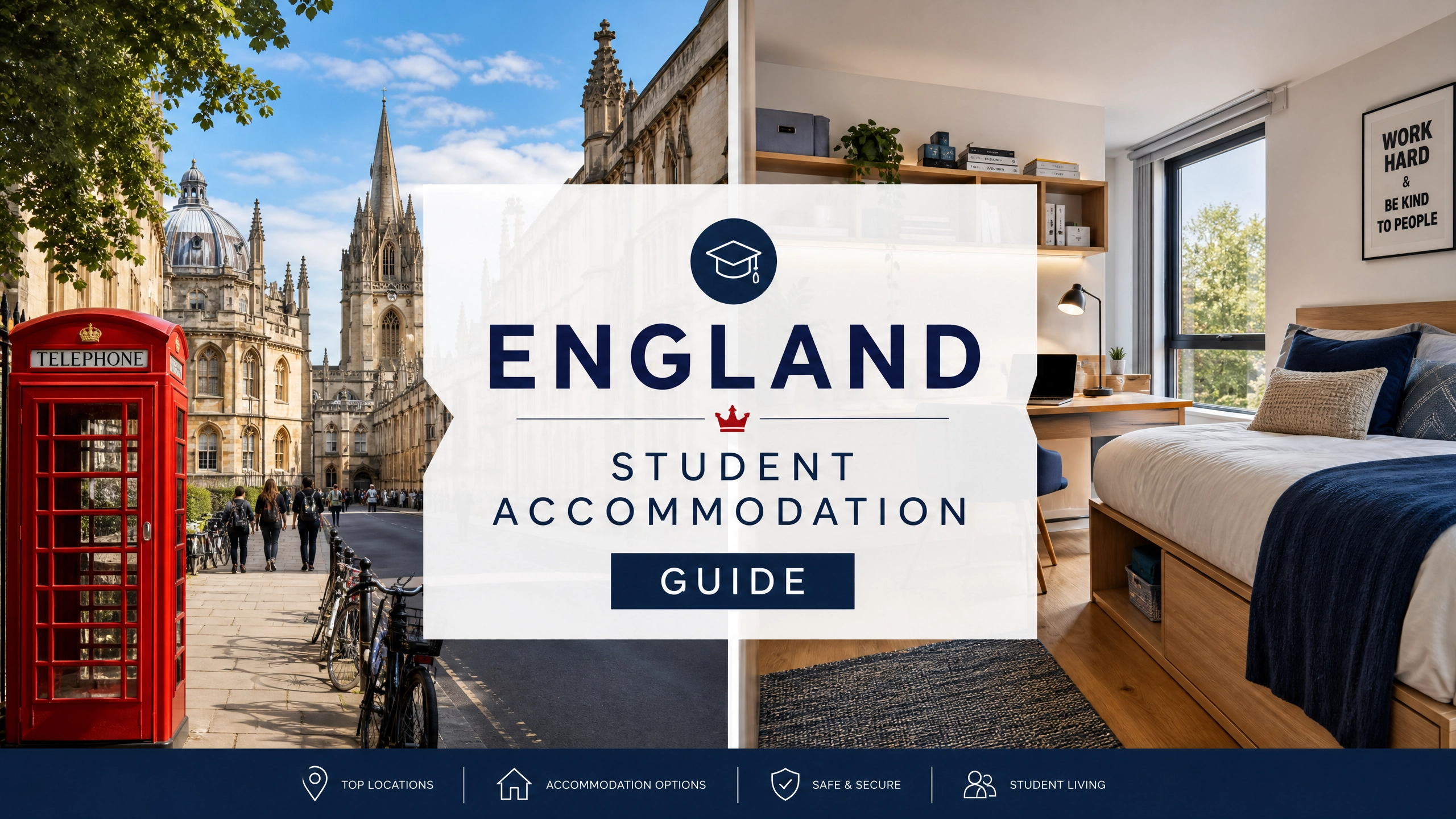
England is home to hundreds of the world’s most prestigious universities and attracts hundreds of thousands of international students every year. Once they have secured a place at their dream university in England, the biggest challenge for students is usually finding accommodation in England. This guide covers everything students need to know about finding student accommodation in England, including the best student cities, average rent, accommodation types, living costs, booking timelines, and practical renting tips.
Overview of England
England is the largest country in the United Kingdom, located in the southern part of Great Britain, and home to the majority of the UK’s universities. It combines centuries of academic heritage with modern student life, attracting learners from over 180 countries.
England’s higher education sector includes world-famous institutions such as the University of Oxford, the University of Cambridge, Imperial College London, University College London (UCL), and the University of Manchester. These universities contribute to England’s reputation as one of the world’s leading study destinations.
For students, England offers:
- A diverse range of universities and academic programmes
- Extensive public transport networks
- Strong graduate employment opportunities
- A multicultural and international environment
- Student-friendly cities with dedicated accommodation options
The student accommodation market in England is well developed, with thousands of purpose-built student housing beds available across major university cities. Many properties include utilities, internet, study spaces, gyms, and social areas, making them particularly attractive to international students.
England's Most Popular Student Cities
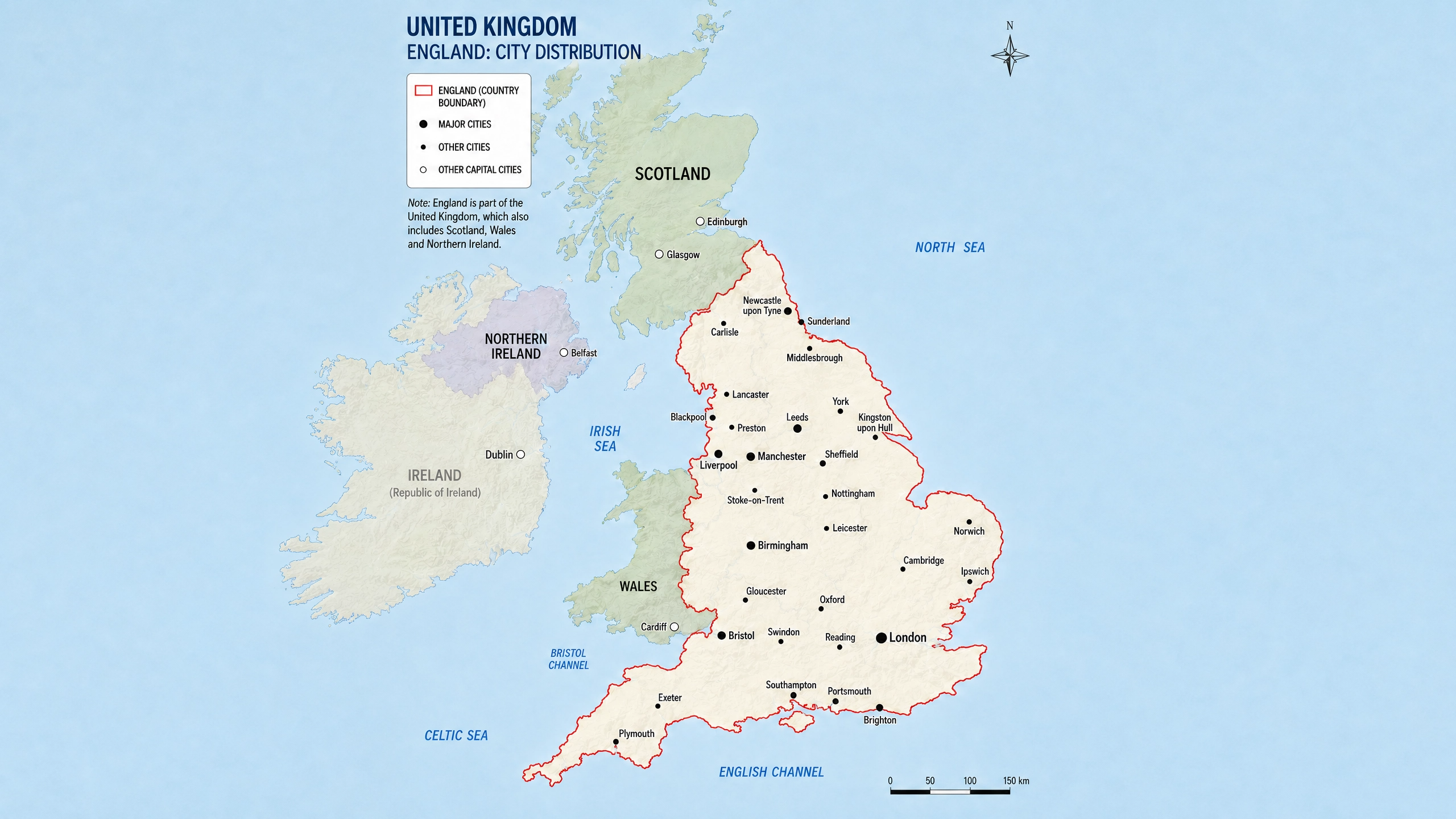
England’s most popular student cities include London, Manchester, Birmingham, Leeds, Bristol, Liverpool, Newcastle upon Tyne, and Sheffield, each offering strong universities, diverse student communities, and a wide range of accommodation options for students.
London, England
As the capital of the UK, London is one of the world’s most popular destinations for higher education. The city is home to over 40 universities, including highly ranked UCL, KCL, IC, and LSE. Every year, London attracts a large international student population, with the proportion of overseas students reaching 40% across major universities. Student accommodation in London is the most expensive in England, which largely depends on the location and room type. Most student choose to live near their campus. However, students benefit from extensive transport links, diverse neighbourhoods, and a wide range of accommodation options in London.
- Top Universities in London: University College London, King’s College London, Imperial College London, LSE, Queen Mary University of London, and City University of London.
- Best Areas for Students to Live in London: Bloomsbury, Stratford, Elephant & Castle, Wembley, Camden, and Hammersmith.
- Average student rent in London ranges from £150 to £450+ per week, depending on accommodation type and location.
- Types of student accommodation in London are university halls of residence, purpose-built student accommodation (PBSA), private rented housing, and
Manchester, England
Manchester is widely regarded as one of the UK’s best student cities, with over 100,000 students making it one of the largest student populations in Europe. The city offers a vibrant social scene, world-class music and cultural heritage, and strong graduate employment opportunities, particularly in media, technology, and creative industries. Compared to London, living costs are significantly more affordable, making it an attractive destination for both domestic and international students. Accommodation options are varied and well-distributed across the city, catering to a wide range of budgets and lifestyle preferences.
- Top Universities in Manchester: The University of Manchester, Manchester Metropolitan University, and the University of Salford.
- Best Areas for Students to Live in Manchester: City Centre, Fallowfield, Rusholme, Hulme, Salford Quays, Ardwick.
- Average Student Rent in Manchester ranges from £ 100 to £300+ per week, depending on location and room type.
- Types of Student Accommodation in Manchester: PBSA residences, university halls, shared houses and private apartments.
Birmingham, England
As England’s second-largest city and one of the youngest cities in Europe, Birmingham has established itself as a dynamic and increasingly popular destination for students. The city offers a compelling balance of affordability, with lower living costs compared to other major student cities, making Birmingham an attractive option for budget-conscious students. Birmingham also has strong graduate employment prospects across sectors such as finance, engineering, and healthcare. Students in Birmingham benefit from a well-developed accommodation market, with a wide range of options spanning university-managed halls and private rentals spread across vibrant neighbourhoods close to campus. With excellent transport connections, including direct rail links to London, Manchester, and beyond, Birmingham is both well-connected nationally and easy to navigate locally.
- Top Universities in Birmingham: University of Birmingham, Aston University, Birmingham City University, and Newman University.
- Best Areas for Students to Live in Birmingham: Selly Oak, Birmingham City Centre, Edgbaston, Digbeth, and the Jewellery Quarter.
- Average Student Rent in Birmingham ranges from £100 to 280+ per week, depending on location and room type.
- Types of Student Accommodation in Birmingham: PBSA developments, university-managed halls, shared student houses, and private rentals.
Leeds, England
Leeds is one of England’s largest and most celebrated student cities, with over 65,000 students contributing to a lively and diverse urban atmosphere. The city is home to several well-regarded universities and consistently ranks highly for student satisfaction, offering a strong combination of academic quality, vibrant social life, and excellent graduate employment prospects, particularly in finance, digital technology, healthcare, and the creative industries. Compared to London and other major cities, Leeds is notably affordable, with lower living costs and modern student accommodation properties across well-connected neighbourhoods. Beyond academics, Leeds is renowned for its thriving nightlife, independent food scene, and world-class shopping, making it one of the most well-rounded and enjoyable cities to study in England.
- Top Universities in Leeds: University of Leeds, Leeds Beckett University, and Leeds Trinity University.
- Best Areas for Students to Live in Leeds: Headingley, Hyde Park, City Centre, Woodhouse, and Burley.
- Average Student Rent in Leeds ranges from £70 to £260+ per week, depending on location and room type.
- Types of Student Accommodation in Leeds: PBSA accommodation, university halls, shared student houses (HMOs), and private rentals.
Bristol, England
Bristol is one of England’s most vibrant and sought-after student cities, consistently ranking among the top destinations for higher education thanks to its high academic standards, creative culture, and exceptional quality of life. Home to a student population of over 40,000, the city has built a strong reputation across disciplines, including the arts, engineering, sciences, and creative industries, with graduates highly regarded by employers nationally and internationally. Beyond academia, Bristol’s thriving independent food and music scene, iconic harbourside, and green spaces give the city a distinctive character that sets it apart from other student destinations. However, Bristol’s growing popularity means accommodation demand significantly outstrips supply, pushing rental prices higher than many comparable cities outside London.
- Top Universities in Bristol: University of Bristol and University of the West of England (UWE Bristol).
- Best Areas for Students to Live in Bristol: Clifton, Redland, Stoke Bishop, Bristol City Centre, and Temple Meads.
- Average Student Rent in Bristol ranges from £110 to £370 per week, depending on the property’s location and room type.
- Types of Student Accommodation in Bristol include purpose-built student accommodation (PBSA), university halls of residence, shared student houses, and private flats.
Liverpool, England
Liverpool is one of the most affordable student cities in England and is known for its welcoming atmosphere and vibrant cultural scene. The city attracts more than 50,000 students with its academic strength across disciplines such as medicine, law, business, and the creative arts, and its world-famous cultural heritage. Liverpool’s living costs are notably low, making it a particularly popular destination for students looking to balance quality of life with financial stress. Accommodation options in Liverpool are plentiful, particularly around the city centre and university districts.
- Top Universities in Liverpool: University of Liverpool, Liverpool John Moores University, and Liverpool Hope University.
- Best Areas for Students to Live in Liverpool: Liverpool City Centre, Kensington, Smithdown Road, the Georgian Quarter, and the Baltic Triangle.
- Average Student Rent in Liverpool ranges from £80 to £250 per week, depending on the property’s location and room type.
- Types of Student Accommodation in Liverpool: purpose-built student accommodation (PBSA), university-managed residences, shared student houses, and private apartments.
Newcastle upon Tyne, England
Newcastle upon Tyne is consistently ranked among the UK’s best student cities, with over 50,000 students benefiting from a vibrant, welcoming community and some of the most affordable living costs of any major city in England. The city is home to Newcastle University, a prestigious Russell Group institution, and Northumbria University, both of which perform strongly in national rankings. Beyond academia, Newcastle offers a remarkable student lifestyle, from its historic landmarks to its independent food scene and world-famous nightlife. The city’s efficient Metro system connects students from campuses to accommodation and other corners. The student accommodations in Newcastle upon Tyne are also relatively affordable, with diverse options near the universities.
- Top Universities in Newcastle: Newcastle University and Northumbria University.
- Best Areas for Students to Live in Newcastle: Jesmond, City Centre, Sandyford, Heaton, and Shieldfield.
- Average Student Rent in Newcastle is about £116 per week, making it the second most affordable in the UK.
- Types of Student Accommodation in Newcastle: PBSA accommodation, university halls, shared student housing, and private rentals.
Sheffield, England
Sheffield is one of England’s most affordable and well-regarded student cities, consistently recognised as one of the most budget-friendly places to study in the country, with over 60,000 students contributing to a diverse and thriving university community. What truly sets Sheffield apart is its unique combination of vibrant city life and natural beauty, sitting on the edge of the Peak District National Park, students can enjoy world-class hiking and outdoor activities alongside a lively independent food and music scene. The student accommodation market is well-supplied and notably affordable, with a broad range of options catering to different budgets and lifestyles across a number of popular student neighbourhoods.
- Top Universities in Sheffield: University of Sheffield and Sheffield Hallam University
- Best Areas for Students to Live in Sheffield: City Centre, Ecclesall Road, Broomhill, Crookes, and Kelham Island.
- The average student rent in Sheffield is around £130 per week, depending on location and room type.
- Types of Student Accommodation in Sheffield: PBSA residences, university accommodation, shared houses, and private apartments.
Types of Student Accommodation in England
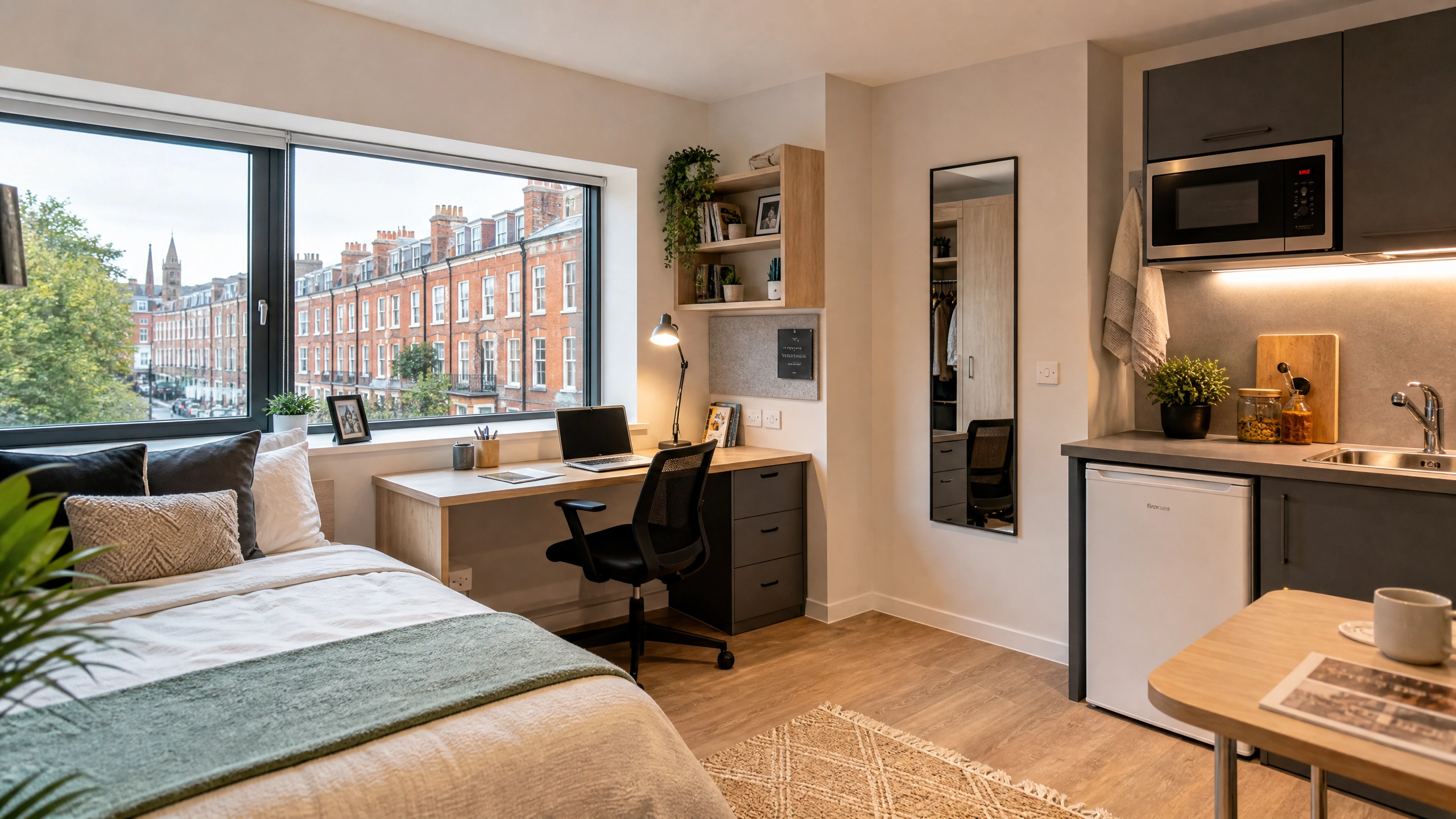
The four most common types of student accommodation in England are Purpose-Built Student Accommodation (PBSA), private student rentals, university halls of residence, and shared student houses (HMOs).
Purpose-Built Student Accommodation (PBSA)
Purpose-Built Student Accommodation (PBSA) refers to residential buildings specifically designed and managed for students in England. This type of accommodation is typically operated by professional accommodation providers and located close to universities, transport links or the city centre. PBSAs have become increasingly popular among students because they offer a fully managed, all-inclusive living experience.
PBSAs are designed exclusively for students, supporting students’ academic success with a strong on-site student community and a convenient living environment. The booking process is simple and straightforward, and the all-inclusive rent makes budgeting easier. Students can choose from PBSA’s flexible room types, including en-suite rooms and self-contained studios, according to budget and lifestyle. Students can easily move into the fully furnished rooms and have free access to modern amenities such as gyms, study rooms, cinema rooms, and social spaces in the building. High levels of security, including CCTV and secure entry systems, offer students a safe living environment. The reception and on-site maintenance team can provide students with prompt service.
For students who are unfamiliar with the UK rental market and seeking high-quality living, PBSAs can be the best choice. PBSAs provide a convenient, secure, and all-inclusive living arrangement but are usually more expensive than shared housing or private rentals. Availability of popular PBSAs is limited during peak booking seasons, so early application is advisable.
Private Student Rentals
Private student rentals refer to apartments, flats, or houses rented directly from landlords or letting agencies. These rentals are not specifically designed for students, unlike PBSAs and university halls, although many are popular among students. Private rentals provide a wider choice of locations and property types across the city. Ideal for returning students seeking greater freedom, privacy, and a non-student-specific living environment.
Students typically sign a tenancy agreement and are responsible for managing rent payments and household arrangements. Utility bills are often not included in the rent, but the private options potentially offer lower rent in some cities, especially when sharing with others. For students who prefer private rentals, tenancy agreements require careful review before signing to ensure that the landlord’s responsiveness is clear.
University Halls of Residence
University halls of residence are accommodation buildings owned or managed directly by universities themselves in England. These university student halls are commonly located on or near campus. University student halls are the most traditional form of student housing in England, and they are the first housing option for first-year students.
Living in university halls of residence means students stay close to campus facilities and student events. Students have the most convenient access to lectures, libraries and on-campus student services, and opportunities to socialise with fellow students. Some on-campus residences offer catered options, with on-site meals provided, which is particularly welcome during the busy exam periods. Many universities prioritise first-year and international students when allocating rooms. However, room availability is limited and not guaranteed, particularly for returning students. In addition, university halls offer less flexibility in room selection compared to private options. Students should also be aware that living on campus can feel less independent than renting off-campus.
Shared Student Houses (HMOs)
A House in Multiple Occupation (HMO) is a property rented by three or more unrelated tenants who share common facilities such as kitchens, bathrooms, or living rooms. HMOs are particularly common in established student neighbourhoods across England. They are widely regarded as one of the most affordable housing options available to students, making them a popular choice from the second year of study onwards.
Shared Student Houses are a popular and budget-friendly accommodation option, particularly in established student neighbourhoods close to universities. Students typically share communal facilities such as kitchens and living areas and may sign either individual or joint tenancy agreements. Compared with PBSA and university halls, HMOs often offer lower rents and more spacious living environments, making them especially attractive to groups of friends who want to live together and enjoy a sociable student experience. However, utility bills are often charged separately, and housemates must share responsibility for household maintenance and cleanliness. While HMOs can provide a strong sense of community, students should also be prepared for reduced privacy and the potential for disagreements over bills, chores, or shared spaces.
Comparison of Student Accommodation Types in England
| Aspect | PBSA (Purpose-Built Student Accommodation) | University Halls of Residence | Private Student Rentals | Shared Student Houses (HMOs) |
|---|---|---|---|---|
| Description | Professional, purpose-built student buildings with modern facilities | University-owned/managed accommodation, often on or near campus | Regular apartments/flats/houses rented from private landlords | Houses shared by 3+ unrelated students (classic student house) |
| Best For | First-year & international students, those wanting convenience & security | First-year students, especially internationals | Returning students seeking independence & variety | 2nd-year+ students, groups of friends wanting affordability & social life |
| Rent Level (Weekly) | Highest: £140–£280+ (UK avg. en-suite ~£150–£200; London: £200–£350+) | Medium-High: £120–£220; London: £180–£250+ | Medium: £130–£250+ (varies widely) | Lowest: £90–£180 (per person); London: £150–£250+ |
| Bills & Inclusions | All-inclusive (rent covers bills, Wi-Fi, etc.) | Often includes some utilities/meals | Usually rent only – bills extra | Rent only – bills shared separately |
| Amenities | Gym, cinema, study rooms, social spaces, laundry, 24/7 support | Common rooms, laundry, sometimes catering | Depends on property (basic to good) | Basic shared kitchen/living areas |
| Management & Service | Professional on-site team, reception, maintenance | University staff | Landlord or agency (variable responsiveness) | Landlord/agency + self-managed by tenants |
| Main Advantages | Convenience, security, all-inclusive, modern facilities | Campus convenience, social integration, support | Independence, choice, potentially cheaper | Cheapest option, spacious, sociable with friends |
| Main Disadvantages | Most expensive, less independence | Less choice & flexibility, can feel institutional | Bills extra, variable quality & landlord service | Lower privacy, shared responsibilities, potential conflicts |
Top-rated Student Accommodations in Major Cities Across England
England offers a wide range of student accommodation options, while the top-rated options features key factors that matter most to students, including proximity to university campuses, high-quality facilities, value for money, great service and safety, and overall high student satisfaction. Following are some of the highest-rated student accommodations across England’s leading university cities.
Best Student Accommodations in London
The best student accommodation in London offers modern en-suites and studios with high-end amenities and security measures, prime locations, and excellent transport links.
Stratford One
Stratford One is one of the most popular purpose-built student accommodations, located in Stratford, East London. The property enjoys excellent transport links through Stratford Station, allowing students to reach central London and major universities such as Queen Mary University of London, the London School of Economics (LSE), and University College London (UCL) with ease. In addition, students appreciate Stratford One for its modern facilities, including an on-site gym, dedicated study spaces, and a social lounge and communal areas for residents to relax and connect. Stratford One benefits from proximity to Westfield Stratford City, one of the largest shopping centers in the UK, offering students a wide selection of groceries, restaurants, cafés, and shops.
Chapter London Bridge
Chapter London Bridge offers premium student living in Central London. This student accommodation is just moments from London Bridge station and within easy reach of King’s College London, London South Bank University, and the University of the Arts London. Chapter London Bridge is particularly popular among students seeking a premium living experience in the heart of the city. Residents have access to a fully equipped gym and the cinema room. One of its standout features is the rooftop terrace, offering impressive views across the London skyline. Its combination of high-end amenities, excellent transport links, and an unbeatable central location makes it one of the most sought-after student accommodations in London.
Best Student Accommodations in Manchester
Top-rated Manchester student accommodation offers an excellent combination of affordability, modern facilities, and convenient access to leading universities.
Canvas Manchester
Canvas Manchester is a modern student accommodation offering a strong balance between academic convenience and city-centre living. It is ideally located for students at the University of Manchester and Manchester Metropolitan University, both of which are easily accessible on foot or by public transport. Situated close to the Oxford Road corridor and Manchester city centre, the property places students within easy reach of key academic buildings, transport links, and the city’s social and cultural scene. On-site facilities include a gym, study spaces, and social areas, along with secure access and an on-site management team to ensure a safe and comfortable living environment.
Piccadilly Point
Piccadilly Point, managed by Unite Students, is a purpose-built student accommodation located just a 3-minute walk from Manchester Piccadilly Station. It offers excellent connectivity across Manchester and beyond, while the University of Manchester and Manchester Metropolitan University are both within a 15-minute walk. The property provides fully furnished en-suite rooms and studios with all bills included, as well as amenities such as a gym, study spaces, laundry facilities, and 24/7 security, making it a convenient and well-connected choice for students in Manchester.
Best Student Accommodations in Birmingham
The best Birmingham student accommodation offers excellent value for money compared with London, while providing easy access to multiple universities, a wide range of modern housing options, and strong transport connections across the UK.
Battery Park
Battery Park is a popular student accommodation in Selly Oak, one of Birmingham’s most established student neighbourhoods. Located just a 15-minute walk from the University of Birmingham and directly opposite Selly Oak Station, it offers convenient access to both campus and Birmingham city centre. The property features fully furnished en-suite rooms and studios with all bills included, alongside amenities such as a TV lounge, games area, bike storage, and secure entry systems. With supermarkets, cafés, and restaurants nearby, Battery Park is a practical and affordable choice for students seeking a well-connected location.
Vita Student Birmingham (Gough Street)
Vita Student Gough Street is a premium student accommodation located in Birmingham city centre, close to Birmingham New Street Station and The Mailbox. Offering private studios and one-bedroom apartments, the property provides easy access to the University of Birmingham, Aston University, Birmingham City University, and University College Birmingham. Residents benefit from an extensive range of facilities, including a gym, basketball court, study spaces, private dining room, and social hub, as well as all-inclusive bills, free weekday breakfast, and regular housekeeping services.
Best Student Accommodations in Leeds
The most popular Leeds student accommodation combines affordable rents with easy access to multiple universities, offering students a strong balance between budget-friendly living, modern facilities, and a vibrant student lifestyle.
Scape Leeds
Scape Leeds is a modern student accommodation located on Merrion Street in Leeds city centre, within a 5-minute walk of Leeds Beckett University and Leeds Arts University, and around 10 minutes from the University of Leeds. Opened in 2024, the property offers contemporary en-suite rooms and studios alongside premium amenities, including a gym, rooftop terrace, cinema room, study spaces, and social areas. Its prime location in Leeds city centre also gives students easy access to shopping, dining, nightlife, and transport links across the city.
iQ Leeds
iQ Leeds, located in the popular student area of Headingley, provides convenient access to the University of Leeds, Leeds Arts University, and Leeds Beckett University. The property offers a range of fully furnished rooms with all-inclusive bills, complemented by facilities such as a gym, cinema room, games area, study spaces, and communal lounges. With nearby bus connections and a quieter residential setting, iQ Leeds is a popular choice for students seeking both convenience and value for money.
Best Student Accommodations in Bristol
Best Bristol student accommodation places students in the city centre and close to leading universities, making it particularly attractive for those seeking a balance between academic opportunities and an active social scene.
iQ Bristol
iQ Bristol offers convenient access to BIMM Bristol, the University of Bristol, and UWE Bristol. The property is positioned in Bristol city centre, close to Cabot Circus, Bristol Shopping Quarter, and Bristol Temple Meads Station, making it ideal for students who want to live in the heart of the city. Residents can choose from fully furnished en-suite rooms and studios and enjoy amenities such as a gym, cinema room, study spaces, music room, private dining area, and regular social events, with all bills included.
New Bridewell
New Bridewell is a modern student accommodation situated in Bristol city centre, within walking distance of the University of Bristol and BIMM Bristol and well connected to the University of the West of England Bristol by public transport. The property offers a range of en-suite rooms and studios with all-inclusive bills, alongside facilities including study areas, social lounges, a cinema room, games area, courtyard, bike storage, and on-site support. Its central location and comprehensive amenities make it a popular choice among students in Bristol.
Best Student Accommodations in Liverpool
Top-rated Liverpool student accommodation combines affordable rents, walkable university campuses, and a lively cultural scene that is particularly appealing to students.
Vista Square
Vista Square offers modern student accommodation within walking distance of both the University of Liverpool and Liverpool John Moores University. Its central location provides easy access to Liverpool city centre, Liverpool ONE, transport links, and a wide range of shops, restaurants, and entertainment venues. The property features fully furnished en-suite rooms and studios with all-inclusive bills, alongside premium amenities such as a gym, yoga studio, sauna, cinema room, study spaces, sky lounge, and regular social events.
Iconinc The Ascent
Iconinc The Ascent is a premium student accommodation located in Liverpool city centre, just a short walk from Liverpool John Moores University and around 15 minutes from the University of Liverpool. Offering stylish self-contained studios, the property is designed for students seeking greater privacy and comfort. Residents benefit from high-end facilities including a gym, cinema room, games lounge, study spaces, private dining areas, and hotel-inspired services. The Ascent accommodation is within easy reach of Liverpool ONE, Bold Street, and the city’s vibrant social scene.
Average Student Rent in England
Student accommodation in England typically costs between £120 and £350 per week, with the national average generally falling between £180 and £250 per week, depending on the city and accommodation type. Compared with the rest of the UK, England has the widest range of student housing options and includes both the country’s most expensive market, London, and many affordable student cities such as Sheffield, Liverpool, Leeds, and Newcastle. As a result, accommodation costs in England can vary considerably from one location to another.
Key factors affecting student rent include the city and local housing demand, room type (such as non-en-suite, en-suite, studio, or apartment), proximity to campus and city centres, whether utility bills are included, the property’s age and facilities, contract length, and seasonal demand during peak booking periods. Students seeking accommodation in major cities or premium PBSA developments can expect to pay significantly above the national average, while shared housing and student accommodation in smaller cities are often available at more budget-friendly rates.
The table below shows typical weekly rents for en-suite rooms in major student cities across England.
| City | Average Weekly Rent Range (En-Suite) | Bills Included? | Notes |
|---|---|---|---|
| London | £200 – £350+ | Yes (most PBSA) | Highest prices in central areas; outer zones are lower. Strong demand drives premiums. |
| Birmingham | £140 – £230 | Yes (most PBSA) | Steady increases; good value outside prime locations. |
| Leeds | £130 – £230 | Yes (most PBSA) | Affordable big city option; many listings £130–£180. |
| Bristol | £160 – £250 | Yes (most PBSA) | Competitive market; higher end of regional cities. |
| Liverpool | £120 – £200 | Yes (most PBSA) | Generally, one of the more affordable major cities. |
| Newcastle upon Tyne | £120 – £190 | Yes (most PBSA) | Good value with strong student infrastructure. |
| Sheffield | £110 – £180 | Yes (most PBSA) | Among the cheapest large student cities, stable pricing. |
How Much Is the Deposit for England Student Accommodation?
Students renting accommodation in England are typically required to pay a deposit before moving in. The deposit for rent accommodation in England is generally equal to 5 weeks’ rent. For most student accommodation, the deposit ranges from £100 to £500, although the exact amount varies depending on the accommodation provider and the weekly rent. Many Purpose-Built Student Accommodation (PBSA) providers charge a fixed booking deposit of around £150–£300, while some premium properties may require a larger upfront payment. In recent years, many student accommodation providers have also introduced low-deposit or no-deposit booking offers, allowing students to secure a room with a smaller advance payment.
When Is the Deposit Returned?
Student accommodation deposits are usually returned after the tenancy agreement ends, and the student has moved out. Before issuing a refund, the accommodation provider or landlord will typically inspect the room to ensure that all tenancy conditions have been met.
- The deposit is normally returned in full if:
- Rent payments have been completed
- The room is left clean and in good condition
- No damage beyond normal wear and tear is found
- All tenancy obligations have been fulfilled
If deductions are made, the landlord or accommodation provider must explain the reasons clearly and provide supporting evidence where necessary.
Deposit Protection in England
Students renting private accommodation under an Assured Shorthold Tenancy (AST) benefit from legal protection through England’s tenancy deposit regulations. Landlords are required to place eligible deposits into a government-approved tenancy deposit protection scheme within 30 days of receiving the payment.
The three government-authorised deposit protection schemes in England are:
- Deposit Protection Service (DPS)
- MyDeposits
- Tenancy Deposit Scheme (TDS)
These schemes safeguard tenants’ deposits and provide an independent dispute resolution service if disagreements arise over deposit deductions at the end of the tenancy.
Tips to Protect Your Deposit
Taking a few simple steps can help maximise the chances of receiving your full deposit back after you move out of the accommodation in England.
- Before moving in:
- Read the tenancy agreement carefully
- Take photos or videos of the room’s condition
- Complete the inventory checklist accurately
- Report any existing damage immediately
- Before moving out:
- Clean the room thoroughly
- Remove all personal belongings
- Follow the accommodation provider’s check-out procedures
- Keep records of emails and communications related to the tenancy
By documenting the property’s condition at both move-in and move-out, students can reduce the risk of disputes and make the deposit return process much smoother.
Cost of Living for Students in England
On average, students in England can expect to spend between £800 and £2,200+ per month on living costs, depending on their location, lifestyle, and accommodation type. The cost of living in London is at the higher end of this range, with total monthly expenses usually ranging from £1,300 to £2,200+, reflecting the city’s elevated housing, transportation, and overall living costs. In other major student cities such as Manchester, Birmingham, Leeds, Sheffield, and Liverpool, monthly living costs are generally more manageable, ranging from £800 to £1,500.
Beyond accommodation, students should budget for a range of additional monthly expenses, including food and groceries, local transport, study materials and stationery, mobile phone bills, entertainment, and personal costs. Planning ahead and accounting for these expenses alongside rent will help students avoid financial strain and make the most of their time studying in England.
The table below shows you the breakdown of the estimated living expenses for students in England.
| Expense Category | Estimated Monthly Cost | Notes / Tips |
|---|---|---|
| Rent | £800 – £2,200+ | Largest expense. London is the most expensive. PBSA and Halls usually all-inclusive. Northern cities much cheaper. |
| Food & Groceries | £150 – £300 | £150–£250 if cooking at home. Shop at Aldi, Lidl, Tesco or ASDA to save money. |
| Utility Bills | £0 – £150 | Often included in PBSA rent. Private rentals / HMOs usually require separate payment (electricity, gas, water, heating, broadband). |
| Laundry | £10 – £30 | On-site facilities in most accommodations. |
| Transport | £40 – £150 | Use 16–25 Railcard, student bus passes, or walk/cycle if living near campus to reduce costs. |
| Internet & Mobile Plans | £15 – £40 | SIM-only mobile plans £10–£25. Broadband often included in PBSA. |
| Entertainment & Social | £50 – £200 | Includes eating out, cinema, nightlife, streaming. Use UNiDAYS / Student Beans for student discounts. |
| Textbooks & Printing | £20 – £50 | Many resources available digitally via university libraries. |
When to Start Looking for Student Accommodation in England?
The best time to start looking for student accommodation in England is typically between January and June for September intake students. Demand for student housing is highly seasonal, and the most competitive properties, especially PBSA and accommodation close to top universities, are often booked several months in advance.
Typical Booking Timeline:
- January–March: Early-bird phase begins. Many PBSA providers release their new academic year listings with discounted rates or promotions.
- April–June: Peak booking period. The widest choice of rooms is available during this stage.
- July–August: High demand period. Remaining options may become more limited, especially in London and other major student cities.
- September onwards: Late booking stage. Students may still find rooms, but choices are more restricted and prices may be higher.
Key Advice for Students:
- Start researching accommodation at least **6–9 months before arrival**
- Secure housing early if studying in London, Manchester, or Birmingham
- Consider flexible cancellation policies if booking early
- International students should prioritise accommodation with verified listings and clear contracts
Booking early not only ensures better availability but also gives students more choice in terms of location, room type, and budget.
Where to Find Student Accommodation in England?
Students in England can find accommodation through several channels, including university accommodation portals, student accommodation platforms, and local private listing platforms. Each channel serving different needs and levels of flexibility, understanding the differences between these platforms can help students make a more informed decision and secure the right accommodation for their needs.
University Accommodation Portals
University accommodation portals are the official booking platforms provided by universities for their own managed halls of residence. These portals give students direct access to on-campus or university-affiliated accommodation, located close to campus facilities and student support services. The university itself manages all student halls, meaning maintenance and welfare support are all handled in-house. Contract lengths are usually aligned with the academic calendar, and many universities guarantee rooms for first-year and international students who apply before a specified deadline.
While university portals offer a safe and structured route into student housing, their scope is limited to what the university itself provides, typically a fixed selection of room types at set price points, with little flexibility on contract length or location. Students seeking a broader range of options or more competitive pricing may find university portals restrictive compared to accommodation platforms. University portals are best suited to first-year undergraduate students transitioning into university life for the first time, international students who prefer a structured and well-supported living environment, and students who prioritise proximity to campus and access to university support services above all else.
Student Accommodation Websites (e.g. uhomes.com)
uhomes.com is a dedicated student accommodation platform offering thousands of verified listings across student cities in England, including London, Manchester, Birmingham, Leeds, Bristol, Sheffield, Newcastle, and more. Unlike university portals, which are limited to a single institution’s managed properties, or booking directly with individual providers, which requires students to research and compare options independently across multiple websites. uhomes.com allows students to browse and compare a wide range of accommodation types, including PBSAs, shared houses, and private rentals, across multiple providers and locations in one place.
The platform offers transparent pricing, real-time availability, and detailed property information, making it easier for students to assess value for money before committing. Notably, uhomes.com features exclusive listings and exclusive offers not available through other platforms, alongside a lowest price guarantee, meaning students can be confident they are securing the best available deal when booking through the platform. A standout feature of uhomes.com is its multilingual support, which makes it particularly accessible to international students who may be unfamiliar with the English rental market or face language barriers during the search process. Students can submit enquiries, receive booking assistance, and consult any queries directly with 1-on-1 professional experts through the platform.
uhomes.com works with a wide network of established, verified accommodation providers across England, including iQ, Chapter, Unite Students, Vita, Downing, and more, giving students confidence that listings are reliable and professionally managed. The student accommodation website is best suited to students finding accommodation in England for the first time, students comparing options across multiple cities or providers, and those seeking flexible contract terms and all-inclusive pricing.
Rightmove
Rightmove is one of the UK’s largest property listing platforms, primarily serving the general residential rental market. It aggregates listings from estate agents and private landlords across the country, covering a wide range of property types, including private flats, terraced houses, and long-term rental apartments. Unlike dedicated student platforms such as uhomes.com, Rightmove is not tailored specifically to student needs, listings do not typically include student-specific amenities, all-inclusive billing, or short-term academic-year contracts.
Students using Rightmove must independently arrange viewings, negotiate terms, review tenancy agreements, and manage landlord communications, which requires a greater degree of experience and confidence in exploring private rentals in England. Rightmove is best suited to returning students and postgraduates seeking private long-term rentals, groups of students looking to share a house or flat, and those who prefer to deal directly with landlords or letting agents rather than through a managed accommodation provider.
SpareRoom
SpareRoom is a UK-based platform specialising in room rentals and house shares, making it one of the most widely used tools for students seeking affordable shared accommodation. The platform lists individual rooms within shared properties, allowing students to filter by location, budget, and contract length. One of SpareRoom’s most distinctive features is its housemate matching system, which helps students find compatible people to live with, particularly useful for those moving to a new city without an existing social network. Both short-term and long-term listings are available, offering greater flexibility than many PBSA contracts or university hall agreements.
However, like Rightmove, SpareRoom operates within the private rental market and does not offer the managed, all-inclusive options found on dedicated student platforms such as uhomes.com. Students are responsible for independently verifying listings, reviewing tenancy agreements, and managing household arrangements. SpareRoom is best suited to budget-conscious students seeking affordable shared housing, those looking to find compatible housemates in a new city, and students who require flexible or shorter-term rental arrangements outside of the standard academic-year contract.

How to Book Student Accommodation in England?
Booking student accommodation in England generally follows a structured process, whether students choose university halls or private accommodation.
On-Campus University Accommodation Application Process
1. Find the University’s Accommodation Portal
Before applying, check whether your university offers on-campus housing and locate its official accommodation portal. Not all universities guarantee on-campus accommodation for every student, so it is important to confirm availability and eligibility requirements early.
2. Submit Accommodation Preferences
Once eligible, students log in to the university’s accommodation portal to select their preferred room type, hall, and any additional requirements such as catered or self-catered options. Please note the application deadline for your university’s student halls and submit your application before it expires.
3. Receive an Accommodation Offer
Universities allocate rooms based on availability and eligibility. Many operate on a first-come, first-served basis, so submitting your application promptly is strongly advised, particularly for first-year students, who are often prioritised in early allocation rounds.
4. Confirm Booking and Pay Deposit
Once an offer is received, students must formally accept it and pay a holding deposit within a specified deadline to secure the room.
5. Arrange Move-In
Prior to arrival, students receive check-in instructions from the university, including key collection times, move-in dates, and any documentation required upon arrival.
Off-Campus Accommodation Booking Process
1. Search for Accommodation
Begin your search using dedicated platforms such as uhomes.com, individual PBSA provider websites, or local estate agents, depending on the type of accommodation you are looking for.
2. Compare Your Options
Carefully compare properties based on rent, location, proximity to your university, contract length, and whether utility bills are included, as these factors can significantly affect your overall cost of living.
3. Submit an Application
Once you have identified a preferred property, submit an application by providing your personal details, university enrolment information, and tenancy preferences.
4. Pay a Deposit or Booking Fee
A deposit or booking fee is typically required to reserve the room ahead of contract signing. Ensure you receive a written receipt and understand the terms of the deposit, including any refund conditions.
5. Sign the Tenancy Agreement
Before signing, carefully review all terms of the tenancy agreement, or Assured Shorthold Tenancy (AST) for private rentals. This is a legally binding document, so it is important to understand your rights and obligations as a tenant before committing.
6. Check In
On your move-in date, complete a property inventory check, note any existing damage in writing, and collect your keys. Keeping a record of the property’s condition at check-in can help avoid disputes over your deposit at the end of the tenancy.

How to Avoid Common Student Rental Scams in England?
Students in England should remain cautious when searching for accommodation, particularly when booking private rentals online. International students are especially vulnerable to rental scams, as they are often unfamiliar with the UK rental market and may be searching for accommodation remotely from abroad.
Common Risks
- Fake listings with unrealistically low rent are designed to attract urgent enquiries.
- Requests for upfront payments or deposits before a contract is signed or a property is viewed.
- Landlords refusing to provide an official tenancy agreement or Assured Shorthold Tenancy (AST).
- Unverified listings circulated through social media, WhatsApp groups, or unofficial forums.
- High-pressure tactics urging students to pay quickly, often claiming that other applicants are interested.
- Properties advertised with stolen photos that do not reflect the actual accommodation.
How to Stay Safe
- Book your accommodation in England through verified platforms such as uhomes.com, official PBSA provider websites, or your university’s accommodation portal, all of which list verified and professionally managed properties.
- Never pay a deposit or any upfront fee before viewing the property, either in person or via a live video tour, and before signing a contract.
- Ensure your deposit is protected under one of the UK government’s three approved tenancy deposit protection schemes: the Deposit Protection Service (DPS), MyDeposits, or the Tenancy Deposit Scheme (TDS). Landlords in England are legally required to place deposits in one of these schemes within 30 days of receipt.
- Always request and carefully read a formal tenancy agreement or AST before signing. This is a legally binding document that protects both you and your landlord. Never agree to informal arrangements without written documentation
- Verify landlord or letting agent credentials by checking whether the agent is registered with a recognised professional body such as ARLA Propertymark or the National Approved Letting Scheme (NALS)
- Be cautious of deals that seem too good to be true. If the rent is significantly below the average for the area, treat it as a warning sign
If You Have Been Scammed
If you believe you have fallen victim to a rental scam, report it to Action Fraud, the UK’s national fraud reporting service, at actionfraud.police.uk, or call 0300 123 2040. You should also inform your university’s student support team, who may be able to provide further guidance and assistance.
Booking through established, verified platforms and university-approved accommodation channels significantly reduces the risk of encountering scams and gives students greater confidence and legal protection throughout the rental process.
What to Consider When Renting in England?
Choosing the right accommodation involves more than simply finding a room within your budget. Before committing to a tenancy, students should carefully evaluate the following factors to avoid unexpected costs or complications later.
- Location & Commute: Assess the distance from accommodation to campus, transport costs, and the accessibility of local amenities.
- Rent & Bills: Confirm whether rent includes utilities such as electricity, water, and Wi-Fi to accurately budget your monthly outgoings.
- Room Type & Facilities: Choose a room type that suits your budget and lifestyle, and check what communal facilities are available on site.
- Contract Length & Flexibility: Check that the contract length aligns with your academic year or your schedule, and look out for summer rent obligations and break clauses.
- Deposit Amount & Protection: Confirm the deposit amount and ensure it is registered with an approved tenancy deposit protection scheme within 30 days of payment.
- Assured Shorthold Tenancy (AST): Read all AST terms thoroughly before signing, and seek advice from your student union or a housing service if anything is unclear.
- Cancellation & Refund Policies: Review the cancellation and early termination terms carefully before signing to understand any potential financial consequences.
- Housemate Compatibility: Where possible, choose housemates whose habits and expectations align with your own to avoid disruption to your studies and wellbeing.

Transport in England & How Students Get Around
England has a well-developed public transport network across its major cities, making it relatively straightforward for students to commute to university and navigate day-to-day life without a car. The type of transport available and the most common ways students get around vary depending on the city, but public transport, cycling, and walking are by far the most popular commuting methods among the student population.
London‘s transport network is operated by Transport for London (TfL) and includes the Underground (Tube), Overground, Elizabeth line, DLR, and an extensive bus network. Most students commute by tube or bus. Students can apply for an 18+ Student Oyster photocard, which provides a 30% discount on season tickets across the TfL network.
Manchester‘s transport network includes an extensive bus network and the Metrolink tram system, connecting the city centre to key student areas including Salford, Didsbury, and the Oxford Road university corridor. Most students commute by bus or tram, with discounted student travel passes available through the Bee Network.
Birmingham‘s transport network includes buses, the West Midlands Metro tram line, and local rail services. Buses are the most common form of student commute, particularly along the Bristol Road corridor in Selly Oak. The Swift student card offers discounted travel across the bus and tram network for eligible students.
Leeds relies primarily on an extensive bus network, with no tram or metro system currently in operation. Buses are the dominant mode of student transport, connecting popular student neighbourhoods such as Headingley and Hyde Park to university campuses. First Leeds offers a discounted student MegaRider ticket for unlimited term-time bus travel.
Sheffield‘s transport network includes a comprehensive bus service and the Supertram system, both of which connect the city centre to key student and residential areas. Most students commute by tram or bus, with discounted student passes available through Stagecoach.
Bristol‘s public transport is centred around buses operated by First West of England, connecting student areas such as Clifton and Redland to university campuses. Bristol is also one of England’s most cycling-friendly cities, and a significant proportion of students choose to cycle as their primary mode of transport.
Newcastle benefits from the Tyne and Wear Metro, a light rail network connecting the city centre to surrounding areas including Gateshead and Newcastle Airport. Most students commute by Metro or bus, with discounted travel available via a Pop PAYG card or student Metro pass.
In Liverpool, Merseyrail provides a reliable suburban rail network alongside local buses. In Nottingham, the NET tram system and local buses serve both Nottingham Trent University and the University of Nottingham. In Oxford and Cambridge, cycling is the most popular mode of student transport, given the compact, cycle-friendly layout of both cities. In cities such as Coventry, Southampton, Leicester, and Exeter, local bus networks remain the primary commuting option, with most operators offering discounted student passes.
For travelling between cities, a 16-25 Railcard (£30 per year) offers up to a third off National Rail fares and is widely used by students across England. For budget travel, National Express and Megabus coach services offer affordable long-distance connections between major cities.
Conclusion
Finding student accommodation in England requires early planning, careful budgeting, and an understanding of different housing options. With strong demand in major student cities, securing accommodation early can greatly improve choice and value.
Platforms such as university portals, PBSA providers, and student-focused platforms like uhomes.com all play different roles in the market. By comparing options carefully and understanding contract terms such as AST and deposit protection, students can make informed housing decisions that support their academic and social life in England.
If you’re thinking about studying in the UK, it’s crucial to find the right student accommodation. That’s where uhomes.com comes in. It’s a reliable platform that helps students like you find the perfect place to live in London, Manchester, Glasgow, Cardiff, Birmingham and many other cities. So far, they’ve helped more than 55,000 students successfully find their dream homes.

FAQs About Student Accommodation in England
What are the best universities in England?
England is home to many world-leading universities, including the University of Oxford, the University of Cambridge, Imperial College London, University College London (UCL), the London School of Economics (LSE), the University of Manchester, the University of Bristol, the University of Leeds, and the University of Birmingham. According to the QS World University Rankings 2027, Oxford, Cambridge, and UCL consistently rank among the top 10 universities in the world. These institutions attract a large number of both domestic and international students every year across a wide range of disciplines.
Do international students need a UK guarantor?
Yes. Some private landlords and shared housing providers in England require international students to provide a UK-based guarantor, typically a UK resident who agrees to cover rent payments if the tenant is unable to do so. However, many Purpose-Built Student Accommodation (PBSA) providers and student-focused platforms accept alternative arrangements, such as paying several months’ rent in advance or using an international guarantor service, which acts as a guarantor on behalf of the student for a fee. Always check the specific requirements of your chosen accommodation before booking.
Are short-term student rentals available in England?
Yes, short-term student accommodation is available in England, though it is less common than standard contracts. Most PBSA and university hall agreements run for 44–51 weeks, aligned with the academic year. Shorter contracts, typically ranging from 2 weeks to 6 months, are more commonly available through flexible PBSA providers, serviced student studios, and some private rental platforms. Short-term options are most widely available in major cities such as London, Manchester, and Birmingham, where accommodation demand is highest year-round.
What can I do if my deposit is not returned?
If your deposit is not returned at the end of your tenancy, first request a written explanation from your landlord or accommodation provider detailing any deductions made. In England, landlords are legally required to return deposits within ten days of both parties agreeing on the amount to be returned. Deposits under an Assured Shorthold Tenancy (AST) must be protected in a government-approved scheme, either the Deposit Protection Service (DPS), MyDeposits, or the Tenancy Deposit Scheme (TDS), and you can raise a formal dispute through the relevant scheme, which offers a free and independent resolution process. If your deposit was not protected, you may also be entitled to claim compensation through the courts.
Can international students find accommodation in England?
Yes, international students can find accommodation in England through a variety of channels. Options include university halls of residence, Purpose-Built Student Accommodation (PBSA), private student apartments, and shared houses. Many providers and platforms, including uhomes.com, which offers multilingual support and 1-on-1 booking assistance, make it straightforward for international students to search, compare, and book accommodation remotely before arriving in the UK. Virtual tours and online booking are widely available. Due to high demand in major student cities such as London, Manchester, and Birmingham, international students are strongly advised to begin their search and book as early as possible, ideally several months before their course start date.
Are utility bills included in student rent in England?
It depends on the type of accommodation. In most Purpose-Built Student Accommodation (PBSA) and university halls of residence in England, utility bills, including electricity, water, heating, and Wi-Fi, are included in the rent, making budgeting straightforward. In private rentals and shared student houses (HMOs), however, utility bills are typically charged separately and split between tenants, which can add a meaningful amount to monthly living costs. Always confirm exactly what is included in the quoted rent before signing a tenancy agreement to avoid any unexpected expenses.