


Moving to and studying in a city as beautiful as Manchester can always be exciting. However, the colourful life in this great city must be based on being familiar with the local transport system. Actually, Manchester public transport is one of the best in the UK. With the newly integrated Bee Network, travelling across the city has never been more seamless. In this guide, we break down everything you need to know about buses, trams, and trains, including the best routes for students, how to snag the cheapest tickets, and the pros and cons of each.
Public Transport Manchester
Whether you are studying at the University of Manchester, Manchester Metropolitan University, or the University of Salford, getting around is easier than you think. Let’s now see how Manchester public transport works.
Buses
The bus is the most extensive mode of transport in Manchester. Under the Bee Network franchising system, Transport for Greater Manchester (TfGM) manages the routes and fares, while the actual services are driven by contracted operators like Stagecoach, Go North West, and Diamond Bus.
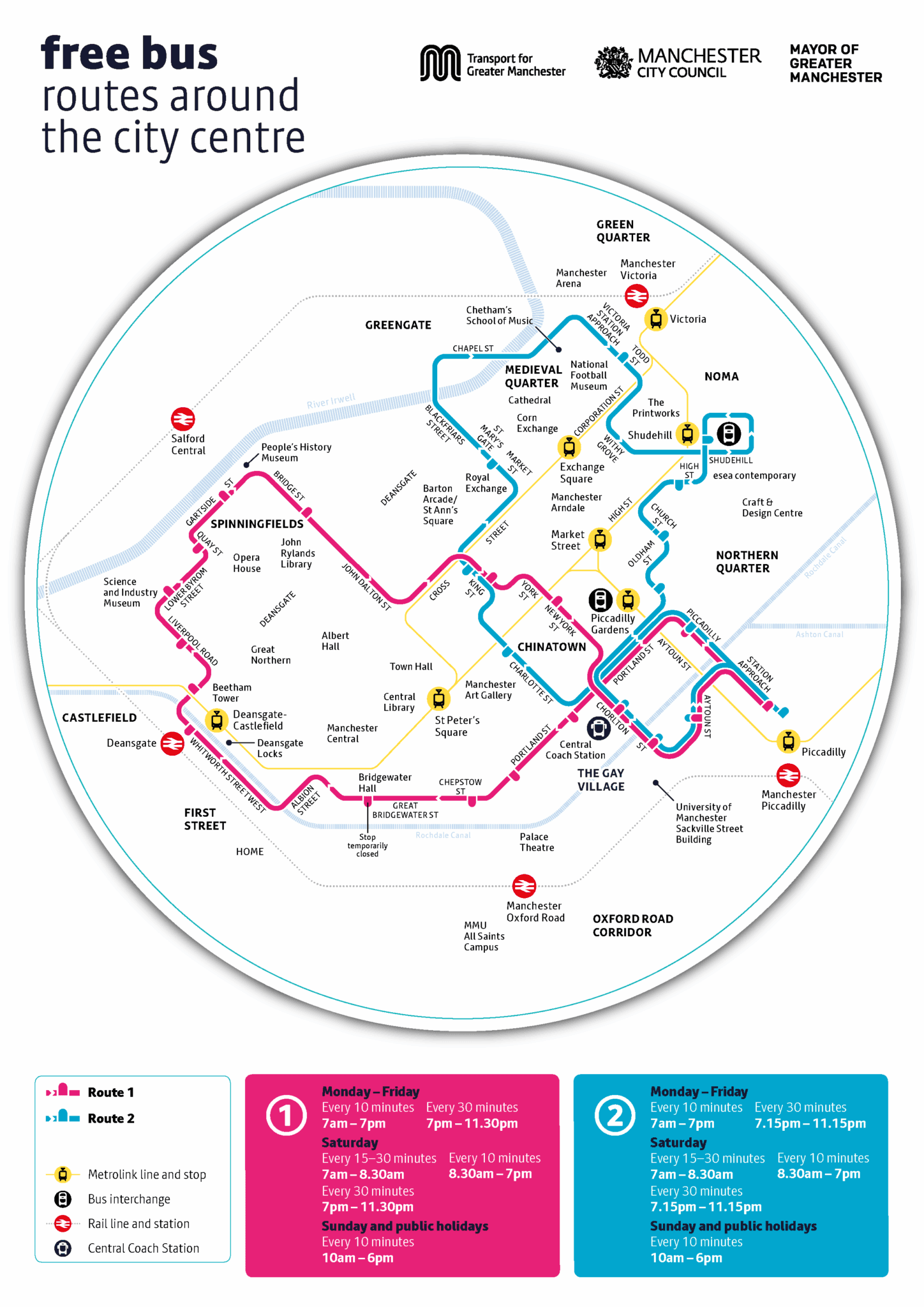
- Key Routes: The network is extensive. The most famous route is the Oxford Road Corridor (one of the busiest bus routes in Europe), served by the 142, 143, 41, 42, and 43. The Free Bus (Routes 1 & 2) also operates loops around the immediate City Centre, connecting major train stations and shopping districts at no cost.
- Operating Hours: Main routes, particularly the 42, 43, 142, and 143, operate 24 hours a day, making them reliable for late-night travel. Less-popular suburban routes typically operate from 5:00 AM to 11:30 PM.
- Ticket Prices: Fares are currently capped under the Bee Network scheme. A single journey costs £2 for adults, and a 1-day AnyBus travelcard is around £5. You can hop on any bus operator with this ticket.
- How to Ride: Hail the bus by putting your hand out as it approaches. You can pay via contactless card, Apple Pay, or Google Pay directly on the bus reader. Cash is accepted but less common. Press the “Stop” button to signal the driver when your stop is approaching.
| Ticket Type | Adult Price (Cap) | Child/Student Price |
|---|---|---|
| Single Journey | £2.00 | £1.00 (Child) |
| 1-Day AnyBus (Unlimited) | £5.00 | £2.50 (Child) |
| 7-Day AnyBus (Unlimited) | £21.00 | – |
| 28-Day AnyBus (Unlimited) | £85.40 | – |
– Image from Bee Network
Trams
The Manchester Trams are the UK‘s largest light rail system. It is owned and managed by Transport for Greater Manchester (TfGM), which oversees the entire network’s expansion and operations.
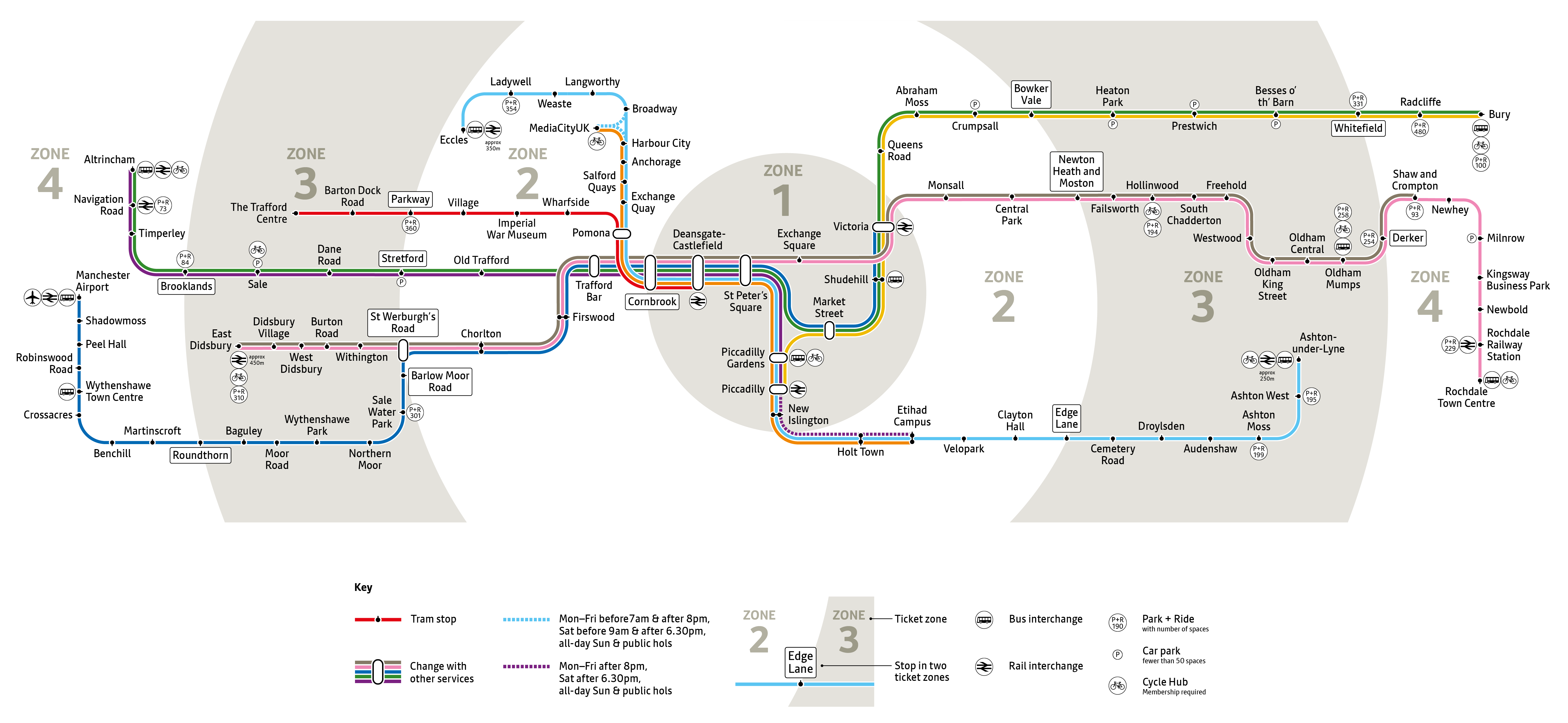
- Key Lines & Zones: The network consists of 8 lines serving 99 stops. It is divided into 4 Zones. Zone 1 covers the City Centre (Piccadilly, St Peter’s Square, Victoria), while Zones 2-4 cover areas like Salford Quays, MediaCityUK, and Manchester Airport.
- Operating Hours: Trams generally run from 6:00 AM (03:00 AM on Airport lines) until midnight (around 01:00 AM on weekends). They run every 6–12 minutes, depending on the time of day.
- Ticket Prices: Manchester tram ticket prices depend on how many zones you travel through. A Zone 1+2 off-peak return ticket is roughly £3.50 – £4.00.
- How to Ride: Unlike the London Underground, there are no ticket barriers. However, you must Tap In and Tap Out at the yellow smart readers on the platform using your card or device. TfGM inspectors patrol regularly, and failing to tap out can result in a fine of up to £100.
| Ticket Type | Zones Covered | Adult Price (GBP) |
|---|---|---|
| Single Ticket | Any 1 Zone (e.g., Zone 1 only) | £1.40 |
| Single Ticket | Zone 1 + 2 (City Centre to Salford/MediaCity) | £2.80 |
| Single Ticket | Zone 1 + 2 + 3 (City Centre to Airport line) | £3.80 |
| 1-Day Travelcard (Anytime) | Any 1 Zone | £2.70 |
| 1-Day Travelcard (Anytime) | Zone 1 + 2 | £4.30 |
| 1-Day Travelcard (Off-peak) | Any 1 Zone (Travel after 9:30 AM) | £1.90 |
| Bee AnyBus + Tram (1-Day) | Multiple Zones (Unlimited Bus + Tram) | £6.00 – £7.60 |
– Image from Bee Network
Trains and Coaches
Trains are best for speed and travelling outside the city limits. Unlike the local bus and tram network, rail services are part of the National Rail network and are run by various private operators.
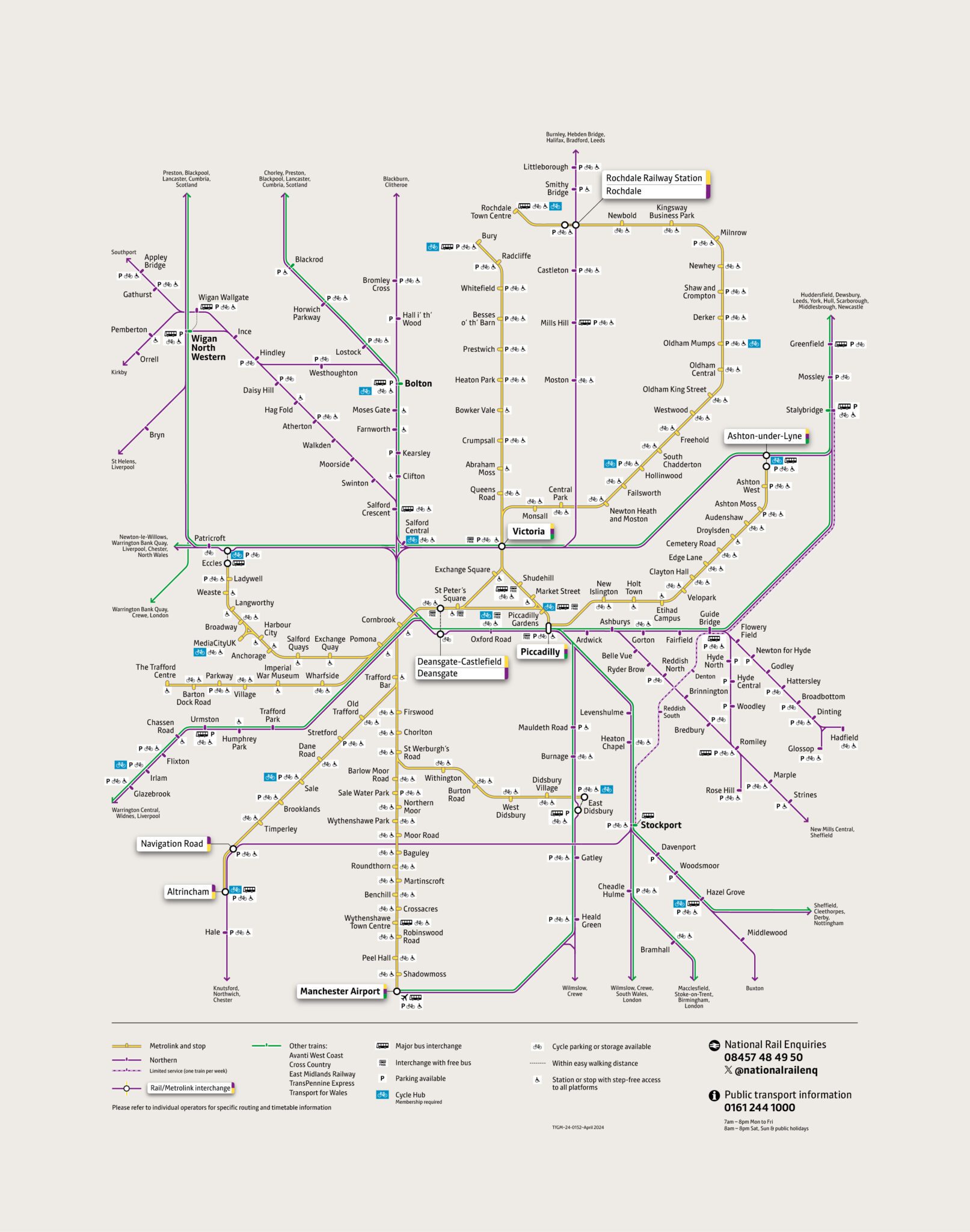
- Key Stations: The three main stations are Manchester Piccadilly (main hub), Manchester Victoria (Northern routes), and Manchester Oxford Road (closest to universities).
- Operating Hours: Trains typically run from 05:00 AM to 11:30 PM, though times vary significantly by operator.
- Ticket Prices: Fares vary by distance and booking time. Advance tickets are significantly cheaper than buying on the day. Short hops (e.g., Piccadilly to Oxford Road) cost around £2 – £3. If you plan to explore London or Edinburgh, the 16-25 Railcard, for just £30 a year, can save you 1/3 off almost all train fares.
- How to Ride: You must purchase a ticket before boarding via apps (like Trainline) or at station machines. Most major stations have ticket barriers where you scan your QR code or insert your paper ticket.
| Destination | Travel Time | Approx. Off-Peak Price |
|---|---|---|
| Manchester Oxford Road | 3 mins | £2.00 – £3.00 |
| Manchester Airport | 15-20 mins | £4.00 – £6.00 |
| Liverpool Lime Street | 45 mins | £12.00 – £16.00 |
| Leeds | 55 mins | £15.00 – £20.00 |
| London Euston | 2h 10m | £45.00+ (Advance) |
– Image from Bee Network
Other Kinds of Transport
Beyond the main network, there are flexible ways to navigate Manchester for those who are living in student apartments in Manchester.
Walking & Cycling
Walking and cycling are extremely popular among students because Manchester City Centre is surprisingly compact and flat. For instance, walking from Manchester Victoria Station to the Oxford Road campus area takes only about 20 minutes, making it a free and healthy way to commute. For cyclists, the city heavily invested in the “Bee Active” network, which features dedicated cycle lanes to keep you safe from traffic. You can also easily rent bikes through the Starling Bank Bike hire scheme, which offers affordable pay-as-you-ride fares, though you should always remember to lock your own bike securely with a D-lock if you own one.
Taxi
For travel at night or door-to-door service, taxis and private hire vehicles are readily available throughout the city. Traditional Black Cabs can be hailed directly on the street and are reliable, though they are usually the most expensive option. Most students prefer using app-based services like Uber or Bolt, which generally offer lower fares and the convenience of tracking your ride.
Transport for Students in Manchester
For students at the University of Manchester (UoM), Manchester Metropolitan University (MMU), or the University of Salford, transport is a daily necessity. Here is your tailored analysis.
Student Bus Pass Manchester
For most students, paying for individual tickets is a financial mistake. Whether you take the bus to Fallowfield or the train home for the weekend, getting a season pass or discount card can save you hundreds of pounds a year. Here are the three essential passes every Manchester student needs.
- The Stagecoach UniRider (Best for Bus Commuters): If you are living in the main student hubs like Fallowfield, Withington, or Didsbury, the Stagecoach UniRider is the gold standard. Since Stagecoach operates the famous 142, 143, and 43 “Magic Buses” that run 24/7 along Oxford Road, this pass covers the vast majority of student journeys. A termly pass typically costs around £125, allowing for unlimited travel on all Stagecoach buses, which is perfect for students commuting to campus daily.
- The Bee Network AnyBus Ticket (For Flexibility): If your commute involves switching between different bus companies or you live in an area like Salford where Stagecoach isn’t the only operator, the Bee Network AnyBus Student Ticket is the smarter choice. Unlike the UniRider, which limits you to one company, this ticket allows you to hop onto any bus operator’s vehicle within Greater Manchester. It offers total freedom across the network, ensuring you never have to wait for a specific coloured bus to arrive.
Commute Convenience & Accommodation
- From City Centre: For students attending the University of Manchester or Manchester Metropolitan University, living in the City Centre often means you can bypass public transport entirely for your daily commute. Most student accommodations in city centre are just a 10-to-15-minute walk from campus, putting you right in the heart of the action. While rent is typically higher, the convenience of walking to early lectures and saving money on monthly travel passes makes it a top choice for many.
- From Fallowfield: Known as the social heart of Manchester student life, Fallowfield requires a daily commute of about 2-3 miles. Who living in student apartments in Fallowfield rely heavily on the Oxford Road bus corridor, particularly the 24/7 “Magic Buses”. While services are frequent, morning traffic can be heavy, so you’ll need to budget for a bus pass and allow extra time to get to class during rush hour.
- From Salford Quays: This waterfront area is perfect for University of Salford students or those seeking a modern lifestyle away from the chaos and living in student apartments in Salford. It is best served by the Metrolink (Tram), which offers a quick, traffic-free ride into the city or MediaCityUK. It’s cleaner and quieter than Fallowfield, but remember that trams stop around midnight, so late nights out may require a taxi home.
Popular Student Routes
- The “Magic Bus” (142/143): These 24/7 routes are the primary means of student commuting. running every few minutes along the busy Oxford Road Corridor. They connect the residential hub of Fallowfield directly to the universities and the city centre. Because they are so frequent and affordable, they are the primary choice for everything from morning lectures to late-night returns.
- Route 147: Ideal for those commuting by train, the 147 provides a direct link between Manchester Piccadilly Station and the main university campus. It stops right outside key UoM buildings and hospitals, saving you a 20-minute walk from the station and offering a dry, quick transfer on rainy days.
- Tram to MediaCityUK: Essential for University of Salford students, this tram line offers a smooth, traffic-free commute from the city centre to the MediaCityUK waterfront campus. It is the most reliable way to reach the creative studios at Salford Quays without worrying about road congestion.
Pros & Cons of Manchester Public Transport
Deciding how to get around Manchester through the public transportation of Manchester often comes down to balancing your budget against how fast you need to get there. To help you choose the best option for your daily life, here is a quick comparison of the Pros and Cons of each mode of transport.
| Transport Mode | Pros | Cons |
|---|---|---|
| Bus | Cheapest option; Runs 24/7 (great for nights out); High frequency on Oxford Rd. | Traffic can be heavy during rush hour; Magic Buses get crowded. |
| Tram | Reliable and clean; Best for Salford/MediaCity access; No traffic jams. | More expensive; Stops at midnight; Strict “Tap In/Out” fines. |
| Train | Fastest (3 mins Piccadilly to Oxford Rd); Good for weekend trips. | Expensive without a Railcard; Prone to strikes. |
| Cycling/Walking | Free & Healthy; Flexible timing. | Manchester rain is frequent; Bike theft risk (use a D-lock). |
| Taxi (Uber) | Safe for getting home late at night; Door-to-door service. | Most expensive option; Surge pricing during peak times/events. |
Conclusion
Mastering Manchester’s public transport is the key to enjoying your student life in this vibrant city. We should note that, while not complex, you will need to spend some time learning how Manchester public transport operates. With the developed Bee Network, you have affordable and reliable options right at your doorstep to go anywhere you long for, from taking the ‘Magic Bus’ for a cheap daily commute to hopping on a tram for a trip to Salford Quays. Just remember to always tap in and out to avoid any unexpected fines!
FAQs
Yes, absolutely. Manchester has a world-class system now integrated under the Bee Network, making travel seamless and affordable. It features the UK’s largest tram network (Metrolink) and 24/7 bus services on key student routes like the Oxford Road corridor. With capped fares (£2 for buses) and simple contactless payment, getting around is incredibly convenient for students.
Yes, it is 100% free. The “Free Bus” operates two circular routes (Route 1 and Route 2) around the city centre, connecting major train stations like Piccadilly and Victoria to key shopping districts. You can hop on and off as often as you like without needing a ticket or pass.
The easiest way is to use contactless (bank card, Apple Pay, or Google Pay). For buses, simply tap your card on the reader as you board; for trams, you must tap in and tap out on the platform validators to ensure you are charged the correct capped fare. Alternatively, you can purchase digital tickets via the Bee Network app or buy paper tickets at station machines.
It depends on the mode of transport. The popular student bus routes, specifically the 142, 143, and 43, operate 24 hours a day, making them perfect for late-night study sessions or nights out. However, the Metrolink (Tram) and trains do not run all night; trams generally stop running around midnight (or 1 AM on weekends) and resume around 6 AM.
No, you almost never need cash. Manchester’s public transport is fully modernised with contactless payments. On buses and trams, you can simply use your contactless bank card, Apple Pay, or Google Pay. For buses, just tap your card on the reader near the driver when you board. For trams, remember to touch your card to the smart readers on the platform before and after your journey to ensure you are charged the correct capped fare.
The fastest option is taking the Train from Manchester Piccadilly or Oxford Road Station, which takes about 15-20 minutes and lands you directly in the airport terminal. If you are on a budget or have an early morning flight before trains start, the 43 Bus runs 24/7 from the Oxford Road corridor directly to the airport, though it takes longer (about an hour). You can also take the Navy Line Tram.
The Manchester tram price is calculated based on the zones you travel through (Zones 1 to 4). For example, a single trip from the City Centre (Zone 1) to MediaCityUK (Zone 2) costs £2.80. To get the best value, always check if a travelcard (daily cap) is cheaper than buying single tickets for multiple journeys.