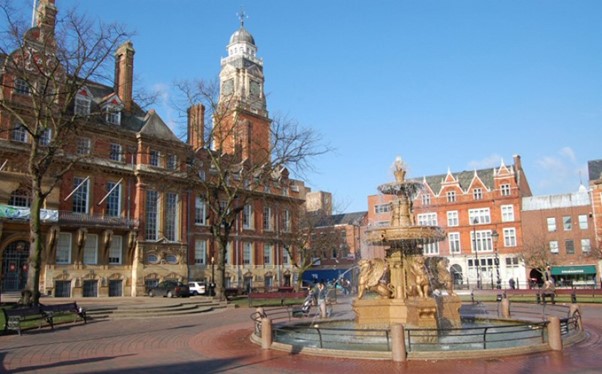




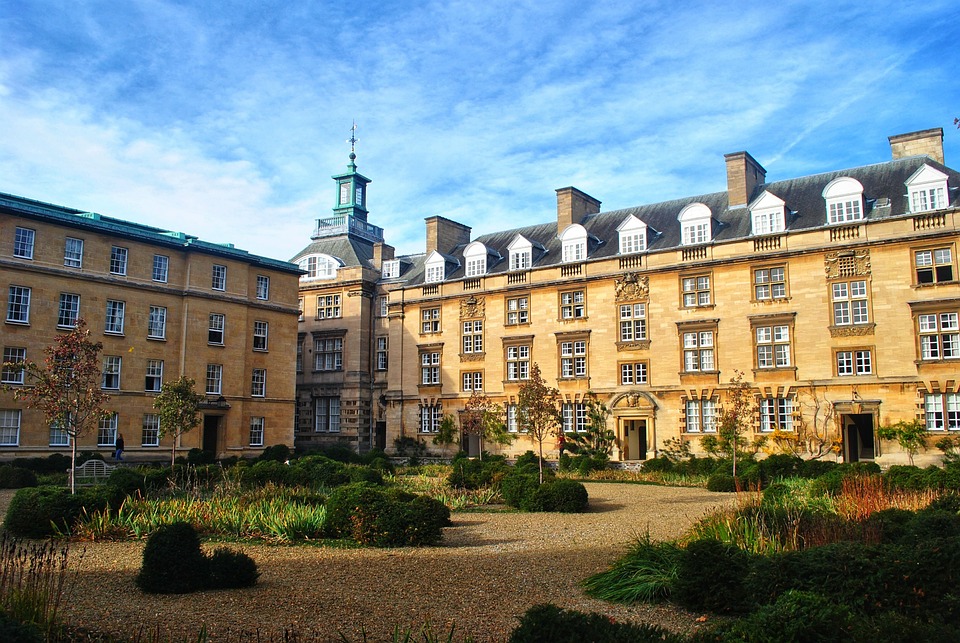
When you think of UCL University, what comes to your mind? A member of the G5 Group and Golden Triangle? A reputed university that is suitable for studying abroad? One of the oldest universities in the UK? The blog will reveal everything you want to know, including UCL University ranking, courses, entry requirements, acceptance rate, and many more. Follow in the blogger’s footsteps and discover UCL University!
About UCL University
University College London (UCL), established in 1826, is one of the top public universities in the world. It was the first university in London to admit students regardless of religion. As a member of the G5 Super Elite, Golden Triangle, and the Russell Group, UCL University is known for its high-quality academic strength, strong economic power, and talented faculty members. Its fame and strength have attracted 51,000 students (50% are international students) from more than 150 countries worldwide to study here.
UCL University Ranking
UCL University, as a highly reputed university in the world, performs well in different authoritative ranking lists, as shown in the following column. In addition, several subjects at UCL rank in the global top 10 (or very close) in recent QS World University Rankings by Subject, including Education & Training (1st), Architecture & Built Environment (1st), Archaeology (3rd), Pharmacy & Pharmacology (3rd), Geography (4th), and Anthropology (4th), among others where UCL features strongly in the top 20 across many disciplines.
- QS World University Rankings 2027: 8th in the world
- QS Europe University Rankings 2027: 2nd in Europe
- Times Higher Education (THE) World University Rankings 2026: 22nd
- Guardian University Guide 2026 (UK): 10th
- QS Sustainability Rankings 2027: 3rd (1st in UK)
UCL University Campus
Located in London, one of the most dynamic and favoured cities, UCL London University boasts 2 campuses: UCL Main Campus, located in the centre of Bloomsbury, and UCL East Campus, situated in East London. In addition, UCL School of Management is an exception, located in the Canary Wharf business district in the City of London.
UCL Main Campus
Basic Information
UCL Main Campus is located in Bloomsbury, central London, an area renowned for its rich cultural and academic atmosphere. Close to the British Museum, British Library and Regent’s Park, it is easy for you to explore London’s rich cultural, historical and artistic attractions. As for the campus, there are many buildings on the UCL Main Campus, used for teaching, research, and administration. Among them, the Wilkins Building, the most representative one, is the landmark building of UCL University. It was built in 1828. All in all, as the third oldest institution of higher education in Britain, UCL Main Campus is not only the centre of academic research but also an important part of British education and culture.
- Address: Bloomsbury, 19 Gordon Square, WC1H 0AW
Transportation
Located in the bustling city centre, UCL Main Campus boasts a convenient transportation. It can be reached via multiple modes of transportation, like by tube, by bus, or by train.
1. Tube
The nearest tube station is Euston Square Station (Hammersmith and City, Metropolitan, and Circle lines), within a 1-minute walking distance. Other nearby stations include:
- Warren Street Station (Northern and Victoria lines): a 6-minute walk
- Russell Square Station (Piccadilly line): a 7-minute walk
- Euston Station (Northern and Victoria lines): an 8-minute walk
2. Bus
There are many bus routes at the Gower Street stop. Buses travelling from north to south stop at Gower Street bus stop, just at the footstep of UCL’s main entrance, while buses travelling from south to north stop at Warren Street bus station, about a 5-minute walk from UCL University. The bus routes include 10, 14, 24, 29, 73, 134, and 390.
3. Train
Euston Station, King’s Cross Station, and St. Pancras Station are all within walking distance.
- Euston Station: a 5-minute walk
- St. Pancras Station: a 12-minute walk
- King’s Cross Station: a 15-minute walk
UCL East Campus
Basic Information
UCL East Campus, located in Queen Elizabeth Olympic Park, Stratford, East London, is the largest expansion of UCL University within nearly 200 years. It was opened in the fall of 2022. As a newly established campus, the UCL East Campus has advanced teaching and research facilities. For example, the Marshgate Building on the East Campus is equipped with various laboratories, and the One Pool Street Building has multiple functions, both a centre for academic research like robotic self-service systems and a dormitory. In addition, UCL East Campus boasts cafes, cinemas, shops, and an exclusive skatepark (City Mill Skate), providing a venue for entertainment activities!
When it comes to the colleges on East Campus, it is home to UCL’s 8 colleges, offering more than 50 new postgraduate and undergraduate programs (postgraduate courses are set more), with courses covering fields such as Architectural Design, Robotics, Media, Arts & Technology, Heritage, Engineering and Advanced Propulsion.
- Address: 1 Pool Street, Stratford, London E20 2AF
Transportation
1. Tube/Train
The nearest station is Stratford Station (underground, overground, DLR, and rail), a 9-minute walk away. You can take a tube or train there. Other train/tube stations include:
- Stratford International Station (DLR and high-speed rail): an 11-minute walk
- Pudding Mill Lane Station (DLR): a 12-minute walk
- Hackney Wick Station (overground): a 19-minute walk
2. Bus
Only a 1-minute walk will take you to the nearest bus stop, London Aquatics Centre Stop. UCL also provides a free shuttle bus service between Stratford Station and One Pool Street, making commuting to UCL East even more convenient for students arriving by public transport.
School of Management
Basic Information
UCL’s School of Management (SOM) is located on the 38th and 50th floors of One Canada Square, Canary Wharf, City of London. Canary Wharf, an important commercial and financial district in London, is the headquarters of many banks, financial institutions and companies providing professional services. Basically, all the world-renowned financial companies you can think of are based here.
- Address: One Canada Square, Canary Wharf, London, E14 5AA
Transportation
1. Tube
Canary Wharf Station (Jubilee line or DLR) is on the doorstep of One Canada Square. You can get to Heron Quays in 4 minutes and West India Quay in 6 minutes, both on foot.
2. Bus
There are many bus stops nearby:
- Canada Square South Canary Wharf Stop: a 1-minute walk
- Canary Wharf Station: a 2-minute walk
- Canada Square North Stop: a 3-minute walk
- West India Avenue Station: a 6-minute walk
UCL University Courses
UCL University offers 400+ undergraduate and 700+ postgraduate courses across 11 constituent faculties, as well as 130 PhD programs, with a focus on Medicine, Science, and Law. Below is a list of the most popular UCL University courses. Students studying here can learn knowledge and skills from the highly reputed faculty members.
- Archaeology
- Architecture and the Built Environment
- Anthropology
- Pharmacy and Pharmacology
- Anatomy and Physiology
- Medicine
- Psychology
- Geography

How to Check Which UCL Campus Your Course Is Located at?
UCL has multiple campuses across London, and different programmes may be taught at different locations. It is important to confirm which campus your course is mainly based at, as this will affect your daily commute and housing choices. The easiest way to check your course location is through the official UCL website. Follow these simple steps:
- Visit the official UCL website.
- Use the search bar in the top right corner and enter the name of your course.
- Click on the programme page from the search results.
- Scroll down to the “Location” section on the course page.
This section will show where the programme is mainly delivered. The location is usually listed as one of the following:
- London, Bloomsbury – UCL Main Campus
- London, Stratford (UCL East) – UCL East Campus
- London, Canary Wharf – UCL School of Management
Some programmes may have classes across multiple campuses, especially if they involve interdisciplinary teaching or specialised facilities. In these cases, the exact locations and schedules will be confirmed in your timetable after enrolment.
UCL University Admission
When applying for admission to an undergraduate university place, applicants need to go through the whole process on the UCAS Application system. In the process, there are some key dates that you shouldn’t miss. You can get detailed information in the chart below. As for the application to a postgraduate program, students should apply online.
| Event | Specific Date | Details |
|---|---|---|
| UCAS application system opens for submissions | 1 September 2026 | Opening date for receipt of applications for September 2027 entry. Applications can be started earlier, but submissions begin on this date. |
| Early deadline for Medicine (A100) and similar courses | 15 October 2026 (18:00 UK time) | Deadline for Medicine, most medicine/dentistry/veterinary courses, plus Oxford and Cambridge. Must be submitted by this time for equal consideration. |
| Equal consideration deadline for most undergraduate courses (except those with October deadline) | 13 January 2027 (18:00 UK time) | Deadline to guarantee full and equal consideration at UCL and most universities. Late applications may still be accepted if places remain. |
| UCL in-person Undergraduate Open Days | June 26–27, 2026 | Main on-campus events at Bloomsbury campus. Register interest via UCL’s website for booking notifications when available. |
| UCL virtual / online sessions (examples) | Various in March 2026 (e.g., 17–26 March) | Ongoing webinars on accommodation, funding, applying, student life, etc. Check UCL website for exact timings and bookings. |
| UCAS Late / Extra applications deadline (for remaining courses) | 30 June 2027 (18:00 UK time) | Final date for late applications or Extra choices to courses still open. After this, Clearing may apply. |
Important notes:
- All deadlines are in UK time — adjust for your time zone (e.g., San Jose, California is typically 8 hours behind UK time).
- Medicine applications must meet the 15 October 2025 deadline; missing it means no consideration for that course.
- UCL strongly recommends applying early, especially for international students, to allow time for visas, accommodation, and any additional requirements.
- Dates can occasionally change slightly — always verify the latest details directly on the UCL website (ucl.ac.uk/study) or UCAS.com.
UCL University Entry Requirements
The entry requirements for a UCL undergraduate place are listed below, including the requirements of standardised testing, language, and written tests. As for postgraduate programs, requirements are course-dependent, and remember to check the specific program page you are going to apply to.
Standardized Testing Requirements
| Particular | Requirements |
|---|---|
| A-Level | ABB-A*A*A |
| IB | Total score = 34—40, scores in 3 HL subjects = 16—20 |
Language Requirements
| Particular | Level | Requirements |
|---|---|---|
| IELTS | Level 1 | Total score = 6.5, individual score ≥ 6.0 |
| Level 2 | Total score = 7.0, individual score ≥ 6.5 | |
| Level 3 | Total score = 7.0, individual score ≥ 7.0 | |
| Level 4 | Total score = 7.5, individual score ≥ 7.0 | |
| Level 5 | Total score = 8.0, individual score ≥ 8.0 | |
| TOEFL | Level 1 | Total score = 92, reading & writing = 24, speaking & listening = 20 |
| Level 2 | Total score = 96, reading & writing = 24, speaking & listening = 22 | |
| Level 3 | Total score = 100, reading & writing = 25, speaking & listening = 23 | |
| Level 4 | Total score = 109, reading & writing = 27, speaking & listening = 23 | |
| Level 5 | Total score = 110, reading & writing = 29, speaking & listening = 23 |
Written Test
Like the University of Oxford and the University of Cambridge, UCL University of London has also changed the original written medical test from BMAT to UCAT.
UCL University Acceptance Rate
UCL has an overall acceptance rate of 10% to 15% for enrolled students, and the university’s offer rate is approximately 43.4% for undergraduate admissions. Due to UCL’s global fame and academic strength, applicant numbers are very high, with nearly 89,239 applications received for 2025 entry. Among these, UCL issued around 38,696 offers in the 2025/26 cycle. Hence, thorough preparation is essential to avoid rejection. The key documents you should prepare in advance include a strong personal statement, academic reference letters, predicted grades/transcripts, and any programme-specific requirements.
By the way, once you receive an offer, the blogger recommends applying for student accommodation immediately to secure your preferred option. After all, UCL welcomes tens of thousands of students each year who need housing. For UCL University accommodation, you can choose to live in UCL’s own halls of residence or rent nearby low-cost student accommodation in London on uhomes.com. In this way, you can naturally enjoy special seasonal offers and get ahead in the competitive market.
UCL University Fees & Scholarships
UCL University Fees
UCL tuition varies depending on the subject and degree. Below are the undergraduate and postgraduate tuition fees for international students in some of the most popular subjects.
| Subject | Undergraduate | Postgraduate |
|---|---|---|
| Archaeology | £39,200 | £35,400 |
| Architecture and the Built Environment | £35,400 | £35,400—£42,700 |
| Anthropology | £35,400 | £31,300 |
| Pharmacy and Pharmacology | £35,400—£42,700 | £35,500 |
| Anatomy and Physiology | £39,200—£42,700 | £36,500—£39,200 |
| Medicine | £57,300 | £57,300 |
| Psychology | £35,400—£42,700 | £35,400—£39,200 |
| Geography | £39,200 | £35,400—£42,700 |
As shown in the diagram, the tuition fees at UCL are about £35,400—£42,700 per year, a large sum. Plus, the cost of living in London is also expensive, about £1,500—£2,500 per month. However, it is easy for you to reduce the living costs with an economical lifestyle and cheaper student housing. For example, you can buy groceries in affordable supermarkets, such as Aldi, Asda, Morrisons, and Co-op. Moreover, you can find student accommodation through uhomes.com, a rental platform specialising in UK accommodation. You will enjoy many special offers when renting housing on uhomes.com, like the highest cashback, group reservations, vouchers, and seasonal special discounts. In addition, you don’t need to worry about utility bills, such as water, electricity, gas, and heating, which are included in the rent.
UCL University Scholarships
There are many kinds of scholarships that UCL University offers, such as the ANID Fee Partnership (UCL University pays for 25% tuition fees) and the ANS Dutch Studies Bursary (£1,250). The scholarships will reduce the cost of study and help you save money. If you want to apply for the scholarships, please note the submission deadline.
UCL University Accommodation
On-campus Halls
For UCL University accommodation, UCL offers different types of accommodation (£4,500 to £8,000 per semester) to all undergraduate and postgraduate freshmen. For example, the catered halls provide meals for students, while the self-catered ones don’t. However, due to the limited number of accommodations, only freshmen are guaranteed UCL University accommodation. Students always start to find student accommodation near UCL University from the second year of study. By the way, if you focus on private spaces and fully equipped facilities, you can rent student housing from the first year.
Off-campus Student Accommodation
On uhomes.com, there are more than 1,800 student housing options near UCL University, so it will be easy for you to book your preferred housing. In addition, in the process of finding and booking your student property, you can consult our property manager for detailed information and further help. Some of the best student accommodation options include:
- iQ Tufnell House: iQ Tufnell House offers En-suites, Studios, and 1-bedroom Apartments. It is conveniently located near University College London, the University of Westminster, and City, University of London. What’s more, the accommodation and uhomes.com offer up to £530 direct cashback and up to £130/person group booking cashback.
- Chapter Islington: Chapter Islington offers a variety of En-suite and Studio rooms. Located in Zone 2, a bustling area, it is surrounded by plenty of supermarkets, restaurants, and parks. Moreover, it is especially ideal for students studying at KCL, UCL and more.

Best Areas to Live near UCL
For students studying at the UCL Main Campus in Bloomsbury, living nearby can make daily life much easier. Areas such as Bloomsbury, Fitzrovia, and King’s Cross / St Pancras are among the most convenient options, as they are within walking distance or just a short commute from the university. These neighbourhoods also offer excellent public transport connections, restaurants, supermarkets, and cultural attractions. If you are looking for a balance between convenience and affordability, many students choose areas slightly further away, such as Angel, Islington, Camden Town, or Kentish Town. In addition, some students prefer to live along the Northern Line, where accommodation prices tend to become more affordable the further north you go.
For students based at UCL East in Stratford, the most convenient place to live is naturally Stratford itself, as it is within walking distance of the campus and provides excellent transport connections. Stratford is served by several major transport lines, including the Central Line, Jubilee Line, Elizabeth Line, London Overground, and DLR, making commuting to other parts of London very convenient. If you cannot find suitable accommodation in Stratford, it is also a good idea to search for housing along these transport lines, as they still provide relatively quick and direct access to UCL East.
Students studying at the UCL School of Management, which is located in Canary Wharf, often choose to live nearby in areas such as Canary Wharf or South Quay for the shortest commute. These neighbourhoods are part of London’s major financial district and offer modern apartments, restaurants, and riverside views. Other nearby areas like Poplar, Limehouse, and Canada Water are also popular among students, as they provide more housing options while still offering convenient connections via the Jubilee Line, DLR, and Elizabeth Line.
Some UCL programmes may have classes at both the Bloomsbury campus and UCL East in Stratford. Since the two campuses are around 12 km apart, choosing a centrally located area can make daily commuting much more convenient. Many students in this situation prefer neighbourhoods such as Aldgate, Barbican, and Whitechapel, which are well connected to both campuses by the London Underground and other transport links. Living in these areas usually allows students to reach either campus within about 20–30 minutes by public transport, making them practical options for those who need to travel between multiple UCL locations during the week.
Student Life at UCL University
- On-campus student life: UCL University provides students with many academic and career resources, like free lectures, workshops, and exhibitions supported by notable institutions. In addition, students studying at UCL London University have plenty of chances to participate in volunteer activities and events.
- Off-campus student life: UCL University is surrounded by a wide selection of bars, restaurants, museums and galleries. For art enthusiasts, the British Museum and the Grant Museum of Zoology are within walking distance from UCL University London. Besides, there are also many free things to do in London, which is perfect for students who want to save money, such as visiting the Houses of Parliament and Big Ben and Hyde Park.
UCL University Job Opportunities
UCL University London has an impressive employment rate of 92%. The highest-paying job for UCL graduates is Airline, with an average salary of £89,978 annually. The other high-paying jobs are listed below. In addition, some of the top recruiting companies at UCL University include PwC, Deloitte, Google, and the UK Government, etc.
| Jobs | Salaries (per year) |
|---|---|
| Airline | £89,978 |
| Legal Department | £83,056 |
| Financial Services | £69,983 |
| Insurance Jobs | £57,678 |
| KYC & Monitoring | £49,987 |
| Legal & Paralegal | £49,218 |
UCL University Notable Alumni
There are over 350,000 UCL University notable alumni (30 Nobel Prize winners) from all around the world. Students studying at UCL London University will benefit from the career support provided by the famous alumni. Some of the notable alumni of UCL include:
- Mahatma Gandhi: Father of the Nation of India
- Alexander Graham Bell: Inventor of the telephone
- John Stuart Mill: Philosopher and a proponent of Utilitarianism
- Rabindra Nath Tagore: First Nobel Laureate of India

Conclusion about UCL University
The blog has introduced UCL University from different aspects, like ranking, admissions, courses, entry requirements, acceptance rate, accommodation and many more. If you want to understand UCL University or have already accepted an offer, you can take a look at this blog to get the relevant information conveniently.
FAQs about UCL University
Is UCL really hard to get into?
Yes, to get into UCL University is uneasy. The acceptance rate of UCL University is only 10.2%, representing that it is very competitive. Therefore, you need to make a full preparation before applying to it, such as top marks of A-Level, IB, and language tests. In addition, a strong personal statement and reference letter are also necessary.
Is UCL a top 10 university?
Yes, UCL University world ranking is high in different ranking lists. For example, it ranks 9th in the QS World University Rankings 2026 and 10th in the Guardian University Guide 2026.
What course is UCL famous for?
UCL University London is strong in Medicine, Science, and Law. Below is the list of the subjects that rank top 10 in the QS World University Rankings by Subject 2025.
- Archaeology
- Architecture and the Built Environment
- Anthropology
- Pharmacy and Pharmacology
- Anatomy and Physiology
- Medicine
- Psychology
- Geography