


Choosing Birmingham vs Manchester is about more than just checking league tables, and it’s about finding a place that feels like home. Manchester and Birmingham, as two large cities in the United Kingdom, stand out as the top two contenders for students, yet they offer completely different vibes. Whether you’re weighing up the cost of living, sports, city size, and campus culture or looking ahead to career prospects, this guide breaks down the Manchester vs Birmingham debate to help you find your perfect match.
Birmingham vs Manchester: City Size
Many people are curious about whether Birmingham is bigger than Manchester. The “Second City” Manchester vs Birmingham debate usually boils down to how you actually define “size”. While Birmingham takes the trophy for pure numbers within city limits, Manchester often wins the “vibe” and metropolitan scale argument.
The “City Proper” Perspective
If you go strictly by official city limits, Birmingham wins by a landslide. Because Birmingham’s council covers almost the entire urban sprawl, its official “city” area is more than double Manchester’s.
Birmingham: 267.8 km² (103.4 sq miles)
Manchester: 115.6 km² (44.6 sq miles)
The Metropolitan Perspective
The narrative flips entirely when you look at the wider metropolitan counties. Manchester’s “reach” extends much further across the North West than Birmingham’s does across the Midlands.
Greater Manchester: 1,276 km² (493 sq miles)
West Midlands (County): 902 km² (348 sq miles)
Even though the West Midlands county includes other big cities like Wolverhampton and Coventry, Greater Manchester is about 40% larger in total land area.
Birmingham vs Manchester: Population
City-Level Scale: Birmingham remains the undisputed “Second City” by local authority standards, boasting a core population of over 1.1 million residents.
Regional Dominance: However, the narrative shifts when looking at wider metropolitan footprints. The Greater Manchester Built-up Area (approx. 2.6–2.9 million) now eclipses the West Midlands conurbation (approx. 2.4–2.5 million).
Manchester distance from Birmingham
Distance: Roughly 85–90 miles apart.
On the Road: Expect a 1.5 to 2-hour drive, primarily following the M6 motorway.
By Rail: Frequent direct trains run throughout the day, typically taking about 1 hour and 30 minutes.
The Bottom Line: As two of England’s biggest urban centers, the commute is straightforward and very well-served.
Cost of Living in Manchester vs Birmingham
London is notoriously pricey, but choosing between Manchester vs Birmingham comes down to how much lifestyle you want for your money. With £2,500 a month, you’ll find your pound stretches further in Birmingham—it’s roughly 6% cheaper overall. While Manchester has the buzz, Birmingham gives you more wins on the basics like rent and groceries, leaving you with more to spend on the weekend.
Cost of Living in Manchester
| Category | Costs (£/month) |
|---|---|
| Housing | £700–£1,400 |
| Food & Grocery | £200–£350 |
| Transportation | £60–£100 |
| Healthcare | £0–£50 |
| Miscellaneous | £150–£300 |
Cost of Living in Birmingham
| Category | Costs (£/month) |
|---|---|
| Housing | £600–£1,100 |
| Food & Grocery | £200–£300 |
| Transportation | £50–£80 |
| Healthcare | £0–£50 |
| Miscellaneous | £150–£300 |
By contrast, cost of living in Birmingham is £1500-£1700 per month, which tends to be much kinder to your bank balance, particularly when it comes to keeping a roof over your head. uhomes.com provides a wide range of central one-bedroom flats in Birmingham, typically priced between £1,000 and £1,200, which essentially hands you back £400–£600 every month compared to Manchester prices. If you prefer to live in the suburbs or a house share, you can find decent spots for as low as £400–£550. Your daily expenses feel lighter in Birmingham too; groceries average out a bit cheaper than Manchester, and a monthly travel pass usually stays under £75. Because the city centre is so compact, many people just walk or cycle, which is a great way to avoid transport costs entirely.
Housing Rent Comparison
1. Studio
2. En-suite
- Manchester: £190–£200 per week
- Birmingham: £170–£180 per week
3. One-Bedroom Apartments
- Birmingham: Central one-bed flats remain relatively accessible for urban living, typically ranging from £1,000 to £1,100 per month.
- Manchester: The same setup in Manchester’s city centre now commands a massive premium, with prices surging to £1,500–£1,600—roughly 50% higher than Birmingham.
Birmingham vs Manchester: Economy
Birmingham Economy
Birmingham isn’t just the economic engine of the Midlands; it’s a city in the middle of a massive identity shift. Now the UK’s second-largest city with over 1.1 million residents, it has successfully pivoted from its industrial “workshop” roots toward a future built on finance, tech, and higher education. The presence of heavyweights like HSBC UK and PwC—alongside the regional powerhouse Jaguar Land Rover—underpins a West Midlands economy now worth over £100 billion. While HS2 promises to tighten its connection to the capital, the real story lies in the surge of local start-ups and foreign investment, even as the city works to bring average wages in line with the national curve.
Manchester Economy
There’s a reason Manchester is often the blueprint for regional growth. Beyond the headline figures of 2.8 million residents and a £75bn GVA, the city has pulled off a difficult pivot into specialised sectors like biotech and digital media. The gravitational pull of MediaCityUK didn’t just bring in the BBC; it created an entire ecosystem for startups. That specialisation is the key differentiator here; it’s why Manchester’s productivity and salary levels are starting to edge ahead of Birmingham’s, which still leans more on a traditional industrial base.
Culture between Manchester and Birmingham
- It’s a city built on music. The swagger of Oasis and the moody legacy of The Smiths are still woven into the very fabric of the streets.
- It’s more than a sport; it’s the city’s pulse. The constant friction between United and City defines the local identity and the weekend mood.
- There’s a restless, creative energy here—think back-alley cafés, vintage finds, and a DIY art scene that feels authentically “unpolished.”
- Those Industrial Revolution roots haven’t faded. The old red-brick warehouses give the city a tough, proud edge that feels both historic and modern.
- It’s arguably the UK’s most multicultural soul. You don’t just see the diversity; you taste it—especially in the Balti Triangle, where the South Asian food scene is the real deal.
- They used to call it the “Workshop of the World.” That gritty, manufacturing backbone is still there, but it’s evolved into a modern skyline built on pure Brummie graft.
- Compared to Manchester’s frantic pace, Birmingham feels grounded. It’s still a massive, lively city, but it doesn’t feel like it’s constantly trying to prove something.
- Beyond the shopping, the city’s heart is in its canals and old factories. It’s a mix of industrial heritage and new-school cool that feels authentic rather than “trendy.”
Weather in Manchester vs Birmingham
Key Differences between Birmingham vs Manchester City:
- Temperature: Birmingham tends to be a fraction warmer than Manchester, but the gap is so narrow that you’d rarely feel the difference on a typical day.
- Rainfall: Manchester carries a heavy reputation for being “damp.” While it does see frequent drizzle, Birmingham’s more southerly and inland location generally keeps it slightly drier throughout the year.
- Climate Drivers: The Pennines are a major factor in Manchester; they tend to trigger sudden, brief showers that catch people without an umbrella.
- The Seasons: Both cities avoid the extremes. Winters are generally chilly rather than freezing, and summers stay comfortably moderate, with heatwaves and deep freezes being the exception rather than the rule.
Universities in Birmingham and Manchester
Universities in Birmingham
Birmingham is home to a diverse range of universities known for strong research performance, industry links, and a vibrant student community in the heart of England.
- University of Birmingham: Ranked 76th in QS University Ranking globally, the city’s academic heavy hitter, famous for its massive research impact and stunning redbrick Edgbaston campus.
- Aston University: Now sitting at 395th in the world, a career-focused hub in the city centre that’s globally recognised for its top-tier business school and industry placement record.
- Birmingham City University (BCU): A modern, creative university that prioritises hands-on experience in fields like media, fashion, and the arts.
- University College Birmingham (UCB): The college specialises in practical, vocational training across sectors such as hospitality and nursing, with many degrees accredited by the University of Warwick.
- Newman University: A smaller, much more personal institution that excels at teacher training and providing a supportive, tight-knit learning environment.
Universities in Manchester
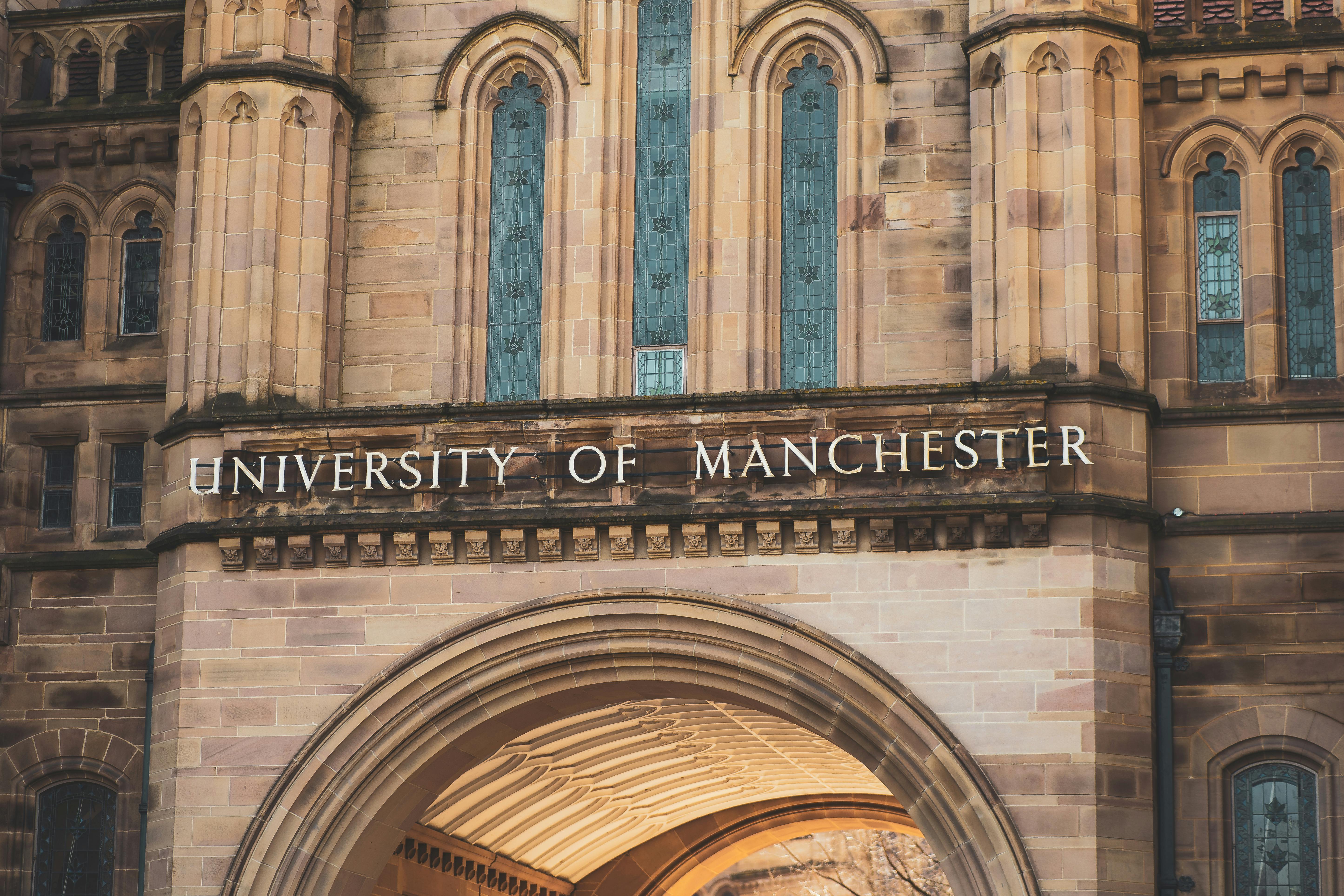
- University of Manchester: UoM is ranked in the position of 32nd in the latest QS University Ranking. This Russell Group giant is a research powerhouse with a massive reputation in science, business, and the humanities.
- Manchester Metropolitan University (MMU): Placing at 522nd, MMU is a huge, industry-linked university that’s all about getting students career-ready through professional partnerships.
- University of Salford: Sitting in the 801-1000 bracket, Salford makes the most of its MediaCityUK location to offer top-tier, hands-on training in media and engineering.
- Royal Northern College of Music (RNCM): It is world-renowned as an elite conservatoire for high-level music performance and composition.
Sports: Manchester United vs Birmingham City
Career Opportunity in Manchester vs Birmingham
As the UK’s leading regional hubs, Manchester and Birmingham offer two unique blueprints for economic growth and industrial innovation.
Manchester: The Creative & Digital Hub
Media & Arts: Dominated by MediaCityUK, serving as the northern base for the BBC and ITV.
Tech Ecosystem: A fast-moving landscape of software startups and digital agencies.
Emerging Markets: Significant recent growth in fintech and high-volume e-commerce.
Birmingham: Services & Innovation
Professional Services: A major center for global banking, accounting, and legal firms.
Advanced Industry: Maintaining a competitive edge in high-end engineering and manufacturing.
Healthcare & Science: A burgeoning life sciences sector supported by top-tier clinical research and hospitals.
Safety in Birmingham and Manchester
Conclusion
FAQ
By most standard measures, Birmingham is larger than Manchester. It’s the UK’s second-largest city, with a population of over one million — roughly double that of Manchester itself. That said, when looking at the wider urban areas, Greater Manchester has around 2.6 million people, slightly more than Birmingham’s built-up area at about 2.44 million.
Manchester is generally considered richer than Birmingham in terms of overall economic output. Manchester’s GDP is around £100 billion, while Birmingham’s is closer to £85 billion, giving Manchester a noticeable lead.
Birmingham is bigger than Manchester within the official city boundaries, with about 1.1 million people compared to Manchester’s roughly 552,000. However, Greater Manchester has a larger metro population and higher GDP than the West Midlands area overall.
Birmingham is usually more affordable than Manchester, with lower rents, cheaper property, and a lower overall cost of living. Both cities cost far less than London, but average house prices in Birmingham (around £202k–£235k) tend to be slightly below those in Manchester (about £203k–£249k), and monthly rents are generally lower as well.
Yes, Manchester is often described as the UK’s third-largest city when looking at the wider built-up area, behind London and Birmingham. However, if you only count the population within the city council boundary, it ranks lower, with cities like Glasgow or Leeds sometimes taking third place, depending on the figures used. The difference comes down to whether you’re referring to the core city itself or the broader urban area.
Liverpool is often praised as one of the nicest cities in the UK, thanks to its friendly people, lively culture, and easy-to-explore waterfront. Other cities that regularly get mentioned include Bath for its historic character, York for its strong quality of life, and Edinburgh for its striking scenery and architecture.
Harrogate is often listed among the safest towns in the UK, with a very low crime index of 17.44. Other places known for low crime levels include Woking in Surrey, the Isles of Scilly, and Scottish areas such as the Shetland Islands.
Some parts of Manchester are often linked with higher crime levels, especially involving violent incidents, gang activity, and anti-social behaviour. Areas such as Moss Side, Longsight, Cheetham Hill, Harpurhey, Blackley, and Wythenshawe are commonly mentioned in this context. In the city centre, places like Piccadilly Gardens can experience more anti-social behaviour at night, while districts such as Spinningfields are generally considered safer and benefit from a strong police presence.
Manchester is often described as the world’s first industrial city and is famous for its influence on music, with bands like Oasis and The Smiths coming from there. The city is also known for its top football teams, Manchester United and Manchester City, and for important scientific achievements such as early computer innovation and advances in nuclear science. Beyond that, Manchester has a lively cultural scene, a diverse population, and a strong track record in social reform, including its links to the Suffragette movement.