

Home for Global Students
4.9/5
GET APP

Cost of Living in UK vs New Zealand Comparison

By Feliks
cost-of-living-uk-vs-nz

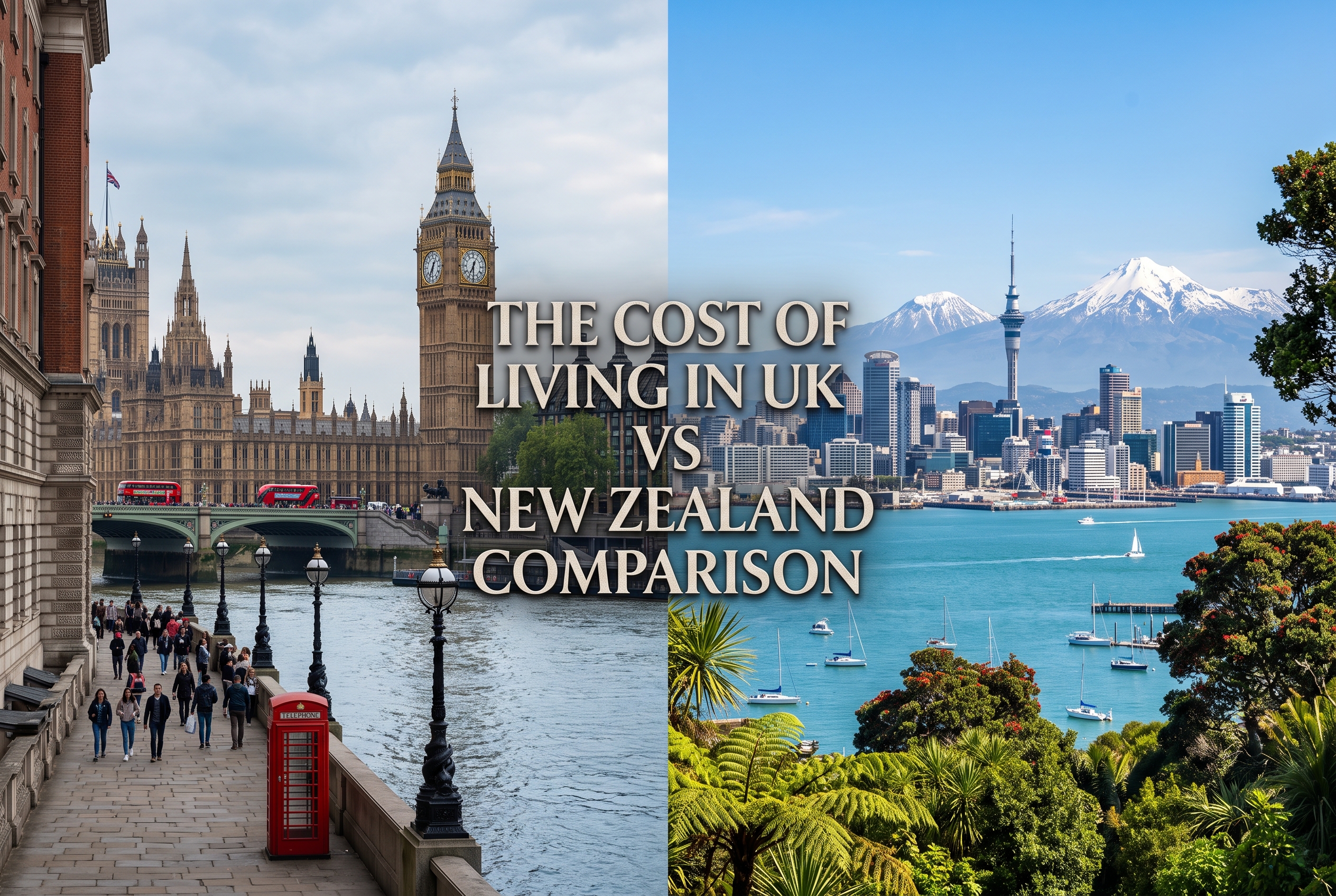
The cost of living in UK vs New Zealand reveals that New Zealand is 11% cheaper than the United Kingdom. This price difference happens mainly because rent and housing costs are much lower in New Zealand. While basic groceries cost slightly more, these housing savings make daily life more affordable for most residents when calculating the overall price of living in New Zealand.

United Kingdom vs. New Zealand Cost Breakdown

New Zealand is generally more affordable than the United Kingdom across most major household expenses. The following breakdown highlights the average living expenses in New Zealand compared to the UK for typical daily needs.

Average Expense United Kingdom (GBP) New Zealand (GBP)
Rent (1-Bedroom Flat, Outside City) £818 £706
Buying a Property (City Centre) £392 £389
Utilities (Basic Monthly Bill) £241 £117
Groceries (1 Liter of Milk) £1.25 £1.34
Restaurant (Inexpensive Meal) £16.00 £10.60
Transport (Monthly Pass) £77.40 £76.61
Monthly Net Salary £2,507 £2,084

This table shows that while people in the UK bring home a higher average salary, paying for rent and energy bills is much lower in New Zealand. Groceries and transport passes remain fairly similar, but your overall budget stretches much further in New Zealand.

Housing Cost in New Zealand VS the UK

Housing cost in New Zealand is generally 16% cheaper than in the United Kingdom. Whether you choose to rent or buy, you will likely spend less money on accommodation in New Zealand.

Renting a Property

Renting a house in New Zealand costs less than renting a similar place in the UK. The price difference is clear across both one-bedroom and family-sized homes.

Rental Type (Per Month) United Kingdom New Zealand
1-Bedroom Flat (City Centre) £1,005 £817
1-Bedroom Flat (Outside City) £818 £706
3-Bedroom Flat (City Centre) £1,641 £1,289
3-Bedroom Flat (Outside City) £1,310 £1,109

Overall, you can save around £100 to £300 a month on rent in New Zealand. The UK also has a monthly Council Tax for renters, which pushes your actual living expenses much higher. Because New Zealand does not charge a separate council tax to tenants, your baseline living expenses in New Zealand stay much lower, as rent usually covers all local property fees. To save more money in either country, you should look for homes outside major cities like London or Auckland, or share a flat with roommates.

Student Accommodation

Student accommodation is more expensive in the UK than in New Zealand, although booking an off-campus private room remains the cheapest choice in both countries.

Accommodation Type (Monthly Average) United Kingdom (GBP) New Zealand (GBP)
University Hall £688 – £1,120 £455 – £970
Off-Campus Accommodation £400 – £900 £275 – £640

While on-campus rooms provide easy university access, off-campus flats save you a large amount of money. Using a dedicated booking platform like uhomes.com is one of the best ways to reduce your living expenses globally. Whether you are looking for student accommodation in the UK or searching for rooms in other countries, this professional one-stop service offers transparent pricing with no hidden fees, high cashback rewards, and verified property listings.

Furthermore, the platform provides a strict low-price guarantee, meaning they will match the price if you find the same room cheaper elsewhere. This tool is especially helpful when booking a UK student flat or student accommodation in New Zealand, as you can use simple search filters to find safe and affordable rooms that fit your exact budget.

uhomes.com logo

Buying a Property

Buying a home is also more affordable in New Zealand compared to the UK. City centre flats show the biggest price gap between the two countries.

Property Type (Price Per Sq Ft) United Kingdom New Zealand
Flat (City Centre) £392 £389
Flat (Outside City Centre) £305 £258

As the table shows, the property prices are cheaper in New Zealand. But house buyers have to think about the quality of the build. Many of the older New Zealand houses don’t have central heating or double glazing, which means you could be paying out more to fix the house up to keep warm in winter. Most homes in the UK already have standard central heating. If you are considering buying a home in New Zealand, always check the insulation and heating systems before you buy to avoid expensive renovations later.

Utilities Cost in New Zealand VS UK

Monthly utility bills are 45% cheaper in New Zealand than in the United Kingdom, mainly because basic electricity and heating costs are lower. However, services like high-speed internet can cost slightly more in New Zealand due to its isolated geography.

Utility Service (Monthly Average) United Kingdom New Zealand
Basic (Electricity, Heating, Cooling, Water, Rubbish) for 915 Sq Ft Flat £241 £117
Mobile Phone Monthly Plan (10GB+ Data, Calls) £14 £24
Internet (60 Mbps or More, Unlimited Data, Cable/ADSL) £32 £37

New Zealand can save you about £100 a month on energy, but poorer home insulation often pushes winter power usage unexpectedly. In contrast, the UK charges higher standing energy rates, yet offers cheaper telecommunications due to dense network competition.

Food Cost in New Zealand VS the UK

New Zealand has higher grocery bills but cheaper dining options when comparing cost of living in New Zealand vs UK. Food prices are very different between the two countries depending on if you like to eat at home or eat at a restaurant.

Groceries

Buying everyday groceries in New Zealand costs around 4% more than in the UK.

Grocery Item United Kingdom (GBP) New Zealand (GBP)
Milk (1 Liter) £1.25 £1.34
Eggs (12, Large) £3.07 £4.57
Chicken Fillets (1 lb) £3.09 £3.15
Tomatoes (1 lb) £1.16 £1.68

Many things are noticeably more expensive, particularly fresh dairy and some vegetables, as New Zealand imports many household goods and exports its best local produce. You can save money in New Zealand by buying fruit and vegetables when they are in season at local weekend farmer’s markets rather than the big supermarket chains.

Restaurants

Eating out at restaurants is roughly 23% cheaper in New Zealand compared to the UK. Whether you want a quick fast-food meal or a sit-down dinner, dining out takes less from your budget in New Zealand.

Restaurant Type United Kingdom (GBP) New Zealand (GBP)
Meal at an Inexpensive Restaurant £16.00 £10.60
3-Course Meal for Two (Mid-Range) £65.00 £50.88
Fast Food Combo Meal £8.00 £6.78
Cappuccino (Regular) £3.60 £2.49

The UK’s higher dining costs mostly come from high restaurant rent and added service charges. In New Zealand, tipping is not expected, which makes your final restaurant bill much more predictable and affordable.

Transportation Cost in New Zealand VS the UK

Getting around your city is generally more expensive in the UK, especially if you rely on trains and buses.

Transportation Type United Kingdom New Zealand
One-Way Local Ticket £2.60 £1.44
Monthly Transport Pass £77.40 £76.61
Taxi (1 Mile Tariff) £2.83 £2.35
Petrol (1 Liter) £1.50 £1.33

Public transport networks in the UK are much wider but cost more for single trips. If you move to New Zealand, budget for a reliable used car, as public transit is limited outside central Auckland and Wellington.

Healthcare Cost in New Zealand VS UK

The UK’s National Health Service (NHS) is free at the point of use, while New Zealand charges small fees for visiting a local doctor. Healthcare systems differ greatly, but both countries provide excellent public medical care.

Healthcare Service United Kingdom New Zealand
General Practitioner (GP) Visit Free (NHS) ~£25 to £40
Prescriptions ~£9.65 ~£2.50
Emergency Hospital Care Free Free
Petrol (1 Liter) £1.50 £1.33

While UK residents pay nothing to see a GP, they pay heavily into the system through National Insurance taxes taken directly from their salary. In New Zealand, you pay a small fee per doctor visit, but standard prescription medicines are heavily subsidized and very cheap.

Childcare Cost in New Zealand VS UK

The UK is noticeably more expensive for childcare than New Zealand. While childcare takes a huge portion of a family budget in both countries, parents moving to New Zealand usually find better financial relief.

Childcare Service United Kingdom New Zealand
Full-Day Preschool (Monthly per Child) £1,307 £662
International Primary School (Annual) £17,015 £12,218

UK parents face some of the highest nursery fees in Europe, often wiping out a single parent’s income. New Zealand offers cheaper base rates and provides 20 hours of fully funded early childhood education per week for children aged three to five.

Entertainment Cost in New Zealand VS UK

Entertainment and fitness activities are cheaper in New Zealand than in the UK, although overall recreation spending remains fairly similar between both countries. Both nations also offer plenty of free outdoor activities to help balance your monthly budget.

Entertainment Type United Kingdom (GBP) New Zealand (GBP)
Monthly Fitness Club Membership £34.60 £26.79
Cinema Ticket (1 Seat) £10.00 £8.46
Tennis Court Rental (1 Hour, Weekend) £13.58 £11.08

Structured entertainment, such as gyms, is a little more expensive in New Zealand but the lifestyle naturally favours free outdoor recreation such as hiking and beach trips. You might find yourself spending more on indoor entertainment, pub culture and theatre tickets in the UK, particularly during long, rainy winters.

Salaries in New Zealand VS UK

The UK pays higher average salaries and monthly take home pay compared to New Zealand. But which country actually pays you more in practice really depends a lot on your own career, experience level and local income tax rates.

Salary and Tax Feature United Kingdom New Zealand
Average Monthly Net Salary (After Tax) ~£2,507 ~£2,084
Tax-Free Allowance First £12,570 is tax-free None (taxed from the first dollar)
National Insurance / Social Security Yes (extra deduction) No separate charge

In the UK, you get a tax-free allowance on the first £12,570 you make, but in New Zealand, they tax income from the first dollar. But middle and upper earners in New Zealand tend to keep more of their pay cheque because New Zealand doesn’t have a separate National Insurance fee, and its upper tax brackets take a lower percentage than the UK system.

Final Thoughts on the Cost of Living in New Zealand vs UK

When comparing the cost of living in UK vs NZ, New Zealand is the cheaper country. There are huge savings to be made in New Zealand on housing, power bills and eating out. At the same time, the UK has cheaper supermarket shopping, better public transport systems and lower internet prices.

If you dream of affordable home ownership, big living spaces and free outdoor entertainment, then New Zealand is the better financial choice. If you prioritize cheap supermarket shopping, international travel and wide telecoms networks then the UK might be better for your budget.

FAQ

Living in New Zealand is 11% cheaper than in the UK, mainly because rent and property prices are significantly lower. Although daily groceries cost slightly more in New Zealand, you will spend much less money on basic housing and utility bills. These massive savings make your everyday life much more affordable.

Average starting salaries are slightly higher in the UK than in New Zealand, but your final take-home pay depends on your tax bracket. The UK offers a tax-free allowance for low earners. However, New Zealand often provides better net income for professionals because it does not charge a separate National Insurance fee.

Yes, earning $80,000 per year is a very good and comfortable salary. This income sits well above the national median wage and easily covers the New Zealand average cost of living. A single person earning this amount can easily cover rent, monthly utilities, and daily grocery expenses. You will also have enough money left over to enjoy outdoor entertainment and save for the future.

Overall income tax is higher in the UK than in NZ, because workers must pay both regular Income Tax and separate National Insurance contributions. The UK gives low earners a small tax-free allowance. In contrast, New Zealand taxes income from the very first dollar but keeps its upper tax rates much lower for high earners.

Regional cities like Hamilton, Christchurch, and Dunedin are among the cheapest places to live in New Zealand. These smaller cities offer a much lower cost of living compared to major hubs. If you move away from expensive areas like Auckland and Wellington, you will significantly drop your monthly rent and daily utility expenses.

Moving from the UK to New Zealand is worth it if you want a better work-life balance, cheaper housing, and a relaxed lifestyle. While you do need to budget for the initial cost of moving to New Zealand, the long-term savings are significant. You will leave behind cheaper British groceries and faster public transport, but in return, you gain larger, more affordable homes and easy access to stunning natural environments.

Yes, New Zealand is an excellent place to live, as it consistently ranks very high globally for safety, public healthcare, and overall quality of life. The country offers a stable economy, welcoming local communities, and a family-friendly environment. Expats and locals both enjoy its beautiful scenery and low crime rates every day.

uhomes.com | Student Accommodation,Flats,Houses,Apartments for Rent
What can I do for you?
ASK ME