




This student accommodation in Kyoto guide highlights Kyoto rental prices, popular university neighbourhoods, house hunting channels, initial move in costs, foreigner screening rules, and the complete application process for those arriving for study, work, exchange programmes, accompanying family, or long term residency.
Rental figures reflect public market data and regional listings as of 2026, serving only as an approximate range. Actual costs vary depending on building age, floor area, walking distance to the nearest station, renovation quality, management fees, and move in dates, so always verify the specific property’s fee breakdown and tenancy contract before signing.
Key Takeaways for Renting in Kyoto
Before diving into the detailed ward breakdown and the full application process, review these essential market facts. Understanding these core rules early on will help you set realistic expectations and avoid common budget mistakes when searching for student accommodation in Kyoto.
- Monthly Base Rent: A single 1R or 1K flat, 15 to 25 square metres, costs ¥40,000 to ¥60,000 in budget areas such as Fushimi, Yamashina, Ukyo, Kita, ¥45,000 to ¥65,000 near major campuses (Sakyo, Kamigyo), and ¥60,000 to ¥90,000 in central districts (Nakagyo, Shimogyo, Kyoto Station).
- Total Monthly Housing Budget: Your actual monthly expenditure will be ¥55,000 to ¥80,000 near universities or ¥70,000 to over ¥100,000 downtown. This total is calculated by taking your base rent and adding ¥3,000 to ¥8,000 for building management fees, ¥7,000 to ¥12,000 for utilities, and ¥3,000 to ¥4,500 for home internet.
- Upfront Move In Costs: Traditional Japanese leases require four to six times the monthly rent upfront, roughly ¥250,000 to ¥400,000 for a ¥55,000 flat, to cover deposits, key money, guarantor fees, insurance, and agency commissions.
- Guarantor Requirement: Foreign students without a Japanese citizen guarantor must use a property designated guarantor company, which charges an initial fee of 50% to 100% of one month’s rent plus management charges.
- Post Arrival Legal Rule: International residents moving to Kyoto from overseas must register their residential address at their local ward office within 14 days of moving in.
How Much Does It Cost to Rent in Kyoto?
Monthly rent in Kyoto as a solo international student usually covers a 15 to 25 square metre 1R or 1K studio. In affordable residential areas such as Fushimi, Yamashina, Ukyo, and Kita, monthly base rent alone typically ranges from ¥40,000 to ¥60,000. Meanwhile, popular university districts like Sakyo ward and Kamigyo ward command slightly higher prices, with most student flats costing between ¥45,000 and ¥65,000 per month. For central commercial and transport hubs such as Shijo, Kawaramachi, Kyoto Station, or Nakagyo ward, prepare between ¥60,000 and ¥90,000 per month. Rents rise even further for newer buildings, larger floor plans, or units right beside a station.
Never plan your accommodation budget based on monthly rent alone. Renting a private Kyoto apartment involves common area management fees (kanrihi), guarantor company charges, fire insurance, cleaning fees, lock replacement costs, key money (reikin), and estate agency fees. Upfront costs for a traditional tenancy regularly equal four to six times the monthly rent. For a property with a monthly rent of ¥55,000, setting aside ¥250,000 to ¥400,000 for initial move in payments is a safe benchmark. You can reduce upfront expenses significantly by choosing properties with zero key money, zero security deposit, zero agency fees, or fully furnished share houses.
When living in Kyoto, your monthly budget must also account for ongoing bills beyond base rent. For a single occupant, building management fees average ¥3,000 to ¥8,000 per month, utilities total ¥7,000 to ¥12,000 per month, with higher gas and electricity usage during Kyoto’s cold winter months, and Wi-Fi costs ¥3,000 to ¥4,500 per month. In total, a standard 1K near university combined with basic utilities comes to ¥55,000 to ¥80,000 per month, while a modern 1K in the city centre ranges from ¥70,000 to over ¥100,000 per month.
Average Rent in Kyoto by Property Type and Area
Different Japanese property portals calculate average rent using different methodologies. Some platforms track currently available listings, while others calculate averages solely from wooden apartments or specific floor plans. Treat the figures below as a practical starting point for budget planning rather than fixed rates for every flat. Market data for Kyoto Prefecture updated by SUUMO in July 2026 also notes that portal averages do not represent a exact average of every property on the market.
Monthly Rent by Room Layout in Kyoto
When looking for student accommodation in Kyoto, studio apartments (1R and 1K), share houses, and university halls like Shugakuin International House remain the most cost-effective layouts for single students, costing between ¥24,800 and ¥70,000 per month.
| Property Type | Typical Floor Area | Common Monthly Rent in Kyoto | Best Suited For |
|---|---|---|---|
| 1R (One Room Studio) |
15 to 22 sq m |
¥38,000 to ¥60,000 |
Students on a tight budget, short stays, or solo residents |
| 1K (Studio with Separate Kitchen) |
20 to 28 sq m |
¥45,000 to ¥70,000 |
Most common choice for international students and single professionals |
| 1DK (1 Room + Dining Kitchen) |
25 to 35 sq m |
¥58,000 to ¥85,000 |
Residents wanting a separate dining area away from the bed |
| 1LDK (1 Bedroom + Living, Dining, Kitchen) |
35 to 50 sq m |
¥70,000 to ¥120,000+ |
Couples, long term professionals, or renters prioritising space |
| Share House |
Private room: 8 to 15 sq m |
¥30,000 to ¥60,000 |
Budget conscious students, short term stays, or those needing furniture |
| University Dormitory / Student Hall |
Varies by room type |
¥25,000 to ¥55,000 (up to ¥100,000 with meal plans) |
First year students and new arrivals seeking simple paperwork |
Average 1K Rent Across Kyoto Wards
Based on regional data, the monthly rent for a standard 1K apartment across Kyoto typically falls between ¥44,000 and ¥62,000. According to SUUMO benchmark data for 1K apartments (apāto), average monthly rents by ward in Kyoto break down as follows:
- Yamashina Ward: ~¥45,000
- Kita Ward: ~¥47,000
- Fushimi Ward: ~¥49,000
- Sakyo Ward and Ukyo Ward: ~¥51,000
- Kamigyo Ward: ~¥55,000
- Nakagyo Ward: ~¥58,000
- Shimogyo Ward: ~¥61,000
- Minami Ward: ~¥62,000
While these numbers highlight ward level differences, individual property features such as a lift, separate bathroom and toilet, automatic lobby locks, indoor washing machine hookups, and free internet often impact the final price more than the ward name itself.
Local estate portals confirm that Yamashina, Fushimi, Kita, Ukyo, and Nishikyo provide more accessible entry-level rents. Conversely, Nakagyo, Shimogyo, and Higashiyama command much higher prices due to their central locations, tourist spots, and commercial districts. If you are on a strict budget, prioritise commuting time to your campus and walking time to the nearest train station rather than focusing solely on ward boundaries.
Building Types in Kyoto
Choosing between a wooden apartment (apāto), a concrete condominium (mansion), and a traditional townhouse (machiya) directly affects your monthly rent, soundproofing, and winter heating bills.
- Apāto (Wooden or Light Steel Frame): An apāto usually stands two storeys tall with no lift. Monthly rent is ¥10,000 to ¥15,000 cheaper than concrete buildings, making them popular among students in Sakyo ward and Kita ward. However, walls are thinner and insulation is weaker during Kyoto’s humid summers and cold basin winters.
- Mansion (Reinforced Concrete or Steel Reinforced Concrete): A standard mansion features three or more storeys, offering better soundproofing, airtight windows, security intercoms, and lifts. Because of these upgraded facilities, you should expect to pay higher base rent and monthly management fees.
- Kyō-machiya (Traditional Wooden Townhouses): Traditional machiya in historic districts like Kamigyo ward and Higashiyama ward often serve as student share houses. However, you must confirm their renovation history, post 1981 seismic compliance (shin-taishin), and protection against winter draughts.
Best Areas to Live in Kyoto by University and Lifestyle
Selecting the right area for your student accommodation in Kyoto depends on your university location, daily transport mode, and whether you prefer a quiet student neighbourhood or lively city centre living.
Sakyo Ward
As Kyoto’s primary academic district, Sakyo Ward is widely considered the best area for students attending Kyoto University and Kyoto University of the Arts.
The neighbourhoods of Demachiyanagi, Hyakumanben, Mototanaka, Kitashirakawa, and Tanaka surround Kyoto University’s Yoshida Campus and Yoshida International House, attracting students who want to live within walking distance of lectures. You can easily browse student apartments near Kyoto University as well as student housing near Kyoto University of the Arts in this area. The district is packed with student oriented 1R and 1K flats, independent cafés, affordable set meal (teishoku) eateries, convenience stores, and bicycle shops, while the Kamo River banks provide scenic paths for walking and cycling. Older student 1K apartments cost ¥45,000 to ¥65,000 per month, while newer buildings with lifts or flats right next to Demachiyanagi Station command higher rents.
Sakyo Ward offers a welcoming academic atmosphere where international students integrate easily, though many older buildings have modest soundproofing, thermal insulation, and storage space. During viewings, inspect window seals, winter heating capacity, bathroom ventilation, and whether bicycle parking is free or paid. Kyoto University students who walk or cycle to campus daily can expand their search northwards towards Mototanaka and Iwakura along the Eizan Electric Railway to secure larger rooms or lower monthly rent.
Kamigyo Ward
Kamigyo Ward is ideal for students attending Doshisha University and those seeking a historic living experience. The area surrounds Doshisha University’s Imadegawa Campus and the Kyoto Imperial Palace, with 1K student flats typically renting for ¥48,000 to ¥65,000 per month.
Areas such as Imadegawa, Kuramaguchi, Horikawa-Imadegawa, and Kitano sit close to campus, while the Karasuma Subway Line connects residents directly to Kitaoji, Marutamachi, and Kyoto Station for easy commuting and grocery shopping. While standard 1K units cost ¥48,000 to ¥65,000, newly renovated flats with separate bathrooms and toilets near Imadegawa Station reach around ¥70,000 per month. Students can compare verified student housing near Doshisha University to match their budget and move in schedule.
Kamigyo Ward features a high proportion of older properties, blending traditional machiya townhouses, wooden flats, and refurbished heritage buildings. While these homes offer authentic Kyoto charm, you must carefully inspect their soundproofing, earthquake resistance, insulation, plumbing, electrical wiring, and damp proofing. Never apply based on attractive listing photos alone. Always ask your estate agent to confirm the building structure, the date of the most recent renovation, and your contractual obligations for cleaning and repairs upon move out.
Kita Ward
Kita Ward offers affordable living near Ritsumeikan University. The area around the Kinugasa Campus provides a quiet and budget friendly environment. A standard 1K flat here rents for ¥38,000 to ¥57,000 per month.
Neighbourhoods including Tojiin, Kitano-Hakubaicho, Emmachi, and Kinugasa provide a peaceful residential setting compared to downtown Kyoto. Students on a budget should focus on Kitano-Hakubaicho, Emmachi, and Nishioji-Oike, combining city buses or bicycles for their daily commute. You can explore student accommodation near Ritsumeikan University Kinugasa Campus or look slightly south towards Saiin and Nishioji for student rentals near Kyoto University.
The key to living comfortably in Kita ward is evaluating bus routes and cycling terrain rather than subway stations. Several Kyoto roads experience heavy congestion during morning and evening peak hours, so if you rely on city buses, test the route during actual class commute times before signing a lease. Also verify the location of large supermarkets, drugstores, and coin laundries during your viewing, as living close to campus does not automatically guarantee convenient grocery shopping.
Fushimi Ward
Fushimi ward sits in southern Kyoto. It offers great value for students near Ryukoku University. A standard 1K flat rents for ¥38,000 to ¥55,000 per month. You will also enjoy direct train links to Kyoto Station and Osaka.
Students at Ryukoku University’s Fukakusa Campus often choose Fukakusa, Inari, Fujinomori, Takeda, or Momoyama. These spots also attract renters wanting to lower their living costs. You can save money here without living too far from Kyoto Station. Commuting conditions around Takeda, Fujinomori, and Fukakusa are convenient, and many student flats near Ryukoku University offer zero key money leases.
Because Fushimi ward covers a large area, living conditions vary considerably between stations. Streets near Fushimi Inari attract heavy tourist footfall, resulting in noticeable crowds and noise on weekends. In contrast, Momoyama and Tambabashi offer well established shopping arcades and daily amenities, though rents there are not always the lowest in the ward. Before applying, evaluate your campus commute route, the nearest supermarket, and the street environment at night together.
Nakagyo, Shimogyo, and Kyoto Station
Nakagyo ward, Shimogyo ward, and the Kyoto Station area offer the best central city living. They provide unmatched transport and retail access. Monthly rents for a 1K flat range from ¥58,000 to ¥85,000 in these busy districts.
Hubs such as Shijo, Karasuma-Oike, Kawaramachi, Gojo, Kyoto Station, Omiya, and Saiin concentrate subway lines, private railways, restaurants, shopping malls, part–time job opportunities, and municipal facilities. Flats within a five minute walk of a major station, newer concrete buildings, or units with an independent washbasin (dokuritsu senmentai) often exceed that range.
Living in the city centre cuts commuting time significantly, making it ideal for students who travel frequently to Osaka, work part time in central Kyoto, or enjoy an active evening lifestyle. However, downtown living is not ideal for every student. Both monthly rent and upfront fees are higher, and streets near entertainment districts experience nighttime noise, tourist crowds, and traffic congestion. Around Kyoto Station, distinguish between transport convenience and residential quietness rather than judging a location solely by straight line distance on a map.
Yamashina, Minami, and Nishikyo Wards
When balancing your daily commute against your housing budget, Yamashina, Minami, and Nishikyo wards offer a practical middle ground, providing generous floor space and 1K flats averaging ¥40,000 to ¥60,000 per month.
Minami ward borders Kyoto Station, Kujo, Nishioji, and Kisshoin, suiting JR commuters and offering generous room sizes for the price. In Nishikyo ward, areas around Katsura and Rakusai,near Kyoto University’s Katsura Campus on the Hankyu Line, provide quieter streets for renters happy to trade a longer commute for larger living space.
Do not dismiss these districts simply as remote suburbs. Instead, compare walking distance to the station, number of train transfers, and late night routes home. Saving ¥10,000 per month on rent is rarely worthwhile if it adds 40 minutes to your commute each way every day. Always calculate your monthly rent savings alongside student commuter pass (tsūgaku teikiken) prices and your personal time cost.
Kyoto Student Housing Platforms and Agencies
When starting your Kyoto housing search for international students, you can secure accommodation through major Japanese property portals, foreigner friendly estate agencies, dedicated student housing platforms like uhomes.com, or share house operators.
Major Japanese Property Portals
Domestic Japanese portals such as SUUMO, uhomes.com, LIFULL HOME’S, at home, and Kyoto regional specialist Kyoto Life (Kyoto Raifu) hold the largest inventory of local flats.
These sites allow you to filter properties by university, train station, budget, and room layout. Kyoto Life also provides ward by ward market rent tools and operates physical high street branches across Kyoto. Keep in mind that the same flat is often listed simultaneously by multiple estate agencies on Japanese portals, and some listings may already be under application or have updated fee terms.
When browsing Japanese portals, use these essential Japanese search filters to narrow down eligible listings:
- 外国人可 (Gaikokujin-ka): Foreign nationals accepted
- 留学生可 (Ryūgakusei-ka): International students accepted
- 保証会社利用可 (Hoshōgaisha riyō-ka): Guarantor company accepted
- 礼金なし (Reikin nashi): No key money
- 敷金なし (Shikikin nashi): No security deposit
- 家具家電付き (Kagu kaden tsuki): Furnished with appliances
- ネット無料 (Netto muryō): Free internet included
- 駅徒歩10分以内 (Eki toho 10-pun inai): Within a 10 minute walk of a station
If you are not confident reading Japanese property sheets, save the listing URLs and ask an English or Chinese speaking estate agent to verify availability and total move in costs.
Foreigner Friendly Estate Agencies and Portals
Portals tailored to international residents, including Real Estate Japan, GaijinPot Housing, and Best-Estate.jp, highlight properties with English or Chinese support that welcome overseas applicants.
On Real Estate Japan’s Kyoto portal, you can view real world listing examples across Fushimi, Shimogyo, Yamashina, and Nakagyo, such as an 18 square metre 1R for around ¥57,500, a central 22 square metre 1K for roughly ¥70,000, or a 1R in Yamashina ward for under ¥40,000. These examples demonstrate how widely prices vary by neighbourhood, though they should not be treated as official ward averages.
The value of a foreigner friendly estate agent goes beyond language translation. They explain guarantor company requirements, verify Residence Card rules, arrange live video viewings, and clarify complex Japanese lease clauses. However, multilingual support does not waive tenant screening. Applicants must still provide valid visa or Residence Card documentation, university admission letters, and proof of income or bank savings, and pay all required initial fees on time.
Dedicated Student Housing Platform, uhomes.com
uhomes.com helps international students find apartments for rent in Kyoto before they fly over. The platform provides English and Chinese support. It also offers expert guidance on Japanese rental rules. As a global student housing platform featuring a wide selection of student accommodation in Japan, it allows you to compare verified properties and secure your home entirely online.
When searching for verified Kyoto apartments for rent on uhomes.com, students can compare quality properties across major areas including Sakyo, Shimogyo, Kamigyo, Kita, and Fushimi. Accommodation options cover private apartments, 1K studios, share houses, and purpose built student halls tailored to different budgets, campus locations, and lease lengths. Using uhomes.com solves this overseas booking challenge with student focused features:
- VR Viewings and Transit Filters: Inspect room layouts, surrounding streets, and commute routes remotely using VR tours and interactive subway, station, and campus map filters before arriving in Japan.
- Transparent Cost Comparison: Review property ratings and historical pricing alongside monthly management fees and upfront move in costs.
- One to One Consultant Support: Connect directly with a personal consultant via the uhomes.com app for assistance with budget planning, commute checks, move in dates, guarantor company paperwork, and international student screening.
- Reduced Upfront Costs: Many exclusive listings on uhomes.com waive agency fees, security deposits, and key money, making them ideal for first time arrivals in Japan.
Share Houses for Short Stays and Flexible Budgets
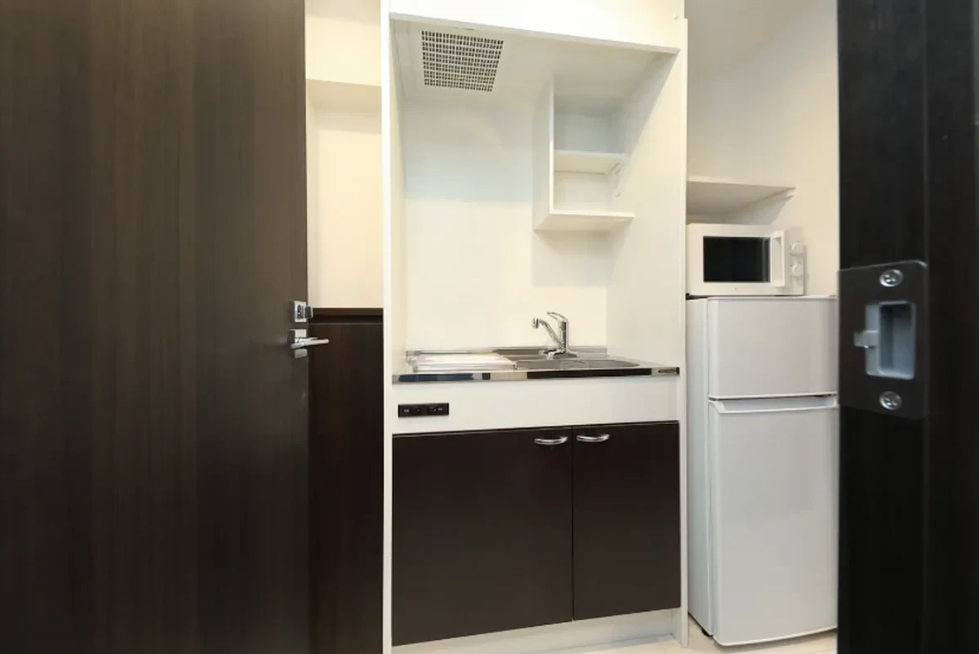
Share houses provide a private furnished bedroom alongside shared kitchens, lounges, and Wi-Fi, requiring much lower upfront move in fees than standard private apartments.
They are particularly practical for exchange students staying in Kyoto for only one semester or new arrivals who want a temporary base while exploring neighbourhoods in person. When evaluating a share house, look beyond the monthly rent. Confirm whether water, electricity, gas, and Wi-Fi are fully covered in the monthly utility fee, how cleaning duties and move out fees work, what rules apply to visiting friends and nighttime quiet hours, the required notice period before moving out, and whether you can officially register the address on your Residence Card at the ward office.
Kyoto Upfront Rental Costs and Refunds
The most common misunderstanding among first time renters in Japan is assuming that all upfront payments act as refundable deposits. In reality, most initial charges are non refundable one off fees, so always ask your agent for an itemised written quote showing the exact amount, recipient, and refund conditions before signing.
| Fee Name | Japanese Term | Typical Cost or Calculation | Usually Refundable? |
|---|---|---|---|
| Security Deposit |
敷金 (Shikikin) |
0 to 2 months’ rent |
Yes, remaining balance is refunded after deducting unpaid bills or repair costs |
| Key Money (Gift Money) |
礼金 (Reikin) |
0 to 1 month’s rent |
Non refundable |
| Estate Agency Fee |
仲介手数料 (Chūkai Tesūryō) |
Up to 1 month’s rent plus 10% consumption tax |
Non refundable |
| Advance Rent |
前家賃 (Mae Yachin) |
Pro rated daily rent for the move in month plus full next month’s rent |
Not applicable (applied to rent) |
| Initial Guarantor Fee |
初回保証料 (Shokai Hoshōryō) |
50% to 100% of total monthly rent and management fee (sometimes higher for students) |
Non refundable |
| Fire Insurance |
火災保険 (Kasai Hoken) |
¥15,000 to ¥25,000 for a 2 year policy |
Non refundable (or pro rated by insurer upon early exit) |
| Lock Replacement Fee |
鍵交換費 (Kagi Kōkanhi) |
¥15,000 to ¥30,000 |
Non refundable |
| Move Out Cleaning Fee |
退去時清掃費 (Taikyoshi Seisōhi) |
Paid either upfront at move in or settled at move out |
Subject to contract terms |
| 24 Hour Tenant Support |
24時間サポート (24-Jikan Sapōto) |
¥16,000 to ¥22,000 (confirm whether mandatory or optional) |
Non refundable |
| Antibacterial / Pest Treatment |
抗菌施工費 (Kōkin Sekōhi) |
¥15,000 to ¥20,000 (confirm whether optional) |
Non refundable |
Understanding Shikikin Deductions and Non Refundable Clauses
Always check your contract for the terms Shikikin (security deposit) and Shōkyaku (non-returnable fee). A Shikikin Shōkyaku rule means you lose a fixed part of your deposit. This money will not come back to you upon move out, no matter how clean you keep the flat. Pet friendly properties frequently include additional Shōkyaku deductions. Furthermore, renting a zero deposit flat does not mean moving out is free, as mandatory room cleaning fees are simply collected upfront or billed separately when your tenancy ends.
How Guarantor Companies Work for International Students
A guarantor company (hoshōgaisha) is not a refundable security deposit. Instead, it is an institutional insurer that guarantees your rent payments to the landlord if you default. Because most international students do not have a Japanese citizen relative to act as a joint guarantor (rentai hoshōnin), landlords require tenants to enrol in a guarantor company.
The initial guarantee fee equals 50% to 100% of your combined monthly rent and management fee. Most plans also charge an annual renewal fee of around ¥10,000, or a monthly administrative fee of ¥1,000 to ¥2,000. The specific guarantor company is designated by the property management firm, meaning tenants cannot switch providers on their own. Some Kyoto universities also offer university backed institutional guarantor support for eligible international students, so check with your campus international office early.
University Guarantor Support Through JASSO
Before paying a private guarantor company, ask your university international office if they participate in the International Student Housing Comprehensive Security System provided by Japan Student Services Organization (JASSO). Under this scheme, your university can act as your official guarantor. You simply pay an insurance premium of ¥4,000 for one year or ¥8,000 for two years, which is significantly cheaper than standard commercial guarantor fees. However, both your school and your prospective landlord must be registered with and agree to this specific system.
How to Apply for a Student Flat in Kyoto
Securing a private student rental flat in Kyoto takes between one and three weeks from initial enquiry to collecting your keys, following a structured seven step process.
Step 1: Set Your Total Budget and Commute Radius
Establish both your maximum base rent and your total monthly housing limit before browsing listings. For example, if your base rent target is ¥55,000, never assume management charges, Wi-Fi, and utilities are included. Next, map out walking, cycling, bus, subway, and train routes from your university, prioritising neighbourhoods within a 30 minute single journey with minimal transfers.
Step 2: Prepare Application Documents
Gather all required tenant screening documents in advance so you can apply immediately when a good flat appears. Standard documents include:
- Passport and Residence Card (Zairyū Card) or Certificate of Eligibility (COE) / student visa details
- University admission letter (Nyūgaku Kyokasho) or current student ID card
- University address and department contact details
- Emergency contact details, both in your home country and in Japan
- Bank balance statement or official scholarship certificate proving sufficient funds
Some property management companies also request proof of income, part time employment contracts, or a working Japanese phone number. Always inform your estate agent at the very beginning if you do not have a Japanese guarantor and need a guarantor company, preventing wasted viewings at properties that reject overseas applicants.
Step 3: Contact Estate Agents and Verify Property Status
Reach out to an estate agent as soon as you spot a suitable property, because popular student flats in Kyoto are often snapped up within a few days during peak admissions seasons. Do not simply ask for the monthly rent. Request a full itemised quote covering the management fee, key money, deposit, guarantor company fee, fire insurance, lock change fee, move out cleaning fee, early termination penalty (tanki kaiyaku iyakukin), lease renewal fee (kōshinryō, usually 1 month’s rent every 2 years), and move out notice period.
Step 4: Conduct an In Person or Virtual Viewing
During your viewing, check the natural sunlight, soundproofing, storage cupboards, and indoor mobile signal. You should also test the water pressure, heater controls, and bathroom ventilation. Finally, look at the air conditioner age, internet wiring, and the building’s rubbish area. Turn on the taps and shower to test water pressure, measure the indoor washing machine tray (sentakuki pan), and check hallway and doorway widths to ensure a refrigerator and bed can fit inside. If you are viewing an older wooden building, walk around the street again in the evening to check nighttime noise levels.
Step 5: Pass Tenant and Guarantor Screening
Your estate agent submits your application pack to the guarantor company, property management firm, and landlord. Screening normally takes one to seven days, though overseas applicants, newly arrived students, or tenants requesting a distant move in date may be asked for supplementary documents. Keep your phone reachable during this period and let your emergency contact know they may receive a brief verification call.
Step 6: Review the Lease Contract and Pay Upfront Costs
Once your application is approved, licensed estate agents provide the mandatory Explanation of Important Matters (Jūyō Jikō Setsumeisho), the tenancy agreement, and the final payment invoice. Verify every clause before transferring funds. Focus on the lease duration, renewal fees, cancellation notice period (usually 1 to 2 months in advance), short term cancellation penalties, move out cleaning fees, original condition restoration rules (genjō kaifuku), pet and smoking bans, subletting prohibitions, address registration eligibility, and bicycle parking rules.
Never rely on casual verbal assurances or chat messages saying something is fine. Every promise affecting your costs or tenant rights must be written into the contract or confirmed in writing by the management company. Always transfer initial payments to the official corporate bank account stated on the contract, and never send large sums to a personal bank account.
Step 7: Collect Your Keys, Set Up Utilities, and Register
On move in day, before unpacking your belongings, take date stamped photos and videos of all walls, floors, doors, windows, bathroom fittings, kitchen surfaces, and pre installed appliances. Email any existing scratches, stains, or wear to the property management company immediately so you are not charged for them when moving out.
Then you need to arrange activation for electricity, water, gas, and home internet. Finally, under Japanese law, foreign residents moving into Kyoto from abroad must visit their local ward office (Kuyakusho) or branch office (Shisho) within 14 days of establishing their address to complete resident registration (Jūmin Tōroku) and have their address printed on the back of their Residence Card. Bring your passport and Residence Card as required by Kyoto City guidelines, and complete your enrolment in Japan’s National Health Insurance (Kokumin Kenkō Hoken) at the municipal counter during the same visit.
Eight Common Mistakes to Avoid When Renting in Kyoto
Avoiding these eight frequent rental pitfalls will protect your deposit, keep your monthly bills predictable, and prevent administrative issues in Kyoto:
1.Assuming Zero Key Money Means a Cheap Deal
Some properties with zero key money compensate by charging higher guarantor fees, inflated cleaning fees, or strict early termination penalties if you leave within the first year or two. Always compare total upfront costs and total first year expenditure.
2.Comparing Base Rent Without Calculating Commute Costs
A lower monthly rent in an outer ward can easily be wiped out by daily train and bus fares, multiple line transfers, and monthly station bicycle parking fees.
3.Overlooking Management and Internet Fees
Listed headline rents often exclude monthly management fees (kanrihi). Similarly, free building internet may run on a shared connection that slows down at night, so confirm connection speeds and router setup rules in advance.
4.Expecting a 100% Security Deposit Refund
Review Shikikin, Shōkyaku (non refundable deduction), professional cleaning, and restoration clauses carefully, especially in pet friendly flats and zero deposit properties.
5.Failing to Confirm Official Address Registration
Tourist guesthouses, short term monthly flats, and certain informal share houses do not permit resident registration (jūminhyō). Without a registered address, you cannot update your Residence Card, open a Japanese bank account, enrol in health insurance, or receive official university documents.
6.Ignoring Foreigner Screening Requirements
Seeing an available listing online does not mean the landlord accepts international students. State your nationality, visa type, target move in date, university name, and guarantor status in your very first enquiry.
7.Transferring Money to Personal Accounts Before Signing
Legitimate Japanese agencies provide corporate registration details, a Real Estate Transaction Business Licence number (Takuchi Tatemono Torihikigyō Menkyo), and written invoices. Never pay cash without an official receipt or transfer money to an individual’s personal bank account.
8.Disregarding Kyoto's Municipal Living and Landscape Rules
Strict rules governing rubbish sorting, morning disposal times, nighttime noise, bicycle parking, smoking, and overnight guests are strictly enforced. Furthermore, Kyoto enforces strict historic landscape and architectural preservation ordinances (keikan jōrei), meaning exterior modifications or alterations to older buildings are heavily restricted.
How to Choose Kyoto Accommodation by Monthly Budget
Matching your monthly housing budget to the right Kyoto ward and room specification helps you prioritise what matters most for your daily comfort.
| Monthly Budget Tier | Recommended Kyoto Wards & Areas | Typical Property Types | Key Trade Offs to Consider |
|---|---|---|---|
| Under ¥50,000 |
Fushimi, Yamashina, Ukyo, Kita, Nishikyo |
Older 1K flats, university dormitories, share houses |
Prioritise ventilation, soundproofing, and nearby supermarkets over a tiny new studio in the centre |
| ¥50,000 to ¥70,000 |
Sakyo, Kamigyo, Fukakusa, Emmachi, Kitaoji, Saiin |
Standard 1K flats with separate bath and toilet, private student halls |
Balance building age against walking distance to the nearest station |
| Over ¥70,000 |
Nakagyo, Shimogyo, Kyoto Station, Karasuma-Oike, Shijo |
Modern concrete 1K, spacious 1DK or 1LDK flats |
Focus on concrete soundproofing, indoor laundry space, independent washbasins, and building security |
Final Advice for Securing Your Kyoto Student Home
Securing a realistic rent in Kyoto is never about hunting for the lowest headline figure online, but balancing your total annual budget, daily campus commute, neighbourhood convenience, and lease terms. First-time arrivals in Kyoto often find it easiest to start with university dormitories, a Kyoto international student house, verified student platforms like uhomes.com, foreigner friendly agencies, or furnished share houses. Students planning a multi year degree should carefully compare total first year costs, two year renewal fees, move out restoration clauses, and building maintenance standards.
Follow a clear sequence when house hunting: set your all inclusive budget, define your commuting radius, compare itemised upfront fees, verify foreigner eligibility, inspect the room, complete tenant screening, review the written contract, and photograph the flat upon move in. By preparing your visa documents and funds early, working with licensed platforms and estate agents, and ensuring all verbal promises are confirmed in writing, you can smoothly secure a comfortable student home in Kyoto.
FAQ
What is the average monthly rent in Kyoto for students?
The average monthly rent in Kyoto for international students in a single 1R or 1K studio ranges from ¥45,000 to ¥70,000. Budget friendly flats around ¥40,000 are available in Fushimi, Yamashina, Kita, and parts of Ukyo ward, whereas central flats in Nakagyo, Shimogyo, Shijo, and Kawaramachi cost ¥60,000 to over ¥90,000 per month. Building management fees, utilities, Wi-Fi, and commuting costs are usually billed separately.
Can foreigners rent a flat in Kyoto without a Japanese guarantor?
Yes, international students and expats can rent a flat in Kyoto without a personal Japanese guarantor by using an approved guarantor company (hoshōgaisha). The guarantor company acts as your institutional rent guarantor for a fee. Because not every private landlord accepts overseas tenants, prioritise properties marked as foreigner friendly or apply through platforms and agencies experienced with international students.
Why are upfront rental costs so high in Kyoto?
Upfront move in costs are high because Japanese leases collect first month’s rent, pro rated daily rent, security deposits (shikikin), non refundable key money (reikin), agency fees, guarantor company charges, fire insurance, and lock replacement fees all at once. While not every flat charges every single item, traditional rentals regularly require four to six times the monthly rent upfront. Always compare the total move in invoice rather than looking only at monthly rent.
When should international students start looking for Kyoto housing?
Students arriving for the spring semester should start searching one to two months before their move in date, and even earlier for popular university neighbourhoods. Peak rental demand runs from March to April and from September to October, when good properties rent out within days. If you are applying from abroad, prepare your documents early and confirm that your platform or agency supports virtual viewings and international payments.
Do international students need to live right next to campus?
No, you do not have to live immediately beside your university in Kyoto. Cycling to class is extremely common across Kyoto’s flat city grid, and subway and private railway lines provide reliable daily connections. Decide on an acceptable one way commute time first, then weigh monthly rent, transit fares, supermarket access, and room quality together. Saving ¥10,000 on monthly rent is rarely worth adding an extra hour of commuting every day.