



Like Borges, you used to think that libraries were Heaven on Earth.
In this post, you will witness 5 top UK university libraries regarding “value” and “strength”.
Preview: Witness of the Value

UK university libraries with their state-of-the-art facilities and serene study environments, are hubs of academic excellence, inspiring students and researchers to delve deeper into their fields of interest.
Inside Top 4 UK University Libraries
1. University of Sheffield Library

As one of the top 100 universities in the world, the collection of Sheffield University Library is naturally very impressive. According to statistics, the University of Sheffield Library has a rich collection of books, up to more than 1.5 million books. There are also many CK-ROMs, videotapes, audio tapes, slides and other multimedia materials.
The University of Sheffield Library comprises ten varying sizes across the campus. Among them, Western Bank, Information Commons and St. George are the three core libraries of the University. They are also an essential part of Sheffield‘s academic culture.
Key Metrics
Collection Size: 1.5+ million items
Facilities: Multimedia collections (CD-ROMs, audio tapes, slides), digital archives
Branches: Western Bank Library, Information Commons, St George’s Library & more
Highlights
Blends traditional reading rooms with digital learning spaces.
The Information Commons is ideal for collaborative work and 24/7 access (during term).
Strong support for cross-disciplinary research and digital study.
#Incentives to Explore Sheffield
Know The Cost to Study In Sheffield
Know The Best Student Accommodation In the University Of Sheffield
2. University of Oxford Library

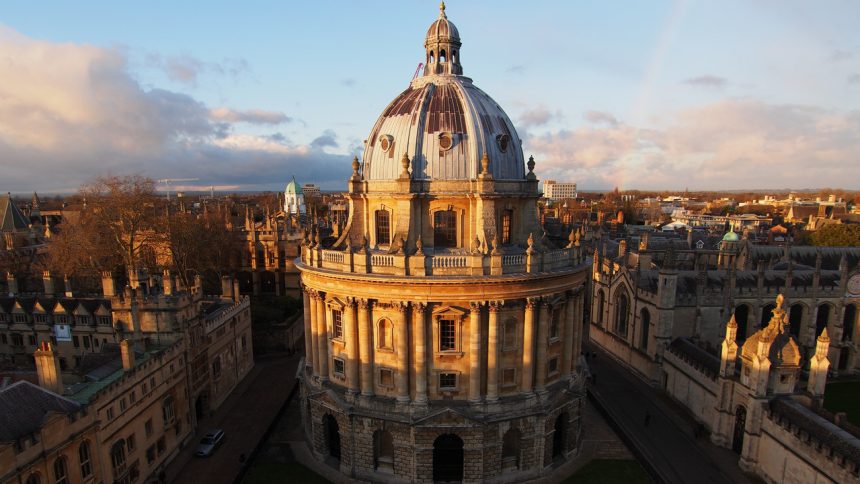
Bodleian Libraries — University of Oxford is the second largest university library in the UK after the British Library. The buildings are built with an emphasis on environmental and energy conservation.
The University of Oxford libraries are divided into research libraries and individual libraries. At one time, it was estimated that the University of Oxford had a collection of about 8 million books, but today it is estimated to be more than that. Because Oxford University accepts book donations from all over the world, it receives donations of up to 5,000 new books weekly.
Notably, the Oxford University Library has one of the world’s largest collections of books and manuscripts. However, some library services are limited to Oxford students only. So, go ahead and become an Oxford scholar.
Key Metrics
Collection Size: 13+ million printed items
Status: One of the UK’s Legal Deposit libraries
Study Spaces: Thousands across multiple sites
Access: Some areas open to visitors; special access for researchers
Highlights
Includes the Old Bodleian, Radcliffe Camera, and the modern Weston Library.
Houses vast special collections, manuscripts, rare books, and archives.
Excellent digital resources and research support across all disciplines.
3. University of Cambridge Library
Fun fact about the Cambridge Library: Most university logos are an open book, signifying that students are learning to read.
The University of Cambridge logo is a closed book. Some people would compare it with the closed book in the Cambridge University logo. They say that Cambridge people don’t study hard, but only use books to make a show of themselves.
This time Cambridge people will hit back: “Where, it is you who are too slow to read, we have finished learning, you are still learning.”
Key Metrics
Collection Size: Approx. 9 million items
Status: Legal Deposit library
Study Spaces: Multiple reading rooms and specialist collections
Open Access: More open-shelf materials than most deposit libraries
Highlights
Strong digital infrastructure with extensive e-journals and databases.
Suitable for undergraduate study through to advanced research.
Hosts renowned archives and special collections.
4. Durham University Library

Bill Bryson Library & Palace Green Library in Durham University is much more user-friendly, and the system networking is first-class.
Durham University has the most Harry Potter atmosphere in the UK, and its library is also very magical. Durham University’s “mobile bookcase” must be pressed at the same time, and the combination of two bookcases, bookcases can be freely moved combination.
If you find someone in the middle of the bookcase while moving it, kick it down, and it will stop immediately.
Key Metrics
Study Spaces: ~1,800 seats across branches
Opening Hours: Generally 8am–midnight; extended hours during exams
Collections: Special collections centred at Palace Green Library
Highlights
Bill Bryson Library offers modern study zones, group rooms, and strong digital resources.
Palace Green Library provides access to manuscripts, archives, and heritage materials.
A highly student-friendly system suitable for international students.

5. University of Aberdeen Library
The Sir Duncan Rice Library is the main academic library for the University of Aberdeen. It was designed by Schmidt Hammer Lassen Architects and completed in 2011. The library captivates not only with its striking contemporary architecture and open, airy layout, but also with a thoughtfully designed environment that welcomes and inspires every visitor. Boasting an extensive and diverse collection of print and digital resources across countless disciplines, it stands as a true center of academic excellence.
From silent study areas and collaborative group rooms to the breathtaking panoramic city views from its upper levels, the library provides an ideal setting for immersive learning and deep reading. Whether you are engaged in serious research or simply seeking a tranquil space to enjoy a book, The Sir Duncan Rice Library meets every need.
Key Metrics
Study Spaces: ~1,200 seats
Collections: ~400,000 books and manuscripts
Facilities: Media rooms, digital labs, modern study zones
Highlights
Known for its architectural design and bright, open learning spaces.
Highly accessible for international students with excellent digital services.
Ideal for both individual study and group collaboration.
Find the Best Student Accommodation with uhomes.com
As you settle into your academic life in the UK, finding the right home is just as important as finding the right library. After a day spent in the reading rooms, you’ll appreciate a comfortable, well-located space to unwind and recharge.
At uhomes.com, we specialize in helping students like you find their perfect accommodation in the UK. We offer a wide range of verified student apartments across major university cities—from modern studios in London to friendly shared flats in Edinburgh and purpose-built accommodations in Manchester. We handle the details, so you can focus on what matters: your studies, new friendships, and exploring everything the UK has to offer.
Let your adventure begin with a place that feels like home. Find your ideal UK student accommodation with us.
#Incentives to Explore Durham
Experience The Hogwarts Charm of Real Durham
Experience The Best Student Accommodation Near Durham University
Other Amazing Libraries In The UK?
/British Library
Founded in 1753, and since then amalgamating a number of national libraries, it has a collection of books, newspapers, magazines, sheet music, compact discs and tapes.
/University of York Libraries
There are seven University of York libraries and collections, with The Minster Library in the centre of York. As the most extensive cathedral library in the UK, York Cathedral’s library holds over 130,000 items, with many printed books dating from before 1800.
#Incentives to Explore York
Embrace Luxury Student Accommodation In York
How to Series You May Also Wonder to Know In The UK
FAQs of UK University Libraries
Q1: Do UK university libraries offer online resources?
Yes, most UK university libraries offer a plethora of online resources. These include e-books, online journals, databases, and digital archives that can be accessed remotely.
Q2: How can I borrow books from Sheffield University Library?
To borrow books from Sheffield University Library, you must first be a registered student or staff member with a valid university ID. Begin by searching for the desired book in the library’s online catalogue. Once you’ve located the book, note down the book’s location and call number. Use the call number in the library to find the book on the shelves. To check out the book, take it to the self-service machines on each floor. Scan your university ID and then the book. The machine will issue a receipt indicating the due date for returning the book. It’s advisable to return or renew the book on or before this date to avoid any late fees.
Q3: What other services do UK university libraries offer?
Besides book lending, UK university libraries often offer study spaces, computer facilities, printing services, research support, workshops, and events. Some also provide specialist resources like rare books and manuscripts, maps, and audiovisual materials.
Q4: Can non-students visit these U.K, university libraries?
Some, like Oxford and Cambridge, offer limited visitor or researcher access. Policies vary by institution.
Q5: Do all these U.K. university libraries offer 24/7 access?
No, not all UK university libraries offer 24/7 access; it varies by institution, with many providing 24/7 for main libraries or specific study zones during term/exam times (like UCL, Warwick, Manchester, Durham, Sheffield), while others have standard hours or offer 24/7 access only to specific groups (like PhDs) or have 24/7 computer labs, but you need your university card for building entry.
Q6: Do U.K. university libraries have group study rooms?
Yes, many UK university libraries offer group study rooms, including those at the University of Portsmouth, the University of East Anglia (UEA), the University of Reading, and the University of Manchester. These rooms are often bookable in advance and vary in size and equipment, such as screens, whiteboards, and PCs.
Q7: Which U.K. university library has the largest collection?
The Bodleian Libraries at the University of Oxford holds the largest collection among U.K. university libraries, and is one of the largest academic library systems in the world. Its collection includes over 13 million printed items, along with vast numbers of manuscripts, maps, digital resources, and special collections.