


For residents planning to move, study, or settle in London, choosing one of the safest areas in London is paramount. It is safe not only for you but also for the whole family, especially the children. In big cities like London, the crime rates are quite high. That’s why you need to search for one of the safest boroughs in London to reside in before deciding to move there. This is also an important thing for tourists who visit London, who need to find the safest areas in London to stay and enjoy the city while staying safe and sound.
This guide provides an in-depth analysis based on the latest official statistics published by the Metropolitan Police Service (MPS) and the Office for National Statistics (ONS) to present the safest administrative boroughs in London for 2026, complete with key optimization advice.
London Safety Overview: Is the City Safe?
Undoubtedly, London is safe overall for a major international metropolis. The city frequently ranks high among global safe cities, surpassing counterparts like New York City, Tokyo, and Paris. It ranked 12th among 31 cities worldwide in the 2025 Safest Cities of Berkshire Hathaway Travel Protection, and 14th in the ranking of The Economist. Based on a number of criteria, London is considered to be the greatest city in the UK to live in. This attracts many international students to pursue their studies in London. However, in a city of nearly 9 million people, crime rates vary significantly across different areas. Understanding which boroughs consistently report the lowest crime figures is the essential first step in deciding where to live.
If you have decided to study abroad in London, take a look at uhomes.com’s student accommodation in London, with safety and security as one of the main highlights. Firstly, the student housing properties at uhomes.com are perfectly located in the safest neighbourhoods in London. Secondly, only students can live in the student room, avoiding the potential danger of living in a complex community. Thirdly, 24/7 security, CCTV surveillance, secure entry, and fire system are fully equipped to ensure you safety to the very extent.
Key Factors for Choosing the Safest Areas in London
When assessing the safety of an area, you should focus on the following critical factors, which also help determine the authority and trustworthiness of the information:
| Assessment Factor | Core Consideration Points | Source of Authority |
|---|---|---|
| Crime Rate | Crimes per 1,000 residents. The lower the figure, the safer the area. Pay attention to violent crime and property crime breakdowns. | Metropolitan Police Service (MPS) and the Office for National Statistics (ONS) latest annual data. |
| Socioeconomic Factors | Wealth, employment rate, and community engagement. Areas with higher socioeconomic status generally exhibit lower crime rates. | ONS, Local Council Reports. |
| Quality of Life Facilities | Excellent schools (Ofsted ratings), ample green spaces (parks), and robust public transport networks. | Ofsted, local government planning. |
| Accommodation Type | Purpose-Built Student Accommodation (PBSA) or high-security residential blocks with 24/7 surveillance and secure access tend to be safer. | Professional accommodation providers/hotel ratings. |
All in all, a comprehensive safety assessment for London areas relies on 4 key factors: the crucial crime rate, which must be authenticated using the latest official data from the Metropolitan Police Service (MPS) and the Office for National Statistics (ONS). This is supplemented by socioeconomic factors and quality of life facilities, which are vital indicators of community stability and draw on data from ONS, local council reports, and Ofsted ratings. Finally, the accommodation type is also a key measure of personal security.
11 Safest Areas in London to Live
The following is a list of 11 safest places to live in London with the lowest overall crime rates, based on the latest official statistics (Year Ending 2024 figures, projected for 2025 rankings).
| Rank | Borough | Approximate Crime Rate Per 1,000 People | Key Characteristics / Ideal for |
|---|---|---|---|
| No.1 | Richmond | Approx. 54 – 60 | Consistently the safest borough. Known for its high green space ratio, wealth, and beautiful riverside environment. Ideal for families and those seeking tranquillity. |
| No.2 | Bexley | Approx. 56 – 67 | South East London suburb. Lower cost of living, strong community feel, noted for low burglary rates. |
| No.3 | Sutton | Approx. 57 – 63 | A model family borough with excellent grammar schools and scenic green hills. Known for its strong community and low crime figures. |
| No.4 | Kingston | Approx. 57 – 66 | Lively riverside area with excellent shopping and dining. Popular with students due to university presence and fast train links to Waterloo (30 mins). |
| No.5 | Harrow | Approx. 63 – 68 | North West London. Culturally diverse, home to Harrow School, and features excellent transport links to Central London. |
| No.6 | Bromley | Approx. 64 – 72 | South East commuter haven (13 mins to London Victoria). Leafy streets, an active town centre, and good public schools. |
| No.7 | Merton | Approx. 66 – 67 | Home to Wimbledon. An affluent and desirable area in South West London, providing vital residential surroundings. |
| No.8 | Havering | Approx. 67 – 80 | Eastern outskirts of Greater London, offering a true countryside feel with ample green spaces. Good choice for those seeking large living spaces and quiet. |
| No.9 | Barnet | Approx. 68 – 72 | One of North London’s largest boroughs. Offers village-style shops, excellent transport, and is popular with young professionals and families. |
| No.10 | Enfield | Approx. 74 – 87 | North London gateway. A busy town centre with relatively low crime rates, often cited as one of the more affordable and safe options. |
| No.11 | Maida Vale | Below average | An affluent, charming West London neighbourhood (not a borough). Known for Victorian architecture and a strong local security presence. |
This table summarises the 11 safest areas to live in London, which are generally characterised by low crime rates (ranging from approximately 54 to 87 crimes per 1,000 residents).
The top-ranking areas, such as Richmond upon Thames and Sutton, typically boast extensive green spaces, affluent communities, and excellent schools, making them especially ideal for families and those seeking tranquillity. Meanwhile, boroughs like Kingston upon Thames and Harrow are popular among students and young professionals due to their convenient transport links, cultural diversity, and comparatively low crime figures. Collectively, these areas, predominantly located in Outer London, offer a high quality of life with strong safety records, while each maintains its unique community character and cost-of-living profile.
No.1 Richmond
- Crime Rate: 54 – 60 Crimes Per 1000 People
Richmond is one of the safest areas in London. Known as Richmond upon Thames in South-West London, this region was first established as a royal hideaway in the 16th century and is not only one of the safest London areas to reside in but also one of the most beautiful places. As a region with the lowest crime rate in all of London, it is a popular destination for people on weekends to enjoy the sun, large parks, and vast green spaces, as well as fantastic dining options, bars, and shopping. Richmond, located on the river in the southwest of the city, an attractive and safe area to live in.

No.2 Bexley
- Crime Rate: 56 – 67 Crimes Per 1000 People
Bexley is one of London’s safest neighbourhoods recognised for its affordable costs and communal living. Located in the suburbs of southeast London, Bexley features a lovely lake, plenty of green spaces like Bexleyheath, bike paths, a thriving community of local cafés and charming pubs, quick access to London city centre, and the allure of “country-city living”.
Burglary is lower than most London boroughs, and violent crime is below UK average. These things make Bexley one of London’s safest boroughs. To find the safest place to live in London you can search for student accommodation in UK with uhomes.com. It provides many different types of accommodation at affordable prices.

No.3 Sutton
- Crime Rate: 57 – 63 Crimes Per 1000 People
Sutton deserves to make the list of the safest boroughs in london. Located just north of the Surrey Downs in southwest London, Sutton is a walker’s paradise, with stunning rolling hills and spectacular views that few other boroughs can match. The town centre is the heart of Sutton, with a strong sense of community. It is regarded as a calm, tranquil neighbourhood ideal for families. The residents living in Sutton claim that they feel happy, satisfied and safe staying in this neighbourhood, ranked Sutton top among safe areas to live in London.
There is plenty of green space, good grammar schools, a bustling town centre, and weekly farmers markets selling fresh products. Also, if you want to get to London, transport is quick, simple, and accessible, and you’ll be there in no time.
No.4 Kingston
- Crime Rate: 57 – 66 Crimes Per 1000 People
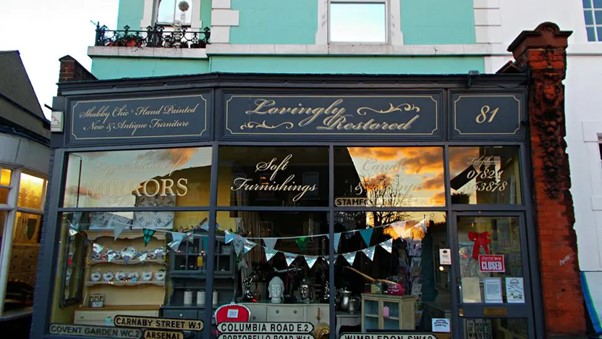
Kingston upon Thames is one of the safest parts of London, located less than a mile from Richmond upon Thames. Kingston boasts an abundance of restaurants and stores, a lively riverside, and a renowned theatre. Additionally, there are many trains that can transport you directly to Waterloo in just over 30 minutes. You can live comfortably, pleasantly, and safely in this place. The best-recommended student accommodations in Kingston include iQ Kingston, ViBe Student Living, Arbury Court Kingston, and Davidson House.
No.5 Harrow
- Crime Rate: 63 – 68 Crimes Per 1000 People
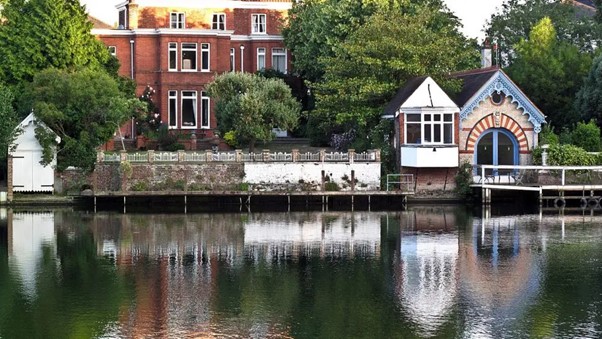
Harrow is among the safest parts of London. It is hidden in the northwest of the city, giving it a calmer feel than the central boroughs of London. Beautiful historic buildings, open green spaces, and excellent schools – Harrow School, one of the nation’s top private schools, is located here – make Harrow a winner. As one of the best places to live in London, Harrow is a really culturally varied region, with two huge retail malls, lots of cute cafés, and excellent transport links connecting it to central London, making Harrow a secure and convenient London neighbourhood.
No.6 Bromley
- Crime Rate: 64 – 72 Crimes Per 1000 People
Bromley is among the safest neighbourhoods in London. It is a commuter’s dream because it is only 13 minutes from Bromley to London, Victoria. The verdant, leafy Bromley, the safest area to live in London southeast, features attractive Victorian streets, an active town centre, a renowned theatre, and some excellent public schools.
No.7 Merton
- Crime Rate: 66 – 67 Crimes Per 1000 People
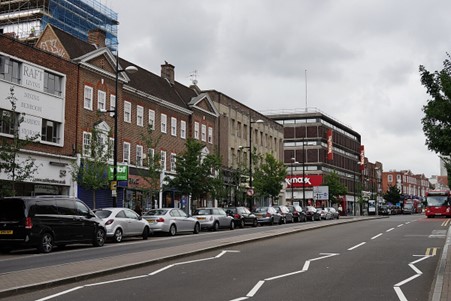
The safe London borough of Merton is located in southwest London and includes Wimbledon, Mitchum, Colliers Wood, Morden, and Rayner’s Park. They all have vital residential surroundings, including lovely parks and tree-lined streets. Wimbledon is unquestionably the most desirable safe area in Merton, London.
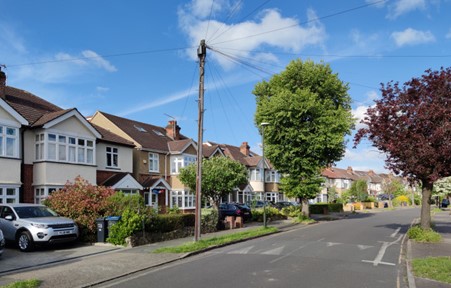
No.8 Havering
- Crime Rate: 67 – 80 Crimes Per 1000 People
Havering, the safest part of London, is located on the eastern outskirts of Greater London and includes parts of Essex. It is also the farthest from central London. Despite being only half an hour outside of Central London, Havering residents can appreciate true countryside living with plenty of green spaces and rural places.
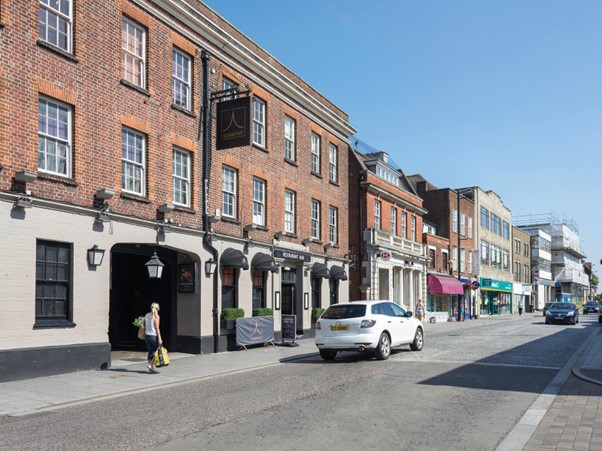
No.9 Barnet
- Crime Rate: 68 – 72 Crimes Per 1000 People
Barnet makes it a very desirable location for young professionals and families together seeking for safest place to live in London. Barnet offers many parks, excellent schools, many village-style stores, and excellent transportation connections to London.
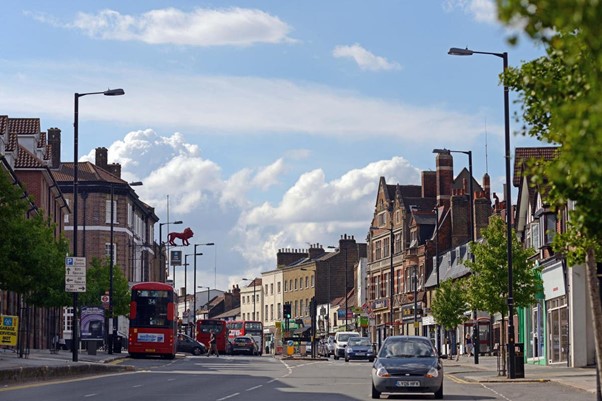
No.10 Enfield
- Crime Rate: 74 – 87 Crimes Per 1000 People
Enfield, one of the safe affordable places to live in London, is situated on the border of North London and serves as a gateway into the lovely countryside. The area has a busy town centre, numerous excellent schools, low crime rates, and some historic homes that appeal to families.
No.11 Maida Vale
- Crime Rate: Below Average
Maida Vale, as one of the safest places in London, is a wealthy and lovely area that provides peace and charm to its people and visitors. Tree-lined streets, beautiful Victorian and Edwardian architecture, and calm canal walks make this residential region a peaceful alternative to central London. The West London area is convenient and has local police to ensure safety. Safety is so important in this area that some streets hire private security agencies to keep the area safe.
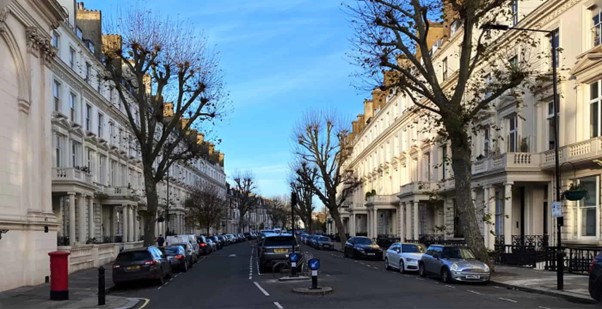
Safest Boroughs in London by Size, Poverty Rate & Property Price
In this part, we list the safest boroughs in London according to size, poverty rate, and property price. Moving beyond raw crime figures, a holistic understanding of safety requires examining the underlying socio-economic landscape. The following analysis explores the strong correlation between a borough’s geographic size, its resident poverty rate, and its average property price, revealing how these vital economic and demographic factors contribute to—and often predict—an area’s overall security and stability.
Analysing Security by Size and Density
Assessing the safest boroughs by size is an indirect measure, as safety is primarily defined by the crime rate per 1,000 residents. However, the size and resulting population density of a borough strongly influence the type of crime and the sense of security. The key takeaway is that the safest boroughs are generally found in Outer London, characterised by larger physical areas and lower population density compared to the smaller, highly dense Inner London boroughs.
The table below shows the area (size) of the top safest boroughs (by crime rate) compared to some of the smallest, highly dense boroughs in the centre.
| Borough | Area (sq km) | Population Density (Approx. Residents per sq km) | Overall Safety Context |
|---|---|---|---|
| Bromley | 150.13 | Low (2,300) | Very Safe (Low Crime Rate) |
| Havering | 114.47 | Low (2,600) | Very Safe (Low Crime Rate) |
| Richmond upon Thames | 57.42 | Medium-Low (3,500) | Safest Borough Overall (Lowest Crime Rate) |
| Bexley | 60.56 | Medium-Low (4,000) | Safe (Top 5 Crime Rate) |
| Kensington and Chelsea | 12.13 | Very High (13,000) | Smallest Borough Area / High Crime Rate (Due to Density/Affluence) |
| City of London | 2.90 | Extreme (Tiny Residential Pop) | Smallest Area / Highest Crime Rate (Daytime traffic) |
From the table, we can see that the size and density of a London borough are key factors influencing its safety profile. Generally, the physically largest boroughs in Outer London, such as Bromley and Havering, benefit from lower population density and more green space, contributing to lower crime rates and greater community stability. Boroughs of medium area, like Richmond upon Thames and Bexley, often strike an optimal balance, maintaining a safe, suburban feel while consistently registering the capital’s lowest crime figures. Conversely, the smallest areas with the highest density, notably Kensington and Chelsea and the City of London, experience significantly higher crime rates (particularly theft and robbery). This high density, combined with a concentration of wealth and commercial targets, overrides their affluence in terms of recorded crime statistics.
Safest Parts of London by Lowest Deprivation (Poverty Index)
The table below presents the safest London boroughs based on their ranking in the authoritative Index of Multiple Deprivation (IMD) and their estimated Child Poverty Rate. The data reveals that the boroughs with the lowest levels of deprivation (i.e., the most affluent) correlate perfectly with the boroughs scoring lowest in crime, demonstrating that economic stability and community wealth are key factors in guaranteeing neighbourhood safety.
| Rank | Borough | IMD Deprivation Rank (Out of 32 London Boroughs) | Estimated Child Poverty Rate (Approx.) | Correlation with Safety |
|---|---|---|---|---|
| 1 | Richmond upon Thames | 32 (Least Deprived) | 16% – 19% | Very High (Safest by Crime Rate) |
| 2 | Sutton | 30 | 20% – 23% | High (Top 5 Safest by Crime Rate) |
| 3 | Bexley | 29 | 22% – 25% | High (Top 5 Safest by Crime Rate) |
| 4 | Kingston upon Thames | 28 | 20% – 24% | High (Top 5 Safest by Crime Rate) |
| 5 | Harrow | 26 | 23% – 26% | High (Top 5 Safest by Crime Rate) |
| 6 | Barnet | 25 | 25% – 28% | High (Low Crime Rate) |
Safest Neighbourhoods in London by Property Price
Property price serves as another vital indicator when assessing area safety. We commonly observe a direct positive correlation: areas with higher average property values benefit from greater community economic stability and higher investment in security and public services. The table below presents the property prices in several high-value London areas, illustrating the clear link between affluence and the high safety ratings we have discussed.
| Rank | Borough | Approximate Average Property Price | Safety Context |
|---|---|---|---|
| 1 | City of Westminster | £3,000,000 | Highest property value; high security resources (despite high tourist crime rates). |
| 2 | Kensington and Chelsea | £2,080,134 | Highest property value; high security resources (despite high tourist crime rates). |
| 3 | Camden | £1,858,738 | High affluence, particularly in the northern parts; stable residential areas. |
| 4 | Hammersmith and Fulham | £964,013 | High stability and affluence in West London; generally safe residential pockets. |
| 5 | Hackney | £933,006 | High property values due to widespread gentrification; stability in residential areas. |
| 6 | Richmond upon Thames | £838,527 | Consistently the safest borough by crime rate; high wealth and stability. |
| 7 | Lambeth | £834,518 | High property values in affluent areas (e.g., Clapham, Battersea); proximity to Central London. |
| 8 | Wandsworth | £803,319 | One of the safest Inner London boroughs by crime rate; strong stability and resources. |
Note: Property prices are estimates and subject to market fluctuations. Boroughs with extremely high prices (like Westminster) often show high crime rates due to target-rich environments (tourists, shops), but their residential areas are considered highly secure due to affluence and high security investment.
Safest Places in London for International Students
For international students, choosing the safest parts to live in London often depends heavily on individual priorities, such as proximity to a university, daily commuting distance, and overall budget. The following table provides tailored recommendations for specific resident profiles, ensuring a balance between exceptionally low crime rates and practical lifestyle requirements in London.
| Area Type | Recommended Borough/Area | Advantage |
|---|---|---|
| Suburban Safety Prime | Kingston upon Thames, Harrow | Low crime rate, relatively reasonable rent, home to university campuses and excellent facilities. |
| Safe & Central Commute | Wandsworth | Inner London (Zone 2/3) with one of the lowest crime rates among central boroughs, balancing safety with convenience. |
| High Security Lodging | Maida Vale, Greenwich | Areas with strong local policing and high-security residential buildings (PBSA/Serviced Apartments). |
In summary, residents seeking the lowest overall crime rates combined with reasonable rent and excellent facilities should focus on Outer London, suburban hubs like Kingston upon Thames and Harrow. For those needing a safe environment that allows for quick access to the centre, Wandsworth offers the best balance as a secure Inner London commuting base. Finally, for those prioritising immediate, high-level security, areas with strong local policing and access to specialised accommodation, such as Maida Vale and Greenwich, are highly recommended.
Safety Levels of Accommodation Types
Beyond the safety of the neighborhood itself, the type of accommodation you choose significantly impacts your personal security in London. Different lodging options offer varying levels of inherent protection and management oversight. The table below ranks popular accommodation types, detailing their specific security features to help residents and travelers prioritize their well-being alongside location and budget.
| Accommodation Type | Safety Level | Key Security Features | Ideal for |
|---|---|---|---|
| Purpose-Built Student Accommodation (PBSA) | Highest |
|
|
| Serviced Apartments | High |
|
|
| High-Star Hotels | High |
|
|
| Hostels | Medium-Low |
|
|
| Private Rentals / Airbnb | Variable (Lowest) |
|
|
In summary, personal safety is highest in centrally managed properties: Purpose-Built Student Accommodation (PBSA) provides the most comprehensive security due to 24/7 staffing and controlled access, closely followed by Serviced Apartments and High-Star Hotels. Conversely, Private Rentals (like Airbnb) and Hostels offer the lowest or most variable levels of security, placing a greater burden on the individual resident to perform extensive due diligence, research reviews, and verify neighborhood safety.
What Makes Certain London Places Safer Than Others?
Feeling safe in any community is more complex than just crime figures. While low crime rates and competent police are vital for making residents feel safe, other factors also have a significant role. You should take the following factors into consideration when choosing the safest place in London to live.
- Education
Better education gives students additional opportunities, making them feel more invested in society and their future. As a result, good schools and educational institutions improve the quality of life of residents, which leads to safer neighbourhoods.
- Arts and Culture
Art can significantly influence the level of safety in a living area. A strong arts environment makes residents feel happier and safer. Urban revitalization and beautification are often part of community investment programmes to improve the neighbourhood.
- Green spaces
While crimes still occur in parks, green places improve community, health, and well-being. These all affect social safety. As seen in our list, all safest boroughs in London value green spaces.
- Transportation links
Transport links usually increase safety. Better public transport in London attracts investment, making it more desirable and providing more opportunities for residents. Also, a good public transport system may be better resourced for passenger safety and security.
Summary about Safest Parts of London
The safety in London areas needs to be taken into consideration when you want to live or just travel to the city and stay there for a few nights. Other than safety, there are many things that you must consider before moving, such as education, accommodation with green spaces or even a neighbourhood with art revitalisation, and good transportation links. You should search for the info beforehand about the safest areas in London before you decide to visit or even move and live there.
FAQs about Safest Neighbourhoods in London
Is London safe to walk at night?
Yes, overall. London’s night-time safety is good compared to global megacities. The primary concern of visitors is safety, especially in unfamiliar areas during the night. Although overall London is a very safe city, we would advise caution in some locations and at night when crime rates are typically a little higher. Choose safe boroughs in London to live, stay on roads with good light, stay away from remote places, and use common sense.
Which criminal trends are getting worse in London?
Anti-social behaviour, drug offences and public order offences are types of crime that are becoming more prevalent in London. These types of offences are on the rise across the capital, but it is worth noting that there has been very little change/increase over time. Meanwhile, burglary and violent/sexual offences are also on the rise in London, but prosecution rates are improving.
Which area should tourists avoid to stay?
The most dangerous areas in London with higher crime rate, like Canning Town, Tower Hamlets, and Hackney, are not advised for visitors to stay. Most London areas are safe and sound to live in, but there are still some places with higher crime rates. Central areas of London have higher crime rates, so choosing a neighbourhood like Maida Vale or Greenwich will give you a safe place to return to after a long night.
What is the safest area in London?
Richmond upon Thames is the safest borough in London, with only 54 crimes per 1000 people here. The area is home to many green spaces, world-class restaurants, and local bars.
Is Brixton safe during the day?
Yes, Brixton is particularly safe during the day. Though historically known for higher crime and drug issues, targeted revitalization and enhanced policing have dramatically improved safety. Nowadays, most visitors and residents can comfortably enjoy the area’s vibrant culture, markets, and attractions without any worries about the safety.